






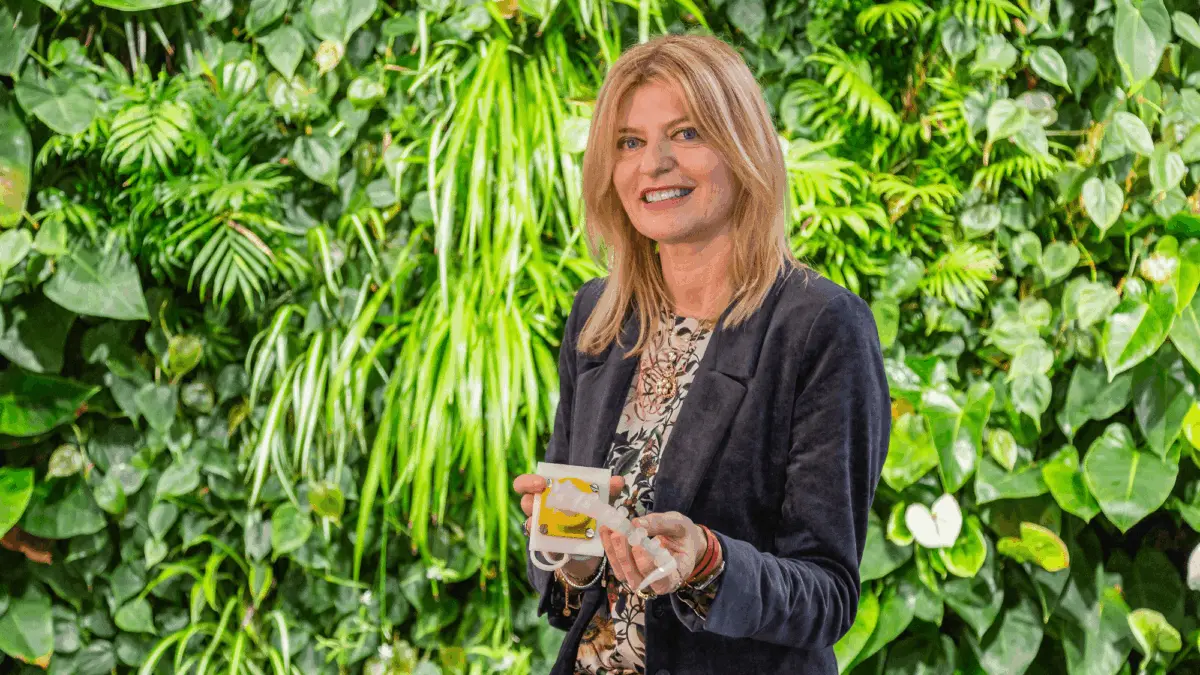
Throughout her distinguished career, roboticist Barbara Mazzolai has consistently turned to the natural world for profound inspiration. Now, she is setting her sights on a much larger and more urgent goal: ensuring that the advanced technology she helps build gives back to the environment rather than depleting it.
After starting her professional journey as a biologist, a chance opportunity allowed Mazzolai to pivot toward engineering, ultimately establishing her as an early pioneer in the rapidly growing field of bioinspired robotics. Drawing deeply on her comprehensive knowledge of biology and the natural world’s unmatched ability to solve a remarkably diverse set of complex problems, she has successfully overseen the development of revolutionary robots based on octopuses, plant roots, and even dynamic seeds.
Reflecting on her lifelong fascination, Mazzolai explains that she has always been captivated by living organisms and the extraordinary variety of solutions selected by the evolutionary process over millions of years.
Today, Mazzolai serves as the associate director for robotics at the prestigious Italian Institute of Technology in Genoa, where she also directs the Bioinspired Soft Robotics Laboratory. Her academic and professional background spans multiple disciplines, reflecting her unique trajectory. She earned a master’s degree in biology from the University of Pisa, a master’s degree in eco-management and audit schemes from the Scuola Superiore Sant’Anna, and a Ph.D. in microsystems engineering from the University of Rome Tor Vergata.
Despite her deep appreciation for technological innovation, Mazzolai firmly believes that the engineering and robotics sectors must urgently reckon with their own footprint and direct impact on the natural world. This pressing realization is precisely why she is actively championing an entirely new field of research that she calls "sustainability robotics."
In a manifesto published in Nature Machine Intelligence in July, Mazzolai and her international collaborators outlined a comprehensive vision for a transformative approach to designing robots. This new paradigm is purposefully intended to drastically improve and harmonize the often-strained relationship uniting nature, humanity, and technology.
Emphasizing the urgency of this shift, Mazzolai notes that society needs to significantly reduce the footprint left by modern technology. She explains that this movement is ultimately about thinking in fundamentally different ways to open up entirely new, responsible possibilities for both robotics and society at large. Within this fresh mode of thinking, Mazzolai considers ecological sustainability not as an optional afterthought, but as an absolute core component of the initial design phase.
A Child of Nature
Mazzolai traces her enduring fascination with the living world back to her formative childhood years growing up along Italy’s picturesque Tuscan coast, relatively close to the bustling port city of Livorno. Her father worked as a public-health inspector and was also a dedicated professional mycologist. Consequently, the family spent a considerable amount of time exploring lush local forests, identifying species, and learning intricately about regional fungi and plants.
Before committing to the sciences, Mazzolai briefly considered pursuing art, which represented her other major passion during youth. However, she ultimately decided to enroll at the University of Pisa in 1987 to formally study biology. She was initially drawn heavily toward marine biology. Yet, shortly before successfully graduating with a master’s degree in 1995, she secured a competitive research position at the Italian National Research Council’s Institute of Biophysics. There, she dedicated her time to studying the complex ecological cycles of heavy metals like mercury as they moved through both the living and nonliving components of the environment.
This rigorous work involved collecting, preparing, and analyzing a wide array of samples extracted from natural water systems, soil compositions, vegetables, and even human tissues to better understand the adverse impacts these persistent metals exert on human health and the environment. Impressively, she managed to balance these intensive research duties with specialized studies in environmental management at the Scuola Superiore Sant’Anna in Pisa, ultimately graduating with a second master’s degree in 1998.
During that dynamic period, Mazzolai learned through university networks that the institution was actively recruiting biologists to help design innovative new devices tailored specifically for environmental monitoring. Seizing the opportunity, she applied and successfully secured the position in 1999. She began working as a dedicated research assistant under the supervision of renowned bioroboticist Paolo Dario. Initially, her responsibilities centered on developing specialized sensors, which quickly evolved into building complete robotic systems intended to monitor air, water, and soil quality.
Even before officially entering a formal doctoral program, Mazzolai’s exceptional contributions were recognized when she was promoted to assistant professor in 2004. Shortly thereafter, she made her very first foray into the uncharted waters of bioinspired robotics. In close collaboration with academic colleagues at Sant’Anna, she helped design an innovative soft robot directly inspired by the anatomy and movement of the octopus.
Describing the significance of that project, Mazzolai notes that they proposed the system as a foundational paradigm for launching the broader concept of soft robotics. The project vividly demonstrated that robots do not need to be rigid to be functional; they can be entirely soft and compliant while simultaneously applying strong, precise physical force to their surrounding environment, much like the biological animal does in nature.

Back to School
By 2007, Mazzolai decided to formalize her advanced technical training by enrolling in a Ph.D. program in microsystems engineering at Tor Vergata University of Rome. She successfully balanced this demanding doctoral coursework with her ongoing professional responsibilities at Sant’Anna. By that stage, she was already relying heavily on advanced microfabrication techniques to develop miniature sensors for her robotic projects, and she was fiercely motivated to push that specific technological subfield forward.
While standard robots frequently feature various sensors designed primarily for basic perception—such as tactile feedback or proprioceptive awareness—these conventional systems typically focus narrowly on helping the robot understand its own physical position relative to its immediate environment. Mazzolai points out that very few traditional robots integrate physical or chemical sensors capable of truly understanding the complex ecological environment through which they move.
Driven by this insight, Mazzolai was appointed as a team leader at the Center for Micro-BioRobotics of the Italian Institute of Technology in 2009. There, she continued her groundbreaking work in the rapidly expanding field of bioinspired robotics. Two years later, she successfully defended her doctoral dissertation, completed her Ph.D., and earned a well-deserved promotion to director of the center.
Planting the Seeds
Around this pivotal time in her career, Mazzolai became intensely interested in using plants as a novel biological model for entirely new categories of robots. This marked a significant expansion of bioinspiration, pushing the field beyond its traditional focus on animals. In particular, she was utterly captivated by the unique ability of plant roots to efficiently and autonomously explore complex underground environments. She intuitively imagined that mechanical machines endowed with a similar level of navigational deftness could yield powerful real-world applications in both sophisticated environmental modeling and precision agriculture.
When she first proposed this unconventional concept to her peers, many colleagues were understandably skeptical of developing robots based on organisms that outwardly appeared static and motionless. However, Mazzolai emphasizes that plants are actually in a state of constant, dynamic motion through a biological process known as indeterminate growth. Unlike animals, plants truly grow continuously for their entire lifespan, fluidly adapting their physical morphology and behavioral responses to shifting external environmental conditions, while constantly repairing themselves, sensing changes, and communicating with their surroundings.
Attempting to successfully mimic a biological system operating on principles so radically different from conventional engineering required extensive, rigorous contemplation. Mazzolai explains that working in the realm of bioinspired robotics frequently requires researchers to maintain what she jokingly describes as "two separate brains"—the analytical mindset of a biologist paired with the pragmatic problem-solving methodology of an engineer.
This intricate process typically involves conducting deep, thorough studies of the target organism to uncover the fundamental biological principles that govern how it operates, long before any attempt is made to physically engineer a robot capable of replicating those traits. Mazzolai stresses that the resulting machine is never meant to be a direct, literal copy of a natural organism, primarily because living creatures are exceptionally difficult to replicate artificially and ultimately serve entirely different evolutionary goals.
Consider, for example, the case of plant roots. What makes biological roots remarkably efficient at exploring dense soil is their unique mechanism for reducing mechanical friction: they grow exclusively at the very fine, delicate tip of the structure, while the thicker, more established base of the root remains entirely static. This localized growth strategy drastically reduces the total amount of energy required to push downward through compacted earth, especially when compared to the mechanics of a conventional industrial drill, which must forcefully push an entire heavy structure forward from above.
To successfully translate this elegant biological principle into a functioning robotic system, Mazzolai’s research team developed a miniaturized 3D printer engineered to sit directly at the machine’s leading tip. As the robot advances, this onboard printer feeds thermoplastic filament through a heated nozzle, continuously building a snakelike structural body immediately behind it. This innovative design allows the robot to navigate through soil with exceptional energy efficiency. Furthermore, the guiding tip houses specialized sensors that enable the machine to actively avoid physical obstacles while simultaneously detecting nearby sources of essential nutrients or water.
Making Robotics Sustainable
Having spent the vast majority of her professional career borrowing ingenious design solutions from nature, Mazzolai is now deeply eager to return the favor. She points out that many modern technologies—including widespread synthetic plastics and high-capacity automotive batteries—have historically been developed with little to no foresight regarding how they will ultimately impact the global environment at the very end of their operational life cycles.
Mazzolai is fiercely determined to ensure that the burgeoning field of robotics does not blindly follow that same ecologically damaging path. This conviction serves as the direct inspiration for what she and her collaborators now term "sustainability robotics." This visionary approach rests upon three foundational pillars: guaranteeing that manufactured robots maintain a minimal ecological footprint throughout their existence, ensuring that such technologies remain globally accessible to people across all socioeconomic backgrounds, and fostering "symbiotic" relationships where robotic systems provide mutual, tangible benefits to both human society and the natural world.
More concretely, Mazzolai envisions successfully incorporating comprehensive life-cycle concepts directly into the initial design phase of all future robots. Under this framework, machines at the end of their useful operational lives could be systematically reused, safely recycled, or even cleanly biodegraded back into the environment without leaving toxic residues.
Although such goals might initially sound overly ambitious, Mazzolai remains profoundly confident that all the necessary scientific and engineering ingredients required to make this vision a reality are already well within reach. Furthermore, she is certain that this progressive ethos will strongly resonate with and inspire the next generation of roboticists. Noting the rising enthusiasm among younger researchers facing the growing threats of ongoing environmental degradation, she observes that they genuinely want to work in this evolving field because it represents their future, and they are eager to develop technologies that can actively help heal the planet.