






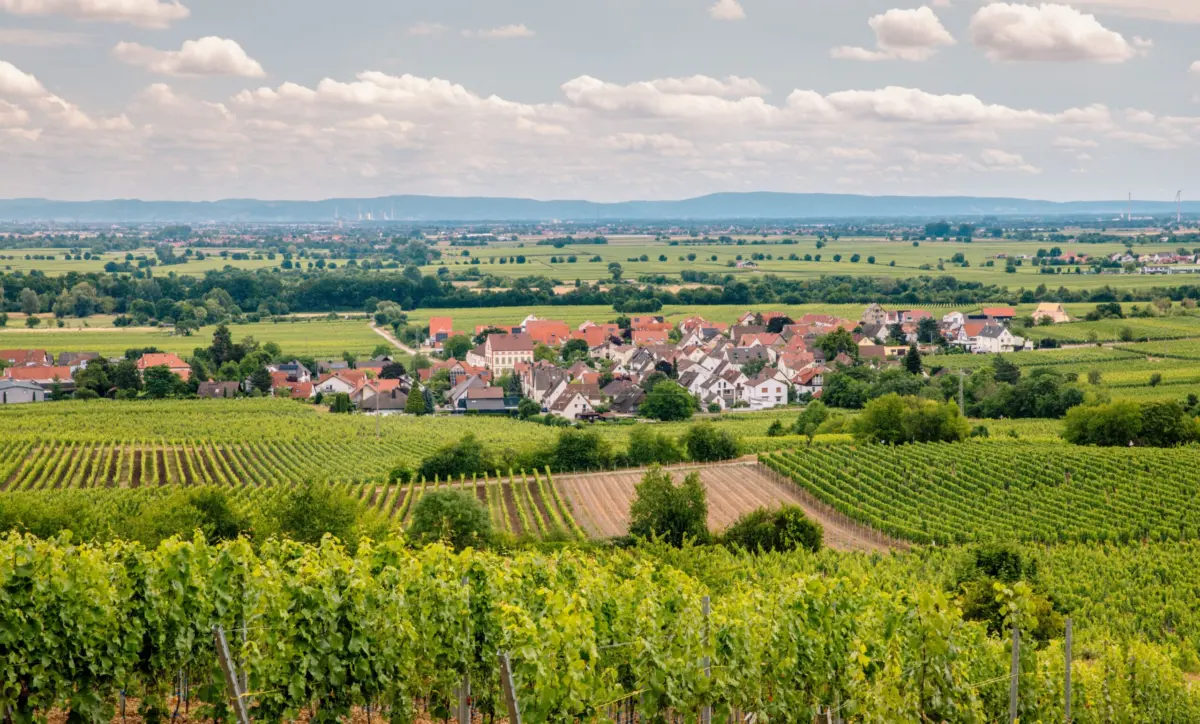
All appears entirely normal in the southern German hamlet of Deidesheim, a picturesque community of roughly 3,700 residents nestled in the renowned Rheinpfalz region. Schoolchildren straggle home along 400-year-old cobblestoned streets under a blazing sun, passing surrounding wineries that have long owed their stellar reputations to small-batch, niche wine lovers. Occasionally, a sleek Mercedes-AMG with Frankfurt plates slows down to admire the medieval architecture, but otherwise, there is no outward sign of anything extraordinary. Nothing on the surface suggests that this tiny, idyllic town is now home to the Michelin Guide’s latest three-star restaurant—an achievement that elevates Germany’s total count of top-tier establishments to just 12.
Walking through the streets, a visitor might wonder what kind of fanfare such a monumental culinary accolade would provoke. A street parade? A local town crier making formal announcements from the square? After all, the biggest traditional day on the local calendar is Goat Day, an ancient throwback when a neighboring village delivers a live goat on Whit Tuesday in return for historic grazing rights. That celebration is rivaled only by the August Wine Festival, which spans two energetic weekends. During the festival, Schlager music echoes through the air as over a dozen winery cellar doors fling open wide. It is bratwurst served at every turn, and a DJ spinning tunes from a souped-up 1970s Kombi van gives the scene more of an achingly hip Berlin Berghain vibe than a bucolic countryside retreat.
Yet beneath its calm, Mona Lisa-sanguine façade, this town has always carried a sophisticated, high-end lilt. Even on the eve of the post-award announcement, the newly minted three-star L.A. Jordan restaurant—named after its historical founder, Ludwig Andreas Jordan, rather than basketball sneakers—seemed remarkably muted. However, the internal reaction of the team upon hearing the news was decidedly non-Teutonic in its sheer exuberance.
"It was like we won the food version of the Soccer World Cup, the Culinary World Cup," says managing director Herr Ole Leidner, recalling the momentous occasion. "There was screaming, I may have cried."

Chef Daniel Schimkowitsch shared a similar sense of profound disbelief and elation. Schimkowitsch originally earned L.A. Jordan’s first Michelin star the very year it opened in 2014, followed by a second star nine years later. Reflecting on the latest triumph, he noted that he was "speechless, happy, full of respect, humility, and gratitude to my entire team, the Michelin Guide, our guests, and my owner." With this third star, the restaurant not only climbs the domestic German culinary ladder, but it also secures a coveted spot among the top 150 dining establishments internationally.
While German radio stations have eagerly trumpeted the big news concerning one of the nation’s smallest towns deep in the Palatinate, Deidesheim is no stranger to high-profile attention. For years, it has served as the secret weekend destination of choice for well-heeled Frankfurt financiers, diplomats, and dedicated gourmands making the high-speed dash down the Autobahn. Former Chancellor Helmut Kohl frequently brought visiting international dignitaries to the historic Deidesheimerhof restaurant on the main square to offer them an authentic taste of Germany. Among the distinguished guests hosted there over the decades were Queen Elizabeth II, Margaret Thatcher, and Mikhail Gorbachev—though not simultaneously—while pop icon Michael Jackson famously once moonwalked through those very doors.
Yet the modern incarnation of L.A. Jordan represents a distinct shift toward a new generation of dining enthusiasts. "The phone started ringing immediately, and our waiting list exploded overnight," Leidner says, noting an influx of international inquiries from places like the United Kingdom and New York. The restaurant is now fully booked through September. Walking past its exterior sign, which still proudly displays its previous two stars while locals and visitors read the glowing Michelin inspector report, one can only imagine the flavors that lit a firecracker under the judges’ taste buds—such as the Atlantic monkfish paired with chanponzu sauce and Périgord truffle.
Of course, there is much more to discover in the gourmet landscape of Deidesheim beyond a single extraordinary plate. Exploring the surrounding vineyards reveals a verdant belt of green vines wrapping tightly around the town’s collection of medieval houses. These plots are managed with fierce dedication by local families, interspersed with inviting picnic tables and tangled terrace stairways. Walkers might even stumble upon unexpected artistic touches among the grapes, such as a 15-foot nude sandstone sculpture named Eva of Pardisegarten, representing the winery’s holdings and mid-frolic among the vines.

Beyond the region’s defining Riesling, the local wine portfolio includes aromatic Gewürztraminer, robust Spätburgunder (Pinot Noir) reds, and Auxerrois—a dangerously easy-to-drink white wine that can quietly creep up on an unwary drinker if vigilance isn’t maintained.
Back in town, cellar doors and wine-focused restaurants line the main street of Weinstrasse without a straight plumb line in sight. Visitors can easily spend an afternoon strolling the half-mile stretch, moving seamlessly from the bookends of young-blood vintners at the historic Weingut von Winning to the glass-structured architecture of Weingut Reinhardt. There is also the innovative Weingut Reichsrat von Buhl—where visiting Mexican food trucks are a major draw during the Wine Festival—and the Kimich Winery, complete with a secret rear garden, a resident roaming turtle, and occasional flamenco guitarists strumming in the shade.
Friends and colleagues are often intrigued by the town’s distinct dual personality, which oscillates effortlessly between quiet, sleepy vibes and sudden explosions of electric saxophones during summer festivals, complete with amorous couples occasionally leaning against street-facing windows.
Throughout the calendar year, Deidesheim offers a steady rotation of distinct cultural events. March brings the blossoming of cherry and almond trees, creating vast cotton candy webs of pink and white known locally as the Pfälzer Mandelblüte. May features the famed Goat Festival, which secured official UNESCO cultural status. In July, the Ketschauer Hof hosts its International Wine and Summer garden party, while October invites visitors to embark on the Jazzwanderung, a progressive jazz and wine walk winding toward the forest as the autumn leaves turn gold. The winter months bring their own seasonal charm, featuring a cloaked St. Martin’s Day procession of singing children holding lanterns along the cobblestone streets, followed by a local Christmas market that remains one of the region’s best-kept secrets.

While large tour buses are notably absent and English is rarely spoken as a primary language among residents, international food lovers are increasingly pointing their forks toward Deidesheim. As Ole Leidner observes, roughly 75 percent of their visitors are German, but the elevation of L.A. Jordan represents a modern evolution that brings a powerful international impact to the local landscape. The Michelin Guide may have awarded the town three stars, but the local community would undoubtedly rate it a million.
Where to eat in Deidesheim
For travelers seeking alternative dining experiences outside of L.A. Jordan, the more casual, French-themed 1718 restaurant offers an inviting atmosphere within the Ketschauer Hof. Elsewhere, the Riva terrace at sister property Kaisergarten provides a serene setting overlooking a koi pond, paired with attentive service on sunny afternoons. In the mornings, visitors can stop by Café-Bistro Bellavigna, a friendly, couple-run spot serving hearty breakfasts and specialty coffee. Those looking for traditional hearty fare can head to Gaststätte Winzerverein to enjoy face-sized schnitzels served beneath a pretty, pergola-covered terrace. For a rustic mountain experience, Waldschenke Deidesheimer Hütte operates as a cabin-style beer garden nestled in the forest, located just a short 30-minute hike from the Weinstrasse. Meanwhile, Sushi.B, housed within Weingut Reichsrat von Buhl, offers a high-end showcase of delicate Japanese cuisine helmed by visiting chefs, providing a unique counterpoint to the town’s traditional Eurocentric dining scene.
Where to drink in Deidesheim
Wine enthusiasts looking to sample the local output can visit Weinbar 1911 to enjoy a glass of Riesling while people-watching on the main square. The rear courtyard of Gasthaus Zur Kanne offers a quiet oasis complete with lavender syrup mocktails. For a more structured tasting, the Kimich winery hosts tastings inside an original historic villa, highlighting fruity white wines like Paradise.
A useful local tradition for visitors is the Dubbeglas—a traditional dimpled glass characteristic of the Palz region that holds roughly 17 ounces of wine. To keep the pace manageable during long afternoons, many locals prefer to drink a Weinschorle, a refreshing 50-50 mix of local wine and sparkling water.