






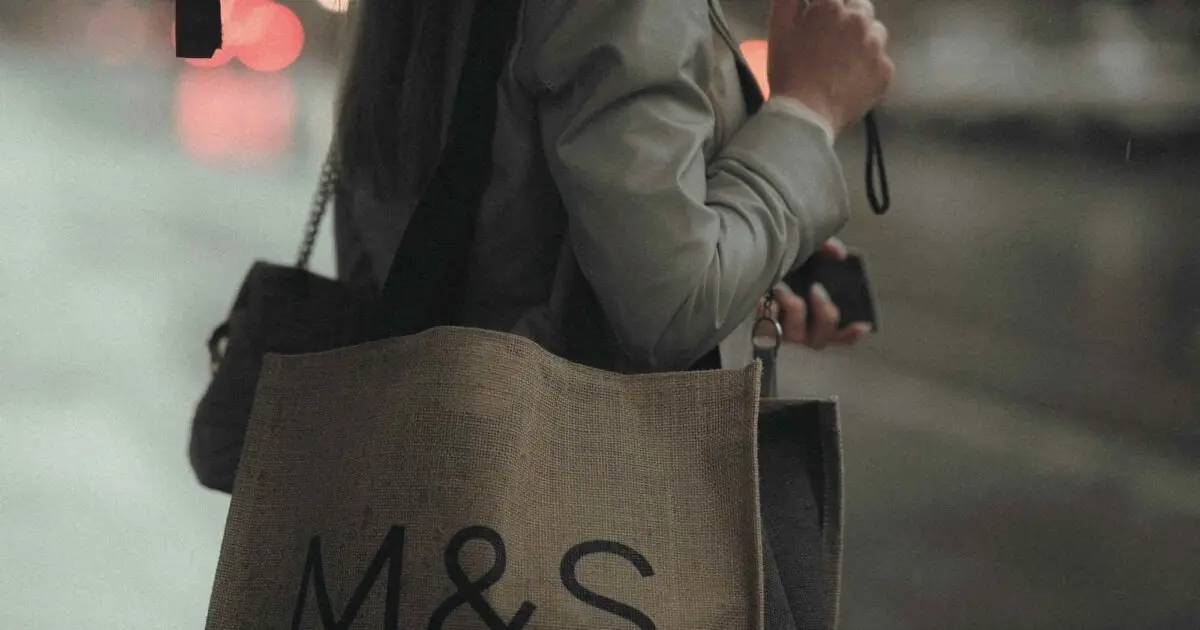
As Marks & Spencer makes its high-profile debut at London Fashion Week with a rapid-fire "see now, buy now" runway format, observers and conscious consumers are asking a pressing question: just how sustainable are the heritage retailer’s everyday practices? To find out, we look to the latest assessment from Good On You, which evaluates brands using a rigorous ratings system tracking impacts on people, the planet, and animals.
Marks & Spencer currently holds a middling "It’s a Start" rating. According to sustainability analysts, this score reflects a brand that is making noticeable efforts to take responsibility for its actions, yet continues to fall short in critical areas. Specifically, the retailer produces immense volumes of clothing, has yet to ensure living wages are paid across its entire supply chain, and has recently embraced faster production cycles that run counter to long-term sustainability goals. This analysis is based on the official Marks & Spencer brand rating published in May 2026 and reflects the retailer’s disclosed practices up to that point.
Marks & Spencer is known for quality, but what about sustainability?
Founded in 1884, Marks & Spencer has spent well over a century evolving into a cherished British institution. Long before it became a fixture of the modern high street, the company established itself as a reliable retailer for food, fashion, and homeware, anchoring local economies and employing thousands of workers. Its financial announcements are frequently scrutinized as broad indicators of the UK’s wider economic health, and over recent decades, the brand successfully expanded its presence overseas.
The company’s cultural footprint in the United Kingdom is undeniable. Phrases born from its marketing campaigns—most notably the iconic tagline, "This is not just food, this is M&S food"—have transcended advertising to become part of everyday vernacular, shorthand for superior quality. Yet that reputation for high-calibre goods creates a complex paradox in the modern retail landscape. In an era increasingly defined by the mounting crises of textile waste and overconsumption, consumers are forced to re-examine how a company can mass-produce clothing on such a massive scale while maintaining a high standard, all while keeping price points accessible.
Walking through any of the brand’s expansive retail locations reveals racks densely packed with garments, prompting inevitable questions about the lifecycle of these items: Where does it all go? What is it actually made from? And crucially, who made it?
To answer these questions, analysts evaluate publicly available corporate disclosures against Good On You’s leading sustainability methodology. The resulting "It’s a Start" score indicates that while the company has taken meaningful steps to mitigate certain environmental impacts, its overarching business model as a major mass producer leaves substantial gaps that remain unaddressed, or at least undisclosed.
Environmental impact
When evaluated for its environmental footprint, Marks & Spencer once again earns an "It’s a Start" designation.
On the positive side of the ledger, the retailer utilizes a selection of lower-impact materials and has publicly stated that it is on track to completely replace virgin polyester with recycled alternatives in its clothing lines by 2026. While shifting away from virgin synthetics is a welcome step, critics and environmental advocates point out that recycled polyester remains a fossil-fuel-derived material that sheds microplastics into water systems with every wash cycle. Given that polyester is the brand’s second most-used material, analysts argue that true environmental leadership would require reducing its overall reliance on the fabric rather than simply swapping its origin.
Simultaneously, Marks & Spencer has invested in reducing greenhouse gas emissions across its manufacturing processes, establishing science-based targets aimed at curbing emissions within both its direct operations and its wider supply chain.
However, the sheer volume of production casts a long shadow over these operational improvements. The brand’s discarded garments have been identified on at least two separate occasions within textile waste dumps in the Global South. Although the company maintains that it does not intentionally export excess clothing, the undeniable presence of its cast-offs in international waste streams highlights the broader consequences of high-volume manufacturing.
To its credit, the retailer has implemented various extended producer responsibility measures. These include a clothing take-back scheme operated in partnership with charity Oxfam, an established repair service, and a one-year guarantee on all children’s clothing designed to encourage durability. Despite these initiatives, sustainability experts maintain that operating on a massive, high-volume production model fundamentally conflicts with long-term ecological stability.
This tension became even more apparent as Marks & Spencer restructured parts of its fashion business to accelerate production timelines. The company introduced a trend-led capsule program designed to move items from the design phase to the final product in as little as two weeks. This acceleration mirrors the foundational mechanics of fast fashion, encouraging rapid overconsumption and placing intense pressure on manufacturing partners. The brand’s September 2026 debut at London Fashion Week further underscored this trajectory, utilizing a consumer-facing "see now, buy now" model that bypassed the traditional six-month industry lag between runway presentation and retail availability.
Labour rights
Labour practices within the Marks & Spencer supply chain receive a similarly moderate "It’s a Start" score from analysts.
The retailer demonstrates transparency in several key areas. More than half of its final production stage facilities are certified by the Sedex Members Ethical Trade Audit Best Practice Guidance, and the brand publicly discloses all of its tier 1 fashion suppliers in collaboration with the Open Supply Hub. Furthermore, the company has implemented targeted initiatives aimed at supporting vulnerable women and girls within its supply networks. During the COVID-19 pandemic, the brand instituted robust policies to protect garment workers, a success leadership attributed to maintaining long-term, stable relationships with its manufacturing partners—widely regarded as an industry best practice.
While these measures set a commendable standard for a major high street retailer, a glaring omission remains: the lack of a guaranteed living wage for workers throughout the entire supply chain. Currently, there is no evidence indicating that workers at every level are paid a living wage, nor has the brand officially adopted a recognized living wage definition. Because fair compensation is a fundamental pillar of social justice and ethical manufacturing, this remains a critical area for future improvement.
Animal welfare
Animal welfare practices at Marks & Spencer also land at the midpoint of the rating scale.
The retailer maintains a formal animal welfare policy aligned with the Five Domains of Animal Welfare. It sources its wool exclusively from non-mulesed sheep and ensures that all leather is procured from finishing tanneries certified by the Leather Working Group. Additionally, the company has set a formal goal to source all of its animal fibers from preferred standards—such as the Responsible Wool Standard, Responsible Mohair Standard, Responsible Alpaca Standard, and Global Recycled Standard—by the year 2030.
Nevertheless, the brand continues to utilize significant quantities of animal-derived materials, including leather, shearling, wool, down, and alpaca, all of which carry inherent risks of animal suffering and environmental degradation. Analysts suggest that the retailer could leverage its substantial purchasing power to accelerate the development and commercial testing of emerging, non-plastic, and cruelty-free alternatives.
Overall rating: "It’s a Start"
Marks & Spencer has clearly invested considerable effort into refining its operational practices over the years, distinguishing itself from many industry peers through relatively robust disclosures. By publishing its tier 1 supplier lists, transitioning toward recycled synthetics, and maintaining clear accountability regarding its targets, the company earned its middling "It’s a Start" rating. Yet, these positive steps are tempered by recent strategic pivots toward accelerated fashion cycles and frequent product drops.
To ascend to higher tiers of sustainability, the retailer would need to rein in the sheer volume of its output and pivot away from the linear "take-make-waste" model driving global overconsumption. Deepening supply chain transparency to encompass raw material producers, further reducing its reliance on animal products, and committing unconditionally to a living wage for every worker involved in production remain essential milestones on that path.
For consumers seeking alternatives that align more closely with high standards of social and environmental responsibility, a variety of independent brands operate across similar retail categories with advanced sustainability models. Retailers such as Toad&Co, Harvest & Mill, Colorful Standard, Sheep Inc, SeamsFriendly, Printfresh, Oobi, and Disruptor London offer diverse apparel, knitwear, children’s wear, and lifestyle products built upon principles of organic sourcing, transparency, and circular design.