





References to gemstones appear throughout the expanse of ancient human history, cited in early writings as decoration, a medium of barter, a marker of wealth, a source of power and magic, or objects of outright adoration. In these earliest surviving records, however, the gem was merely auxiliary to a primary narrative rather than an independent subject of study. It was not until the philosophical and scientific inquiries of Aristotle that the physical world and its constituent parts were deemed worthy of systematic documentation.
Aristotle’s division of philosophy into distinct branches—logic, metaphysics, physics, ethics, politics, and art—fostered a structured approach to examining nature. Concurrently, the natural world was conceptualized into foundational elements: earth, water, air, fire, and ether. This paradigm shift allowed gemstones to be classified, described, and measured by their physical properties. The nascent study of gems and minerals began as an exercise in observation, the cataloging of geographic sources, and the recording of prevailing legends and folklore. Early texts sought to synthesize all available knowledge of the era, frequently blending rigorous empirical observation with persistent pseudoscience. As the natural sciences matured, specialized disciplines such as mineralogy and gemology slowly emerged from this colorful backdrop.
Origins
Theophrastus, a student of Plato and the successor to Aristotle as head of the Peripatetic school of philosophy, authored what is recognized as the first known treatise dedicated entirely to gemstones. Living from approximately 372 to 287 B.C., his work Peri Lithon (Of Stones) survives today only in a fragmented state. This early synthesis of Aristotelian physics and metaphysics served as the source material for centuries of subsequent lapidary lore. Over the centuries, the text has seen multiple scholarly translations, moving from John Hill’s initial English translation to modern interpretations by E. R. Caley alongside J. F. C. Richards, and subsequently by D. E. Eichholz.
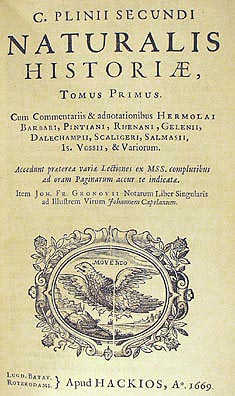
A few centuries later, the Roman author and historian Gaius Plinius Secundus—widely known as Pliny the Elder—compiled his monumental thirty-seven-volume Naturalis Historia (Natural History) in 77 A.D. Drawing from an estimated two thousand distinct sources, Pliny’s work embraced natural history in its broadest possible sense, encompassing astronomy, geography, meteorology, fine arts, human inventions, and social relations. Today, it stands as an indispensable window into life and thought during the first century.
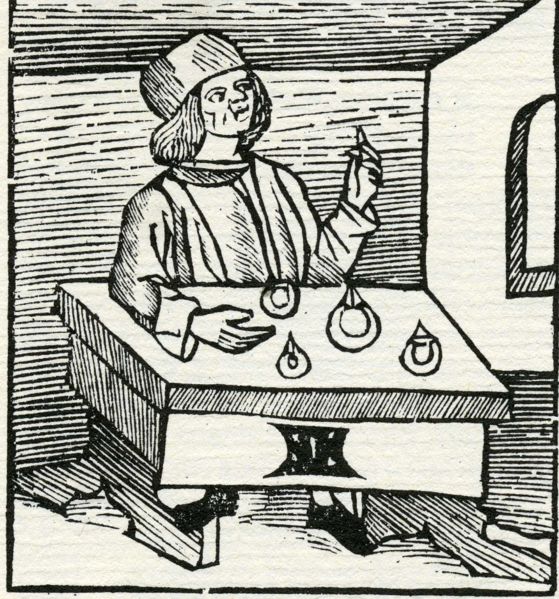
Much of Pliny’s documentation regarding gemstones, however, relied on secondhand accounts rather than direct personal observation, drawing from historical sources now lost to antiquity. His methodology frequently involved grouping disparate stones by color, mining origin, or legendary attributes. These collected myths and the assumptions drawn from them formed the bedrock of medieval literature on the subject. For the first thirteen centuries of European history, Pliny remained the most frequently cited authority on gems, his assertions repeated without question across generations. While subsequent writers frequently embellished his texts with speculation, Pliny’s genuine attempts to classify stones by color and external features marked an important early milestone. For instance, he grouped all green stones under the Latin term smaragdus, encompassing emeralds, green sapphire, turquoise, smithsonite, malachite, jasper, and even glass. Yet, he also demonstrated flashes of acute observation, notably recognizing the fundamental connection between beryls and emeralds. Over two hundred and fifty editions of his classic text have since been published in numerous languages, beginning with the first complete edition printed in Venice in 1469.
Christian Lapidaries
As Christianity spread across the Roman Empire and into the medieval era, scholars began integrating biblical themes with the lore of precious stones. Saint Epiphanius, Bishop of Constantia in Cyprus, authored the first treatise addressing the gemstones mentioned in scriptural texts around the fourth century. His work provided a foundational model for treating biblical gems in later lapidaries, offering early interpretations of the twelve stones embedded in the Breastplate of Aaron.
While the Church officially discouraged pagan worship and magical practices, medieval Christians retained a deep-seated fascination with the supposed supernatural properties of gemstones. This interest found a socially acceptable outlet through a focus on biblical lists, such as the stones of the Breastplate and those forming the foundation of the New Jerusalem. Epiphanius’s writings circulated widely in manuscript form before being printed in full within Conrad Gesner’s 1565 publication De Omne Rerum Fossilium.
During the sixth century, Isidore, Bishop of Seville, compiled his encyclopedic Etymologiarum sive Originum Libri XX (Etymologies). Intended primarily as a reference dictionary, it gathered over a thousand manuscripts detailing contemporary knowledge. His descriptions and classifications of gemstones served as a standard reference for scholars well into the twelfth century.
By the eleventh century, the medieval scholar Marbod, Bishop of Rennes, produced Libellus de lapidibus, also known as Lapidaire en Vers. Written in verse and drawing heavily on earlier works attributed to mythical figures and Roman writers like Solinus and Isidore, the text became the definitive medieval guide to the marvelous properties of stones. Its immense popularity is evidenced by the survival of more than one hundred and sixty Latin manuscripts and numerous vernacular translations.
In the thirteenth century, Albertus Magnus sought to reconcile Aristotelian philosophy with Christian theology at the University of Paris. His treatise De Mineralibus represented an ambitious attempt to organize the science of mineralogy, attempting to explain mineral formation and the causes of gemstone colors, even while retaining a generous measure of medieval mysticism. Concurrently, King Alfonso X of Castile and Leon composed a major work connecting gemstones to astrology, classifying gems by color and assigning them to zodiac signs based on complex astronomical tables.
Introduction of the Scientific Method
The dawn of the sixteenth century brought a gradual shift toward more rigorous methodologies. Camillus Leonardus, an Italian physician from Pesaro, published Speculum Lapidum in 1502, applying more systematic observations to physical properties such as hardness, specific gravity, and color, even though he still maintained that the therapeutic virtues of gems were enhanced by ritual engraving.
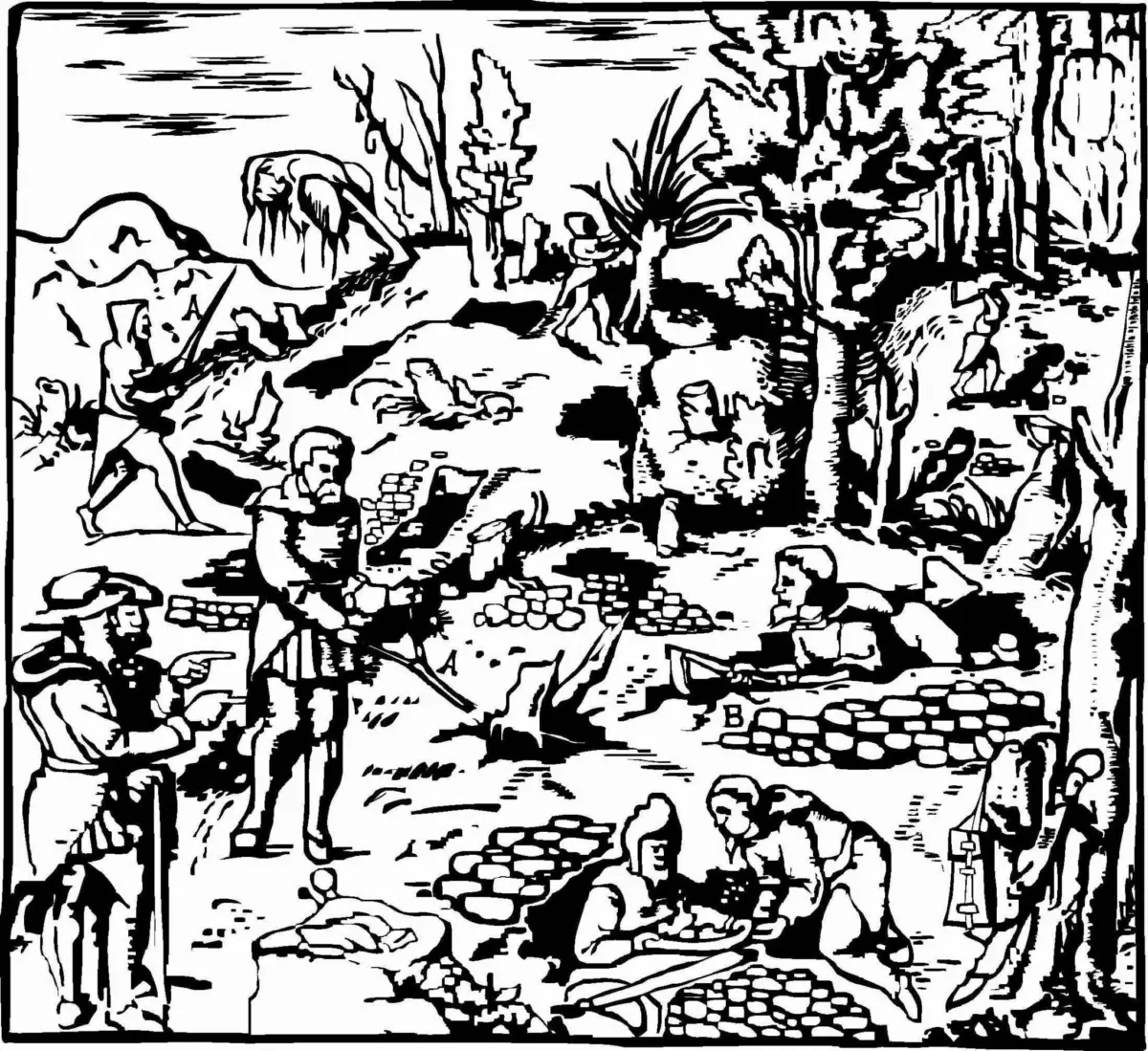
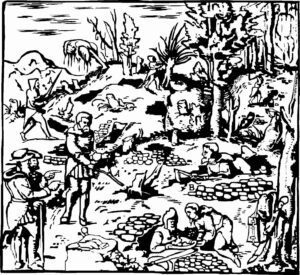
True structural advances in mineralogy arrived with Georgius Agricola, widely regarded as the father of modern mineralogy. His 1546 work, De Natura Fossilium, displayed a sophisticated, firsthand understanding of gemstones. Agricola utilized rudimentary scratch tests for hardness and provided exceptionally precise physical descriptions that hold up remarkably well by modern standards.
Conrad Gesner’s 1565 compilation further advanced the field by incorporating illustrations of crystals, fossils, and cut gems via woodcuts. However, Gesner also cemented a legacy of trade misnomers based on color and geography—such as calling tourmaline the "Brazilian emerald" and green sapphire the "Oriental emerald"—conventions that persist within the jewelry industry today.
Anselmus Boëtius de Boodt, physician to Emperor Rudolph II, published Gemmarum et Lapidum Historia in 1609. De Boodt introduced a five-tier hardness scale, speculated on atomic structures, and expressed open skepticism regarding the supposed magical and medicinal properties of gemstones, marking a watershed moment in empirical gemology.
The publication of Ulyssis Aldrovandi’s Musaeum Metallicum in 1648 utilized the term geologia in its modern context, signaling a definitive split between the emerging science of mineralogy and the enduring romance of gem lore. As historian F. D. Adams observed, medieval mineralogy was gradually replaced by a true science rooted in direct observation of the earth’s crust.
Scientific inquiry deepened further in England with Thomas Nicols publishing the first major English lapidary in 1652, followed by Robert Boyle’s 1672 treatise, An Essay About the Origine and Virtues of Gems. Boyle applied advanced physical principles to crystal formation, dismissed the internal medicinal use of insoluble gemstones, and advocated for hydrostatic weighing to determine specific gravity as an identification tool. Dr. Robert Pitt reinforced these conclusions in 1703, demonstrating through simple observation that ingested stones pass through animals entirely unchanged.
Modern Gemology
By the eighteenth century, mineralogy and geology were firmly established as empirical sciences, driven by specialized instrumentation and meticulous documentation. However, commercial gemology remained closely tied to the retail jewelry industry, where the romance, legend, and lore of stones continued to drive trade.
A significant revival of interest in the romantic and historical aspects of gemology occurred in the late nineteenth and early twentieth centuries through the work of Dr. George Frederick Kunz. Serving as a gemological consultant to Tiffany & Co. and as curator at the American Museum of Natural History, Kunz cataloged North American gemstones and published enduring collections of historical pseudoscience, including The Curious Lore of Precious Stones and The Magic of Jewels and Charms.
Professionalism was permanently instilled into the modern trade with the establishment of the Gemological Institute of America in 1931 and the American Gem Society in 1934 by Robert M. Shipley. These institutions introduced standardized grading, educational rigor, and reliable consumer protection, supported by ongoing research published in the GIA’s quarterly journal, Gems and Gemology.
Today, after more than two millennia of evolving research, the study of gemstones continues to bridge the gap between empirical science and human fascination. While modern metaphysics and alternative healing practices maintain a steady cultural presence, they rest upon a rich, historical foundation built by centuries of scholars, physicians, and scientists who sought to understand the enduring mysteries locked within the earth’s most treasured minerals.