




Ancient trade routes were far more than mere economic corridors for the exchange of commodities. They functioned as sprawling, dynamic networks connecting distant civilizations through shared objects, ritualistic practices, and evolving visual languages, fundamentally challenging modern assumptions about rigid cultural boundaries. This profound historical reality sits at the heart of Global Antiquity: Cultural Interactions in Afroeurasian Space 600 BCE–1000 CE, a landmark exhibition currently on view at Fondazione Prada in Milan. Running through March 1, 2027, the exhibition brings together a breathtaking collection of artifacts spanning four continents and sixteen centuries of Eurasian and North African history.
Global Antiquity at Fondazione Prada Milan
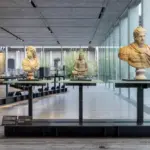
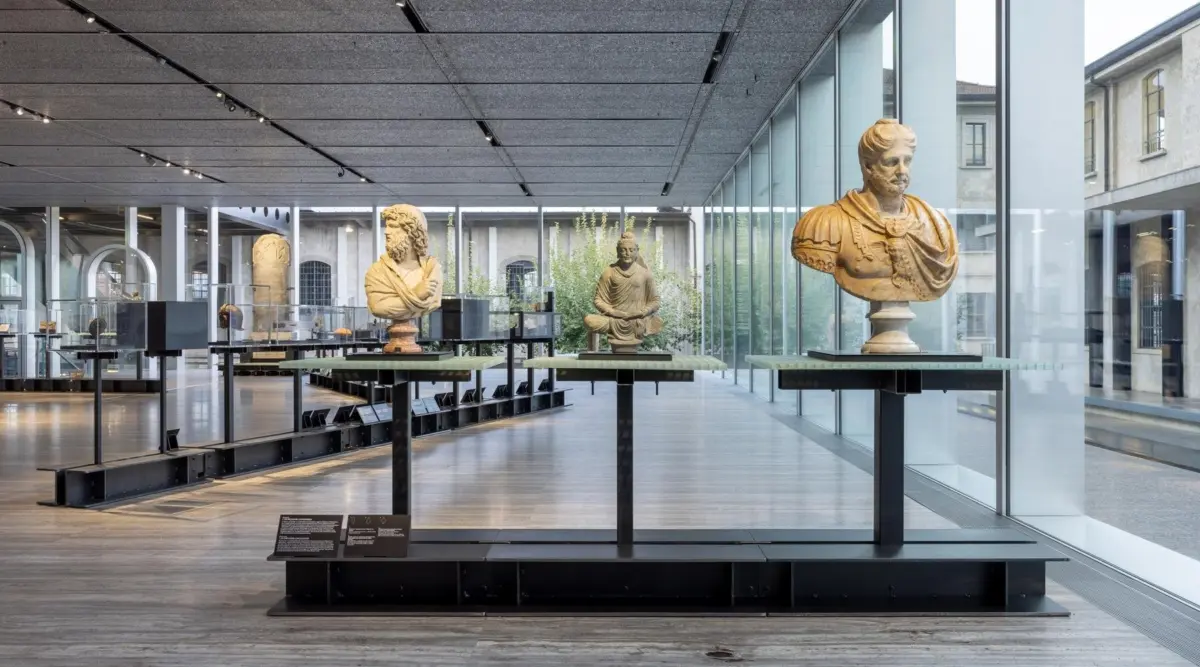
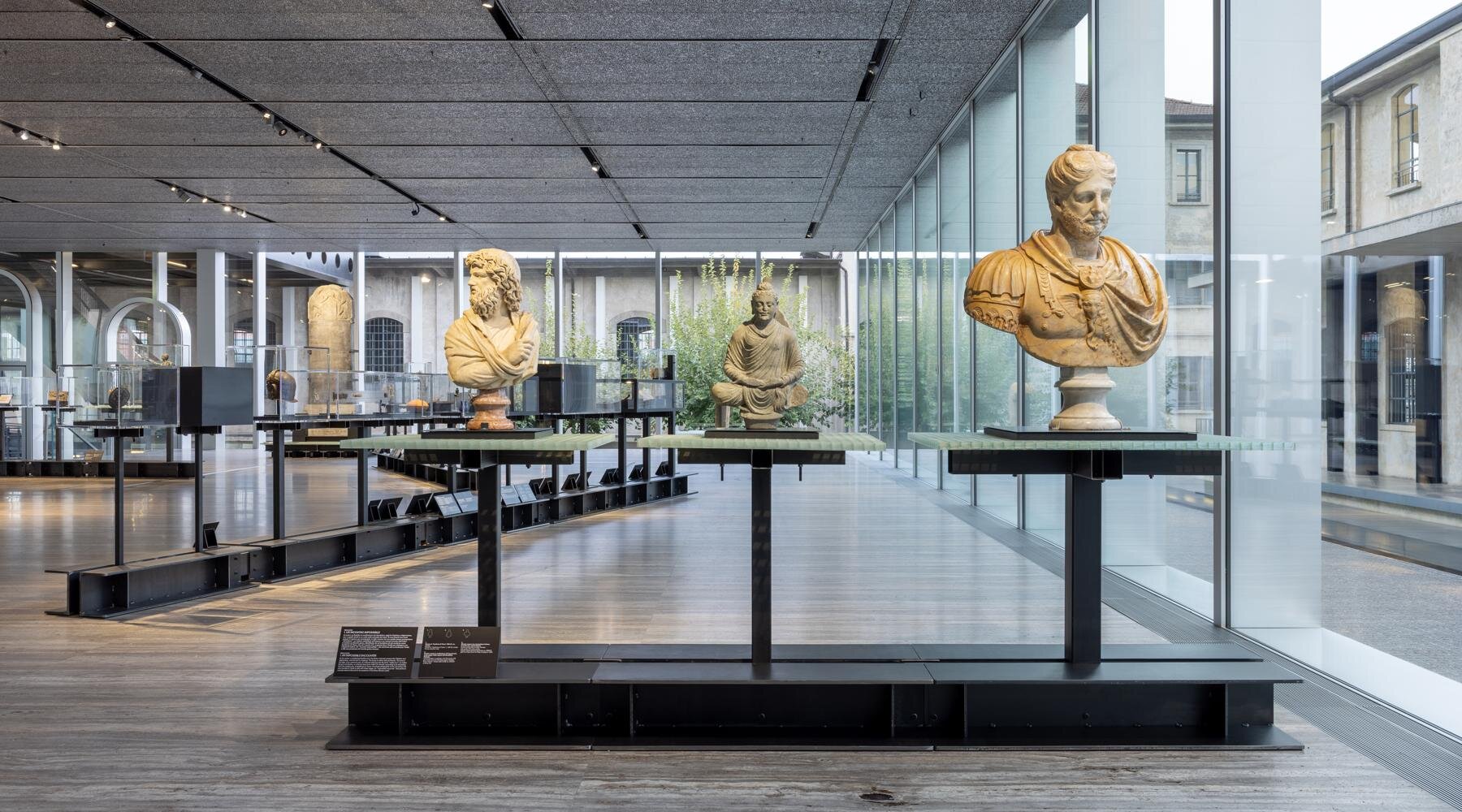
The exhibition opens with a striking conceptual epilogue titled ‘An Impossible Encounter.’ Formed by a trio of ancient busts, the installation features two figures that are presumably Roman men flanking a meditating Buddha from the Gandhara region of Pakistan. Although these sculptural portraits originate from worlds far apart geographically and culturally, the occidental forms carry distinct traces of the figure at their center. One Roman bust is carved with an ‘Indian bun’ atop its head in marble, while another depicts a Greek philosopher who historically encountered Indian sages during the first century CE.
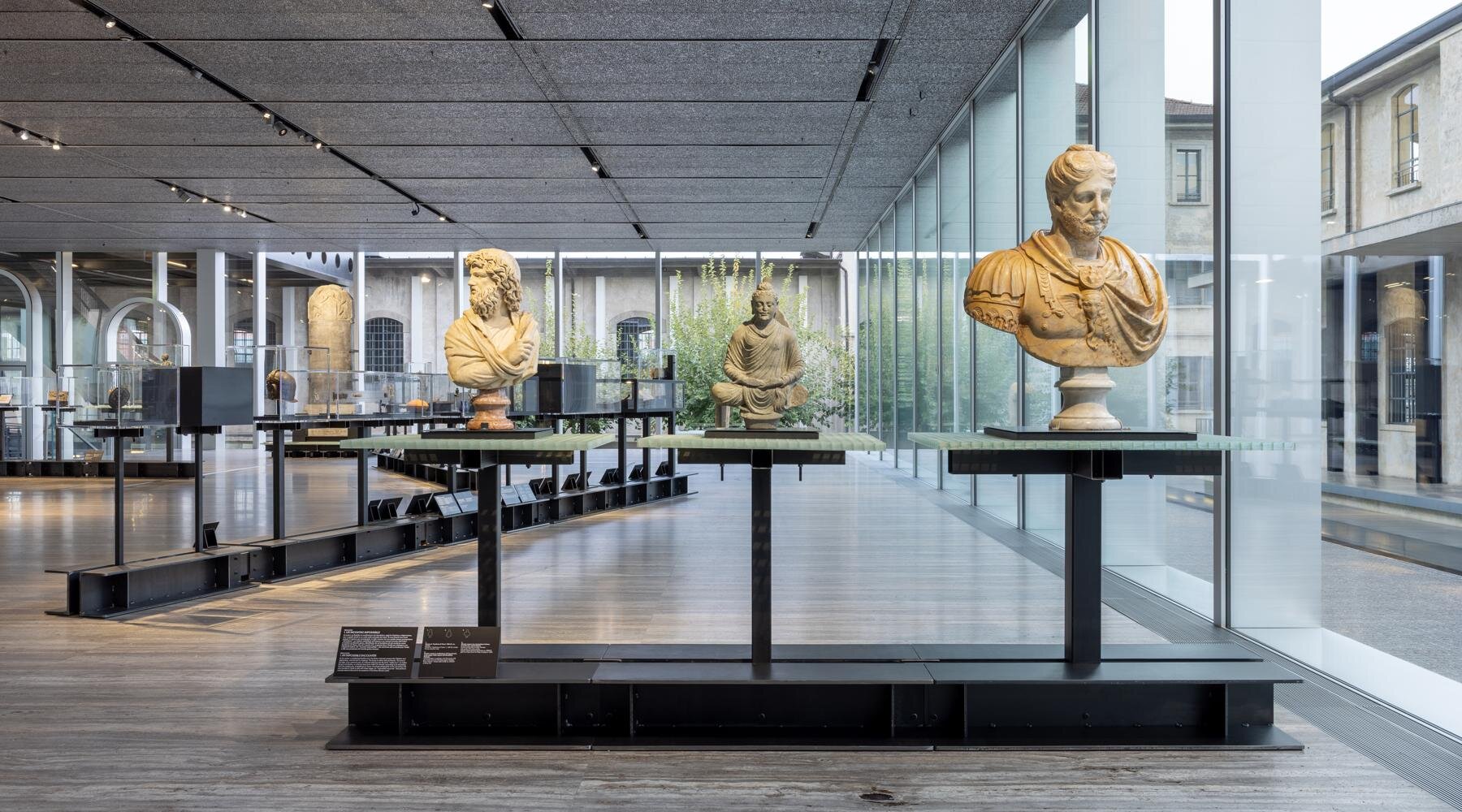
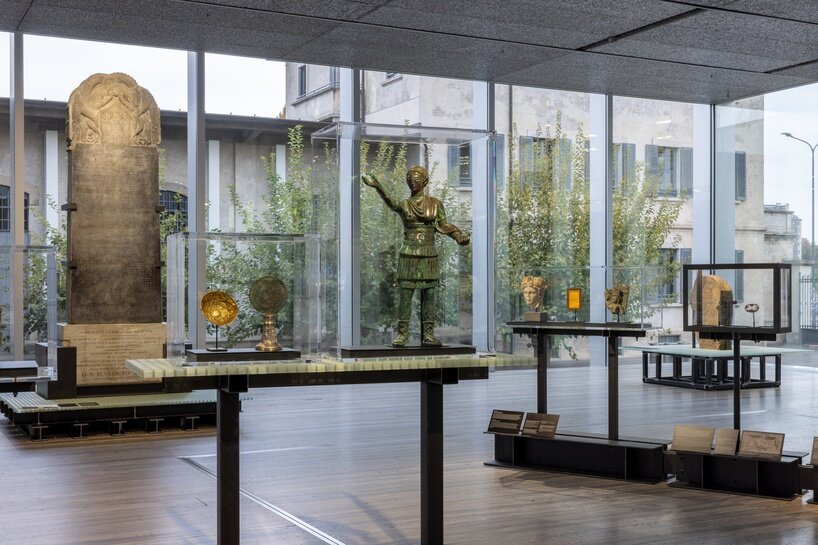
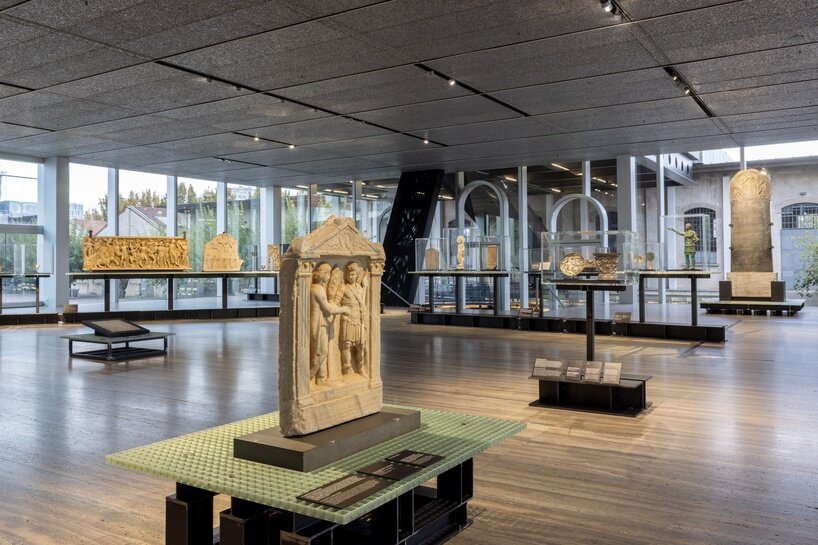
Designed by architect Rem Koolhaas alongside Giulio Margheri and the AMO/OMA team, the exhibition layout honors the distinct requirements of each artifact. Commenting on the curatorial selection of textiles, coins, and steles, Koolhaas remarked that “each and every object has its own demands and comes with its own protocol and its own complexity.” This observation highlights the dense material and referential history embedded in the collection. Brought to Milan from international institutions, these artifacts contain traces of what modern observers might define as an ‘other’—a world that feels extraordinarily distant. Yet, through the physical links forged along ancient trade routes, these objects reveal a persistent human desire to connect across boundaries, cultures, and expansive stretches of time.
Édouard Glissant, Globality and Globalism
Visitors entering the exhibition space are greeted by a prominent quote from cultural theorist Édouard Glissant, addressing the crucial distinction between globality and globalization. In a 2011 conversation with Hans Ulrich Obrist, Glissant explained that while globalization refers to contemporary international relations driven by extraction, which tends to “standardize and dilute,” globality offers a more optimistic perspective. Globality examines how the historical meeting of cultures—most notably those of antiquity—can serve as a generative and unifying event rather than a homogenizing force.
The exhibition is curated by Salvatore Settis, Anna Anguissola, and Chiara Ballestrazzi. In an essay titled The Memory of Things and the Fabric of Archaeological Discourse featured in the exhibition catalogue, Settis elaborates on the philosophical weight of the displays. He writes that “it is this memory-laden materiality that reveals itself to be ever more necessary today, as we scrutinize the rubble of the world in order to dig up something worth preserving and handing down.”
Tracking Wine and Gems Across the Globe
The thematic section dedicated to migrations opens with a vivid nod to Greek mythology, noting how “escorted by a retinue of satyrs and maenads, Dionysus conquests India.” To trace the vast diffusion of wine and its accompanying cultural traditions across Eurasia, the exhibition displays a remarkable selection of drinking vessels that mirror the material culture of tables and gathering spaces across the continent.
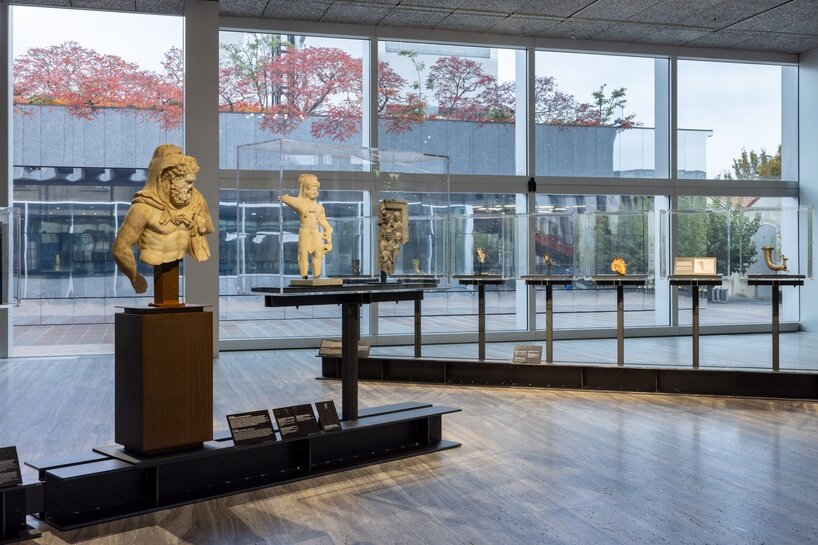
The sequence begins with a rhyton—a distinctive conical drinking container fashioned from pottery and discovered within an Italian necropolis. As visitors follow the geographical trajectory of these cups to Greece, Ukraine, Iranian Azerbaijan, and China, a familiar horn-like shape and animal motif reappear consistently. It creates the impression that not only fermented spirits but an entire procession of mythological forest creatures accompanied ancient traders and travelers across the region.
Elsewhere in the exhibition, objects recovered from Roman funerary sites are exhibited in all their bejeweled splendor. One prominent burial site belonging to two young women yielded ivory dolls and gem-bearing jewelry styled in an aesthetic typical of the East, pointing toward their likely origins within a Syrian community in second-century Rome. Another burial near Rome contained an ornamental headband adorned with precious stones originating from Southeast Asia and Sri Lanka. These artifacts reflect a striking tenderness and worldly glamour, illustrating the immense value placed on globe-spanning objects deemed important enough to accompany their owners into the afterlife.
Influence Spread Across Space and Time
Standing before this extraordinary gathering of artifacts, viewers encounter a palpable sense of ‘contamination’—an experiential imprint left on each object that challenges traditional perceptions of rigid boundaries between ancient societies. However, a secondary layer of contamination occurs within the Fondazione Prada galleries: the intersection between the collective historical past embodied by these objects and the contemporary moment. This modern-day convergence fosters a sense of optimism, serving as a reminder that the world, despite its vastness, is deeply interconnected.
While the exhibition brilliantly illuminates the generative effects of intercultural exchange, it notably bypasses a detailed exploration of how wars, conflicts, and violent conquests also fueled these clashes and meetings of cultures. Instead, the curatorial framework deliberately prioritizes historical trade routes as the primary conduit for interaction. Nevertheless, the inclusion of Glissant’s nuanced theories on globality and globalization introduces a subtle acknowledgment of the inherent potential for conflict and destruction alongside cultural synthesis.
Privileging Globality
By highlighting this historical duality, the exhibition imparts a sense of responsibility on the contemporary viewer to remain cognizant of how they navigate an interconnected world. The visible evidence of historic globality represents one side of the coin, while the flip side reflects the warning issued by Glissant in his introductory quote: a modern globalization that “reduces communities to a single model, attacking them from the top down, diminishing them.”
This tension gains contemporary urgency through exhibition labels inside certain glass cases noting that, despite the institution’s best logistical efforts, it was ultimately impossible to secure the loan of a selection of cultural objects from Kyiv, Ukraine, due to ongoing geopolitical conflict.
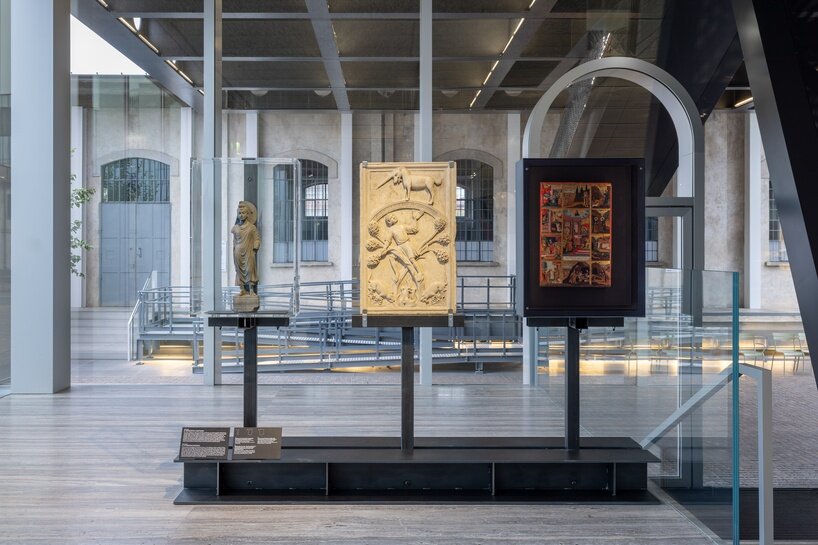
Across language, dress, food, and ritual, every generation, culture, and empire acts as a unique instantiation of humanity, passing down its parables through material history. Humanity currently exists in a perpetual state of posthumanism—an era defined by what follows countless preceding chapters of civilization. With the privilege of studying these preserved objects, contemporary society bears a clear responsibility to continually reflect on the past, not only to avoid repeating historical errors, but to actively sustain the richness of the human experience.
Global Antiquity: Cultural Interactions in Afroeurasian Space 600 BCE–1000 CE is on view at Fondazione Prada in Milan through March 1, 2027. The exhibition is curated by Salvatore Settis, Anna Anguissola, and Chiara Ballestrazzi, with spatial design by Rem Koolhaas, Giulio Margheri, and the AMO/OMA team.