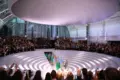
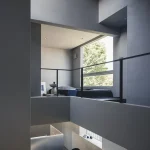





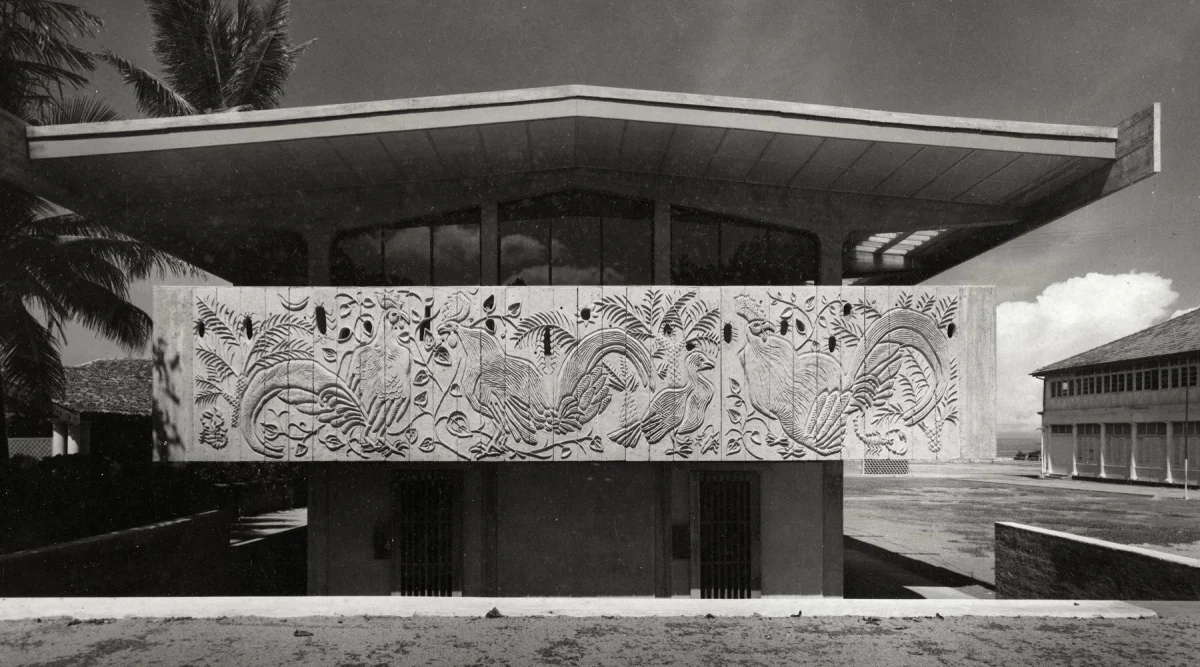
From the lush, experimental landscapes of the Lunuganga garden to the monumental civic scale of the Sri Lankan parliament, a major new retrospective at the Vitra Design Museum is offering international audiences a profound look into the work of one of the 20th century’s most defining architectural voices. Titled Geoffrey Bawa: Architecture for the Senses, the exhibition explores the dynamic, evolving world of the renowned Sri Lankan architect, tracing a career that profoundly shaped how a newly independent nation envisioned its relationship with history, modernity, and place.
Running from September 26, 2026, to February 28, 2027, at the museum in Weil am Rhein, Germany, the exhibition is organized by the Vitra Design Museum, M+, and the Wüstenrot Foundation, in close collaboration with the Geoffrey Bawa Trust. It arrives as part of designboom’s Spectator and Spectacle chapter—a series presented in partnership with SolidNature that examines how wonder is built and how architecture can alter human perception and disrupt the everyday.
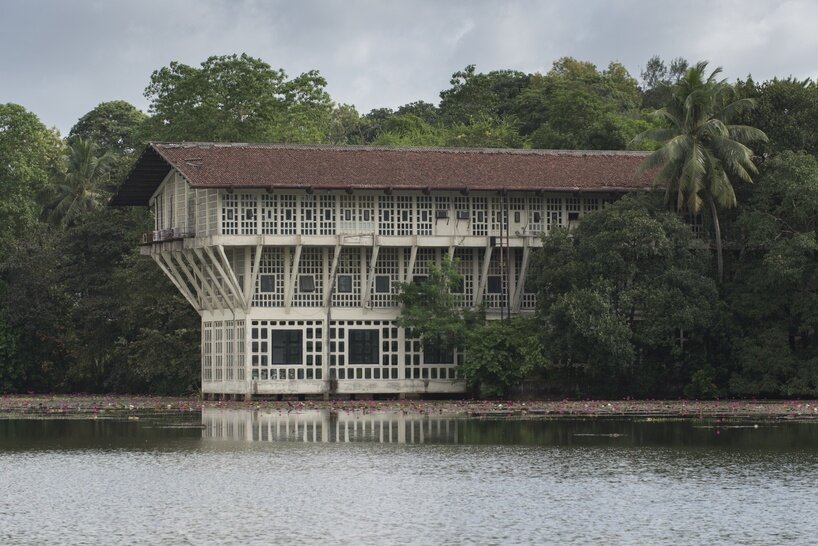
Geoffrey Bawa: Architecture for the Senses at Vitra
Born on the island country in 1919, Geoffrey Bawa spent much of his early life traveling extensively, particularly across Europe. Although he was notably tempted to settle in Italy, Bawa ultimately chose to return to his place of birth. Upon his return, he decided to pursue a career in architecture—a pivotal professional pivot that closely mirrored Sri Lanka’s transition toward independence from British colonial rule.
Bawa occupied a unique vantage point, serving as both a participant in and a key spectator of the profound historical shifts unfolding around him. Writing in the exhibition catalogue essay, In Time: The Architecture of Geoffrey Bawa, Shayari De Silva observes: "In the tropical heat and humidity of Sri Lanka, the progression of decay over time is palpable and indefatigable. Bawa realized this early in his career." De Silva goes on to describe how even his earliest structures were engineered to actively respond to the country’s relentless rain and humidity.
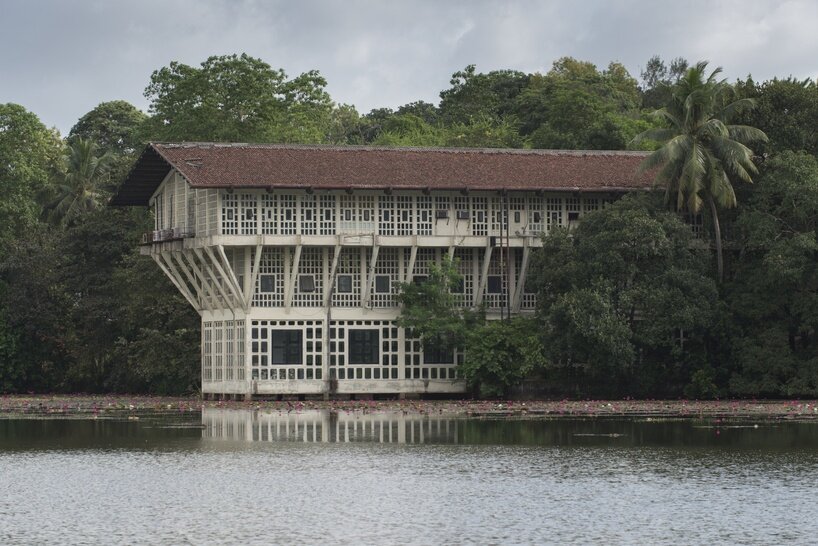
This sensitivity to climate reveals a parallel movement between Bawa’s built work and Sri Lanka’s broader path toward self-definition in the wake of colonial rule. Across his residential designs, hotels, and public commissions, Bawa cast a discerning gaze on his homeland, observing closely how the nation shifted in response to changing political factions, foreign influences, and an innate, collective desire to move forward into a modern era.
‘Tropical Modernism’ and Its European History
Bawa (1919–2003) is widely celebrated as a central steward of the "Tropical Modernism" movement. This architectural phenomenon seamlessly blended indigenous traditional forms with the prevailing aesthetics of modernism, which had first gained international prominence in the 1920s through the influence of the Bauhaus. The Vitra exhibition injects vital nuance into this narrative, inviting viewers to look beyond simplified historical labels.
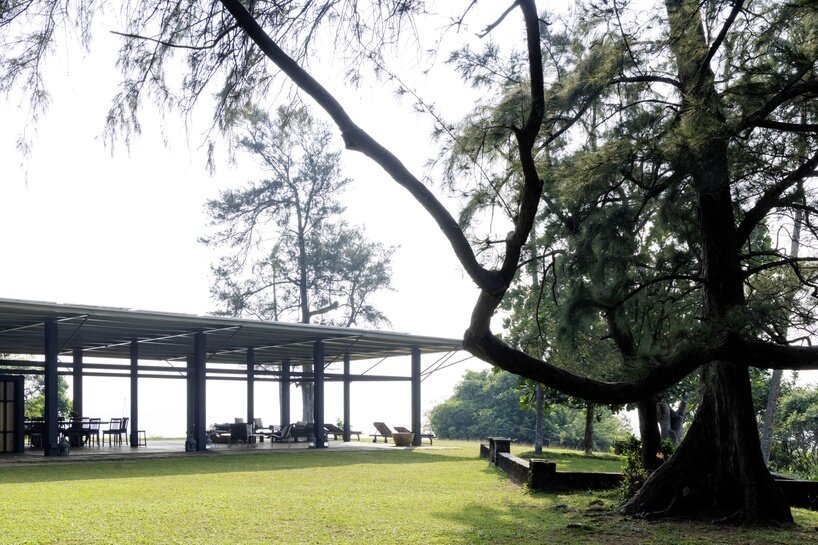
Prior to liberation, Sri Lanka’s built environment was dominated by hulking, English-style colonial buildings, easily recognizable by their heavily ornate decorations and light-colored facades—a visual language imported directly by the occupying power. The departure of British administration left a vast spatial and cultural vacuum, opening up a crucial opportunity for an entirely new architectural identity to take root.
However, the exhibition makes clear that Tropical Modernism was not simply an unmediated import to Sri Lanka or other regions in the so-called "Tropics." Rather, it represented a critical adaptation of European modernist architectural principles, diffused throughout tropical territories by figures such as Maxwell Fry and his wife, Jane Drew. As the Victoria and Albert Museum (V&A) has adeptly noted, the very concept of "The Tropics" carried deep problematics. It defined a vast geographical zone spanning the equator and covering roughly 40 percent of the world’s surface—a sweeping colonial designation that encompassed most territories of the British Empire while entirely ignoring crucial regional variations in climate, as well as distinct local cultures and traditions.
Bawa’s Contribution to the Movement
Within Sri Lanka’s newly independent state, Bawa astutely distilled the most effective elements of modernism—such as the deliberate rejection of Eurocentric ornamentation—while pioneering methodologies that were specifically tailored to his distinct geographic and cultural context.
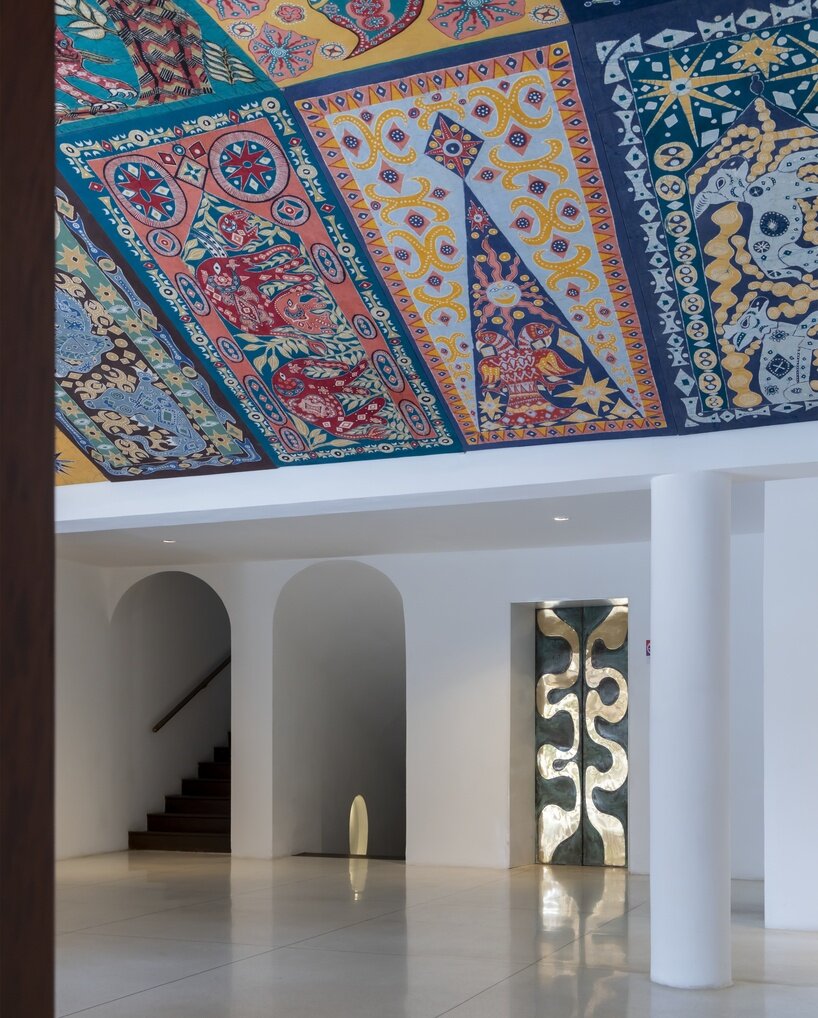
A recurring, essential thread woven throughout the Vitra exhibition is Bawa’s ongoing collaboration with local creatives, artists, and craftsmen who practiced and disseminated indigenous craft traditions. Figures such as Ena de Silva, Laki Senanayake, and Barbara Sansoni left an indelible mark on his projects. Visitors to the exhibition encounter vibrant, colorful batik works that echo their prominent integration into Bawa’s architectural projects, such as the expansive, technicolor ceilings found within the Bentota Beach Hotel.
The Link Between Environment and Structure
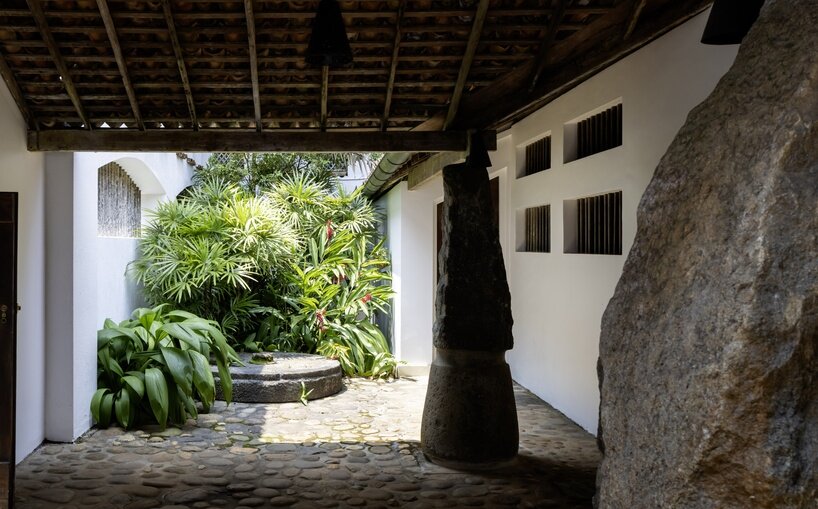
The deep symbiosis between the natural environment and human-made structures is vividly captured in the exhibition. A large-scale three-channel video installation by Kavindu Sivaraj moves fluidly through the natural landscapes surrounding Bawa’s projects, immersing the viewer in the lush scenery that became entirely inextricable from his overarching design language.
Bawa’s entry into architecture itself was rooted in the landscape. Legend has it that upon returning to Sri Lanka, he initially set out simply to create a sprawling garden on his property. When he realized he lacked the technical expertise required to execute his ambitious vision, he resolved to formally study and pursue architecture.
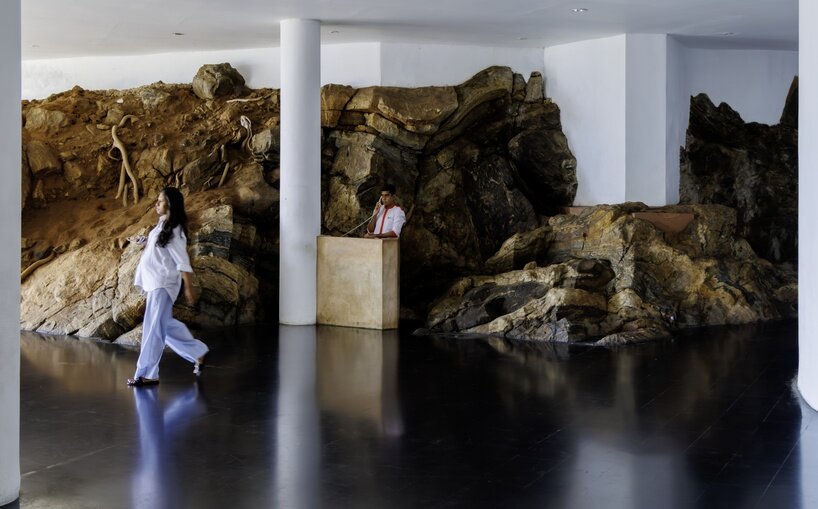
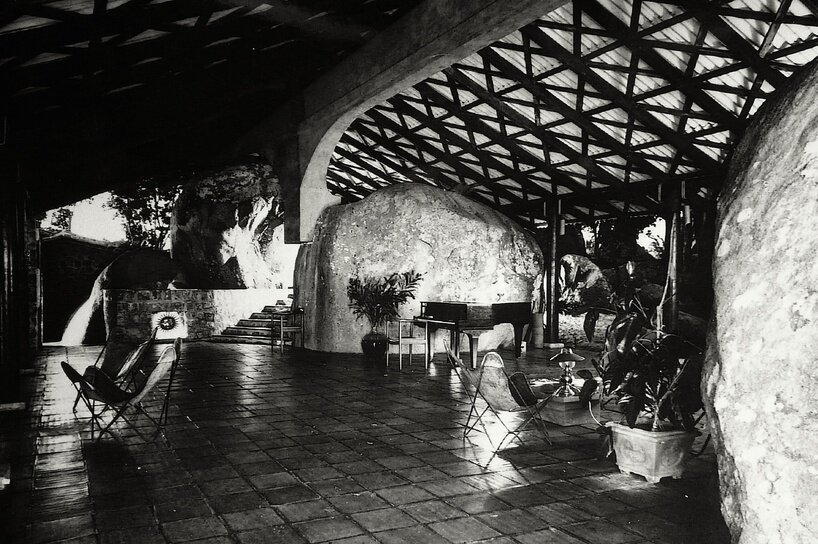
The opening section of the exhibition highlights this foundational phase, showcasing his country estate and personal sanctuary, Lunuganga in Bentota (developed between 1948 and 2003), alongside his Colombo townhouse, Number 11 (1958–1969). These spaces function as vital laboratories, revealing how Bawa successfully merged historical influences, local environmental context, and his own evolving personal style.
The Sri Lankan Parliamentary Building
During his lifetime, Bawa achieved an honor bestowed upon very few architects: he was commissioned to design and lead the construction of his nation’s premier civic monument, the Sri Lankan parliamentary building. Completed in 1982 near the capital city of Colombo, the complex looks out over a serene, man-made body of water.
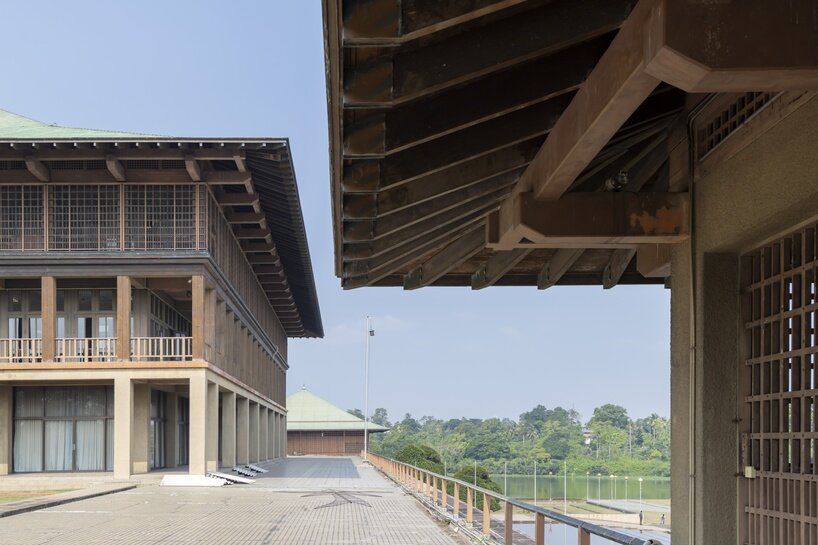
The parliament draws heavily upon both international modern styles and local vernacular architecture. The exhibition catalogue aptly describes the landmark as "a floating ensemble of pavilions that appear to rise from the water." Reflecting on Shayari De Silva’s insights, a particular sentiment stands out regarding Bawa’s philosophy: he was never precious about existing or historical styles, instead choosing to seamlessly marry the language of the past with the functional needs of the present.
It is precisely through this fluid, unencumbered view of time, history, and the future that Bawa was able to use his architecture to crystallize Sri Lanka’s unique position in the wider global landscape during the second half of the 20th century.
Geoffrey Bawa: Architecture for the Senses is on view at the Vitra Design Museum in Weil am Rhein through February 28, 2027.