





Right now, art enthusiasts and collectors alike could certainly use a moment of inspiration and a tangible treat. Finding a terrific piece of contemporary art jewelry to add to a personal collection is not only a rewarding indulgence for oneself, but it also serves as a vital way to celebrate and directly support the visionary artists and the dedicated international galleries that champion their work.
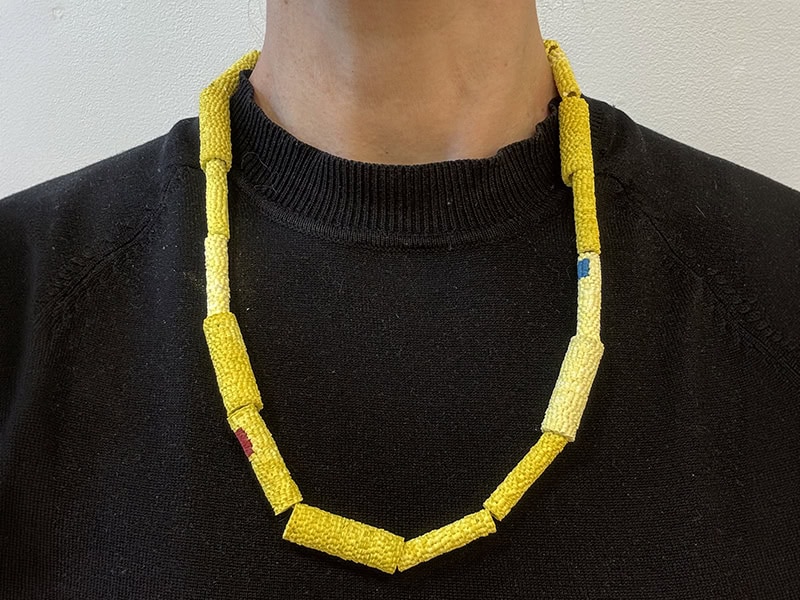
As part of its ongoing commitment to the global creative community, the Art Jewelry Forum (AJF) has released the first part of its October 2026 On Offer series. This bi-monthly curation allows AJF’s extensive network of international gallery supporters to showcase extraordinary pieces personally selected to tempt, provoke, and inspire collectors. From delicate studies in geometry to bold socio-political statements rendered in unexpected materials, this edition presents a diverse array of wearable art that highlights the breadth of contemporary jewelry design today.
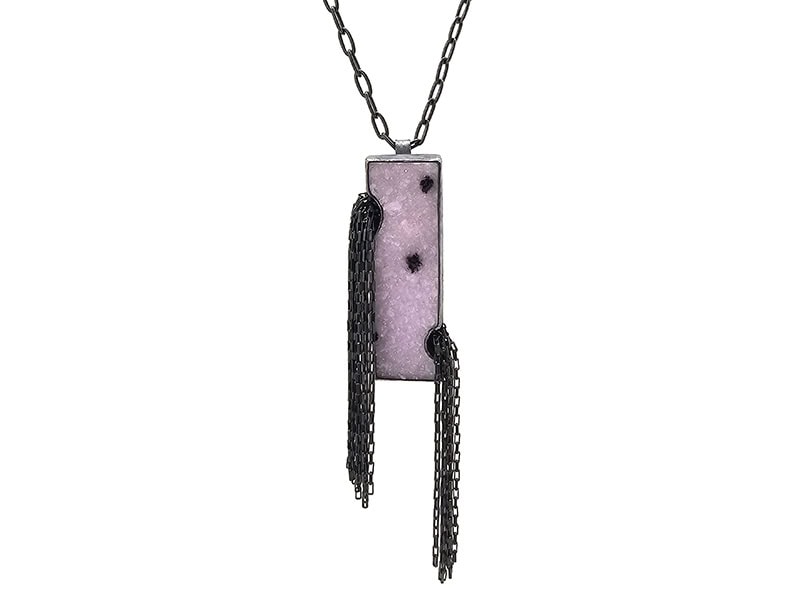
Kicking off the collection at Pistachios Contemporary Art Jewelry in Chicago, Illinois, artist Heather Guidero presents a stunning brooch and necklace combination crafted from oxidized sterling silver and highlighted by a vibrant, sparkling lilac-colored druzy. Priced at US$1,695, the one-of-a-kind piece features handmade oxidized sterling silver tassels that impart a remarkable sense of movement to the work. Designed with versatility in mind, the piece includes a bail, allowing the substantial pendant to transition seamlessly from a lapel brooch to an elegant necklace measuring approximately 18 inches long.
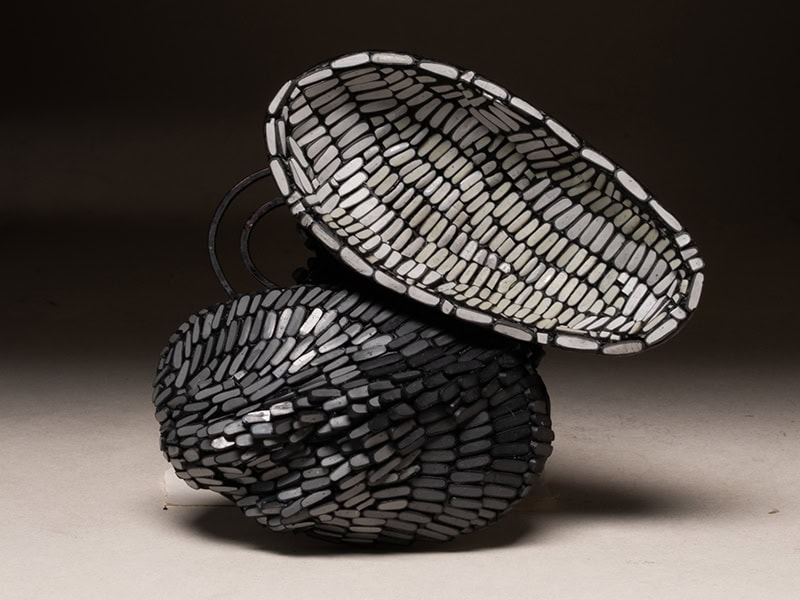
Moving from the American Midwest to the conceptual realm of wearable sculpture, the Wearable Art Museum presents Perch, a 2026 brooch by the collaborative duo 2Roses. Priced at US$750, the piece is constructed from polymer clay and stainless steel, measuring 4 x 4 x 1.5 inches. The sculpture pairs two hollow forms meticulously covered in polymer clay tesserae, each individually cut and finished to create a shimmering surface that shifts and catches the light with the wearer’s movement. One form is dark and closed, while the other is pale and open, artfully tipped against the first in a state of permanent tension and balance. According to gallery director Lisa M. Berman, the wearer actively completes the artistic composition by deciding precisely where on the body the piece is positioned and at what angle, ensuring that every placement fundamentally recomposes the work.
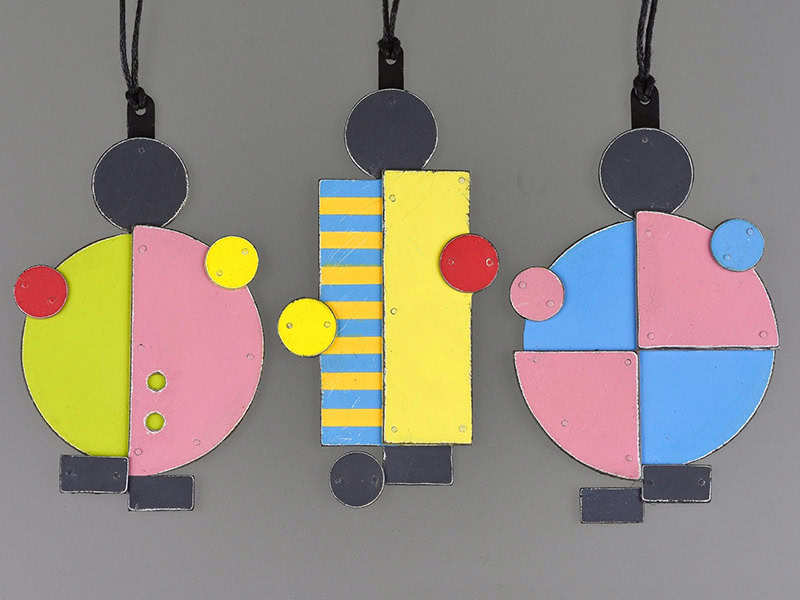
In Auckland, New Zealand, Fingers Gallery is featuring the work of Becky Bliss, a contemporary jeweler who initially trained as a graphic designer. Bliss, whose distinguished career includes selection for the prestigious Schmuck special exhibition in Munich in both 2015 and 2020, presents Play Time, a series of three pendants created in 2024 from mild steel, sterling silver, paint, and cord. Priced at NZ$750 each, the pendants draw inspiration from the foundational building blocks of child development formalized by Friedrich Froebel in the early 19th century. By playfully reinterpreting Froebel’s circles, squares, and triangles, Bliss explores color, form, and gender subversion, utilizing endless combinations to demonstrate the fluidity of youth and the boundaryless expression inherent in play.
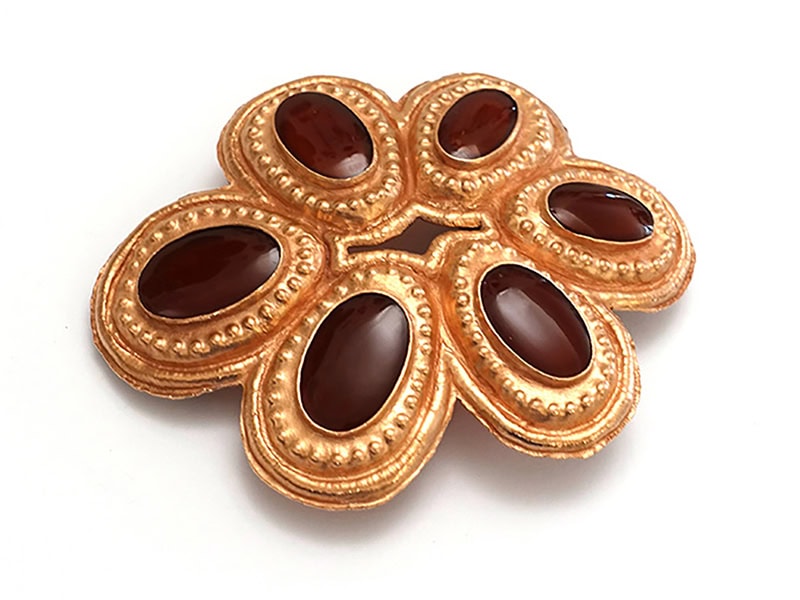
Europe’s contribution to the October lineup brings a sense of exuberant multiplicity through the work of Daniel Kruger, represented by Galerie Door in Nijmegen, Netherlands. An untitled 2026 brooch crafted from copper and cornelian is available for 2,000 euros. Kruger’s practice consistently blurs the boundaries between the sublime and the mundane, the precious and the cheap, and the classical and the kitsch. By combining disparate elements—such as shells, gemstones, plastics, relics, and everyday objects—into cohesive jewelry pieces, Kruger creates ornaments that function simultaneously as talismans, personal statements, and seductive objects designed to draw the eye toward the neck, chest, hand, or ear.
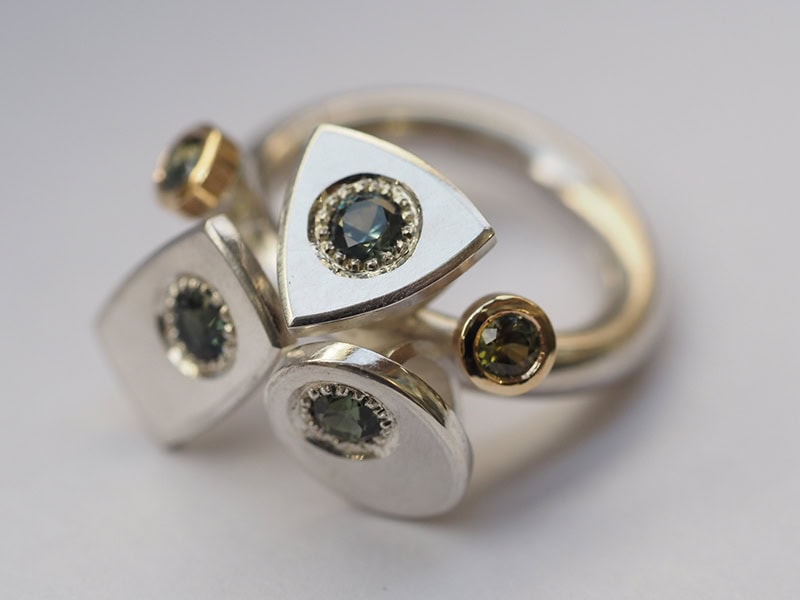
Meanwhile, at Zu design in Adelaide, Australia, jeweler Angela Giuliani contributes to the gallery’s stateMEANT exhibition with a striking ring titled Parti Sapphire, priced at AUS$8,615. Fabricated from parti sapphires, nine-karat gold, and sterling silver, the ring measures 19 x 23 mm at the top and stands 30 mm from the base of the band. The stateMEANT exhibition challenged artists to articulate their processes and philosophies, providing a conceptual framework for works that engage with social, political, or material narratives. Giuliani’s work explores structure, form, and geometry through clean lines and careful craftsmanship, utilizing gemstones not merely as decoration, but as an integral structural component of a timeless and thoughtful design.
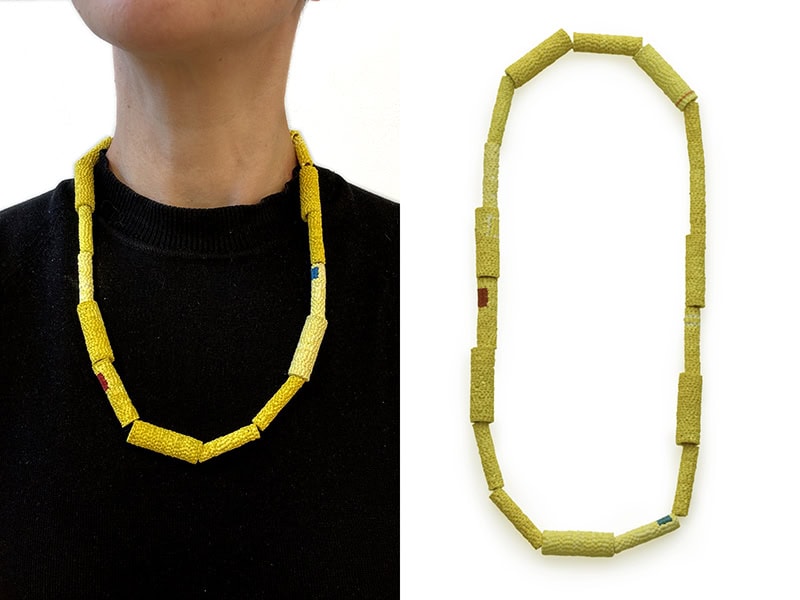
At Four Gallery in Umeå, Sweden, artist Karin Seufert explores the immaterial and complex nature of time through Necklace 539, a 2026 piece crafted from PVC and thread, priced at 1,700 euros excluding VAT. Seufert’s latest creations draw upon celestial navigation and the sky as a tool for orienting oneself in time, portraying the sun as a flickering yellow circle, the moon in its shifting phases, and the stars in multifaceted forms.
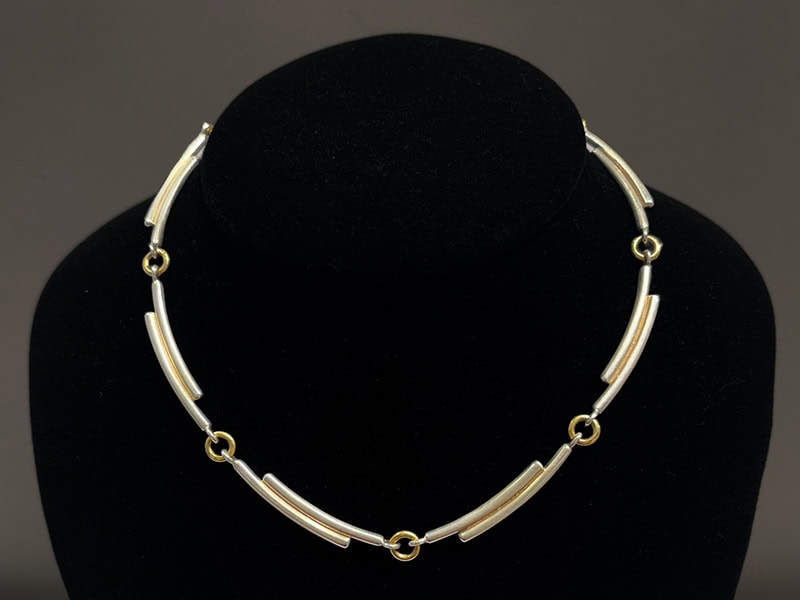
Philadelphia’s Gravers Lane Gallery is featuring an 18-karat yellow gold and sterling silver necklace by Naomi Kurita, priced at US$4,752. Kurita, who has spent three decades guided by the principles of being natural, simple, and wearable, brings together two metals of contrasting warmth in a 15-inch piece designed to rest closely at the base of the neck. Having trained internationally from Denver to the Rhode Island School of Design and New York, Kurita employs a disciplined artistic restraint that has earned her exhibitions in museums and galleries across the United States and Japan.
Representing the Baltimore Jewelry Center in Maryland, artist Liz Clark presents Petite Wreath Studs, a pair of sterling silver earrings created in 2023 and priced at US$1,700. Clark, a graduate of Virginia Commonwealth University who maintains a metal studio in Providence, Rhode Island, crafts these delicate, nature-inspired studs as part of her broader portfolio of contemporary metalwork exhibited across the United States.
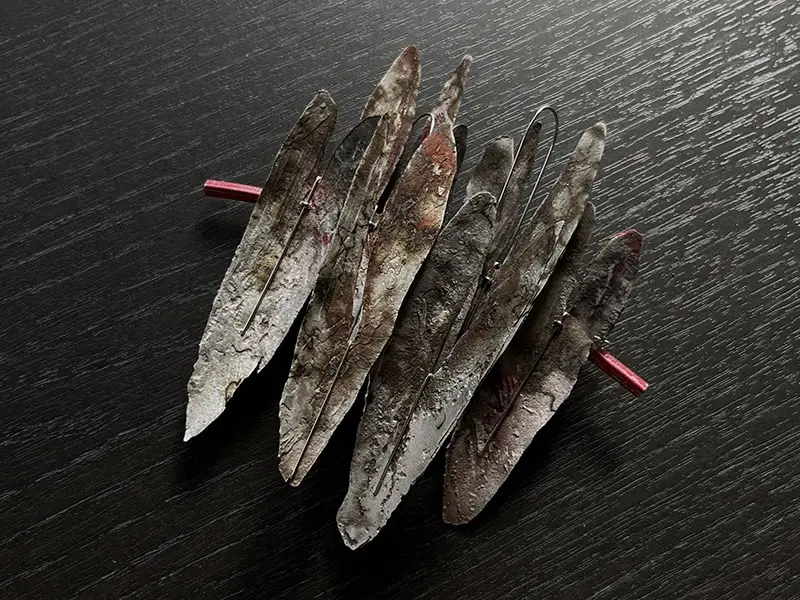
In London, Objects Beautiful gallery showcases The Other Shore #2, a 2022 brooch by Taiwanese artist Mei Fang Chiang, priced at 760 British pounds without tax. Based in Tainan, Chiang is renowned for her mastery of anodized aluminum, utilizing proprietary studio techniques to achieve vibrant, durable colorations. Her award-winning work, which is represented in public collections such as Taiwan’s Gold Museum, explores the delicate coexistence of nature and the man-made, resulting in pieces that are visually striking yet remarkably lightweight and comfortable for daily wear.
At Brooklyn Metal Works in New York, In the Gallery presents Well, It’s Not Up to Us, a 2026 brooch by Kerianne Quick priced at US$650. Constructed from vegetable-tanned leather, Plexiglas, and a nickel alloy pin, the work is part of Quick’s Nevermind series. Drawing upon historical mourning traditions in which mirrors were shrouded in black cloth following a death, Quick reimagines these objects to reflect not the spirit of the deceased, but rather the living viewer, materializing complex emotional states such as shame, culpability, and despair through deliberate material specificity.
Galeria Tereza Seabra in Lisbon, Portugal, highlights the work of Catarina Silva with the necklace Sugar Rush, created in 2026 and priced at 1,500 euros plus shipping. Created for the solo exhibition Jardin d’agrément as part of the third Lisbon Jewellery Biennial, the piece forms part of a larger collection that imagines a lush, utopian garden inspired by paradisiacal mythologies. In this conceptual space, humans, animals, and plants coexist in an equitable ecology, with jewelry acting as a living constellation of symbols ranging from flowers and pearls to embroidered motifs and painted tin.
At Heidi Lowe Gallery in Lewes, Delaware, artist Emily Cobb presents Floppy Flower, a 2026 sculptural work priced at US$1,480. Fabricated for the gallery’s ReJewelry exhibition hosted by the Radical Jewelry Makeover initiative, the piece is constructed entirely from repurposed materials, including gold-plated brass and surgical steel ear nuts, assorted deadstock stud earrings, and brass and silver-filled jump rings, demonstrating innovative approaches to sustainability in contemporary design.
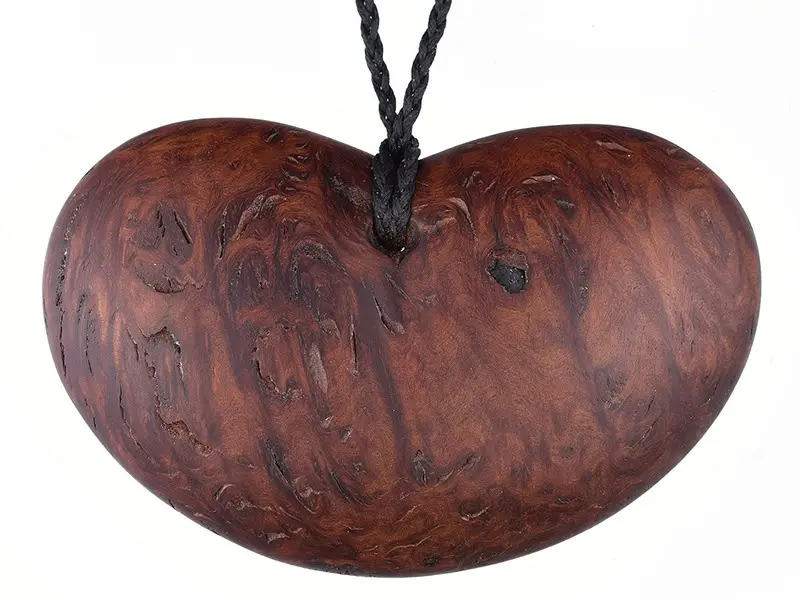
Concluding the current curation, Galeria Reverso in Lisbon, Portugal, presents an untitled 2026 necklace by Manuel Vilhena, priced at 2,220 euros. Fabricated from juniper, ebony, fine silver, cotton, coral, and steel, the piece reflects on the perennial dichotomy between life and death through the thematic lens of pirates—figures who live alongside mortality as an everyday companion in their daring maritime adventures.
AJF reminds interested collectors that inquiries regarding any of the featured works should be directed straight to the respective galleries.