





For years, consumer audio testing has shown that despite the ubiquity of smartphones, smart speakers, and endless streaming options, a large segment of listeners still values the simplicity, warmth, and reliability of a dedicated tabletop or portable radio. Whether tuned into a local public radio station in the kitchen, catching a late-night AM broadcast in the garage, or seeking a bedside clock radio with digital tuning, finding the right standalone radio requires balancing classic aesthetics, reception strength, and modern conveniences like Bluetooth and HD Radio.
Recent testing by consumer technology reviewers has evaluated a wide range of models—from vintage-styled analog cabinets to modern digital units packed with features—to determine the best options across various listening categories.
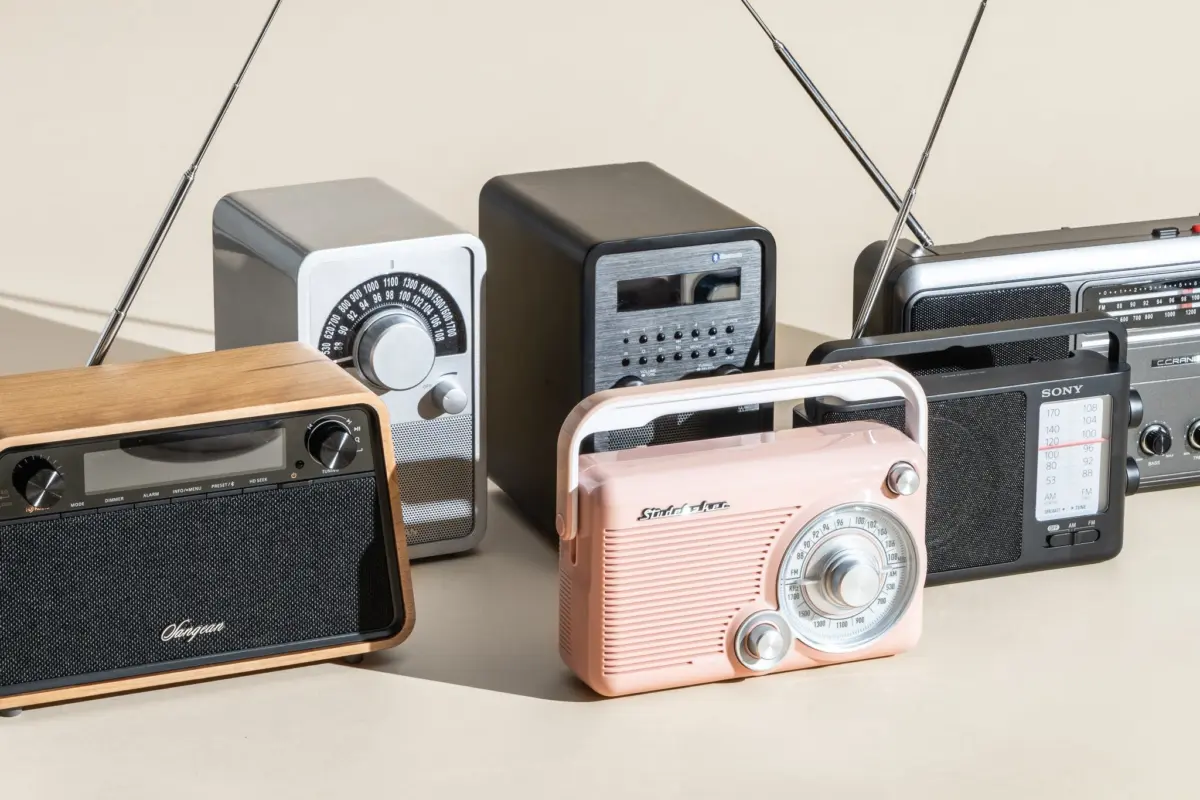
Best for People Who Want Analog Tuning and a Retro Design: Sangean WR-15
For listeners seeking an old-school aesthetic paired with straightforward analog tuning, great sound, and solid reception, the Sangean WR-15 has remained a standout favorite. Housed in a vertical cabinet suitable for bookshelves and countertops, it combines an eye-catching retro design with reliable performance and solid build quality.
The WR-15 is available in three distinct finishes: walnut, black leatherette, and silver piano. Its clean design features a semicircle tuning dial that is easy to read, a centrally located tuning knob with a smooth operational feel, and a green LED light situated above the dial that illuminates when the radio locks onto a station’s strongest signal.
During rigorous testing using its internal FM antenna, the WR-15 successfully picked up 35 out of 46 available FM radio stations in the Troy, New York, testing area, delivering clearer signals with louder sound and less static than many competing models. It also locked onto all 14 local AM stations with ease. For external connections, the radio offers an auxiliary analog audio input via a 3.5 mm cable, a line output for external speakers or amplifiers, and an optional external FM antenna.
While the WR-15 delivers rich monophonic sound with robust bass and a neutral midrange, its placement matters. The speaker utilizes a tuned port on the back of the cabinet to achieve its rich low-end response. Placing the radio within two or three inches of a wall can cause the bass to become overly boomy, particularly during talk radio programs. Additionally, the unit lacks modern premium features such as Bluetooth support, digital tuning, and programmable station presets.
Best for People Who Want HD Radio and Bluetooth: Sangean HDR-19
Listeners looking to bridge the gap between traditional radio broadcasting and modern connectivity often turn to the Sangean HDR-19. Although it comes with a steeper price tag, this tabletop radio packs numerous features into an aesthetically pleasing trapezoidal wooden cabinet with a black speaker grille and an adjustable digital LCD readout.
The HDR-19 excels in both audio fidelity and reception. In recent testing locations, it tuned in 35 out of 46 available FM stations, all 14 AM stations, and 10 out of 25 HD Radio stations. Users can search for stations using manual tuning knobs or seek buttons on the included infrared remote control. When an HD station is detected, the front-panel display flashes "HD" and turns solid once locked in, granting access to secondary multicast programming indicated by a plus symbol.
Sound quality is a major highlight of the HDR-19. Instruments and voices exhibit notable warmth, depth, and clarity, making it well-suited for extended listening sessions of classical music or talk programs. If the default sound profile requires adjustment, users can choose from several EQ presets or utilize a custom equalizer setting to fine-tune the bass, mids, and treble.
The unit includes an auxiliary audio input, a headphone jack, a USB-C port for mobile device charging, and terminals for attaching external AM or F-type FM antennas. It operates via an included AC power adapter, though its relatively large size—measuring approximately 4 inches long—means it may cover adjacent outlets on a standard wall receptacle.
Best for AM Radio Enthusiasts: C. Crane EP Pro
For enthusiasts seeking specialized performance on the AM frequency band to pick up distant broadcasts or niche talk programming, the C. Crane EP Pro is built specifically for the task. Though its rugged, boombox-style aesthetics resemble vintage electronics from the early 1990s rather than a sleek modern home audio accessory, its performance is difficult to match.
The EP Pro utilizes a patented twin-coil ferrite antenna paired with a high-resistance fine-tuning knob on the side panel, allowing users to zero in on weak signals. While standard tabletop radios typically struggle in dense urban environments or interiors with heavy electrical interference, the EP Pro pulls in significantly more AM stations with impressive clarity. It also performs strongly on the FM band, capturing a high volume of local channels with minimal static.
The radio features a 5-inch speaker that produces a full, warm sound, supplemented by basic tone controls and a wide/narrow bandwidth switch to manage interference. Powered either by an included DC power cord or four D batteries, the EP Pro includes a carrying handle for mobility. However, at roughly 5 pounds and measuring over 11 inches wide, it is less compact than standard portable radios, and it lacks advanced digital features like Bluetooth or station presets.
Best for Portable Listening: Sony ICF-506
For a simple, durable, and highly portable analog radio, the Sony ICF-506 offers a straightforward design that runs on either an AC power cord or three economical AA batteries.
Equipped with a telescopic antenna and a sturdy black plastic chassis with a flip-up carrying handle, the ICF-506 performed admirably in reception tests, capturing a high percentage of local FM and AM channels. Its side-mounted tuning and volume dials provide good tactile grip, and an LED indicator confirms when a station is locked in. While its audio output lacks the rich depth of larger tabletop cabinets, it delivers clean, dynamic sound suitable for casual listening around the house or on the go. It includes a headphone jack for private listening, though it omits auxiliary inputs and modern digital features.
Best for People Who Just Want a Cute, Cheap Radio: Studebaker SB2002
Shoppers looking for an affordable, lightweight radio with a fun retro look often gravitate toward the Studebaker SB2002. Available in a wide array of vibrant colors—ranging from pastel pink and teal to classic black—this model provides solid FM reception and straightforward operation.
The SB2002 features an auxiliary input and a headphone jack, making it versatile for indoor and outdoor use. It can run on an AC power cord or four C batteries for portability. However, compromises come with its low price point: the build quality relies heavily on lightweight plastics, the tuning knob lacks physical resistance, and the speaker volume and overall sound fidelity are modest compared to premium alternatives.
Best for People Who Want a Clock Radio: Sangean HDR-15
Functioning as a modernized bedside alarm clock, the Sangean HDR-15 brings HD Radio reception, digital tuning, and smartphone charging into a compact footprint measuring roughly the size of a paperback book.
The HDR-15 includes a 6.5-foot power cord, an auxiliary input, a headphone jack, a record output, and a USB-A charging port. Its bedside functionality is supported by three separate alarms, a nap timer, a snooze button, and 40 total station presets split evenly between AM and FM bands. While its audio profile and channel pickup counts are more modest than larger standalone receivers, it provides an audible upgrade over traditional clock radios for small bedrooms or nightstands.
Other Tabletop Radios Worth Considering
For listeners pursuing specific alternative setups, several other models merit attention depending on space, budget, and acoustic preferences.
The Sangean WR-50P offers a two-piece stereo system featuring separate left and right speakers that can be separated by up to six feet to widen the soundstage. It includes Bluetooth connectivity, digital tuning, dual alarms, and a subwoofer line output, though its larger footprint and higher price point place it in a premium tier.
For a budget-friendly and reliable analog alternative, the Panasonic RF-2400D delivers performance comparable to smaller portable competitors, featuring a telescopic antenna, battery or AC power options, and a sturdy carrying handle, though its speaker can sound harsh at high volumes.
Buyers interested in a horizontal alternative to top-performing retro cabinets often look to the Sangean WR-11SE and WR-16. These models replicate the internal hardware and tuning indicators of vertical designs while offering a wider profile, with the WR-16 adding Bluetooth compatibility and a dedicated source dial.
How Selection and Testing Were Conducted
Testing methodologies for tabletop and portable radios rely on surveys of buyer preferences, which consistently emphasize a desire for simplicity, reliable public radio reception, and straightforward physical controls.
Reviewers evaluate prospective units across multiple geographic locations with varying signal distances, tracking metrics such as total channel acquisition count, signal stability, static rejection, and audio clarity. Units equipped with headphone outputs and wireless connectivity undergo further evaluation for amplifier performance and Bluetooth range. Through these rigorous benchmarks, consumers can identify the right radio to match their exact listening habits, design aesthetic, and space requirements.