




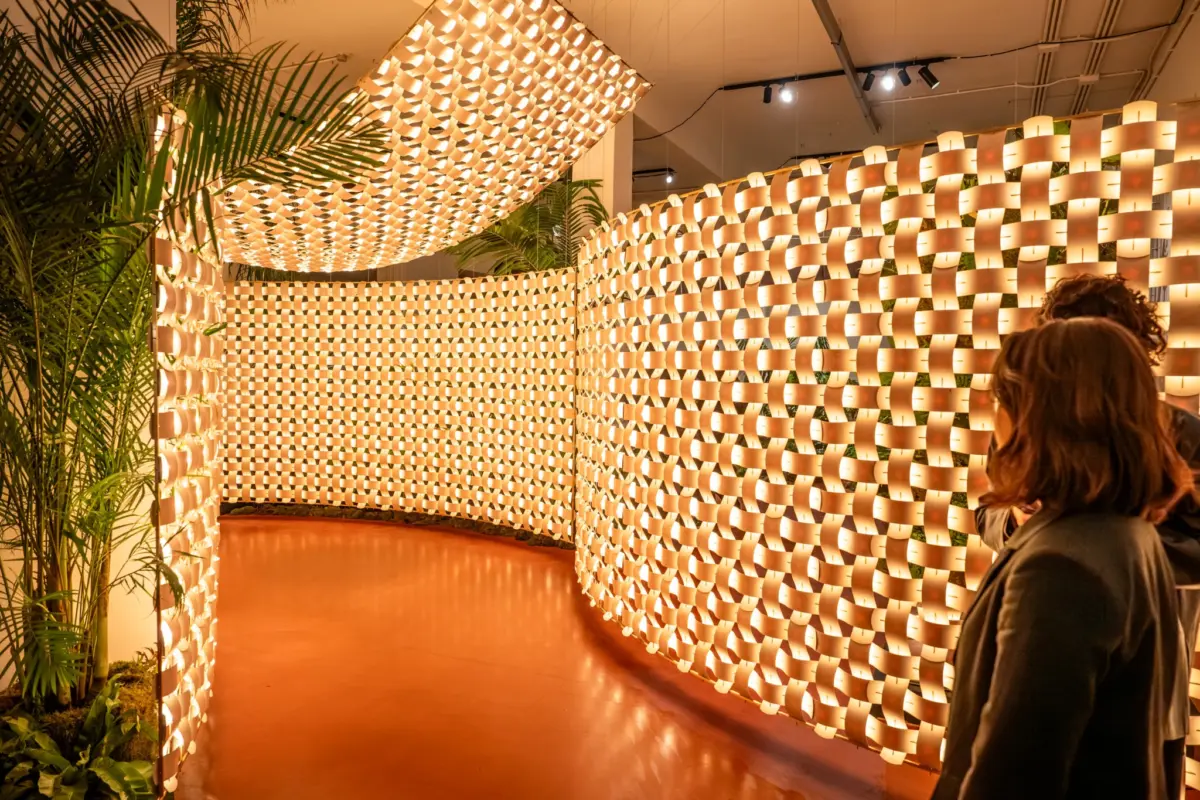
"Typically you start sketching to find out what something should look like, and then you follow with the development and construction process," says Dutch designer Rick Tegelaar, "but for me, it’s the other way around." For Tegelaar, the design process does not begin with pen and paper or digital renderings; it starts directly with physical materials. This intensely hands-on approach took root during a childhood spent tinkering away in his family’s garage, laying the groundwork for a multidisciplinary practice that is now globally renowned for transforming ordinary, everyday, and often overlooked materials into breathtaking, unexpected forms.
Born and raised in the Netherlands, Tegelaar’s life took a pivotal turn at the age of 16 when his father’s untimely death coincided with his high school graduation. Faced with a sudden shift in his circumstances, he chose to forgo a traditional academic trajectory. Instead, he enrolled in a vocational school, immersing himself deeply in metalworking. There, he mastered the complex intricacies of operating lathes, milling machines, welding equipment, and a wide array of other industrial fabrication techniques, acquiring a profound physical understanding of how hard materials behave under pressure and heat.
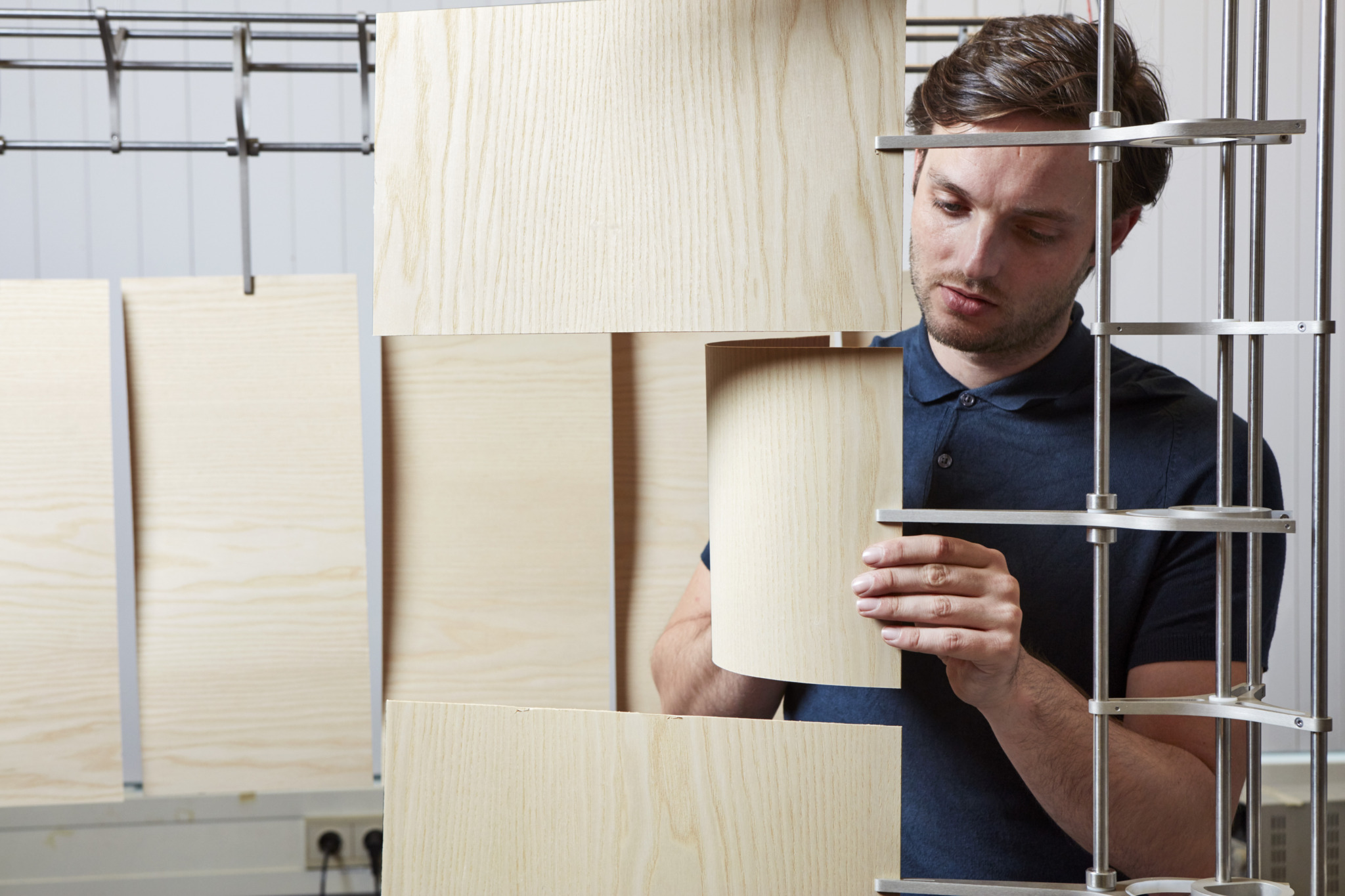
However, as his education progressed, Tegelaar grew increasingly frustrated by the program’s rigid, rule-bound approach to manufacturing. Seeking a discipline that offered greater conceptual freedom, he switched to industrial design. In 2007, he took a defining step by enrolling at the ArtEZ University of the Arts, a Dutch institution that he describes as having been "very creative and had an art academy kind of vibe."
The shift in environment proved transformative. "Suddenly I wasn’t just learning how to manufacture something," Tegelaar explains. "I was asking why products exist and how they should function."
During this formative academic period, one of his most influential mentors was the celebrated Dutch sculptor and furniture designer Wilma Sommers. Though Sommers passed away in 2011 shortly after Tegelaar completed his studies, her mentorship left an indelible mark on his professional philosophy. "She taught me to be brutally honest and to become a lateral thinker," he recalls, principles that continue to guide his studio work today.

Throughout his time at ArtEZ, Tegelaar continued experimenting with humble, unpretentious materials such as ordinary lumber, paper, and inexpensive chicken wire, exploring how these everyday commodities could be manipulated, stressed, and refined into entirely new aesthetic territories.
Reflecting on his early explorations with wire mesh, Tegelaar notes the unique challenges the material presented. "It’s typically a material with no meaning within the design context, so one of the hardest things was shaping it in a very controlled way. If you succeed, it becomes beautiful: rhythmic and even. But if you don’t, it immediately starts to feel like a craft project. There’s a real tension between those two outcomes."
Through sheer perseverance and a refusal to accept the material’s limitations, Tegelaar eventually developed a custom machine and a suite of specialized tools that enabled him to produce consistent, precise forms. By discovering that stretching metal mesh over a carefully engineered mold rather than simply pressing it yielded an elegant silhouette capable of diffusing ambient light, he achieved a major technical breakthrough. This innovation laid the foundation for his self-produced Meshmatics lighting series, a collection of avant-garde fixtures whose sales generated enough vital income to financially sustain his fledgling independent practice.

The striking series soon caught the discerning eye of Moooi, the prominent Dutch design brand co-founded by Marcel Wanders and Casper Vissers in 2001. At Downtown Design in Dubai in 2016, Tegelaar exhibited both his Filigree Floor Lamp—which was already in early development with Moooi—and the experimental wire-mesh chandelier that would soon become known globally as Meshmatics. In a twist of fate, his exhibition booth was positioned directly next to Marcel Wanders’ space. The proximity immediately attracted the Moooi co-founder’s attention, and the Meshmatics prototype was swiftly selected to become Tegelaar’s second product to be officially manufactured and distributed worldwide by the renowned brand.
"I had been making the Meshmatics myself, and that brought so much energy into the studio," Tegelaar recalls, describing the vibrant atmosphere where daily deliveries arrived, heavy workshop machines hummed, and production maintained a constant, driving momentum. "It was always about making, and that was good for my creativity. Then, all of a sudden, that was gone. So I was in the studio, by myself, not producing, trying to come up with new ideas."
Following the successful partnership with Moooi, Tegelaar pursued several new projects, including promising collaborations with various Italian design companies and a handful of ambitious site-specific commissions. Yet, none managed to capture the same momentum or gain significant traction. Then, the global COVID-19 pandemic struck, bringing international manufacturing, exhibitions, and normal studio operations to an abrupt halt.

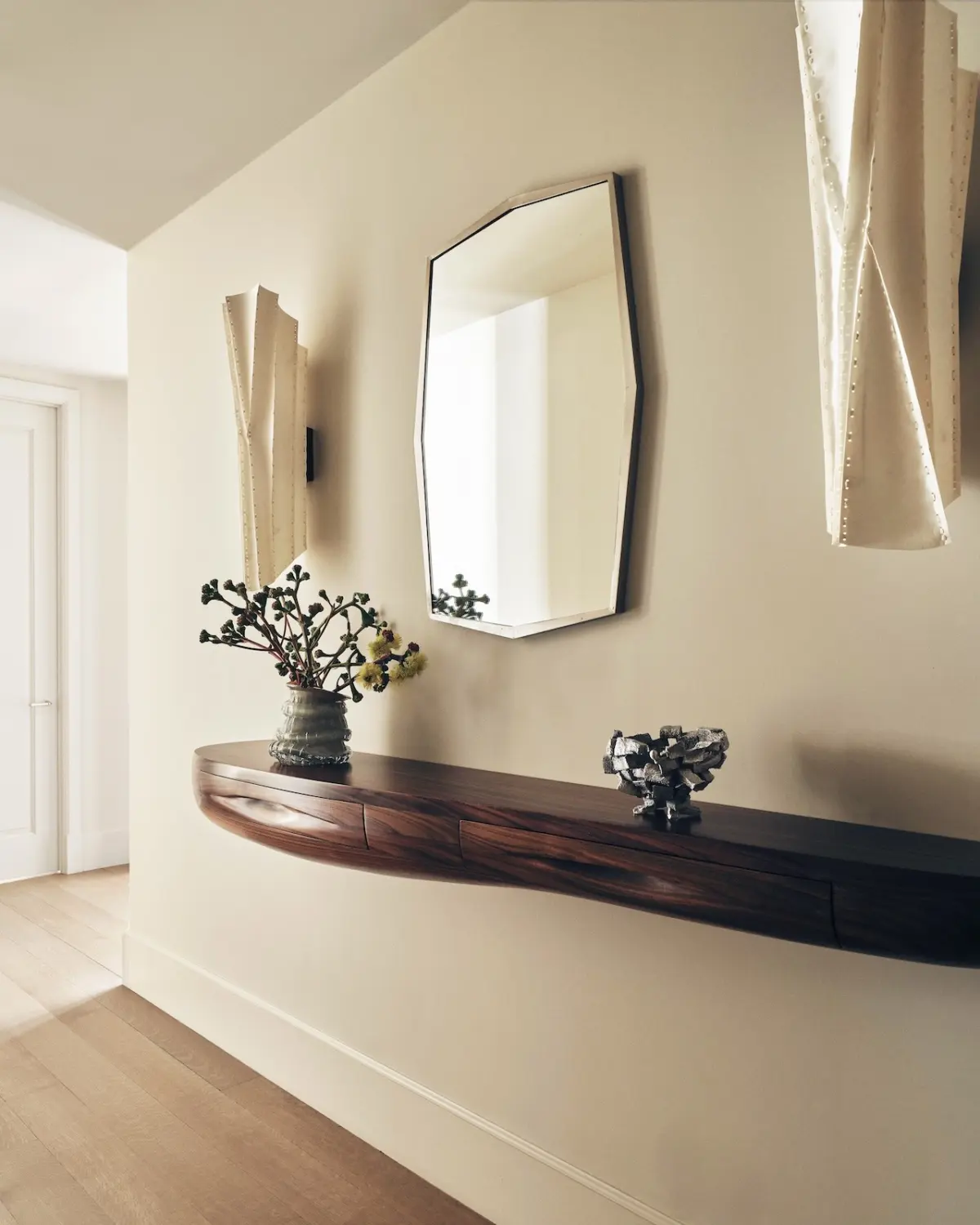
Like countless others around the world, Tegelaar initially assumed the lockdowns would be brief. Rather than viewing the unprecedented disruption as a permanent setback, he chose to embrace it as a creative opportunity. He initially began envisioning an electric blanket, spending his time experimenting with complex circuitry and miniature LEDs. However, as international supply chains shut down entirely and electronic parts grew increasingly scarce, the project stalled out. True to his resilient nature, he refused to give up, pivoting instead to materials he already had on hand: simple plywood and wire. From these humble components, he began developing an oversized woven structure integrated with LEDs.
"By scaling up the weave dramatically, I discovered that each intersection naturally created a pocket where an LED could fit. In an afternoon, I had the essential principle worked out," Tegelaar says, describing the impromptu experiment that eventually evolved into his acclaimed Tabby lighting collection.
True to his methodical working methods, he once again constructed a custom machine designed to automate the repetitive aspects of the weaving process while meticulously preserving the handcrafted quality of the final object. After presenting the prototype to several lighting companies, most of whom rejected the unconventional design, Tegelaar came close to abandoning the project altogether.

"Instead, I exhibited it at Big Art in Amsterdam, deciding that if people responded well, I’d continue," Tegelaar remembers. "If not, I’d move on."
The public response was immediate and overwhelming. Within the very first hour of the exhibition, he successfully sold several pieces.
"In many ways, Tabby brought me back to where I had started," says Tegelaar. The striking Tabby woven lights have since found a home not only in private collections but have also been prominently installed in luxury flagship stores for LVMH around the globe. Most recently, these distinctive lights, alongside a series of new works including a striking piece titled Traces, were showcased during Milan Design Week as central features of his immersive Oasis installation.

Looking forward, Tegelaar’s professional horizon continues to expand with prominent new projects underway. These include exciting collaborations with British contemporary design brand Established & Sons—operating under the creative direction of Casper Vissers—as well as partnerships with historic Venetian glassmaker Barovier & Toso, alongside ongoing extensions of the popular Meshmatics collection for Moooi. Despite these growing international opportunities and the scaling up of his professional practice, Tegelaar remains firmly committed to the tactile foundation that launched his career.
"Making isn’t part of my practice," he says simply. "It is my practice."