


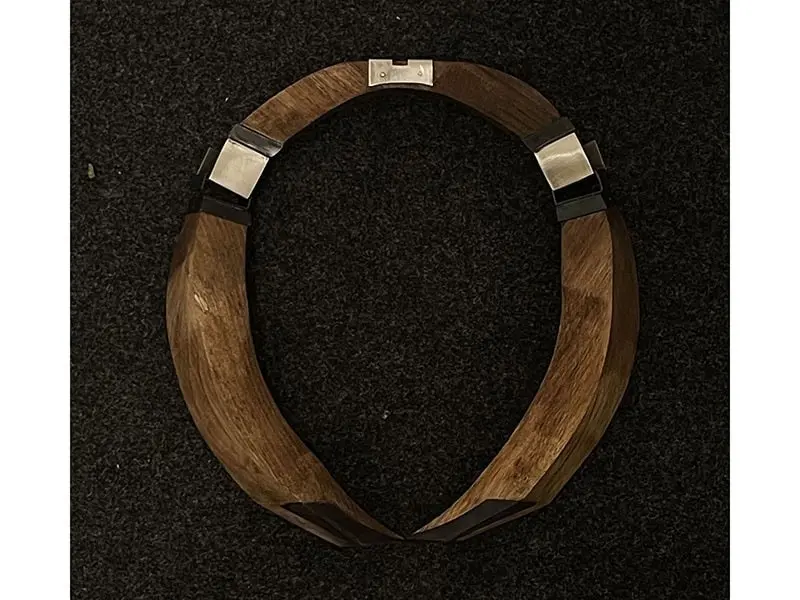
Marie-Caroline Locquet does not view jewelry as a quiet ornament of wealth, power, or social standing. Instead, she approaches the medium as an instrument of conceptual provocation. In her hands, jewelry transforms into restraints and defensive weapons—each piece engineered to deliver a unique wearing experience that confronts our shared human fragility. By drawing subtle and sharp implications from themes of violence and sexual dominance, her works evoke a simultaneous sense of profound physical discomfort and high-stakes erotic tension.
This uncompromising, radical vision has earned Locquet recognition as a finalist for the prestigious Young Artist Award. Supported by Karen and Michael Rotenberg, the international award is presented biennially to acknowledge exceptional promise, boundary-pushing innovation, and distinct individuality in the work of an emerging jewelry artist aged 35 or younger. Through this accolade, Art Jewelry Forum (AJF) champions bold, forward-thinking practices that promise to shape the future trajectory of the art jewelry field.
In an in-depth conversation, Locquet discusses the origins of her provocative practice, the conceptual weight of unwearability, and what this major recognition means for her evolving career.
Challenging Definitions and Embracing the "Unwearable"
Reflecting on how she entered the discipline, Locquet points directly to the foundational years of her formal art education. It was during this period that she first encountered works by established artists that fundamentally challenged her perceptions of what jewelry could be and do. These foundational influences bypassed traditional notions of conventional beauty or the display of accumulated wealth; instead, they presented objects that felt strange, uneasy, and inherently dangerous.

"The works I am talking about were not about beauty, showing wealth, and so on," Locquet explains. "They were ‘strange,’ ‘uneasy,’ somehow ‘dangerous’—in fact, radical. It’s the bottleneck of Bernhard Schobinger and Dorothea Prühl’s work, for example: some pieces that shift the way jewelry is understood. It really changed my point of view on art."
For Locquet, jewelry serves primarily as an object of disruption, critical reflection, and active provocation. She entered the field loaded with questions and a persistent curiosity, driven by a central intellectual inquiry: Why make, and consequently wear, jewelry that appears deeply disturbing at first glance? What does it truly mean to fabricate something that society categorizes as "unwearable"? Over time, this concept of unwearability solidified into the core anchor of her ongoing research and artistic output.
The Meaning of Recognition
Being named a finalist for the Young Artist Award marks a significant professional milestone for the young maker. Growing up in the north of France, Locquet experienced firsthand the social pressures of self-demonstration and the heavy camouflage of social affiliations expressed through conventional adornment during her youth. This early exposure fostered a conceptual detachment from standard aesthetic affinities, steering her toward jewelry as a serious subject of academic and sculptural study.
When asked what being selected as a finalist means for her trajectory, Locquet views it as a strong validation of her path. "Being selected as a finalist is a meaningful recognition of a direction I have been pursuing for several years," she notes. "It gives me confidence to keep going radical, pushing things further, and challenging myself, the wearer, and the viewer."
Confrontation and Public Disruption
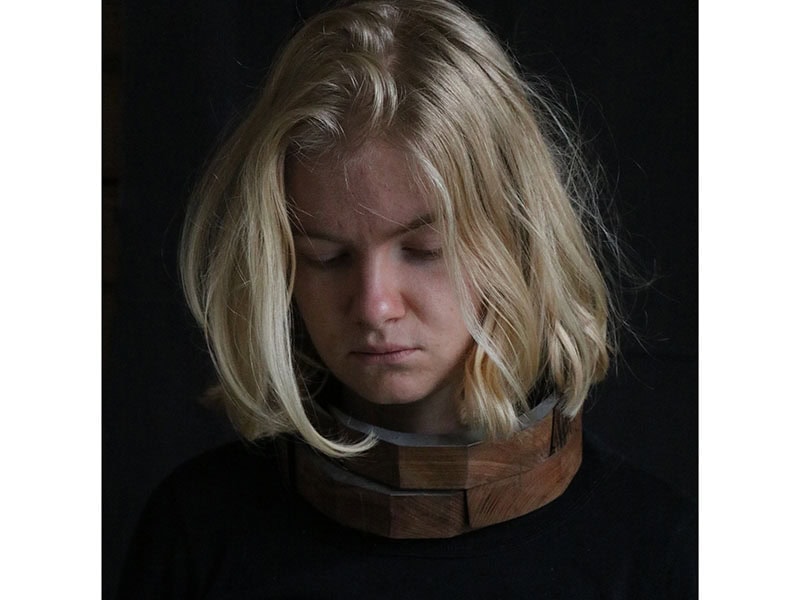
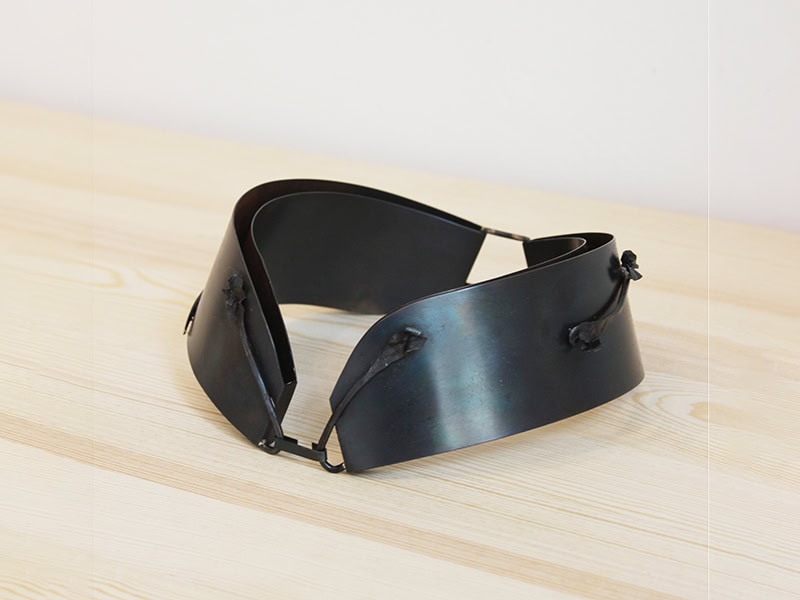
In her artistic practice, Locquet’s pieces deliberately reject the traditional roles of showcase, seduction, and representation. Instead, they are designed to confront the public space with a high potential for disturbance. Her creations tackle heavy conceptual dualities: violence and fragility, seduction and domination, vulnerability and confinement. Pushing materials to their absolute structural limits, she strips them bare to reveal their raw nature through forms that evoke both deep-seated desire and the proximity of death.
Whether functioning as defensive weapons or strict restraint devices, her pieces require active physical participation, maintaining a relentless tension between social discomfort and the intimate temptation of an embrace.
To trace the lineage of these concepts, Locquet looks to historical objects of confinement and control. Her research has previously engaged with the collier d’appartenance—a collar given to individuals in submissive relationships—as well as the traditional "slave collar" originating from 19th-century Norman and Auvergnat cultures, traditionally given to women upon marriage as a token of possession. She has similarly explored the structural logic of animal-labor tools, such as the heavy wooden and metal horse collar.
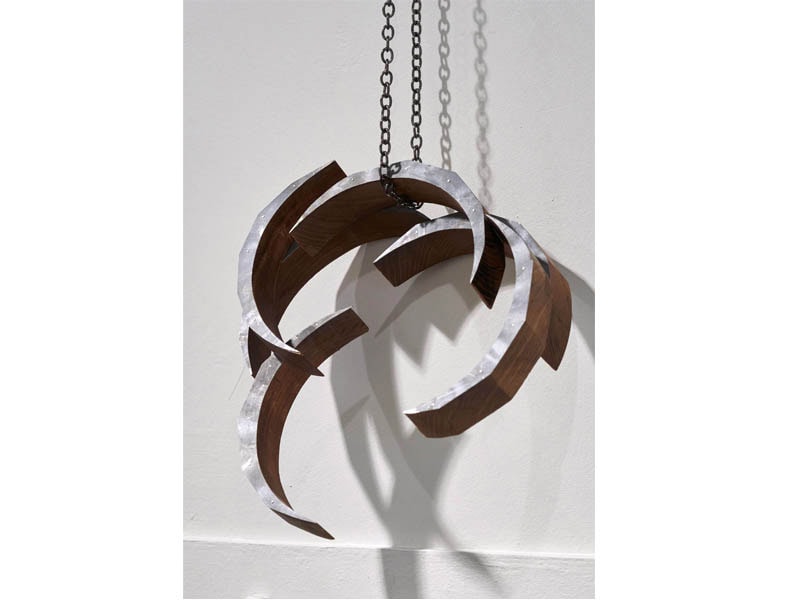
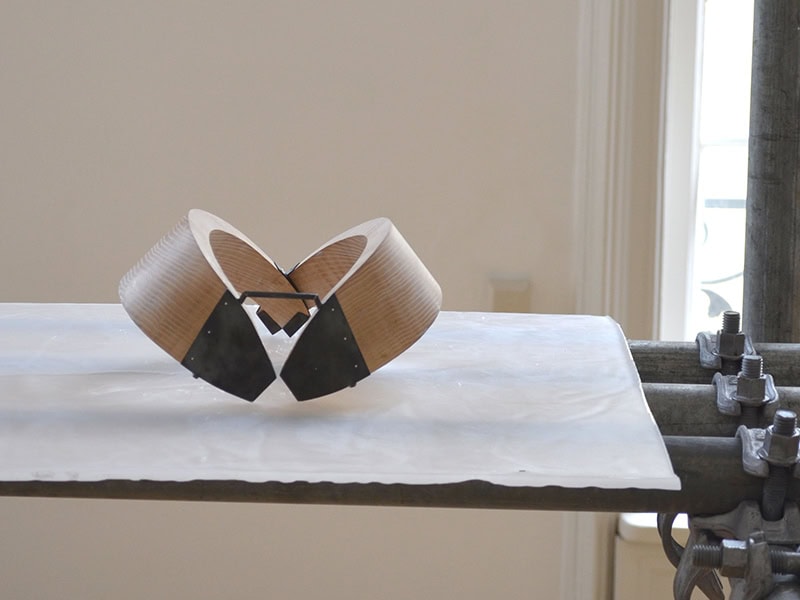
One of the standout pieces from her award application, titled Hands (2024), encapsulates the multilayered nature of her methodology. Crafted from elm wood, zinc-plated steel, and silver, the neckpiece showcases her obsessive technical investigation into complex mechanical systems, functional movements, specialized clasps, and the fluid border separating wearable jewelry from freestanding sculpture.
"The piece unfolds and occupies the space like a complex mechanical object, before closing around the neck… like an act of strangulation," Locquet explains. "It’s my most complex and intimate piece, expressing confinement and violence."
Bridging Adornment, Society, and Space
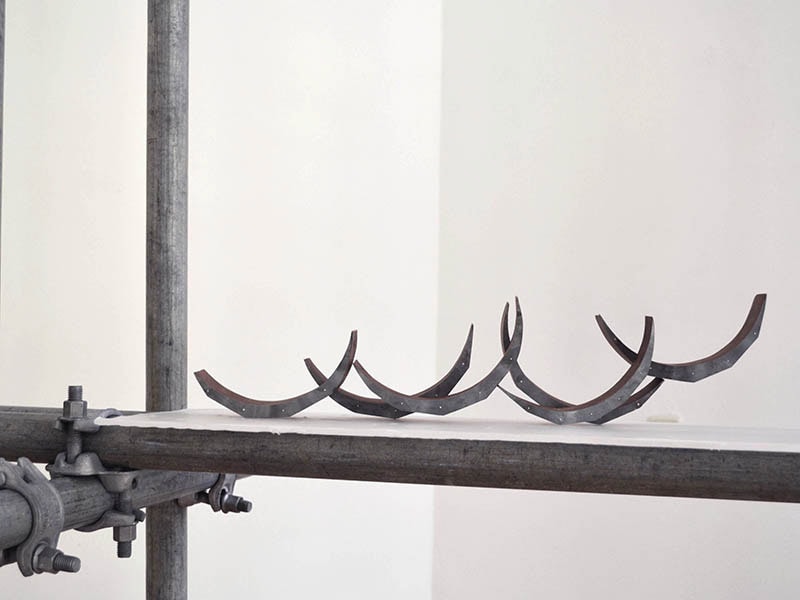
What excites Locquet most about contemporary art jewelry is its capacity to orchestrate a complete, holistic approach. The medium bridges the physical object itself, rigorous academic and iconographic research, and the physical architecture of the exhibition spaces that house them.
Her engagement with the field extends far beyond individual objects into a broader consideration of how body ornament actively shapes the visual identity of a culture. Several years ago, she initiated a large iconographic research project and collection centered entirely around worn and unwearable items, operating under the thematic premise that ornament is inherently impure, makeup often obscene, and disguise an abomination. This ongoing collection illustrates how bodily adornment, when fused with the human form, transmits vital information about social representations, cultural boundaries, and the perpetual oscillation between the private interior sphere and the public domain.
Despite her passion for the discipline, Locquet remains candid about certain systemic frustrations within the contemporary art world. Referencing an exhibition she co-curated with colleagues during Munich Jewellery Week in 2018 titled Jewelry Is Still a Risky Business—a direct nod to a work by Paul Derrez—she emphasizes that jewelry must retain its inherent element of risk.
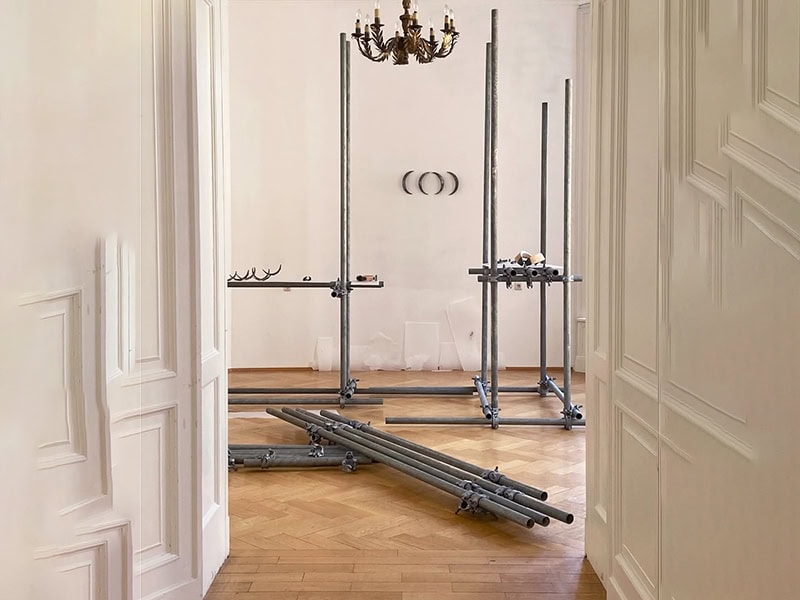
"I sometimes feel that contemporary jewelry is still expected to justify its presence within contemporary art," she notes, recalling how her early days in a French fine art school frequently brought her face-to-face with biases dismissing jewelry as secondary, superficial, or overly niche. Yet, she views this historical marginalization as a structural strength, one that opens up alternative perspectives of looking and thinking, even if it occasionally creates distance from broader mainstream audiences.
To bridge this gap, some of her newer works, such as Panicroom Vector I (2025)—an iron, elm wood, silver, and rubber neckpiece exhibited at A-Galerii in Tallinn, Estonia—act as more literal entry points for viewers.
Looking Ahead
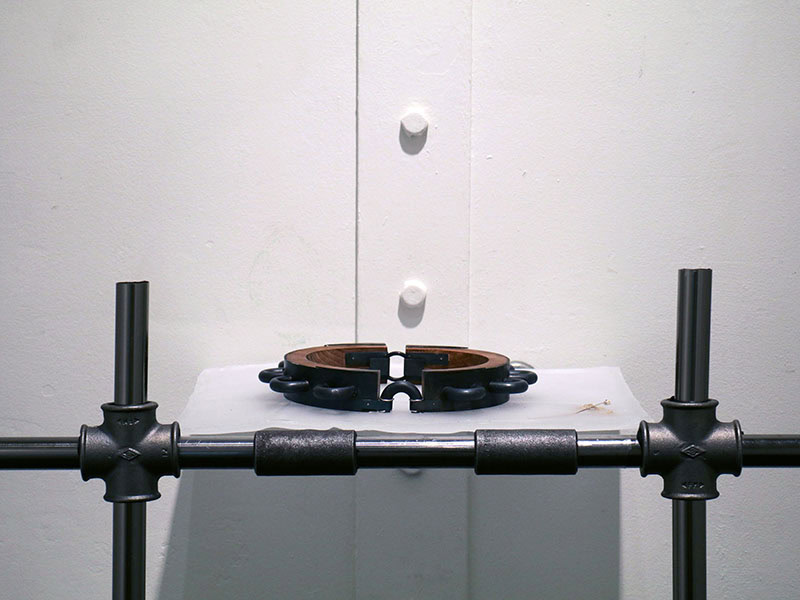
As she looks toward the next five years, Locquet is eager to build upon the momentum generated since her graduation. Having recently expanded her sculptural vocabulary to let her wearable objects and physical gallery spaces resonate in tandem—a dialogue she plans to feature in forthcoming exhibition projects—she remains dedicated to deepening her artistic language, pursuing international residencies, and collaborating with fellow creators.
Beyond her studio practice, Locquet harbors a strong interest in research and teaching. She views academic and pedagogical spaces as vital environments for reinventing and pushing forward collective understandings of body ornament, ensuring that makers can continue to extend, deform, shape, and question the evolving definition of jewelry.
Trusting the creative process and expressing deep gratitude to all who have supported her journey, Marie-Caroline Locquet stands poised to push the boundaries of what contemporary adornment can say, provoke, and demand of the world.