


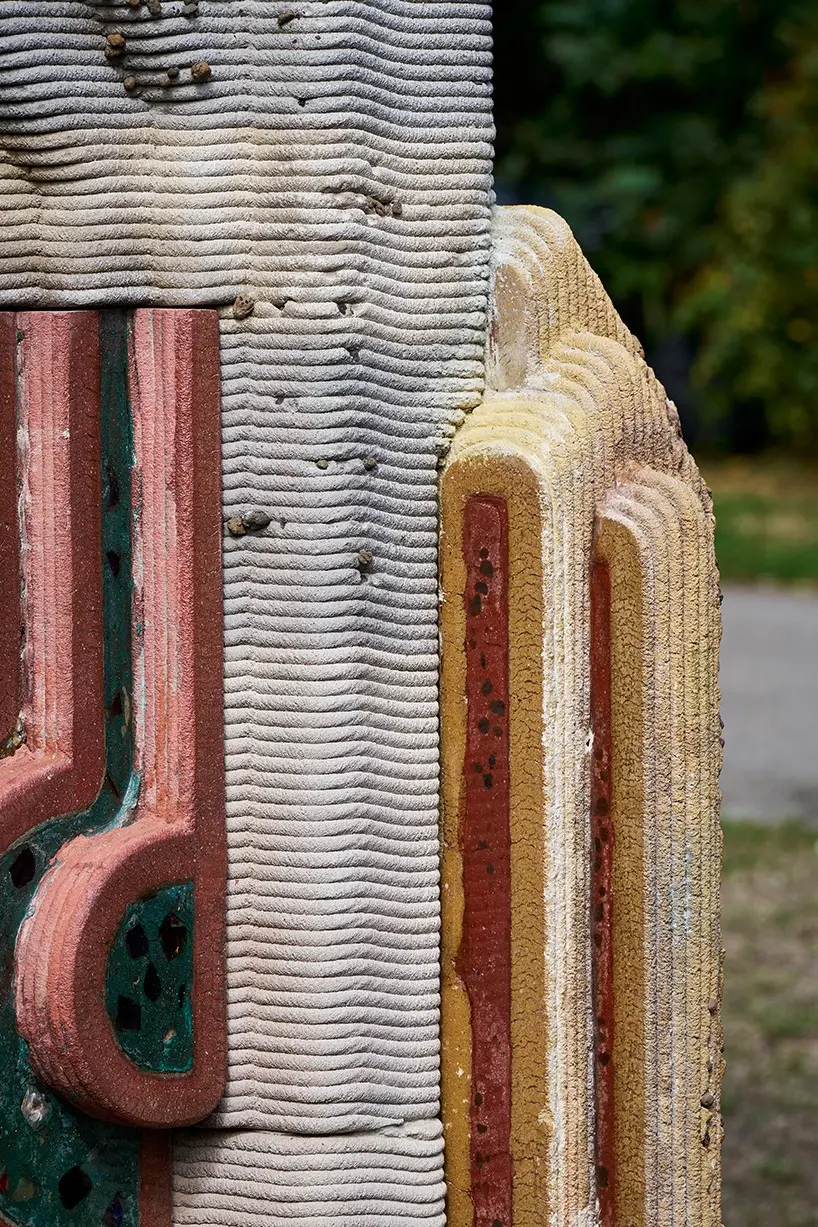
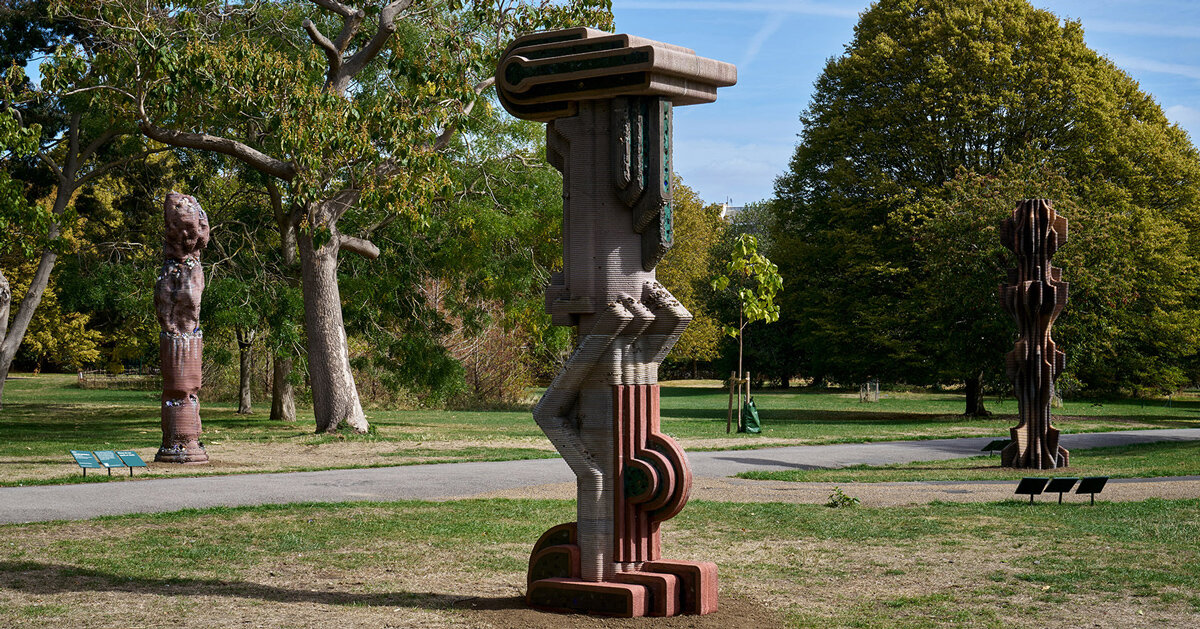
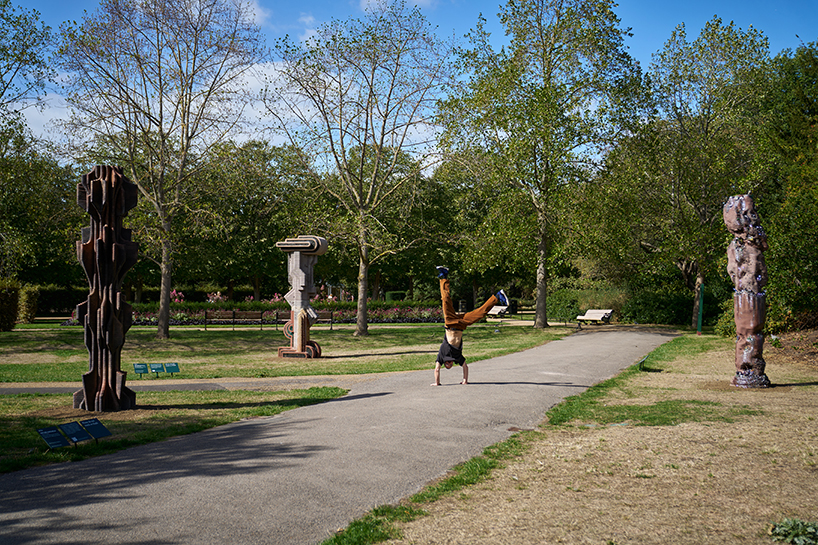
Czech artist Matyáš Chochola has unveiled a striking trio of large-scale works at Frieze Sculpture 2026, currently transforming the landscape of The Regent’s Park in London. Titled BRUTALIST, METEOR, and MACE II, the sculptures represent a daring intersection of cutting-edge digital modeling, advanced robotic fabrication, and meticulous hand craftsmanship. On view through November 1, 2026, the monumental pieces bridge ancient architectural traditions, futuristic science fiction, and contemporary sculptural experimentation, inviting park visitors to engage with a dense layering of historical and sci-fi references.
The three works form part of Chochola’s broader conceptual series titled Virtues and Vices of Our Time: 300 Years Later. This ambitious body of work serves as a contemporary reinterpretation of the Baroque Virtues and Vices originally crafted by Matthias Bernard Braun. Created approximately three centuries after Braun produced his legendary group of 24 sandstone allegorical figures, Chochola’s twelve-part series translates those historical moral frameworks through an eclectic lens. By drawing on Antiquity, Cubism, Brutalism, mythology, science fiction, and modern popular culture, the artist repositions traditional allegorical themes into the anxieties, aesthetics, and material realities of the twenty-first century.
From Carved Stone to 3D-Printed Concrete
To bring this contemporary vision into physical reality, Chochola collaborated closely with Voxell, a specialized Czech company at the forefront of automated construction techniques. This partnership utilized advanced 3D concrete printing not merely as a production shortcut, but as a dynamic framework that merges high-tech robotic manufacturing with deeply tactile, human intervention. Towering between three and four meters in height and weighing approximately one ton each, the sculptures demand a commanding physical presence within the open-air gallery of Regent’s Park.
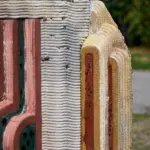
The fabrication process itself is a masterclass in modern engineering and artistic risk-taking. It employs diverse printing orientations, complex non-planar tool paths, and expansive structural overhangs. To support these sweeping geometric flourishes without collapsing during production, lightweight clay aggregate is integrated into the workflow, alongside intentionally programmed irregularities that disrupt the sterile perfection often associated with digital manufacturing.
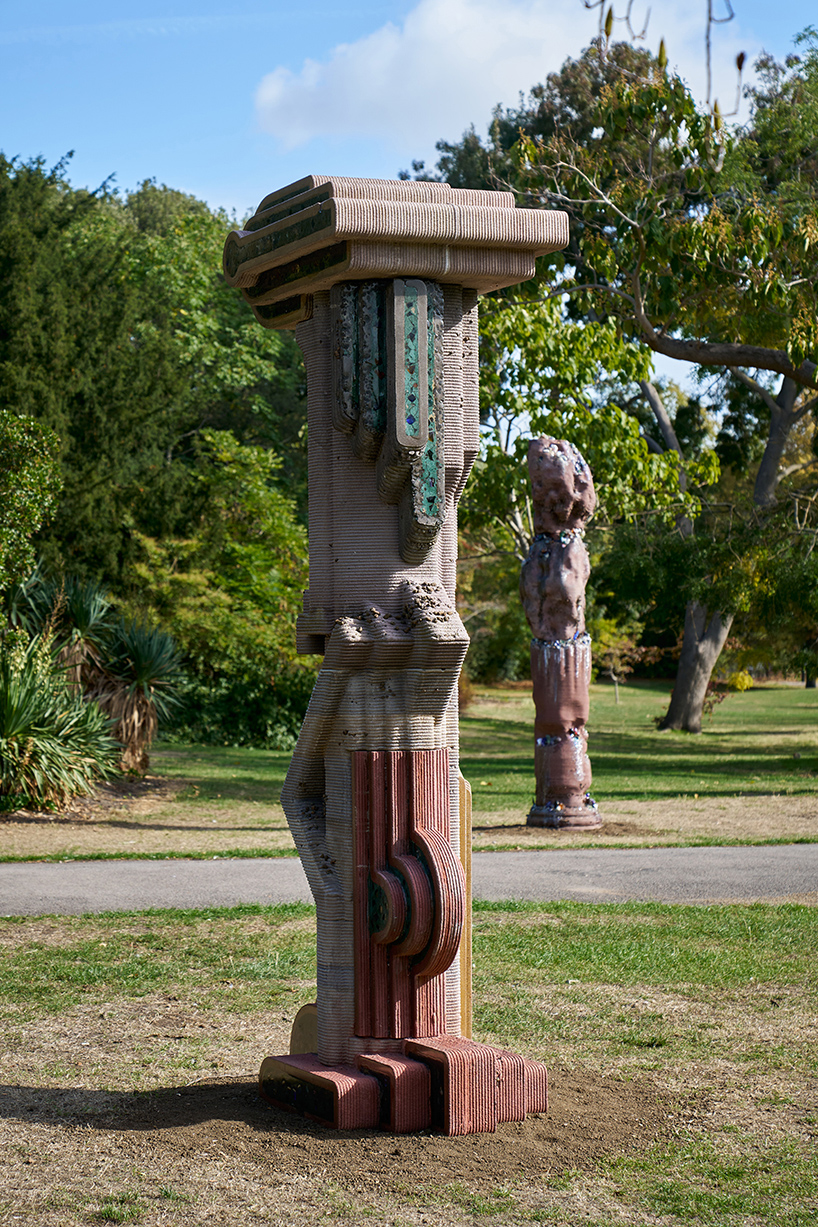
Once the robotic printing phase concludes, the material narrative shifts back to the human hand. The raw concrete surfaces are extensively ground, carved, and polished. Furthermore, Chochola infuses the hardened structures with unexpected materials—such as raw glass, bronze, brass, and vibrant pigments—hand-embedded directly into the composition. This rigorous post-processing ensures that while the genesis of each sculpture is digital and automated, its final character is profoundly physical, tactile, and singular.
BRUTALIST, METEOR, and MACE II at Regent’s Park
Positioned together within the park grounds, BRUTALIST, METEOR, and MACE II operate as what the artist characterizes as a "solemn triad." Each piece explores a distinct stylistic vocabulary while maintaining a cohesive dialogue with the natural and urban environment around it.
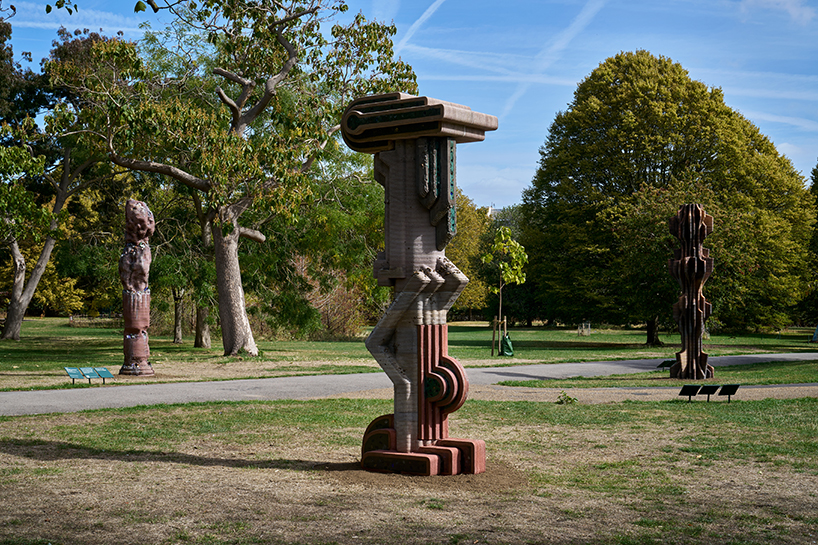
BRUTALIST takes a deconstructed classical column and forces it into a tense dialogue with the heavy geometries of Brutalism, the playful yet jarring sensibilities of the Memphis Group, twentieth-century architectural movements, and dystopian cinematic visions of the future. The result is a totem that feels simultaneously ancient and hyper-modern, evoking the ruins of a civilization that has yet to exist.
METEOR, on the other hand, connects classical architecture with deep cosmic and geological timescales. The piece draws direct inspiration from Tomanowos, a legendary meteorite discovered in Oregon that holds profound cultural significance to the Chinook people. Embodying this celestial narrative, the sculpture incorporates hand-embedded shards of glass directly into its rugged concrete skin, catching the changing London sunlight and reflecting it back across the park lawns.
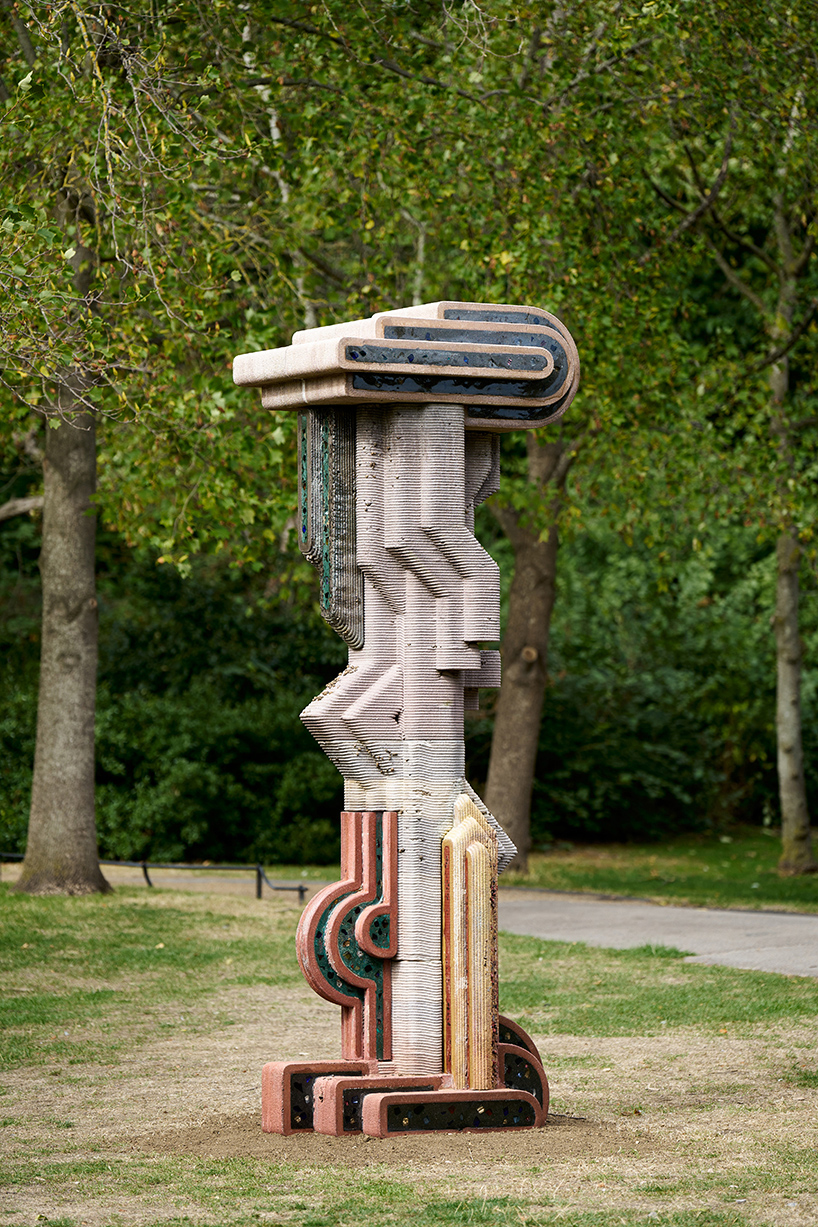
Rounding out the triad is MACE II, an evolution of the artist’s earlier MACE I design. This formidable structure draws deeply from Brutalist architecture, fantasy literature, and the gritty visual language of 1980s science fiction. Its sharp, aggressive angles reference both a monumental medieval weapon and a dormant futuristic technological relic. Printed using an anthracite-tinted concrete mix, the sculpture is finished with a shimmering application of metallic copper powder, grounding its sci-fi aesthetic in a heavy, metallic weightiness.
Historical References Meet a New Public Setting
The conceptual roots of Chochola’s project stretch back to the quiet grounds of Kuks Hospital in eastern Bohemia, where Matthias Bernard Braun’s original sandstone masterpieces were installed to anchor a complex Baroque Christian moral order. Over the centuries, the vulnerability of those original stones necessitated their relocation indoors for preservation, replaced in their original outdoor niches by protective concrete casts.
Chochola’s contemporary series directly inherits this fascinating lineage of original works, copies, reproductions, and cultural shifts. By transplanting his high-tech, hybrid monuments into the public landscape of The Regent’s Park, he extends a centuries-old tradition of placing sculptural allegories in open-air environments where they are subject to weather, time, and the daily lives of everyday passersby.
Curated by Fatoş Üstek, Frieze Sculpture 2026 is designed to investigate what she describes as a "vibrant hybrid ecology," positioning contemporary sculptural works in active conversation with their surrounding landscape, architecture, and diverse audiences. Against this backdrop, Chochola’s works stand as physical testaments to the shifting boundaries between nature and technology, ancient craft and automated futures, and the enduring human desire to shape material into meaning.