






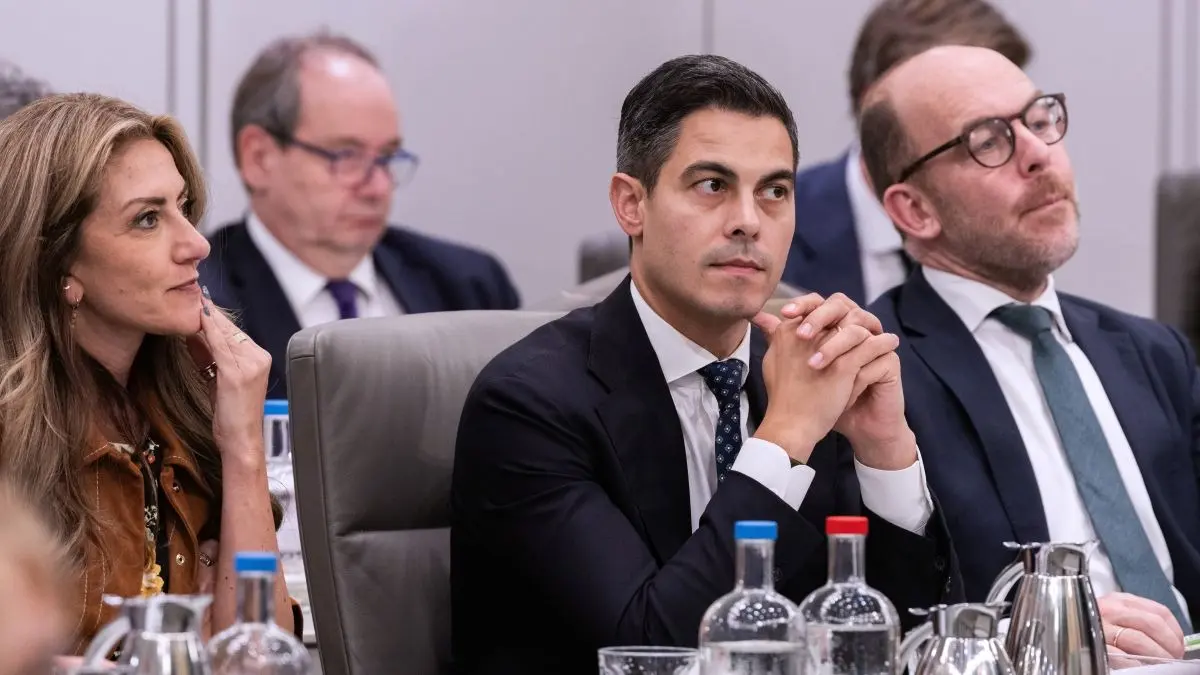
Top members of the Dutch cabinet have gathered in an urgent session to discuss a high-stakes ultimatum issued by a newly formed right-wing political alliance. The coordinated demands, presented on Thursday, threaten to upend the government’s legislative agenda and could ultimately determine the fate of the upcoming national tax plan under Prime Minister Jetten’s administration.
The political landscape shifted abruptly on Thursday morning when the leadership of three distinct right-wing and conservative parties—the far-right JA21, the orthodox Protestant SGP, and the agrarian-focused Farmer-Citizen Movement (BBB)—announced they were formally banding together. By pooling their legislative weight, the alliance aims to force major concessions from the governing coalition regarding key fiscal and social policies.
The coalition’s demands were formally laid out in a letter delivered to cabinet ministers late Wednesday evening. In the correspondence, the allied parties outlined a series of strict conditions. If these demands are satisfied, the group has promised to support the cabinet on the remainder of the tax plan and adopt a constructive approach toward the broader national budget. However, failure to meet their terms could leave the government scrambling for a viable legislative majority.
At the core of the alliance’s demands are sweeping alterations to state spending, taxation, and regulatory policy. The three parties are jointly demanding that the government scrap its proposed tax hikes, which were originally designed to fund increased defense spending in alignment with NATO commitments. In addition, they want the cabinet to abandon a controversial plan to raise the Value-Added Tax (VAT) on flowers, while simultaneously pushing for higher profit exemptions for small and medium-sized enterprises.
Beyond fiscal measures, the joint letter injects deeply contentious social and environmental policy changes into the negotiations. The BBB is pressing for significant adjustments to existing government nitrogen plans, a subject that has long dominated Dutch agricultural debates. Simultaneously, JA21 is demanding harsher, more restrictive measures concerning asylum and immigration. Meanwhile, the SGP has introduced socially conservative ultimatums, calling for an immediate pause on late-term abortions, home-based medical abortions, and surrogacy services.
This coordinated front complicates Prime Minister Jetten’s strategic objective of securing broad, cross-spectrum political support for his government’s policies. Jetten has previously sought to build coalitions that bridge traditional divides by drawing backing from parties across the political spectrum. However, this hardline alliance makes that aspiration increasingly unlikely.
The current political dynamic has placed the governing coalition in a precarious balancing act. Opposition parties on both the left and the right have repeatedly insisted that the coalition must clearly define its political direction by choosing whether to align with left-leaning parties such as PRO and Volt, or lean toward the political right. Within the governing coalition itself, internal divisions persist. Parties such as D66 and the Christian Democratic Appeal (CDA) have historically favored engaging with the political center-left, whereas the People’s Party for Freedom and Democracy (VVD) has shown an increasing inclination toward right-leaning policy alignments.
The policy changes demanded by the JA21-BBB-SGP alliance contain several measures that appear politically intractable for key members of the current government, setting the stage for intense cabinet friction. Among the most contentious points is the alliance’s demand to terminate the legal obligation tied to the so-called "spreading law." This legislation requires all Dutch municipalities to house a fair share of asylum seekers. Asylum Minister Bart van den Brink, a member of the CDA, has previously stated unequivocally that he cannot and will not commit to dismantling this framework.
Furthermore, the demand to drop the defense-related tax increases is particularly sensitive for the CDA, which has traditionally championed strong national security and international defense commitments. Similarly, the SGP’s hardline positions on abortion and surrogacy directly conflict with the progressive stance championed by coalition partner D66, creating deep ideological fault lines within the administration, as first reported by national broadcaster NOS.
Environmental policy represents yet another major stumbling block. The nitrogen reduction proposals put forward by the right-wing alliance directly contradict the regulatory agreements that the cabinet maintains are strictly necessary to resolve the ongoing permit crisis, which has stalled numerous construction and infrastructure projects across the Netherlands. Adding to the cabinet’s legislative dilemma, the progressive party PRO has warned that it will officially withdraw its support for the government if the core nitrogen plans are substantially altered or watered down to appease the conservative alliance.
As top cabinet ministers meet to deliberate their next steps, the government faces a delicate calculus. Weighing the demands of the JA21, BBB, and SGP against the red lines drawn by coalition partners and left-wing allies, the administration must navigate a narrow path to keep its fiscal plans intact and prevent a potential political crisis.