

On a secluded private peninsula on the sun-drenched Greek island of Rhodes, a landscape with a profound and monumental history has been thoughtfully transformed into a contemporary luxury destination. The site where Amoh, a Luxury Collection Resort, now stands once served as a primary source of limestone for the construction of the legendary Acropolis of Lindos. Today, this historic terrain has been reborn through a collaborative design vision that bridges the gap between ancient extraction techniques and modern hospitality, creating an architectural dialogue where landscape, raw materiality, and authentic Greek craftsmanship seamlessly intertwine.
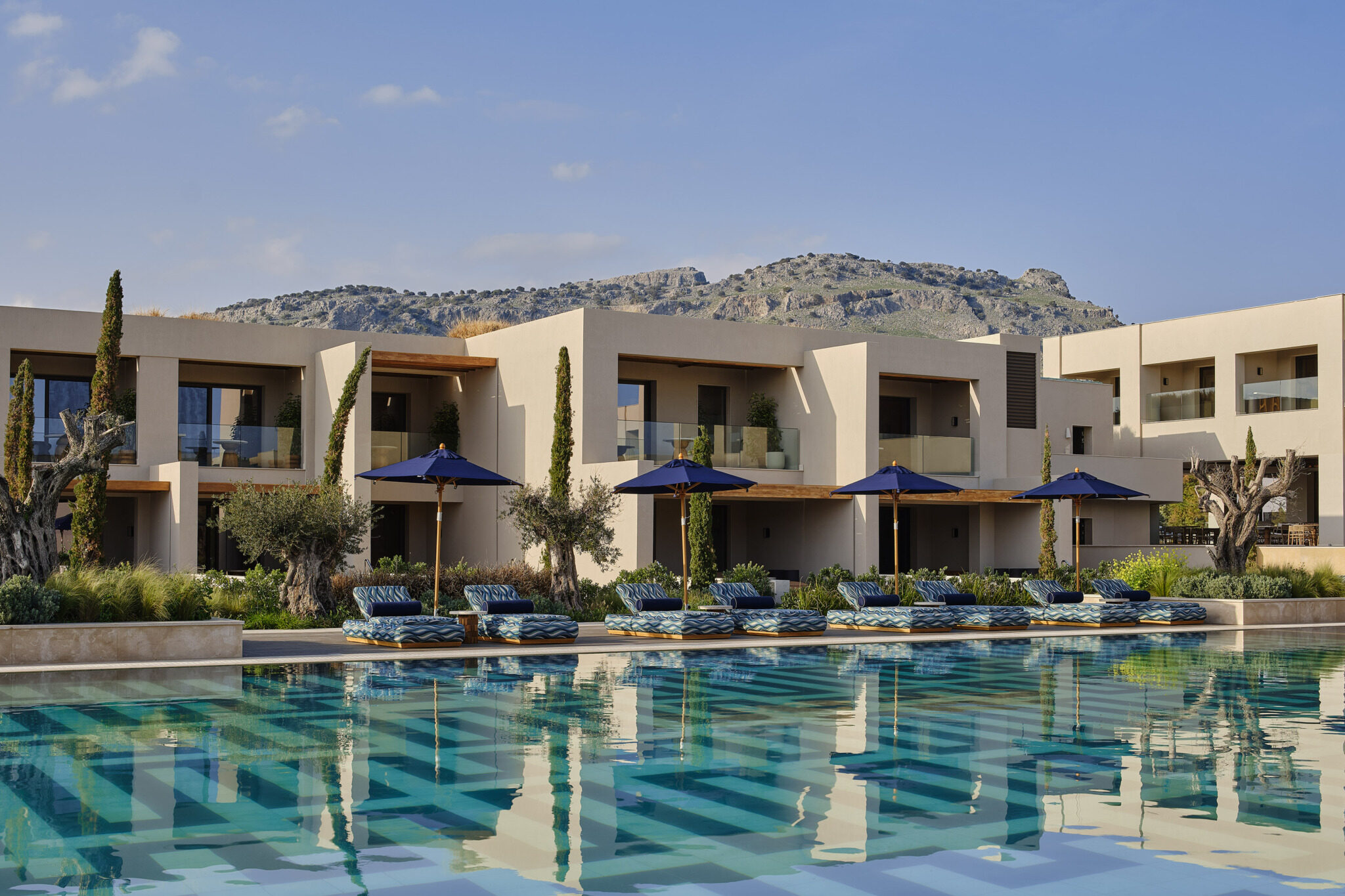
The interior architecture of the resort was spearheaded by the London-based design practice Studio Lost, led by founder Constantina Tsoutsikou. Rather than leaning into predictable Mediterranean clichés or overused tourist tropes, the design team chose to channel the island’s rugged coastal landscape through a restrained, sophisticated lens. Clean architectural lines, low-profile flat roofs, and deeply recessed openings establish a low-rise silhouette that allows the resort to sit comfortably and humbly within its dramatic natural surroundings. To maintain an intimate scale across the expansive property, the resort’s 197 rooms and suites are organized into distinct, village-like clusters, evoking the organic layout of traditional Greek settlements rather than a monolithic hotel complex.

The profound history of the site as a stone quarry informs nearly every aspect of the resort’s material palette. The extraction and shaping of stone are celebrated through monumental carvings, monolithic columns, polished vanities, and sculptural marble furniture pieces scattered throughout the property. According to Tsoutsikou, the prominent use of local stone evokes a sense of permanence and timelessness, capturing the enduring narrative of Ancient Greek heritage and craftsmanship in a way that synthetic or imported materials never could. This foundational stone-led material palette is further enhanced by large-format limestone tiles supplied by Atlas Concorde, anchoring the resort’s structures firmly to their geological roots.

Beyond structural stone, Amoh establishes a deep connection to local artisanal traditions through the revival of Rhodian pebble mosaics, a labor-intensive flooring technique deeply native to the region. One of the island’s last remaining master craftsmen was brought in to hand-lay the intricate flooring, drawing directly from a practice traditionally reserved for historic local courtyards. Individual pebbles were meticulously selected based on their specific shapes and natural colors before being arranged by hand into complex, flowing patterns that trace the footsteps of guests through key areas of the property.

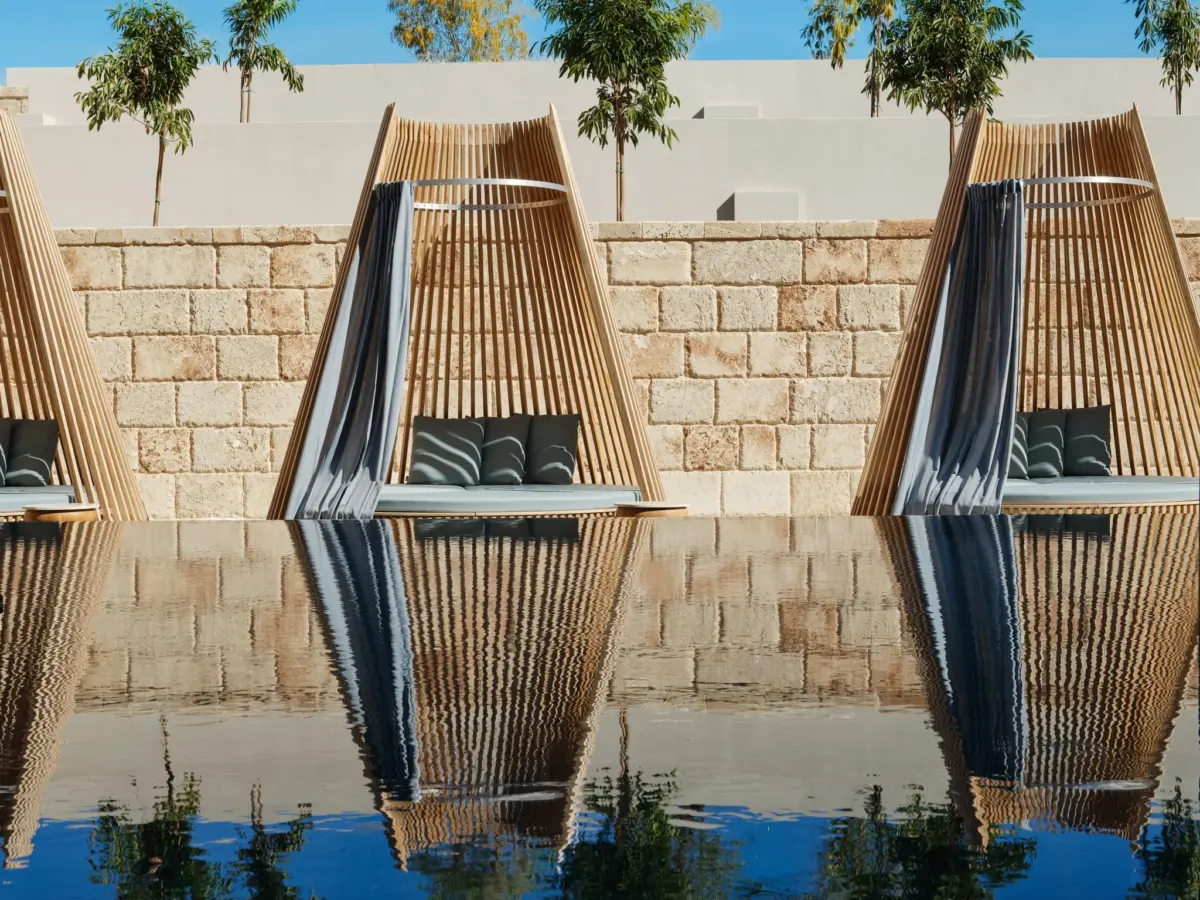
To soften the monumental strength of the stone and introduce a welcoming residential warmth, Studio Lost integrated dark-stained timber throughout the architectural elements and bespoke joinery. For Tsoutsikou, this custom woodwork functions as far more than mere decoration; it is an integral component of the resort’s overarching design language. The design team utilized timber to create a deliberate visual contrast against the heavier stone surfaces, bridging the gap between raw nature and human craftsmanship. From intricately detailed VIP pergolas to sculptural privacy screens and custom latticework, the joinery establishes an elevated benchmark for contemporary Greek hospitality design, connecting the built environment directly back to its geographical and cultural context.

Complementing the natural stone and rich timber are refined wallcoverings provided by the renowned French design house Casamance. A continuous herringbone pattern extends seamlessly from the indoor social spaces out onto the sunlit exterior terraces, reinforcing a fluid connection between interior sanctuary and the wide-open Mediterranean outdoors. Colorwise, the resort takes direct inspiration from the shifting, vivid tones of the Aegean Sea. Deep dark blues and rich emerald greens are woven liberally throughout the interiors, while weathered earth tones and subtle bronze accents help balance the bolder hues. Honeyed stone finishes and oxidized metal surfaces echo the weathered, wind-swept textures of the surrounding ancient quarry.

This sensitive material narrative extends into the resort’s wellness facilities, where the spa introduces a distinctly quieter, more contemplative atmosphere. Relying on soft pastel tones and warm oak, the spa features seven private treatment rooms, a dedicated wet lounge, an ice fountain, a steam room, and a dark timber sauna. Delicate shades of green run throughout the facility, gently complementing the broader material palette established across the rest of the property and offering guests a tranquil space for restoration.

Outdoors, the resort’s expansive swimming pool serves as the primary social hub, anchored gracefully by a light-filled central pavilion. The central bar features intricate timber lattice screens that reinterpret classical Greek geometric motifs, framed effortlessly by private cabanas and uninterrupted, panoramic views of the water. This dedication to hospitality and social gathering is mirrored in the resort’s four distinct restaurants, each of which interprets the overarching design language through a unique lens.

An open-air dining venue utilizes canvas canopies and colorful terrazzo dining tables to evoke the adventurous, exploratory spirit of early 20th-century archaeological expeditions. At Glaze, the traditional ceramic-firing process directly inspires an open kitchen design that places the culinary preparation on full display for diners. Meanwhile, a soaring architectural atrium defines Lithos, where rugged stone-clad walls and custom-suspended timber screens introduce both texture and a sense of intimate enclosure to the expansive dining space.

Throughout the public spaces, guest suites, and dining venues, oversized contemporary artwork and handcrafted objects add a deeply personal, human dimension to the resort’s monumental stone architecture. By celebrating the true richness of native Greek craftsmanship rather than relying on familiar design tropes, Studio Lost and the team behind Amoh have successfully crafted a destination that honors the historical legacy of Rhodes without attempting to merely replicate it—allowing traditional materials and ancient techniques to find a vibrant, new expression in a distinctly modern setting.