






Experiencing a typhoon was not what was on the itinerary for a first visit to Japan. Arriving in June—the traditional start of the rainy season—after boarding a plane from New York to Tokyo on the way to visit Casio for the very first time, the reality of the regional climate quickly set in. Turning off Airplane Mode right after landing immediately inundated the phone with emergency alerts warning that the following day would bring heavy winds and massive rainfall. As it turned out, the scheduled visit to Yamagata Casio the next day would be cancelled entirely due to tropical storm Jangmi, as no bullet trains would be running safely through such severe weather.

Fortunately, after a day of torrential downpours and a comforting meal consisting of multiple bowls of ramen inside Tokyo Station, the storm subsided. This gave the green light to finally make the journey north to Yamagata Prefecture. Yamagata Prefecture, and more specifically the city of Higashine, sits about four hundred kilometers north of Tokyo and roughly three hours away by Shinkansen bullet train. It is home to Casio’s "mother factory," very aptly named Yamagata Casio. While the vast majority of Casio’s high-volume watch production takes place abroad in countries like China and Thailand, Yamagata Casio functions as the technological and operational brain of the entire global enterprise, remaining directly responsible for every single watch that bears the coveted "Made in Japan" designation.

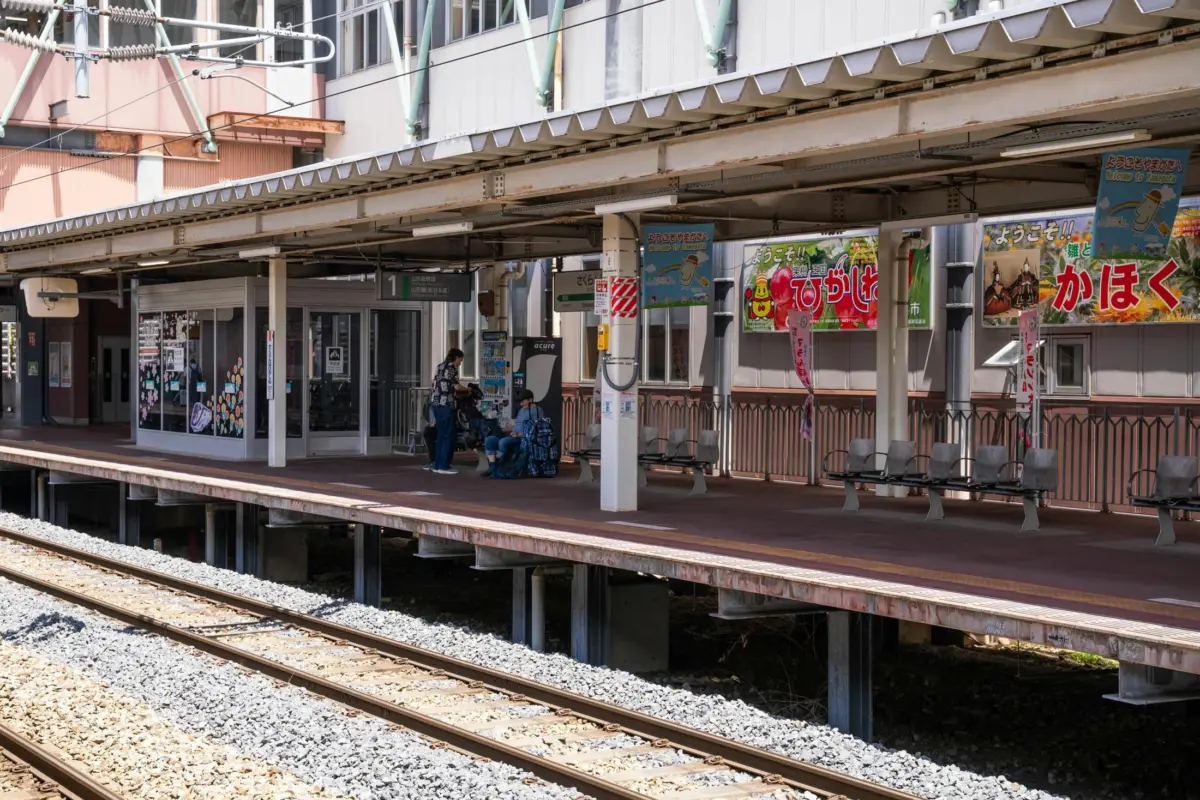
The industrial expanse of Casio’s factory stands in fascinating contrast to what Higashine is best known for: fruit. Stepping off the bullet train at Higashine Sakuranbo station immediately places visitors amid lush fruit trees and bountiful advertisements for the region’s specialty produce, most notably cherries, of which Higashine is the largest producer in the entire country. Naturally, in a culture that embraces mascots for nearly every municipality and enterprise, the city boasts a beloved character named Tanto-Kun—an anthropomorphic pear complete with a cherry-themed staff and cape.

Following a brief stop at a local soba restaurant for an exceptional bowl of buckwheat noodles, the journey continued with a twenty-minute drive until a giant "Yamagata Casio" sign signaled arrival at the gates. Under this single massive roof is housed Casio’s sole domestic watch manufacturing site. It is the birthplace of legendary models such as the cult-favorite screw-back GW5000U.

Unsurprisingly, this remote facility is not designed for casual tourists and remains firmly closed to the general public. For the select few invited to make the trek—including corporate partners, retailers, and members of the media—the entrance opens directly into a museum area. This dedicated space chronicles the brand’s history, displaying some of the most iconic, innovative, and occasionally unusual models produced throughout Casio’s rich watchmaking legacy.

Visitors who successfully make it through these doors are even greeted with a unique perk: two exclusive G-Shock models reserved strictly for those who travel to Yamagata. These are understated variations based on the standard 5600 model, distinguished by two discreet options for a Yamagata Casio logo printed directly on the strap.

While the facility tour offered a comprehensive look at the company’s broader operations—including quartz movement manufacturing, advanced injection molding, and the elite Premium Production Line—the primary purpose of the visit was a top-secret sneak peek into the mysterious "Blue Rose Project." This development ultimately culminated in the October launch of the ultra-exclusive, 20-piece, $80,000 blue sapphire-clad G-Shock MRG-D5000.

A Walk Through The Factory
Watchmaking at Yamagata Casio centers primarily on "Building G," a structure that opened in 2018 and is dedicated exclusively to the brand’s horological pursuits, while other sections of the sprawling site handle separate product lines like calculators and electronic instruments. As expected given the scale and technological nature of the enterprise, there are no traditional watchmakers hunched over quiet workbenches here; Casio’s production methodology is thoroughly industrial.

Movement Production
Given Japan’s frequent exposure to earthquakes, much of the heavy machinery inside the facility is not bolted to a static, rigid foundation. Instead, the floors housing these sensitive tools are decoupled and mounted onto an advanced seismic isolation system. In the event of ground tremors, this specialized mounting system allows the flooring to shift across several degrees of motion, effectively absorbing seismic energy and keeping the factory floor and delicate machinery completely stabilized. It is a remarkably fitting infrastructure for a facility dedicated to building the world’s toughest shock-resistant timepieces.

The Molding Department
Much of Casio’s fabrication relies heavily on precision injection molding, which makes complete sense given that G-Shocks are fundamentally synonymous with high-performance resin. While the actual molding process is heavily automated, a surprisingly large team of Casio technicians and engineers works behind the scenes to translate complex component, case, and strap designs into physical reality through custom tooling. Alongside the creation of new tooling for upcoming projects, the team maintains a massive ongoing maintenance operation to keep existing molds performing flawlessly.

In many instances, the injection molding step for exterior parts like bezels and outer cases is integrated directly into the assembly lines. A freshly molded outer case is ejected and immediately combined with an inner case ring to form the final midcase structure.

Dial-making at Yamagata Casio
To create the diverse array of dials found across Casio’s various price points, the facility employs a mixture of industrial processes tailored to specific collections and components. Most notably, the vast majority of Casio dials and indices are actually injection-molded from specialized resin, even components that might visually appear to be machined from metal. For instance, the intricate lattice-work dial of the MRGB-2100, which features precise openings designed to permit solar charging, is produced entirely through this injection-molding method.

To achieve the distinctive metallic aesthetic seen on many of these dials, components undergo multiple rounds of physical vapor deposition (PVD) coatings, often referred to within the facility as sputtering. The Yamagata Casio team takes immense pride in its advanced PVD capabilities, which enable the wide spectrum of vibrant, colorful designs characteristic of the brand’s catalog.

For the brand’s most intricate dials—those defined by sharp, complex facets and minute geometric patterns—Casio utilizes molds crafted via ultra-precise 5-axis CNC machines. While CNC machining is widespread throughout modern manufacturing, Casio employs specialized machinery capable of processing shapes with nanometer-level accuracy. For perspective, 0.1 millimeters equals 100,000 nanometers. Because environmental factors like microscopic vibrations and minor temperature fluctuations can adversely affect such delicate work, these nano-machining operations are strictly isolated from the rest of the factory floor. Due to the immense challenges involved, production output is intentionally kept low, making this high-precision approach ideal exclusively for dials and indices requiring absolute perfection.

The Premium Production Line
For enthusiasts of the brand, perhaps the most compelling section of the facility is the Premium Production Line, which oversees the meticulous assembly and final inspection of Casio’s highest-end timepieces. This dedicated line handles the brand’s flagship MR-G G-Shock collection—a high-end tier that reinterprets the classic mass-produced formula through hand-finished, intricately engineered craftsmanship—alongside flagship Oceanus models, MT-Gs, and high-end Gravity Masters.

The workforce manning this line is governed by a rigorous five-tier certification system, with "Meister" representing the absolute pinnacle of achievement. Attaining this status requires passing comprehensive yearly examinations, and only personnel who have earned a Gold Medal or higher are qualified to work on the Premium Production Line.

While the precise activities on the line vary hour by hour depending on current production schedules, the observation window captured technicians rigorously inspecting already-cased Gravitymaster watches. Witnessing timepieces retailing below the thousand-dollar mark subjected to such an extensive, hands-on quality control protocol by a room full of trained specialists underscored the brand’s uncompromising commitment to standard across its offerings.

Made in Japan
Casio occupies a fascinating and unique position within the broader watch industry, operating fundamentally as an electronics manufacturer at its core. None of the personnel bear the traditional title of "watchmaker," nor are there traditional mechanical balance wheels or pallet forks anywhere on the premises. Yet, the company continues to produce some of the most culturally significant and recognizable timepieces in the world.

Ever since Kikuo Ibe invented the original G-Shock in the 1980s, Casio has successfully integrated its products into popular culture and daily mass adoption on an unprecedented scale. Today, watches represent the largest segment of the brand’s business. While the vast majority of the millions of watches Casio manufactures annually are produced overseas, Yamagata Casio remains the crown jewel of the entire operation. Within the passionate global community of G-Shock collectors, any timepiece bearing the "Made in Japan" caseback carries a distinct and revered prestige.

After a productive visit to the heart of Yamagata Prefecture, the journey concluded back at the Higashine train station. Walking past the giant cherry advertisements once more, picking up a box of regional cherry-flavored Pocky snacks for the journey, and boarding the Shinkansen back to Tokyo marked the completion of a major horological milestone—one happily achieved despite the early disruption of a Pacific typhoon.