





By Professional News Desk
Japan’s ambitious Martian Moons eXploration (MMX) spacecraft is set to execute a critical engine burn to slow its velocity and successfully enter orbit around Mars, marking a major milestone in an unprecedented interplanetary campaign. Launched aboard the Japan Aerospace Exploration Agency’s flagship H3 rocket from the Tanegashima spaceport, the spacecraft has begun a multi-year voyage designed to answer profound questions about the origins of the Red Planet’s moons and the evolution of the early solar system.

The mission, more than a decade in the making, centers on Phobos—an enigmatic, potato-shaped satellite named after the Greek god of fear and panic. While NASA’s Perseverance rover recently captured a fleeting glimpse of Phobos transiting across the glowing solar disk from the Martian surface, scientists know remarkably little about the moon’s composition and history. To bridge this gap in our planetary knowledge, the international MMX mission aims to conduct an extraordinary series of landings on Phobos, collect pristine samples from beneath its weathered surface, and return them securely to Earth.
Operating in a microgravity environment orbiting a much larger planet introduces staggering engineering obstacles. Engineers had to devise novel orbital mechanics, methods for evaluating a loosely assembled pile of cosmic debris, and reliable mechanisms for capturing samples in a realm where a typical human adult would weigh roughly as much as a single tennis ball.

"I often say that landing on Phobos is like trying to land a balloon," says Yasuhiro Kawakatsu, project manager of MMX at JAXA. "It’s very difficult to drop a balloon to the ground and prevent it from tilting or bouncing."
Why Phobos Is Such a Strange Moon
Phobos and its smaller sibling, Deimos—named after the Greek god of dread and terror—have long puzzled astronomers. Their true origins remain fiercely debated within the planetary science community. One prevailing theory suggests the moons are captured asteroids originally formed in the belt between Mars and Jupiter, pulled into orbit by the planet’s gravitational field. A competing hypothesis proposes that Phobos and Deimos were born from a catastrophic impact, when a massive celestial body struck Mars and hurled a vast ring of debris into space, some of which coalesced into satellites.

Physically, Phobos is classified as a rubble pile: a loosely consolidated agglomeration of rock fragments and fine dust. Lacking sufficient mass to pull itself into a sphere, the lumpy body stretches roughly 27 kilometers in length and possesses a mere 1/1,800th of Earth’s gravity.
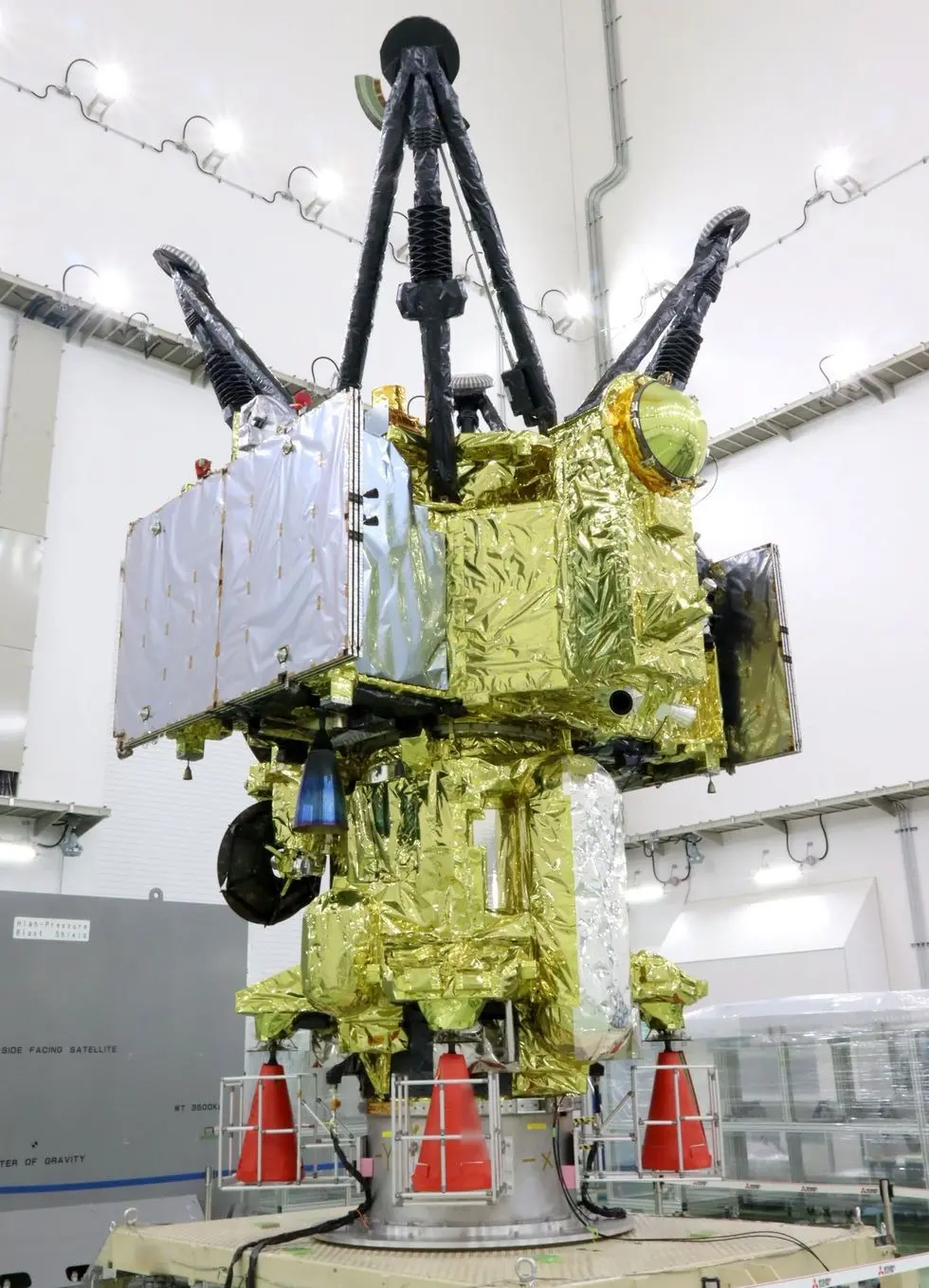
The MMX spacecraft carrying scientific instruments from international partners—including NASA, the French space agency CNES, and the German aerospace center DLR—is structured into three modular components. These include a propulsion module to power the cruise and orbital insertion, an exploration module equipped with sampling gear and the rover, and a return module housing the atmospheric reentry capsule. After completing operations, the exploration and return modules will lift off together before the exploration module is jettisoned, leaving the return capsule to journey back to Earth.

If everything proceeds according to the mission timeline, MMX will deliver a 10-gram sample to Earth in the second half of 2031. Along the way, the spacecraft must navigate complex gravitational fields and execute delicate maneuvers while periodically losing direct communications with Earth during solar conjunctions.
"It’s the most complex mission I have ever seen," says Patrick Michel, director of research at CNRS (the French National Center for Scientific Research) and co-principal investigator on the mission’s rover.

How MMX Will Orbit Phobos
Following its launch on October 20, the propulsion module initiated a nearly year-long deep-space transit. Upon reaching Mars, the spacecraft must execute a precise, extended engine burn to decelerate sufficiently for Martian gravity to capture it. Should this maneuver fail, the spacecraft would be flung out into deep space.
"If something doesn’t go according to plan, MMX will fly by Mars and get catapulted into the solar system," notes Nicola Baresi, an astrodynamicist who co-authored research on the mission’s specialized orbits.

Rather than maintaining a conventional orbit around Phobos—which is physically impossible given the moon’s minuscule gravitational pull—MMX will adopt a quasi-satellite orbit. The spacecraft will loop along an egg-shaped path around Mars itself, moving synchronously with the moon, alternately accelerating ahead of and decelerating behind it based on its proximity to the planet.
To map the terrain in granular detail, MMX will adjust its distance from the surface between 200 kilometers and less than 20 kilometers. Previous images from missions like NASA’s Mars Reconnaissance Orbiter and ESA’s Mars Express provided resolutions of only a few meters per pixel. During a two-year remote sensing campaign, MMX will utilize advanced cameras and laser altimeters to scout optimal landing locations before retreating to a stable orbit during a scheduled two-week solar communication blackout.

Idefix Rover: The First Penguin
Before attempting to land the primary exploration module, mission planners will deploy a small scout referred to in Japanese as "the first penguin"—a metaphor for leaping into unknown waters. This scout is the Idefix rover, developed jointly by DLR and CNES in collaboration with JAXA, and named after the faithful canine companion in the classic French comic series Asterix.
During a low-altitude pass ranging from 40 to 100 meters above the surface, the exploration module will release the 23-kilogram rover. The deployment evokes memories of Japan’s 2005 Hayabusa mission to the asteroid Itokawa, where an errant release altitude resulted in a rover drifting into space.

Idefix will freefall and likely tumble toward the surface, touching down at less than one meter per second. Lacking traditional landing legs or protective airbags, the rover relies on Phobos’s negligible gravity to soften the impact.
"It will bounce probably several times," explains Stephan Ulamec, Idefix co-principal investigator and project manager at DLR. "It will come to rest somehow in some position."

Once stationary, four articulated legs will autonomously right the rover regardless of its orientation, allowing it to unfold its solar panels and begin operations. Traveling at a crawling pace of one millimeter per second, Idefix utilizes specialized metal wheels featuring paddle-like blades designed to grip the microgravity regolith.
Twin cameras mounted on the underside of the rover, known as WheelCams, will analyze the interaction between the wheels and the soil during its 100-day primary mission. Researchers will use these observations to assess grain size, porosity, and surface cohesion, bridging the gap between orbital remote sensing and laboratory analysis of returned samples.

How MMX Will Land and Collect Samples
Following the rover’s reconnaissance, the larger exploration module faces the formidable task of touching down on Phobos. After a controlled descent to 10 meters, the spacecraft will drop the remaining distance in free fall. A successful upright landing will grant the mission roughly two hours on the surface to execute its sampling protocols.
Drawing on technical heritage from the Hayabusa asteroid missions, MMX incorporates two distinct sampling mechanisms to ensure redundancy. A robotic coring sampler, developed by JAXA, will deploy a cylindrical arm designed to penetrate at least two centimeters beneath the weathered top layer, avoiding solar radiation and cosmic ray damage. Simultaneously, a pneumatic sampler provided by NASA and built by Honeybee Robotics will inject non-reactive nitrogen gas into the regolith to stir up and capture loose surface grains.

This dual approach guarantees material collection regardless of surface hardness. Furthermore, scientists calculate that Phobos’s surface may contain hundreds of microscopic grains blasted off Mars by ancient asteroid impacts. By analyzing oxygen isotopes, researchers hope to identify and analyze the first authentic Martian samples returned to Earth. Because these particles arrived on Phobos via natural impacts rather than direct collection from the planet, the mission avoids complex planetary protection quarantine protocols.
After storing the acquired material in a vacuum-sealed capsule within the return module, the spacecraft will lift off from Phobos. Following additional flybys of Deimos, the return module will detach in late 2030 and set a course for Earth.

In 2031, the 60-centimeter sample capsule will plunge into Earth’s atmosphere at approximately 12 kilometers per second. Upon recovery in Australia, the samples will be curated by JAXA and distributed to international partners for comprehensive analysis. By connecting macroscale orbital data, microscale rover measurements, and laboratory sample analysis, scientists hope to clarify how terrestrial planets like Earth and Mars acquired the water and organic compounds essential for habitable environments.