






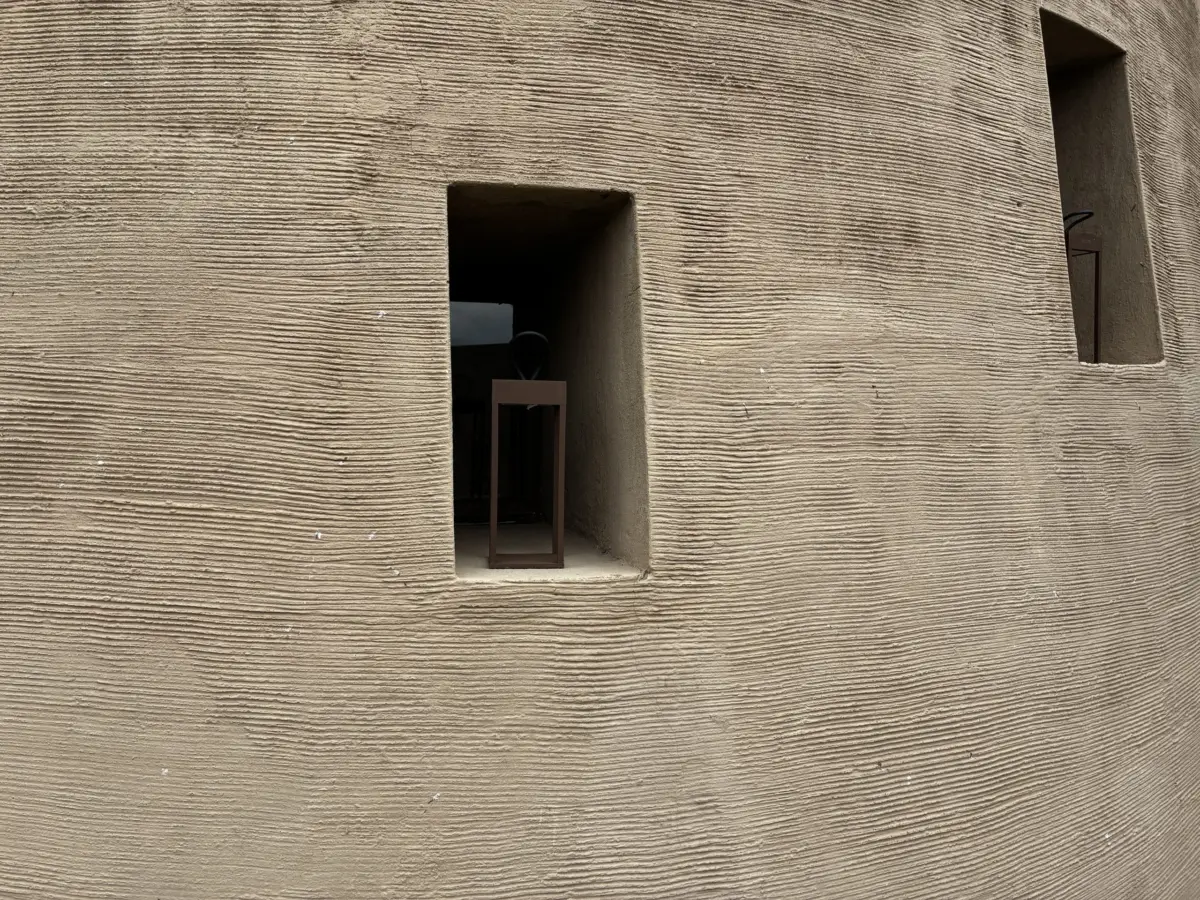
Kenya’s Amboseli National Park is world-renowned as a sanctuary for over 400 species of birds and more than 55 types of mammals, but it is equally striking as a landscape defined by raw textures and vibrant earth tones. A journey across the park’s 392 square kilometers reveals a deeply tactile environment composed of gleaming salt flats, rich red clay, sun-bleached savannah grasses, verdant sage, rigid sedge stalks, and spiky, yellow-barked acacia trees. The earthy color palette, brilliant golden light, and diverse array of physical textures not only characterize this unique East African ecosystem, but they also serve as the foundational inspiration for the design of the nearby Kitirua Plains Lodge, a flagship property under the A&K Sanctuary collection.
A&K Sanctuary, an exclusive hospitality collection operated by global luxury travel pioneer Abercrombie & Kent, currently encompasses 13 high-end safari lodges, a fleet of six luxury riverboats, and an upcoming high-end Airstream camp in Bolivia slated for 2027. Kitirua Plains Lodge stands as the collection’s newest jewel in Kenya, occupying a privileged site within a 128-acre private conservancy that directly borders Amboseli National Park and commands breathtaking vistas of Mount Kilimanjaro—affectionately referred to by locals simply as "Kili."
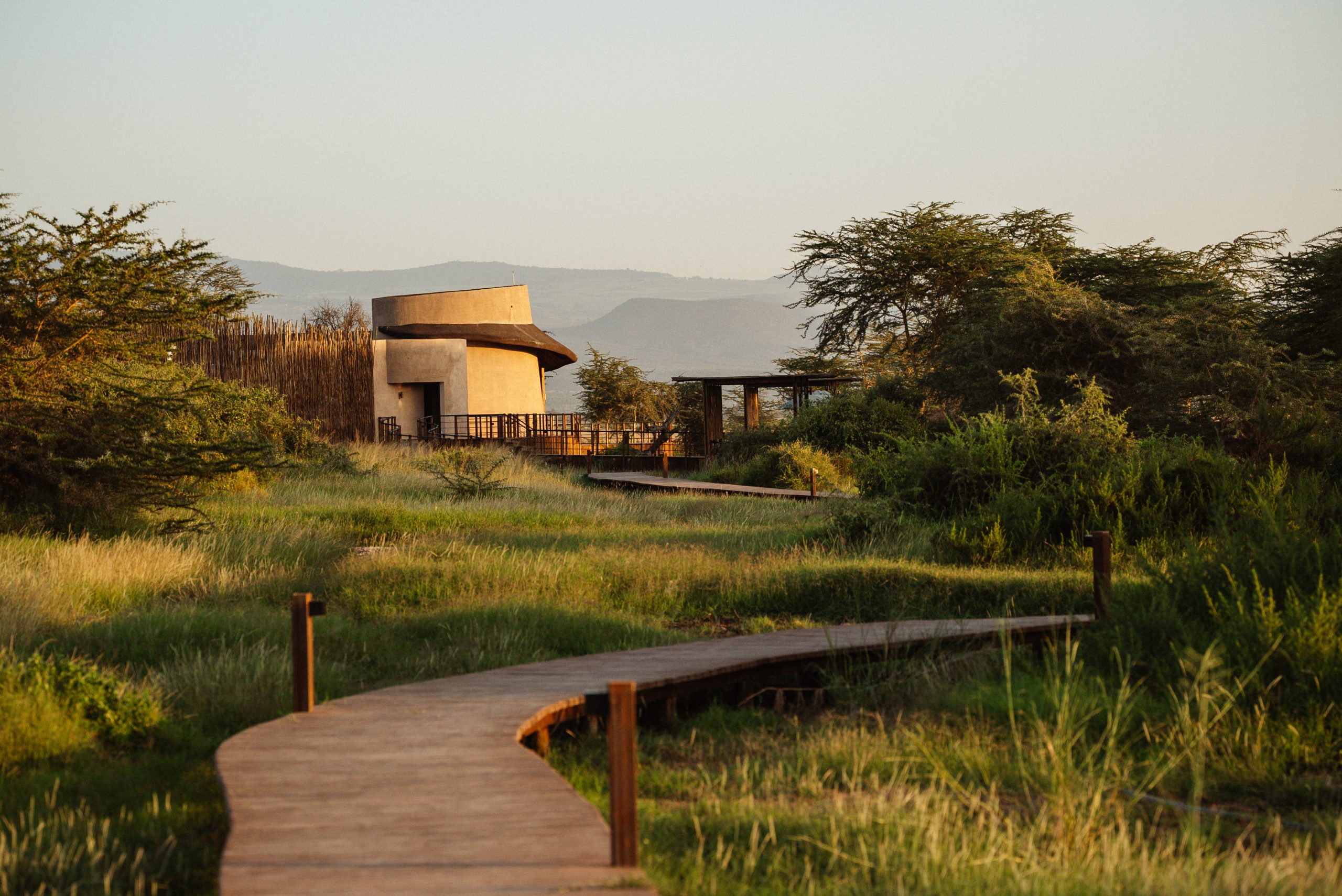
While many traditional safari destinations lean heavily into the classic canvas tent aesthetic long associated with African expeditions, Kitirua Plains Lodge deliberately charted an entirely different visual and architectural course. Luxury Frontiers, a prominent South Africa-based design and architectural firm that spearheaded every facet of the property’s concept, masterplanning, and construction, drew profound inspiration from both the immediate natural environment and the neighboring Maasai community, whose cultural ethos is rooted in living in harmonious balance with the natural world. The resulting architecture eschews slick, shiny, or overly manufactured surfaces in favor of gently curved earthen walls, natural stone tiles, dried grass textile art, rich mango wood panels, and handwoven sisal ceilings. The entirely off-grid lodge seamlessly merges with the surrounding terrain in a manner that feels exceptionally warm, inviting, and deeply respectful.
"Our approach is to understand and draw inspiration from the place, its vernacular architecture, local communities, cultures, materials, and environment," explains Guy McGregor, Managing Director of Luxury Frontiers. "Our design team is entirely African, bringing an authentic understanding and appreciation of the diverse contexts we work across the continent. We respond to the specific sense of place, culture, and character of each project and location."
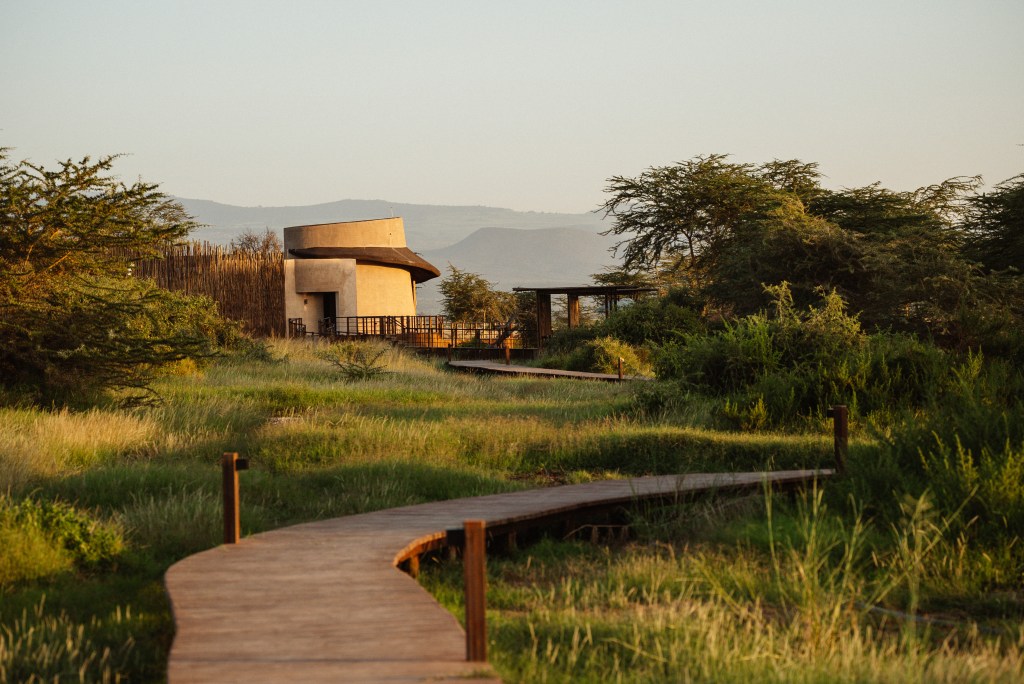
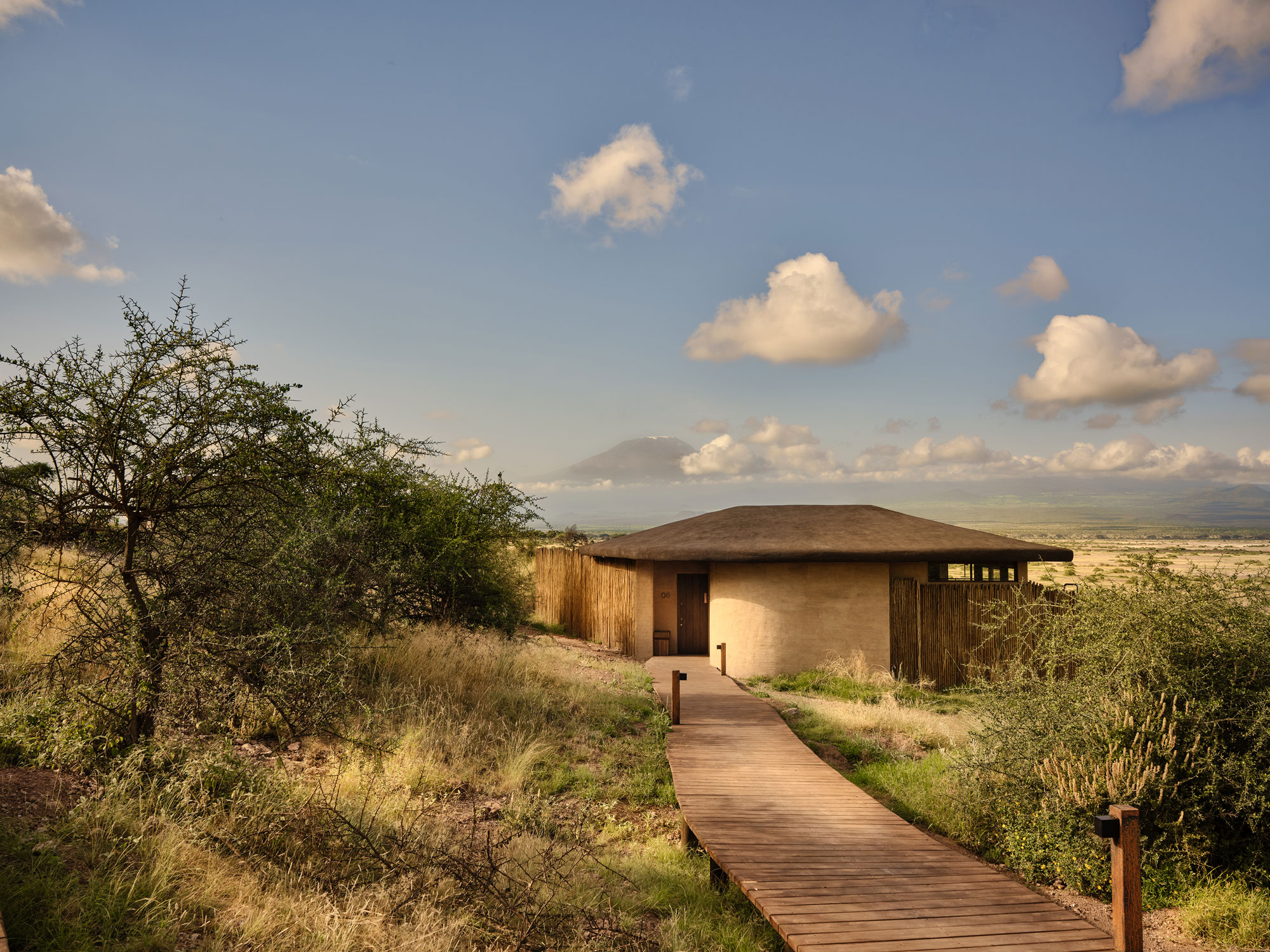
Opening to travelers, Kitirua Plains Lodge features 11 spacious guest suites alongside two expansive double units tailored specifically for families and small travel groups. Guests approach their accommodations via a gentle walk down a curved cypress wood pathway illuminated by oxidized bollards, leading to a remarkably private oasis. Each low-slung suite functions as a distinct freestanding building, ensuring optimal spatial separation and profound tranquility. Furthermore, every structure has been strategically positioned along the land’s natural slope to maximize uninterrupted, panoramic views of Mount Kilimanjaro.
Inside, the accommodations are outfitted with a comprehensive array of amenities, including both indoor and fully private outdoor showers, deep freestanding soaking bathtubs, expansive bedrooms wrapped in floor-to-ceiling windows, and separate sitting rooms featuring pull-down projection screens that open out onto private verandas. These outdoor living spaces serve as prime vantage points for observing local wildlife congregating at nearby watering holes throughout the day. Visitors regularly report sightings of giraffes, zebras, wildebeests, countless bird species, and multiple herds of elephants right from the comfort of their rooms, alongside occasional encounters with local wildlife personalities like "Hank the Tank," a resident hippopotamus affectionately named by the lodge staff.

Natural materials permeate both the private guest quarters and the expansive communal facilities. Locally sourced Verde marble tiles line the washroom walls, while dark Mazeras stone flooring mirrors the ash-colored dust of the plains and the rich darkness of the African night sky—the latter providing a stunning backdrop for stargazing, where guests frequently catch unforgettable glimpses of the Milky Way and shooting stars along the pathways. Woven sisal ceilings introduce an element of cozy warmth, and nearly 90 percent of the African teak and mango wood furniture found throughout the property is manufactured locally within Kenya. Even the textured plaster walls incorporate actual soil harvested directly from the construction site, effectively camouflaging the buildings into the landscape by literally utilizing the earth itself in the architectural process.
These deliberate design choices reflect a profound alignment with the semi-nomadic Maasai people who have inhabited the region for centuries. "Guided by Maasai principles on living alongside nature, the design respects the land as something to exist within rather than dominate," notes McGregor. "The result is an interior that feels connected to where it is, rather than something that could have been placed anywhere."

The lodge maintains a deeply collaborative partnership with its Maasai neighbors, leasing the land directly from the community and fostering a cooperative framework centered on mutual respect for the environment and each other. Numerous Maasai individuals are employed at Kitirua Plains in various capacities, offering guests invaluable opportunities to engage with local experts. Naturalist and guide David Kilelo, for instance, leads evening fireside discussions on Maasai culture followed by immersive walking safaris across the conservancy.
To extend its positive regional impact, visitors are encouraged to support ongoing community initiatives through A&K Philanthropy, the nonprofit arm of Abercrombie & Kent dedicated to community-first conservation in global travel destinations. Travelers visiting nearby Maasai villages gain firsthand insight into local development efforts, such as the construction of new educational facilities for children and the implementation of the LifeStraw Water Filter initiative, which provides safe, clean drinking water to local schools. Guests also have the opportunity to visit vibrant craft markets where women of the tribe showcase and sell handcrafted goods, including intricate beaded jewelry, painted vessels, and carved wooden figurines.
Back at the main lodge, expansive communal areas—including open-air dining rooms, shaded patios, and a salt-water infinity lap pool—are thoughtfully designed to frame the dramatic savannah vistas while offering the comfort of a sophisticated outdoor living room. Guests gather here to unwind on plush seating, enjoy sunset fires known locally as bomas, and observe distant wildlife using the complimentary high-end Leica scopes stationed on the observation deck. Following morning and afternoon game drives, these shared spaces provide a tranquil haven for spotting animals such as mischievous vervet monkeys playing among the acacia branches.
The realization of Kitirua Plains Lodge relied heavily on close collaborations with regional artists, makers, and craftspeople to infuse personalized textures into every corner of the property. "Sourcing was not a process that followed design at Kitirua; it became one of the tools through which the design was made," McGregor explains. "We spent time in Kenyan markets, artisan workshops, and manufacturing studios, understanding what was being produced, how materials were worked, and where there was an opportunity to create something specific to the site. Those conversations shaped the interiors as much as the drawings did."
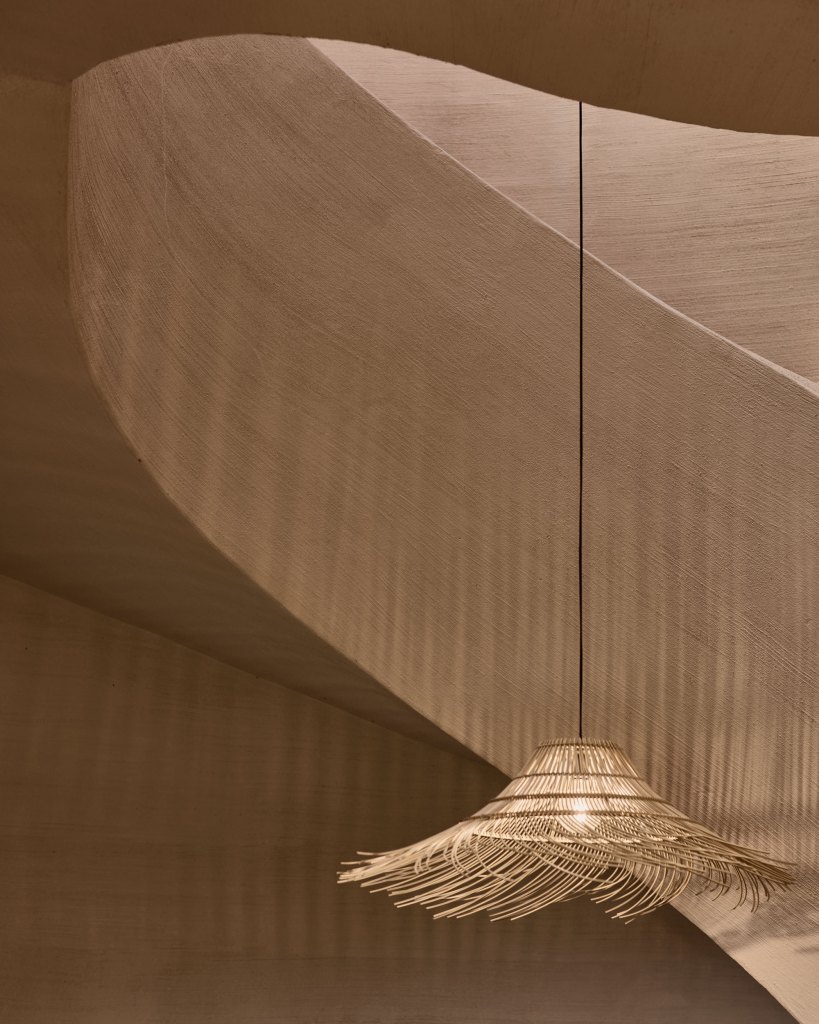
The solid stone floors and dark wood surfaces are softened by cotton throws, comfortable cushions, and custom grass-woven tactile artworks produced by the artisanal studio Lucidity. In the main lobby, a monumental sculptural installation hangs from the ceiling, crafted from woven sisal and hand-shaped clay beads sourced from the foothills of Mount Kenya by Ceramiqa. "Each bead varies in shape, size, and color, making that variation part of the character of the piece," says McGregor.
Additional interior elements were developed in partnership with Afrika Yetu, a Nairobi-based social enterprise that engaged local women artisans to produce the signature woven ceilings, hand-woven baskets, welcome trays, and guest accessories. Furniture and decorative objects were similarly realized through collaborations with Tira Studio, specialized glasswork was acquired from Kitengela near Nairobi, and structural steel components—such as the dramatic fireplace hoods and boma firepits—were fabricated by Rusty Fundi. "The steel has been left to weather naturally, allowing time and climate to become part of the finish," McGregor notes.
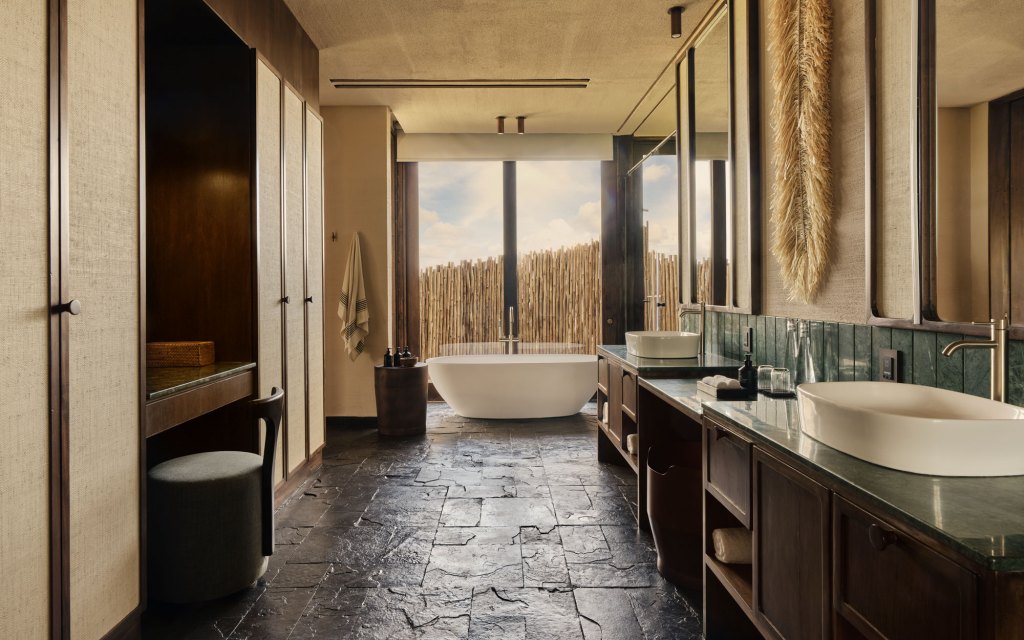
By prioritizing local procurement and restricting specialized manufacturing to the broader East African region whenever necessary, the development team successfully shortened supply chains, supported regional enterprises, and established a cohesive, authentic material language throughout the lodge.
Beyond its material and cultural commitments, Kitirua Plains Lodge implements comprehensive sustainability practices. The entire property operates on photovoltaic solar energy, while careful architectural orientation maximizes cross-ventilation, optimizes natural lighting, and frames the iconic Kilimanjaro views. Mirroring the conservation ethos of its Maasai neighbors, the lodge employs advanced resource management systems, including rainwater harvesting, greywater recycling, and on-site wastewater treatment, ensuring that its operational footprint remains as light as possible on the delicate ecosystem.

Ultimately, Kitirua Plains Lodge offers an immersive, inspiring experience that harmonizes the refined elegance of sustainable luxury design with a profound reverence for the traditional stewards of the East African wilderness. By following the natural rhythms of the land, the property invites travelers to tread lightly, observe wildlife respectfully, and appreciate the raw, untouched beauty of Amboseli.