



The third biennial edition in Lisbon has once again demonstrated how a visionary curatorial proposition can radically expand the critical discussion surrounding contemporary jewelry. By bridging the gap between traditional craft and contemporary art, philosophy, and architecture, the event transformed the Portuguese capital into a living laboratory of ideas. Across various venues in Lisbon, the theme of coexistence manifested as a practical, ongoing negotiation between physical objects, human bodies, diverse histories, and distinct cultures.
At the heart of the event, the main exhibition, Coexistences—Jewellery and the World’s Beauty, remains on view at MUDE, Lisbon’s prominent design museum, through January 31, 2027. Curated by Marta Costa Reis and Patrícia Domingues, the landmark presentation brings together 156 remarkable works created by 70 international artists. The exhibition directly addresses pressing contemporary questions: How do nature, human beings, and emerging technologies coexist within established systems and beyond their borders? Posthumanism and complex encounters between the material and the ephemeral, as well as the natural and the artificial, serve as the conceptual threads running through the entire display. Delicate brooches share gallery space with large-scale objects, immersive installations, and video works, effectively positioning jewelry within a much broader cultural and material conversation.
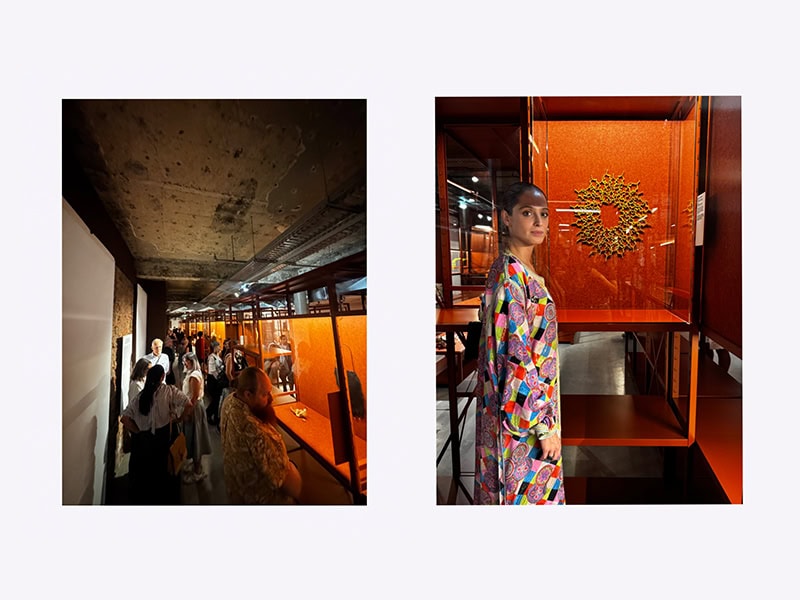
Also housed at MUDE, a special exhibition celebrates artist, teacher, and gallerist Tereza Seabra’s generous donation of her extensive private collection to the city of Lisbon. Assembled steadily since the late 1960s, the collection comprises 346 works by 196 artists, tracing six decades of evolution in contemporary jewelry while simultaneously mapping Seabra’s rich professional relationships and personal history. Rather than following a strict chronological path, the works are organized across twelve interconnected sections categorized by color, scale, material, form, and technique. In an adjacent space, a separate tribute honors her first jewelry instructor, Thomas Gentille, who passed away earlier this year.
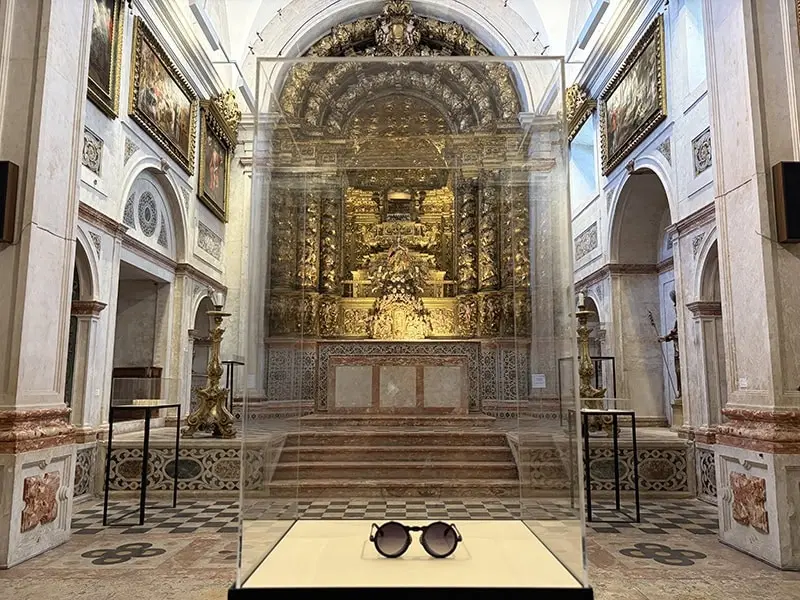
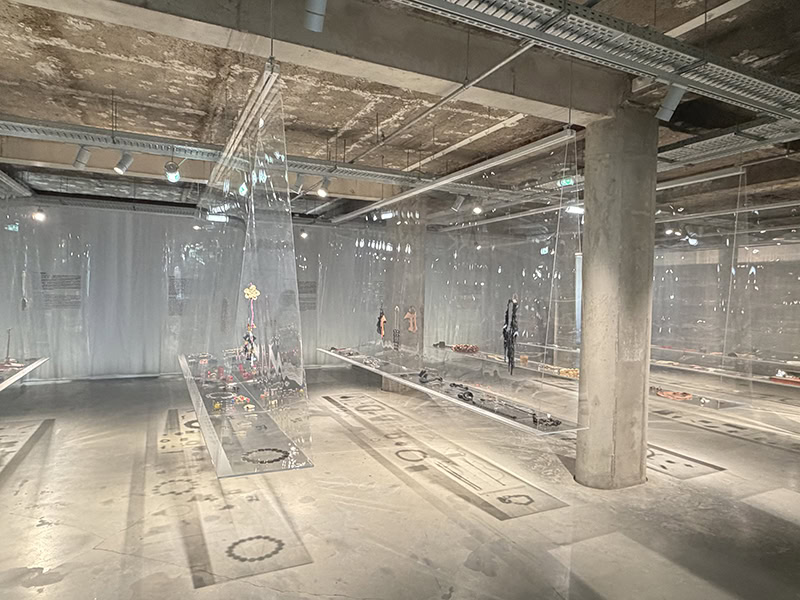
Visitors moving through the space noted the pervasive use of transparent plastic display materials. While these clear cases allow viewers to observe individual pieces from every possible angle—even from underneath—they also create a visually complex environment where isolating individual works can prove challenging. Yet, as fellow artist Ruudt Peters remarked when the observation was shared, "But that’s Tereza! Diverse, vibrant!"
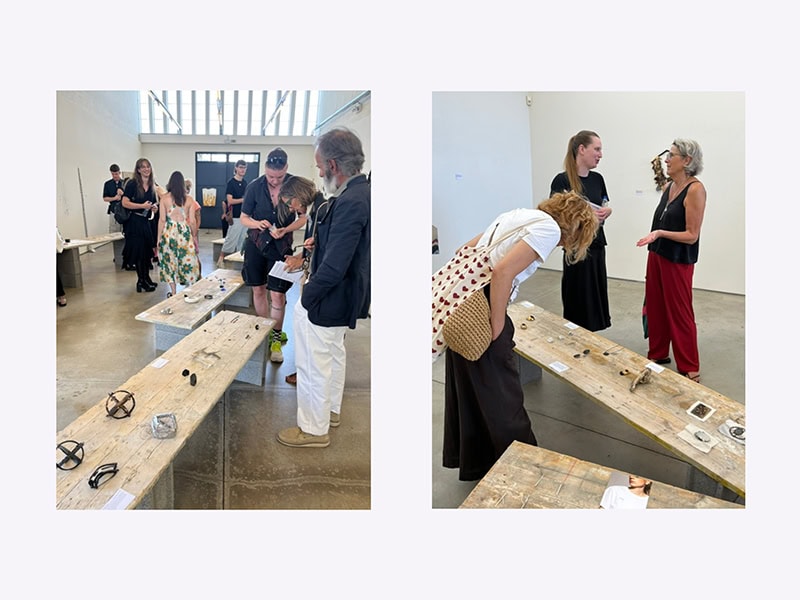
Education and emerging talent found a dedicated platform in Schools at Ar.Co, curated by Catarina Silva. The exhibition presented approximately 130 student works hailing from seven different countries. Silva explained the curatorial framework behind the showcase, noting that each participating school assigned "coexistences" as their primary semester theme, after which a designated teacher selected up to 10 students to represent their institution on an international stage.
A defining characteristic of this year’s biennial was its deep integration into the city’s sacred spaces, with 11 out of the 28 official events and projects—accounting for more than 30% of the program—occupying functioning churches and their adjoining rooms. This spatial choice prompted vital questions among visitors and curators alike: Can a baroque architectural environment, already heavily burdened with historical and religious meaning, truly serve as an effective neutral setting for contemporary art exhibitions? Participating artists faced the delicate challenge of creating compelling, modern displays while maintaining deep respect for the host setting’s unique symbolism, materials, and architectural legacy.
What Makes Us Blind offered a particularly persuasive response to this challenge at the Convento dos Cardaes, a functioning convent that also provides residence and care for women who are blind or live with other disabilities. Echoing the title of Otto Künzli’s iconic 1960s statement piece Gold Makes You Blind, curators Costa Reis and Manuel d’Olivares explored gold’s multifaceted role in jewelry, social stratification, and material hierarchies, thoughtfully placing contemporary pieces alongside thematically related artworks belonging to the historic convent.
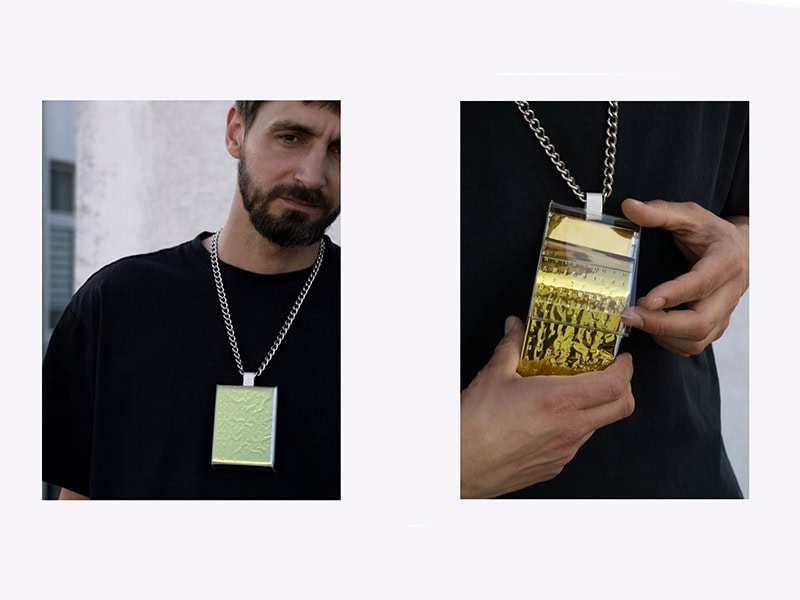
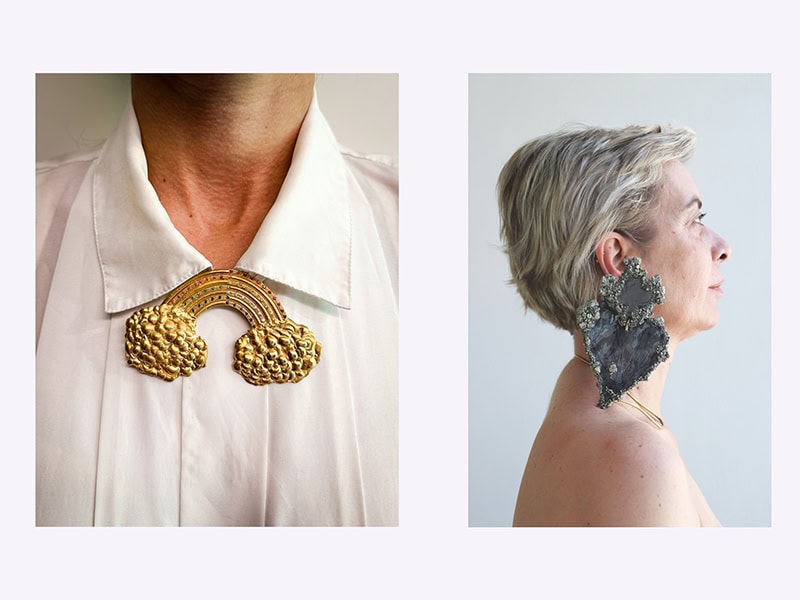
From this exhibition, three standout participants were honored with prizes, each receiving a one-year Silver-level Art Jewelry Forum membership. Viktoria Austmeyer claimed first prize with a pendant containing a gold-colored emergency blanket embossed with the word "Humanity," designed to be unfolded by the wearer whenever needed, either for themselves or for someone else in distress. Maria Benedita secured second prize with a piece invoking the classic Irish legend of finding gold at the rainbow’s end—a treasure that remains forever unreachable because the position of a rainbow depends entirely on its observer. Carla Solheiro captured third prize with provocative earrings referencing Desfile da Mordomia, a traditional northern Portuguese procession in which women proudly display family gold weighing anywhere from one to over five kilograms. By recreating these heavy ornaments in toxic lead, Solheiro directly questioned the psychological and physical burden of status and generational inheritance.
In a powerful moment of inclusive engagement, several blind parishioners were invited to experience the exhibition pieces through the sense of touch. Curator d’Olivares recalled their moving reactions: one visitor touched a piece and exclaimed, "How beautiful!" Another noted that she could distinctly feel the immense amount of labor and craftsmanship that had gone into the creation. A third visitor, upon touching a necklace featuring silver flies crafted by Geraldine Fenn, admitted she could not identify them through touch alone, noting that while flies are physical creatures, humans recognize them primarily by sight rather than tactile sensation.
Within the convent’s open-air cloister, six international galleries participated in the Jewellery Room showcase. Above Galerie Beyond’s display tables hung a striking photograph that cleverly concealed an incongruous television screen. Taken by the gallery founders’ son, Victor Darmont, the photograph depicted Nepal’s Langtang Valley, where he had spent a week recovering from a severe blood infection. Tragically, an avalanche struck the region shortly after his departure, claiming the lives of the very people who had cared for him during his illness. This beautiful photograph, carrying a devastating real-world story while masking a television set inside a functioning convent positioned directly above a temporary jewelry display, emerged for many as the ultimate visual embodiment of coexistence.
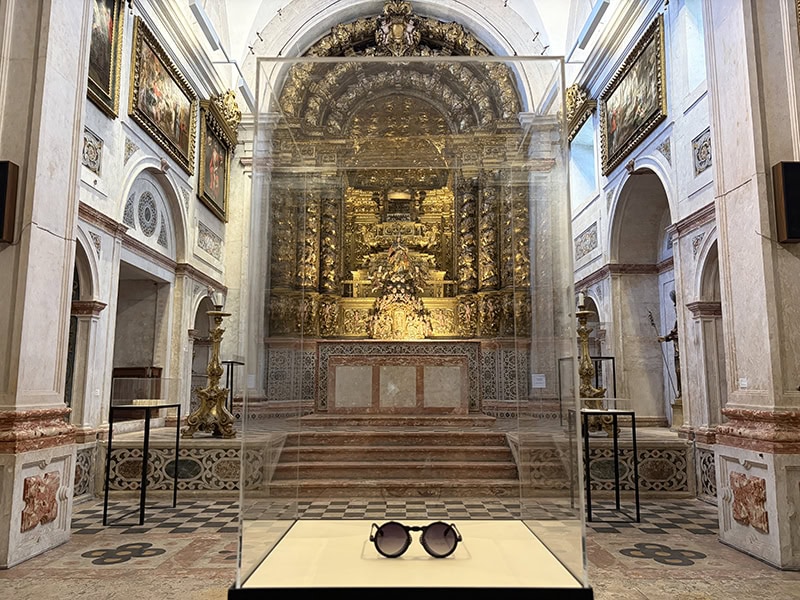
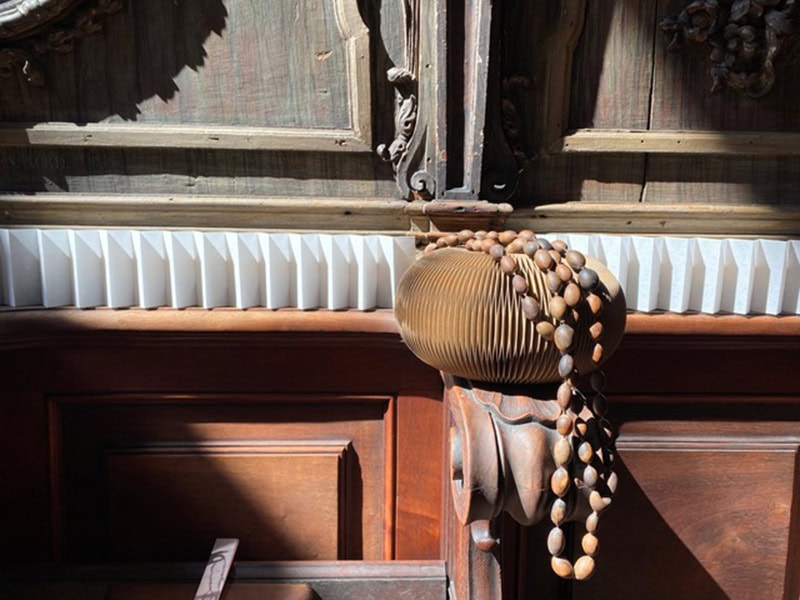
The historic Church of Our Lady of Mercy hosted four distinct exhibitions within its sacred walls. In the Upper Choir Room, Nacre and the Grain brought together seven Scotland-based artists whose work explores the fragile connections between vulnerable natural landscapes and contemporary jewelry. For curator Kristin Beeler, the church itself functioned as an expansive landscape for the artworks, with natural sunlight shifting throughout the day to alter the visual readings of the pieces.
In the church’s Ante-Choir Room, the exhibition Take Place featured works by Elin Flognman, Lena Birgitsdotter, and Staffan Jonsson. Flognman’s installation initially surprised visitors with golden potatoes suspended seemingly in mid-air above the altar. During the installation process, Flognman noted that her brooches appeared naturally drawn toward the gold ornamentation of the altar. Although she hails from a heavily secular country, she admitted to having to work up the courage to ask the resident priest if the altar space could be used for an art exhibition. Permission was ultimately granted, elevating the humble potato—which Flognman views as a powerful connector of people across diverse social classes—into something precious and sacred enough to occupy a religious altar, even if only temporarily.
The reality of holding exhibitions in active religious spaces meant that churches occasionally closed their doors for scheduled baptisms, weddings, or funerals. While this occasionally frustrated biennial visitors, these interruptions were embraced as an authentic component of coexisting with active religious institutions. Artist Staffan Jonsson described the serendipitous nature of encountering a funeral held while Take Place remained open to the public, noting a personal connection to the setting since he had worked in a cemetery every summer throughout his student years—an experience that deeply informed his own pieces addressing symbols of farewell and mortality.
Another conceptual highlight was the exhibition Stuck, which arose when three long-time acquaintances found themselves unable to settle on a single biennial project and decided to make their creative impasse productive. Each participant selected two unfinished pieces and mailed them in turn to the others, permitting successive creative interventions. "The greatest responsibility fell on the last person, who had to decide what the piece would become and how it would function," explained participating artist Caio Mahin, a collaborative process that mirrors the Surrealists’ century-old "exquisite corpse" technique.
Meanwhile, Shared Grounds—Contemporary Jewellery from Austria was mounted inside a recording studio in Lisbon. Supported by the Austrian Embassy, the exhibition showcased emerging talent alongside established figures like Manfred Nissmüller and Peter Skubic. During the opening, Ulrike Ritzinger, Austria’s ambassador to Portugal, addressed the crowd with a rhetorical question: "What is Austria known for? Arnold Schwarzenegger… but everyone already knows him! So we decided to support an event that reveals a different, new side of Austria."
The biennial’s extensive programming also featured a two-day academic colloquium at MUDE. During the sessions, rapporteur Mònica Gaspar offered a compelling observation regarding the demographic of the participants, noting that the majority of invited speakers represented a rising generation of jewelry artists holding PhDs—a relatively new phenomenon she aptly described as "the new kid on the block."
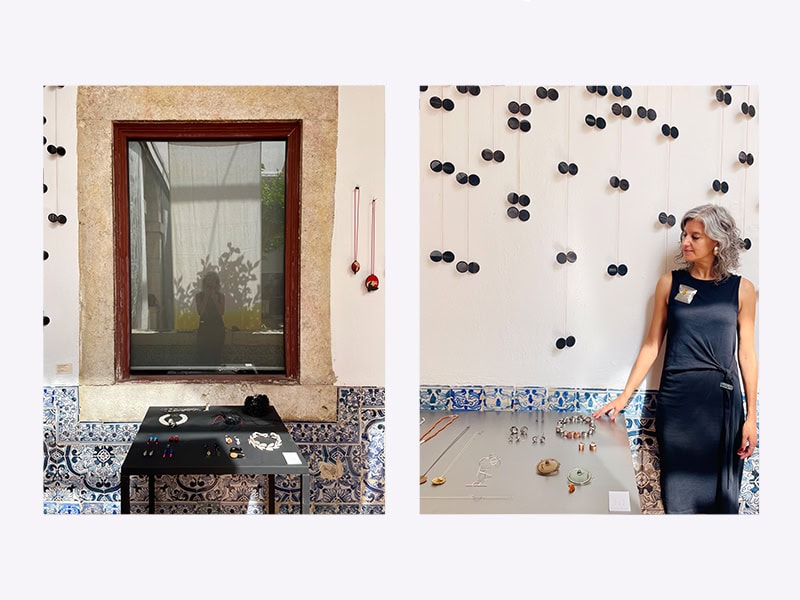
Live performances further broadened the scope of the biennial’s offerings. In Under Many Suns, Camilla Prey moved three-foot-long handmade black candles through the air, generating dynamic graphic compositions as hot wax dripped onto paper below, demonstrating how light can be successfully translated into physical movement and drawing. After dark, a central Lisbon chapel hosted Black Moon, an experience co-curated by Elena Karpilova and Ruudt Peters. In this intimate setting, five jewelers explored their respective artistic practices through actions ranging from mysterious incantations and songs to inviting members of the audience to touch Peters’s heart as some 55 spectators looked on. Ana Escobar’s meditative performance, Findings, examined how everyday found objects can effectively communicate information between individuals, while Tamia Dellinger transferred recurring facial motifs from her jewelry directly onto visitors’ bodies through hand-poked tattoos.
By extending far beyond traditional white-cube gallery exhibitions, the 3rd Lisbon Contemporary Jewellery Biennial successfully created a dynamic cross-disciplinary dialogue. In doing so, the event firmly situated contemporary jewelry within a wider cultural, architectural, and philosophical context, proving its capacity to coexist meaningfully with diverse art forms and historic spaces alike.