





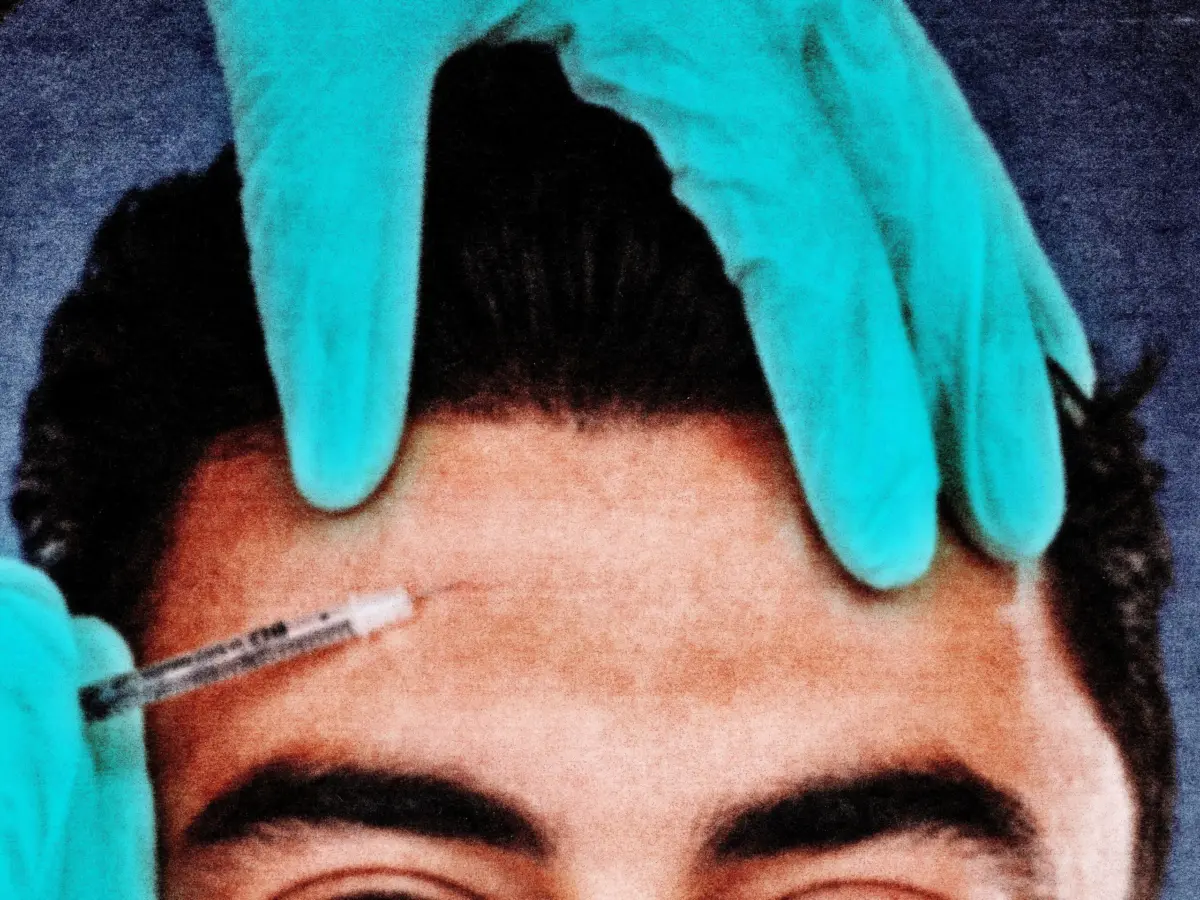
In recent years, the culture surrounding male self-improvement has taken increasingly radical turns. Across digital subcultures and specialized cosmetic clinics, men have turned to aggressive methods under the banner of "looksmaxxing"—ranging from invasive surgical procedures to reshape the contours of their eyes, to extreme practices like bone-smashing to chisel the jawline, and even limb-lengthening surgeries that involve breaking bones to add a few inches of height. Yet amidst these radical physical interventions, one of the oldest mainstays of non-invasive aesthetic medicine is experiencing a major resurgence among men: neurotoxins like Botox.
Long perceived in popular culture as a cosmetic treatment predominantly favored by women, injectable neurotoxins have quietly established themselves as a standard component of male personal upkeep. Recent economic data reveals that male adoption of these procedures has reached a point where men are actually outspending women on individual clinic visits.
According to an October 2026 report published by Guidepoint Qsight, a medical aesthetics data and intelligence provider, male spending on neurotoxin treatments officially surpassed female spending on a per-visit basis. During the third quarter of 2026, men spent an average of $529 per visit for neurotoxin procedures, compared to an average of $455 spent by women. These expenditure figures encompass not only brand-name Botox, but also major market competitors including Xeomin and Daxxify.
The financial shift highlights a broader cultural re-evaluation of non-surgical cosmetic interventions among men. Compared to the extreme pain, prolonged recovery times, and physical risks associated with brutal looksmaxxing trends, neurotoxins offer a virtually painless, low-risk method to achieve a refreshed, youthful, and less severe appearance. The rapid adoption of these treatments is reflected in wider industry metrics. A 2025 global survey conducted by the International Society of Aesthetic Plastic Surgery (ISAPS), which gathered data from 2,900 aesthetic plastic surgeons, revealed that male patients accounted for more than 15 percent of all Botox treatments globally that year. The procedure also ranked as the single most popular non-surgical aesthetic treatment among men by a substantial margin.
For the expanding group of men incorporating injectable treatments into their routines—a phenomenon often colloquially dubbed "Brotox"—the investment is increasingly viewed as a rational extension of personal grooming. Medical professionals who specialize in aesthetic dermatology report a steady surge in male patients seeking treatments for both preventative and corrective purposes.
Dr. Nancy Samolitis, a board-certified dermatologist in Los Angeles and co-founder of the medical aesthetic clinic facile, has observed a distinct shift in her patient demographics. Having treated male clients for years, she notes a recent and pronounced increase in men actively seeking out injectable treatments, with ages spanning anywhere from 35 to 70. According to Dr. Samolitis, contemporary male patients are significantly more educated about skin health and increasingly receptive to clinical procedures than previous generations.
The entry point for many male patients often stems from immediate social circles. Dr. Samolitis notes that a substantial number of men book their initial consultation at the encouraging nudge of a spouse or partner who is already an established client at the practice. Other men seek professional advice independently, arriving with a general desire to improve their facial appearance or look less fatigued, though often unsure of which specific procedure will achieve their goals. In many of these scenarios, localized neurotoxin injections present the most effective solution.
Despite historical misconceptions that facial injections inevitably result in a frozen, overly surprised, or feminized appearance, modern aesthetic techniques aim for subtle, virtually undetectable enhancements. The modern objective of male neurotoxin treatment is not to dramatically reshape the face, but rather to soften expressions and restore a well-rested appearance.
That subtle approach was precisely what led Kyle Waldrop, a 37-year-old product designer based in Los Angeles, to explore neurotoxin treatments three years ago. Waldrop notes that he had long maintained a consistent daily skincare regimen, making the decision to try Botox feel like a logical next step in his overall personal maintenance routine rather than a drastic departure.
For Waldrop, the goal was preventative care rather than radical transformation. He sought to address dynamic lines before they became permanently etched into his skin. His ongoing treatment plan targets forehead lines and crow’s feet around the eyes, and he has recently expanded his injections to address horizontal lines along the neck.
While wrinkle reduction remains the primary driver of neurotoxin popularity, men are also utilizing these injections for functional and anatomical adjustments that go beyond simple anti-aging. Board-certified dermatologist Dr. David Kim, founder of Soho Dermatology in New York City, routinely administers neurotoxins to male patients for structural balance and physiological conditions. Dr. Kim uses targeted injections in the chin to improve muscle tone and create greater facial projection. He also frequently treats the underarm area with neurotoxins to manage hyperhidrosis, a condition characterized by excessive sweating.
Similarly, Bell Yoo, a board-certified nurse practitioner and founder of Mimo Aesthetics in West Hollywood, frequently utilizes neurotoxins for functional muscular concerns in male patients. Yoo treats the masseter muscles—and in some cases, the temporalis muscles along the side of the head—to alleviate severe jaw clenching and nocturnal teeth grinding. This therapeutic application relaxes overactive jaw muscles, providing pain relief while simultaneously reducing muscular hypertrophy caused by chronic clenching.
When it comes to pure facial aesthetics, practitioners emphasize that treating male faces requires a fundamentally different philosophy and technique than treating female faces. Men typically aim to soften deep lines rather than erase them completely, prioritizing the retention of natural facial mobility.
Yoo observes that while female clients frequently request a smooth, highly reflective facial texture often referred to as "glass skin," male clients almost universally reject that outcome, viewing it as artificially waxy or overly shiny. Furthermore, men generally opt out of procedures designed to elevate the eyebrows. While female patients often ask for a Botox-driven brow lift to create an open, arched look, male patients generally prefer to preserve a slightly heavier, lower-set brow line to avoid an unnatural or arched appearance.
Achieving these distinct outcomes requires customized mapping and precise dosing strategies. Dr. Samolitis notes that injection sites and dosage amounts must be carefully calibrated to account for male facial anatomy. Dr. Kim similarly exercises restraint when treating the eye area, deliberately leaving a portion of fine lines around the outer corners intact. In male patients, retaining subtle character lines around the eyes maintains a natural appearance, ensuring the face looks genuinely rejuvenated rather than artificially altered.
These tailored techniques directly address the lingering fear among male patients that cosmetic procedures will compromise their natural masculine features. For patients like Waldrop, preserving natural expression remains a non-negotiable aspect of treatment. When administered correctly and in appropriate quantities, the treatment simply leaves the individual looking healthier and more rested while preserving full expressive movement.
The specific physiological characteristics of male facial anatomy also explain why men are outspending women per visit. As Yoo points out, men generally possess larger, significantly stronger facial muscle groups than women. Relaxing these denser muscle fibers requires a higher volume of neurotoxin units per targeted area, directly driving up the total cost per appointment even if the treatment zones remain identical to those of female patients.
Despite the documented rise in male spending and treatment numbers, a degree of social discretion still surrounds the practice. Yoo notes that many of her male clients prefer to keep their cosmetic routines private, acknowledging that a societal stigma around male aesthetic procedures persists in certain circles.
However, cultural attitudes are visibly shifting among younger demographics and urban professionals. Waldrop views the lingering secrecy around male cosmetic care as unnecessary, placing neurotoxin injections in the exact same category as standard fitness and personal care routines. He points out that men already routinely invest in high-end skincare, professional haircuts, hair restoration treatments, and gym memberships to maintain their physical appearance, making neurotoxin care a straightforward component of modern self-care. For Waldrop and an increasing number of men across the country, aesthetic maintenance is no longer a taboo topic or a drastic measure, but simply a practical element of a broader grooming routine.