






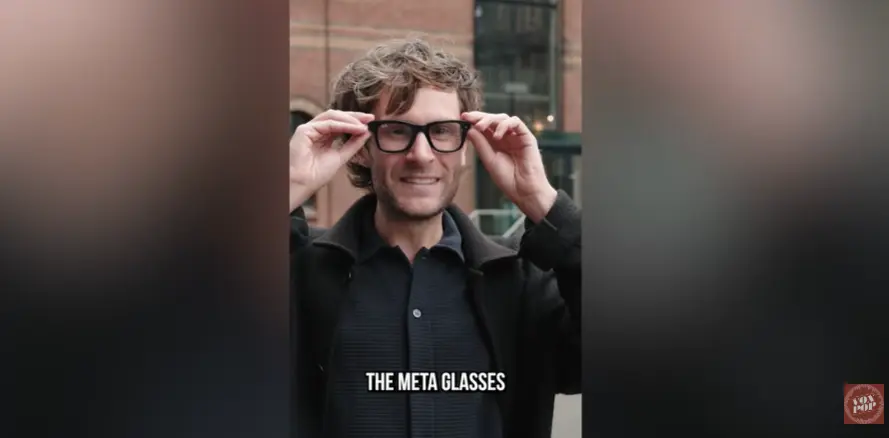
Instagram has removed a satirical video by Dutch journalist Roel Maalderink that targeted parent company Meta over its controversial camera glasses, drawing sharp criticism from digital rights advocates who accuse the tech giant of suppressing public debate.
In the short video, Maalderink dons the wearable tech—widely dubbed “pervert glasses”—and approaches Meta employees to ask how they feel about the product. The gadgets, the most popular version of which is manufactured and sold by Meta, are designed to look like normal everyday eyewear while housing hidden lenses capable of recording video and taking photos covertly.
While the video was swiftly scrubbed from Instagram for alleged violations of community guidelines, it remains accessible on Alphabet-owned YouTube, where audiences can still view the interaction. In the footage, the employees approached by Maalderink—all of whom have their facial features heavily blurred and are completely unrecognisable—are clearly displeased about being secretly recorded and questioned on the job.
The satirical project was produced in collaboration with Bits of Freedom, a prominent Dutch digital rights organisation. According to Meta, the decision to remove the video from Instagram was based on violations of its policies against “bullying and harassment.”
The takedown has triggered a broader conversation regarding corporate censorship, platform governance, and the unchecked power of social media conglomerates to moderate content that directly critiques their own business practices. For Maalderink, the removal marks an unprecedented escalation in his decade-long career as a satirical journalist.
“I’ve been making satirical videos about everything for 10 years now: Gaza, Ukraine, refugees,” Maalderink said in a statement released following the incident. He emphasized that in a decade of producing provocative and politically charged content, this is the first time one of his videos has been actively taken down by a major social media platform.
Digital rights advocates were quick to condemn Meta’s actions, arguing that the removal sets a dangerous precedent for corporate self-interest. Representatives from Bits of Freedom stated that the incident clearly demonstrates the sweeping power and influence wielded by the technology giant in shaping digital discourse.
“Meta determines what becomes publicly discussable and how the debate unfolds,” the organisation said in a public statement. They added that the platform’s reaction suggests there is no tolerance or room for criticism directed at Meta itself, raising serious questions about whether tech companies can act as fair arbiters of online speech when their own products and reputations are brought into question.
The controversy surrounding Meta’s camera glasses extends far beyond corporate headquarters and satirical commentary, touching upon core legal and privacy concerns in Europe. Earlier in the week, the Dutch privacy watchdog, the Autoriteit Persoonsgegevens (AP), issued an explicit warning regarding the use and distribution of media captured by wearable camera devices.
The Dutch data protection authority stated that sharing images or video footage captured with Meta glasses violates strict General Data Protection Regulation (GDPR) rules unless explicit permission has been obtained from every single person identifiable in the media. Because the glasses are designed to blend in seamlessly with regular spectacles, bystanders often have no way of knowing they are being filmed, making meaningful consent nearly impossible to secure in public settings.
As the debate continues to unfold, the incident has amplified scrutiny over the proliferation of covert recording devices and the growing tension between consumer tech innovation and individual privacy rights. With the video still circulating on alternative platforms like YouTube, the backlash against Meta appears unlikely to fade quietly, leaving regulators, privacy advocates, and tech firms to grapple with the legal and ethical boundaries of modern digital surveillance.