





Contemporary jewelry has long transcended the traditional boundaries of precious metals and polite ornamentation, but few emerging makers push the conceptual and visceral limits of the medium quite like Marie-Caroline Locquet. Recently named a finalist for the prestigious Young Artist Award—a biennial honor supported by Karen and Michael Rotenberg that recognizes promise, innovation, and individuality in artists aged 35 or younger—Locquet views her craft not as a passive display of wealth, power, or status, but as an active form of psychological and physical provocation.
Produced through implications of violence, confinement, and sexual dominance, Locquet’s work crafts restraints and defensive weapons into unique wearing experiences that explore shared human fragility. By marrying discomfort with erotic tension, her creations continuously challenge both the wearer and the viewer, positioning art jewelry as an instrument of spatial disruption and radical self-reflection.
Challenging the Definition of Jewelry from the Ground Up
Locquet’s journey into the field began during the earliest days of her art studies in France, where she first encountered works by radical creators that fundamentally challenged her vision of adornment. Rather than gravitating toward conventional notions of beauty or material luxury, she found herself drawn to objects that felt strange, uneasy, and dangerous. She points to the groundbreaking work of Bernhard Schobinger and Dorothea Prühl as pivotal influences that shifted her perspective on art and culture.
Growing up in the north of France, Locquet had developed an early awareness of the social weight attached to self-demonstration and the ways people use adornment to camouflage their social affiliations. Consequently, she approached jewelry from a conceptual standpoint rather than an aesthetic affinity, viewing it as a rich subject for academic study and social critique.

“Why make—and, consequently, wear—jewelry that seems so disturbing at first sight? What does it mean to make something that seems ‘unwearable’?” Locquet reflects, noting that the elusive notion of un-wearability ultimately became the core axis of her artistic research.
Recognition and Radical Momentum
Being selected as a finalist for the AJF Young Artist Award serves as a powerful confirmation of the uncompromising path Locquet has charted for several years. For an emerging artist navigating a specialized field, the recognition provides vital validation, offering the confidence to push her practice even further into radical territory. Her work consistently challenges the boundaries of how an object interacts with the human body, forcing both wearers and onlookers to confront deep-seated social discomforts.
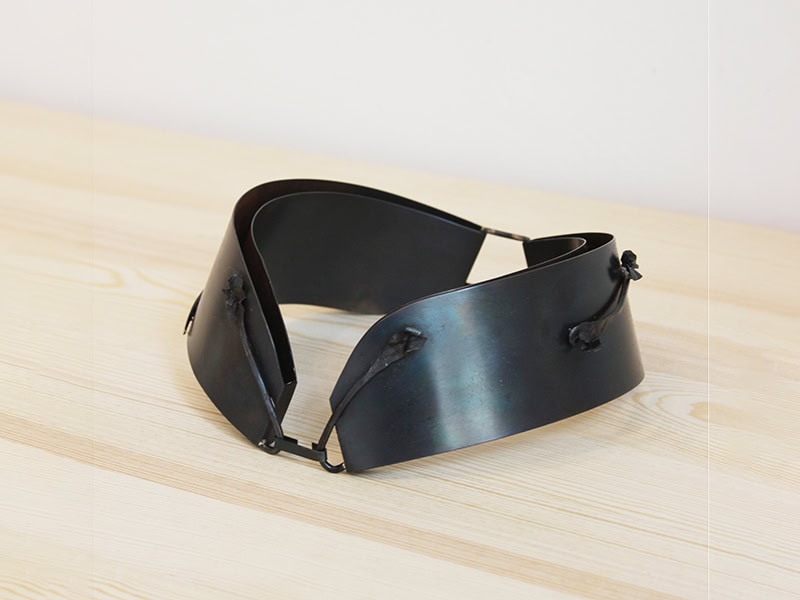
In her application work, Locquet presents pieces that deliberately subvert the traditional role of jewelry as a showcase for status. Instead, her creations act as disruptive confrontations in public spaces. Eschewing simple seduction or passive representation, her pieces lean heavily into themes of disturbance, violence, vulnerability, and confinement. By pushing materials like steel, forged steel, wood, and silver to their absolute limits, she strips away pretense to reveal a raw nature where desire and death inextricably intersect.
Exploring Confinement Through Hands and Other Works
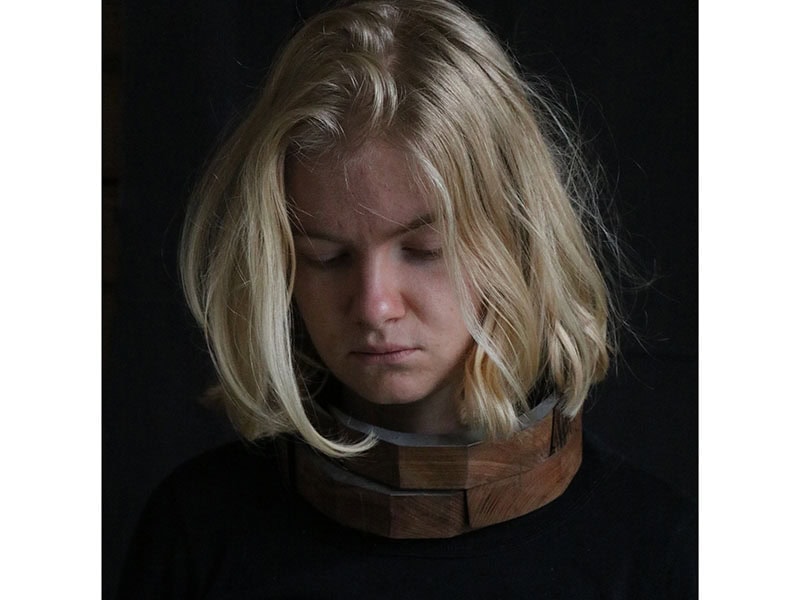
Locquet’s practice frequently draws inspiration from historical and cultural objects associated with control, submission, and labor. Her research has previously encompassed the collier d’appartenance—a historical collar utilized in submissive relationships—as well as the "slave collar" originating from 19th-century Norman and Auvergnat traditions, which was traditionally given to women at marriage as a token of possession. She has similarly explored animal-labor implements like the horse collar to examine the physical realities of subjugation.
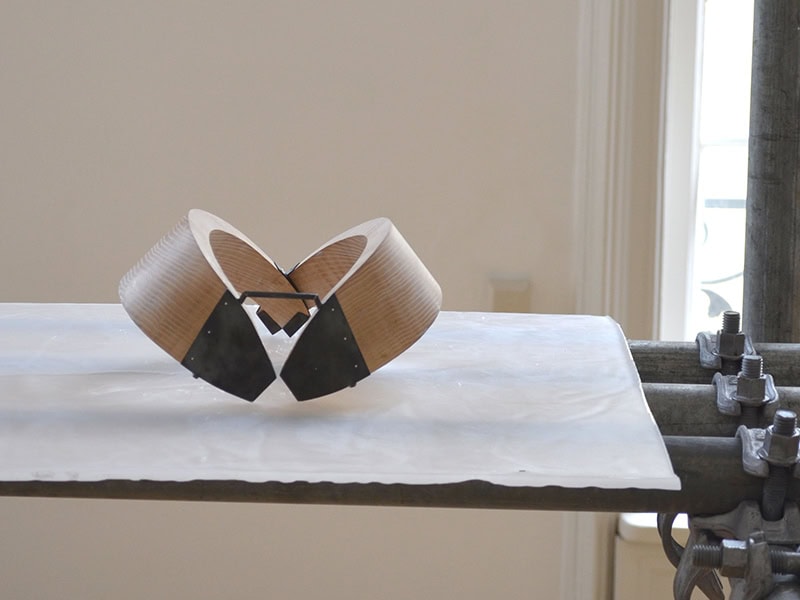
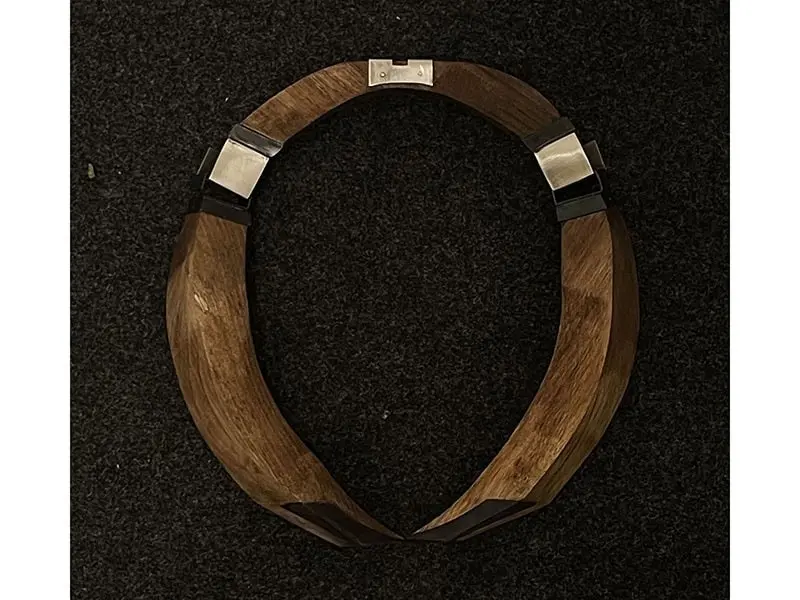
Among her most striking creations is the 2024 neckpiece titled Hands, constructed from elm wood, zinc-plated steel, and silver. The piece serves as a comprehensive showcase of her obsessive investigation into mechanical systems, movements, clasps, and the ambiguous border separating jewelry from sculpture. Hands unfolds and occupies surrounding space like a complex mechanical apparatus before sharply closing around the neck in a motion reminiscent of strangulation. Described by the artist as her most complex and intimate piece, it vocalizes deep themes of physical confinement and implicit violence.
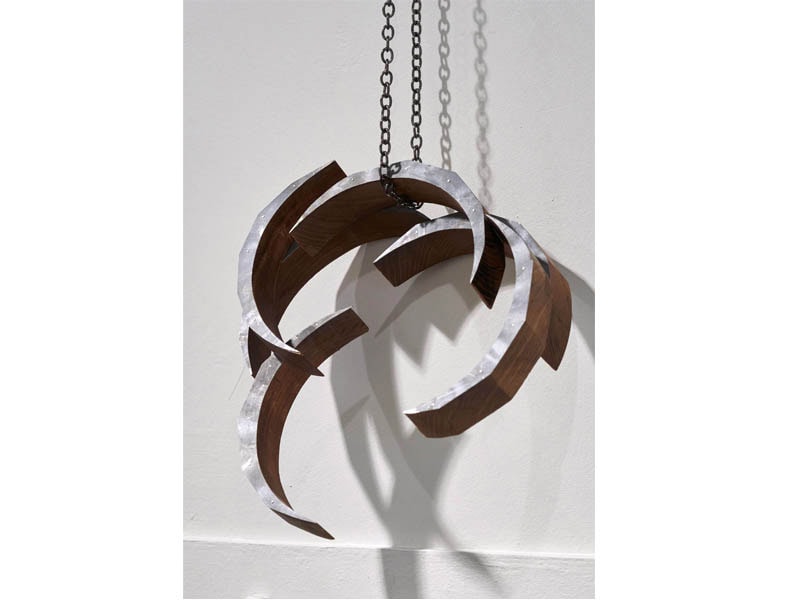
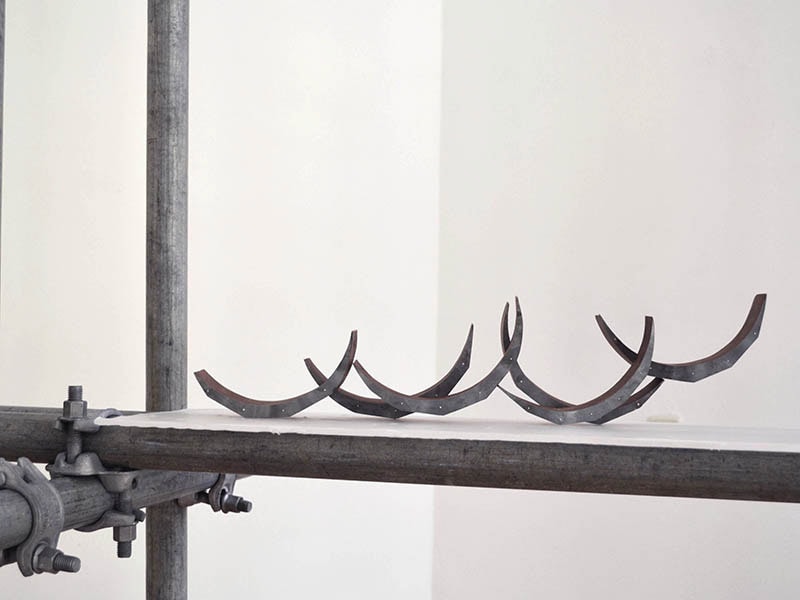
Her material exploration extends across other notable projects as well. In Armor I, a forged steel neckpiece produced during her artist-in-residence program at the Estonian Academy of Arts (EKA) in Tallinn, Locquet transforms rigid metal into a protective yet menacing second skin. Similarly, works like Panicroom Vector I—exhibited at A-Galerii in Tallinn—utilize iron, elm wood, silver, and rubber to establish literal and conceptual entry points for audiences trying to parse the psychological weight of her practice.
The Interplay Between Intimacy and Public Space
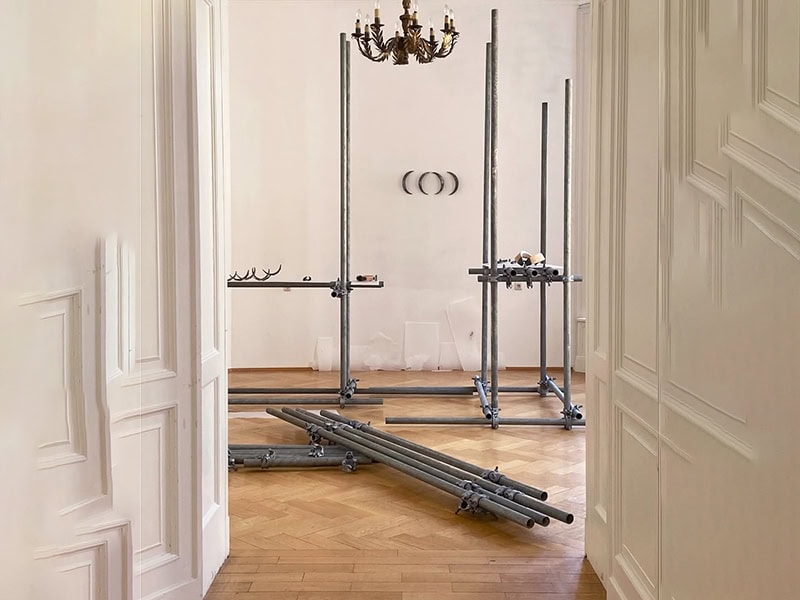
What excites Locquet most about contemporary art jewelry is its capacity to encompass a complete, holistic approach: moving seamlessly from the physical object itself to rigorous conceptual research, and finally to the creation of immersive exhibition spaces that resonate with the work. Her exhibition Importable/M.A.Y.A, presented during Munich Jewellery Week at the Institut Français München, highlighted her ability to extend her sculptural language beyond the body and into the surrounding architecture.
More broadly, Locquet is fascinated by how body ornamentation mirrors the underlying values and boundaries of modern society. A few years ago, she initiated an extensive iconographic research project and collection centered on the concepts of worn and unwearable items, encapsulated by the provocative working "Unwearable—adornment is impure, makeup is obscene, disguise is an abomination." Through this ongoing archive, she examines how adornment acts as a bridge between the intimate, private sphere and the sprawling realities of public space.
Confronting Industry Perceptions and Looking Ahead
Despite the intellectual rigor driving contemporary jewelry, Locquet remains acutely aware of the hurdles the medium faces within the broader art world. Reflecting on her student days, when she and her peers curated an exhibition during Munich Jewellery Week titled Jewelry Is Still a Risky Business in homage to a work by Paul Derrez, she maintains that the medium must continue to embrace risk.
She acknowledges that contemporary jewelry is frequently subjected to expectations that it must continually justify its presence alongside mainstream contemporary art. During her studies at a French fine art school, she routinely encountered the dismissive perception that jewelry was somehow "lesser," "superficial," or overly niche. While this outsider status creates a healthy distance from the mainstream, it also highlights an ongoing gulf between the specialized art jewelry community and the general public—a gap she actively seeks to bridge through literal, narrative-driven works like Panicroom Vector I.
As she looks toward the next five years, Locquet aims to build upon the momentum generated since her graduation. With plans to debut new exhibition projects that merge her objects with spatial design, she intends to continue applying for residencies, collaborating with fellow artists, and expanding her artistic vocabulary. Furthermore, she harbors a strong interest in research and teaching, viewing academic environments as ideal spaces to push forward the collective understanding of body ornament and question the evolving definition of jewelry.
Trusting the creative process and expressing deep gratitude to all who have supported her trajectory, Locquet stands poised to continue reshaping the boundaries of what adornment can achieve, proving that jewelry, at its most radical, remains a vital and unsettling mirror of human vulnerability.