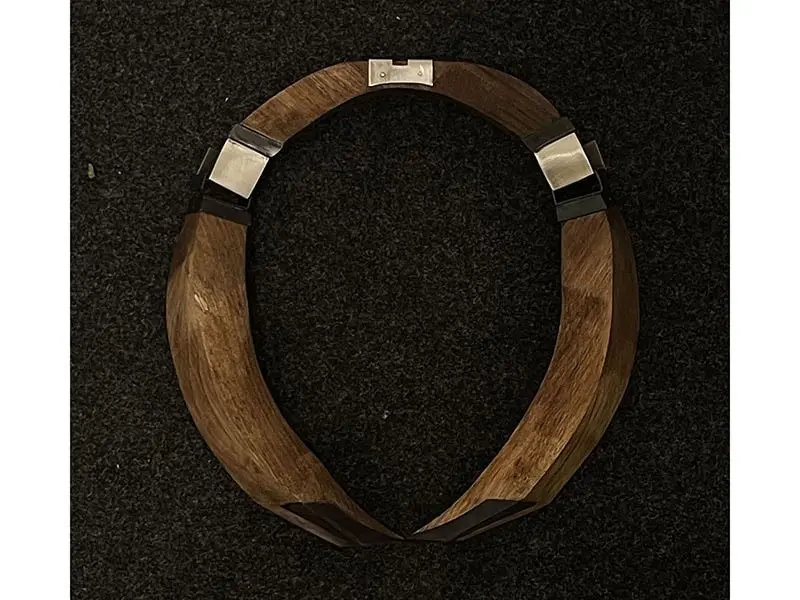
Contemporary jewelry has long been associated with traditional notions of wealth, status, and aesthetic beauty. However, emerging artists are increasingly challenging these conventional boundaries by transforming body ornamentation into powerful mediums for conceptual exploration, social critique, and psychological tension. Among the most daring voices in this movement is Marie-Caroline Locquet, whose provocative creations examine the delicate thresholds between vulnerability and violence, seduction and dominance.
Recognized for her radical approach to the medium, Locquet has been named a finalist for the prestigious Young Artist Award. Supported by Karen and Michael Rotenberg, the biennial award celebrates exceptional promise, innovation, and individuality in the work of emerging jewelry artists aged 35 or younger. Through this recognition, Art Jewelry Forum (AJF) highlights trailblazing practices that challenge established norms and inspire the future evolution of the field.
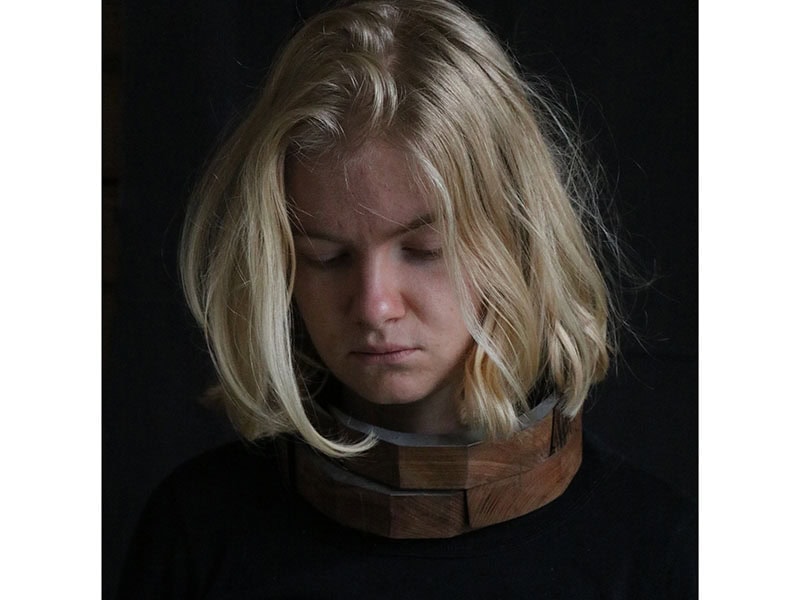
In an in-depth conversation, Locquet reflects on her artistic journey, the conceptual foundations of her striking body armor and restraint devices, and her vision for the future of contemporary art jewelry.
Challenging the Boundaries of Jewelry
Locquet’s path into the discipline began during her early foundational art studies, where she encountered radical works that fundamentally altered her perspective on what jewelry could achieve. Rather than adhering to classical expectations of decorative beauty or the ostentatious display of wealth, she was drawn to pieces created by pioneering artists like Bernhard Schobinger and Dorothea Prühl. Their unconventional designs—often described as strange, uneasy, or even dangerous—shifted the paradigm of how adornment is understood.

This initial exposure sparked a deep sense of curiosity and critical inquiry. Locquet began questioning why an artist would choose to make, and a wearer choose to display, objects that feel profoundly disturbing at first glance. This line of questioning led her to focus intensely on the paradox of "un-wearability." For Locquet, jewelry serves primarily as an instrument of disruption, reflection, and psychological provocation rather than a tool for social representation or conventional seduction.
Growing up in the north of France, Locquet experienced firsthand the societal pressures surrounding self-demonstration and the implicit camouflage of social affiliations through everyday adornment. Consequently, her entry into the field was driven by a conceptual engagement with the subject rather than a simple aesthetic affinity. Her creations reconfigure the traditional status of the ornament, pivoting away from showcase displays of power toward confrontational objects capable of disrupting public space.
Exploring Fragility, Restraint, and Power
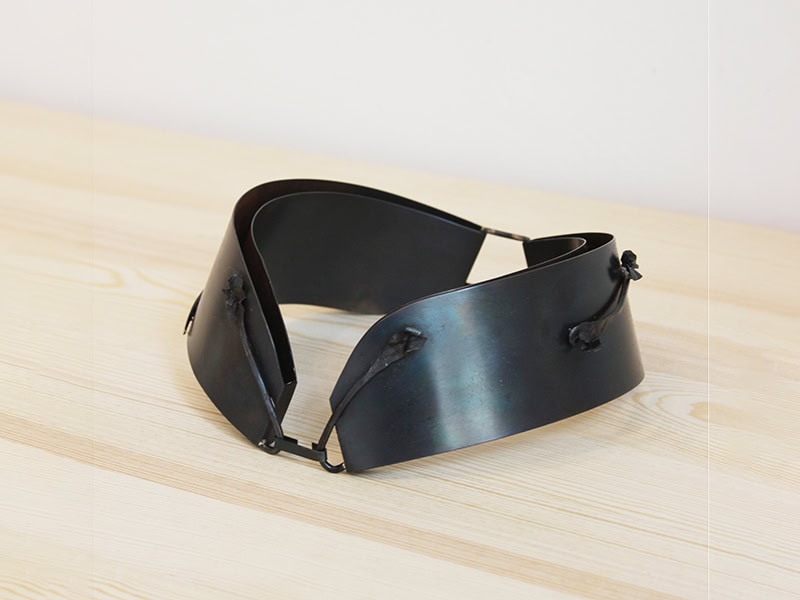
Locquet’s applied works push materials to their absolute limits, stripping them down to reveal an unvarnished nature that evokes a tense equilibrium between desire and mortality. Whether functioning as defensive weapons or intricate restraint devices, each piece provides a unique wearing experience designed to probe shared human fragility. Her works deliberately maintain an uncomfortable tension, walking a fine line between social disquiet and the physical temptation of an embrace.
Drawing inspiration from historical and cultural artifacts, Locquet’s research frequently bridges the gap between bodily confinement and vulnerability. Her practices reference traditional objects such as the collier d’appartenance—a collar associated with submission relationships—and the historical "slave collar" rooted in 19th-century Norman and Auvergnat marriage traditions as tokens of possession, alongside heavy-duty animal labor tools like horse collars.
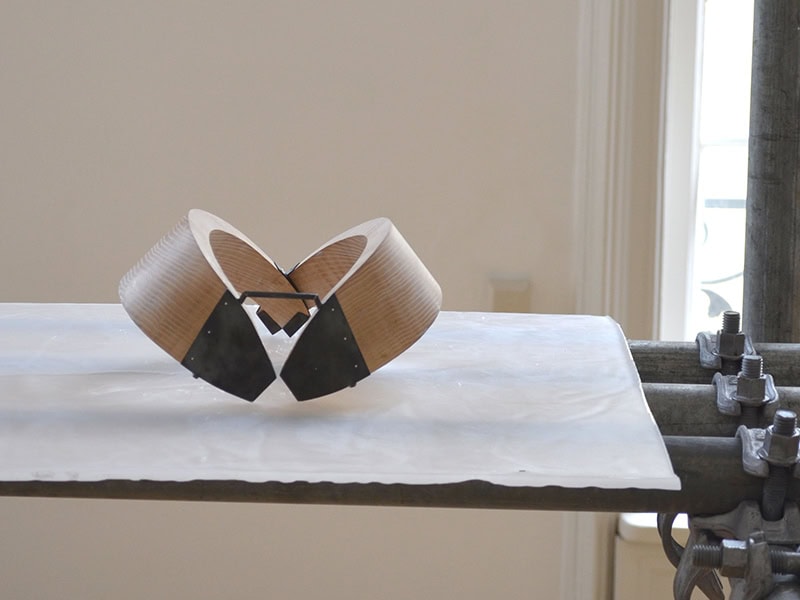
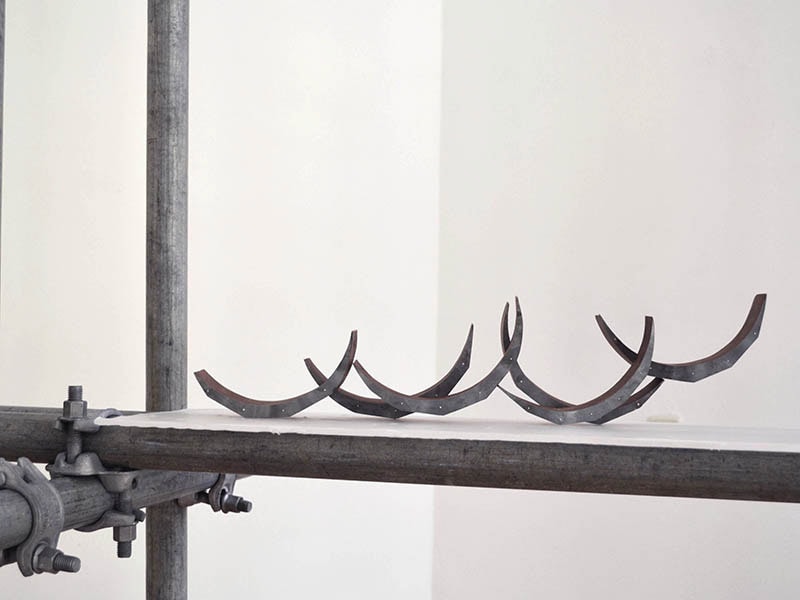
Among her most prominent works is Hands, a 2024 neckpiece crafted from elm wood, zinc-plated steel, and silver. The piece embodies the complex layers of her artistic philosophy, showcasing an obsessive dedication to mechanical systems, kinetic movements, clasps, and the fluid border separating jewelry from standalone sculpture. Unfolding dynamically to occupy surrounding space before closing around the wearer’s neck with an unsettling gesture reminiscent of strangulation, Hands stands as one of her most intimate and complex explorations of confinement and physical dominance.
The Interplay Between Object, Space, and Society
For Locquet, the true excitement of art jewelry lies in its capacity to construct a holistic artistic framework that bridges the physical object, academic research, and immersive spatial installations. Her work extends beyond the worn piece itself, examining how body ornamentation shapes broader cultural perceptions and societal structures.
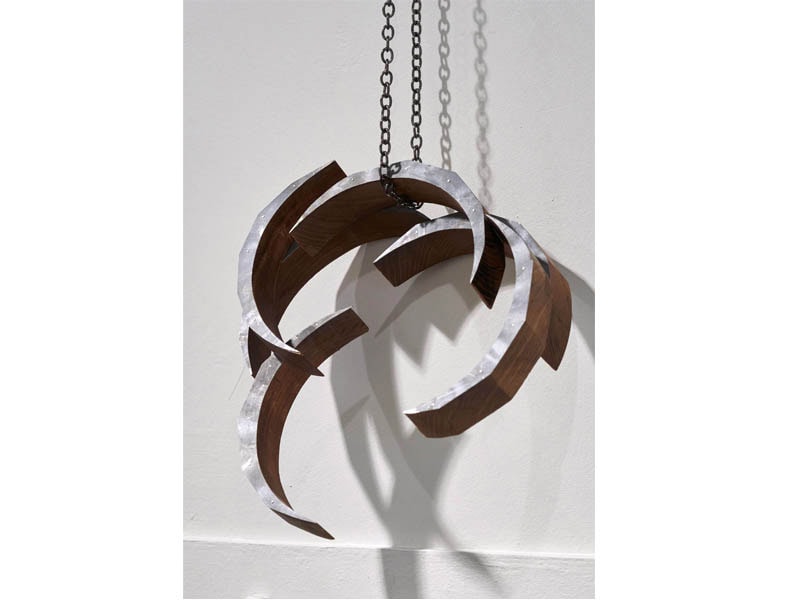
A few years ago, she initiated an extensive iconographic research project and collection titled "Unwearable—adornment is impure, makeup is obscene, disguise is an abomination." This ongoing study investigates how ornaments, once affixed to the body, articulate the deep-seated values, boundaries, and representations of contemporary culture while constantly oscillating between private intimacy and the public sphere.
This critical stance also informs her perspective on the challenges facing the contemporary jewelry community. Reflecting on her student days, when she and her peers curated an exhibition titled Jewelry Is Still a Risky Business during Munich Jewellery Week in 2018—a nod to a work by Paul Derrez—Locquet emphasizes that the medium must maintain its inherent risk-taking edge. She notes that contemporary jewelry is still frequently burdened by expectations to justify its relevance within the broader contemporary art world, occasionally being dismissed as niche, superficial, or secondary by traditional fine art institutions. Yet, she views this outsider status as a distinct strength that fosters fresh perspectives. To bridge the gap with wider audiences, some of her works, such as Panicroom Vector I, incorporate more literal design elements that function as accessible entry points for viewers.
Looking Ahead
Being selected as a finalist for the Young Artist Award serves as a powerful validation of the uncompromising trajectory Locquet has pursued over the past several years. Having graduated five years ago, she views this milestone as encouragement to push her radical vision even further, challenging both wearers and viewers alike.
Looking to the future, Locquet is expanding her practice to integrate her objects directly with architectural space, a development she plans to showcase in upcoming exhibition projects. Alongside her studio production, she harbors a strong interest in research and teaching, viewing academic environments as ideal spaces to reinvent and push the collective boundaries of body ornament. Trusting in her ongoing artistic process, Locquet continues to cultivate her unique visual language through international residencies and collaborative projects, expressing deep gratitude to all who have supported her journey.