






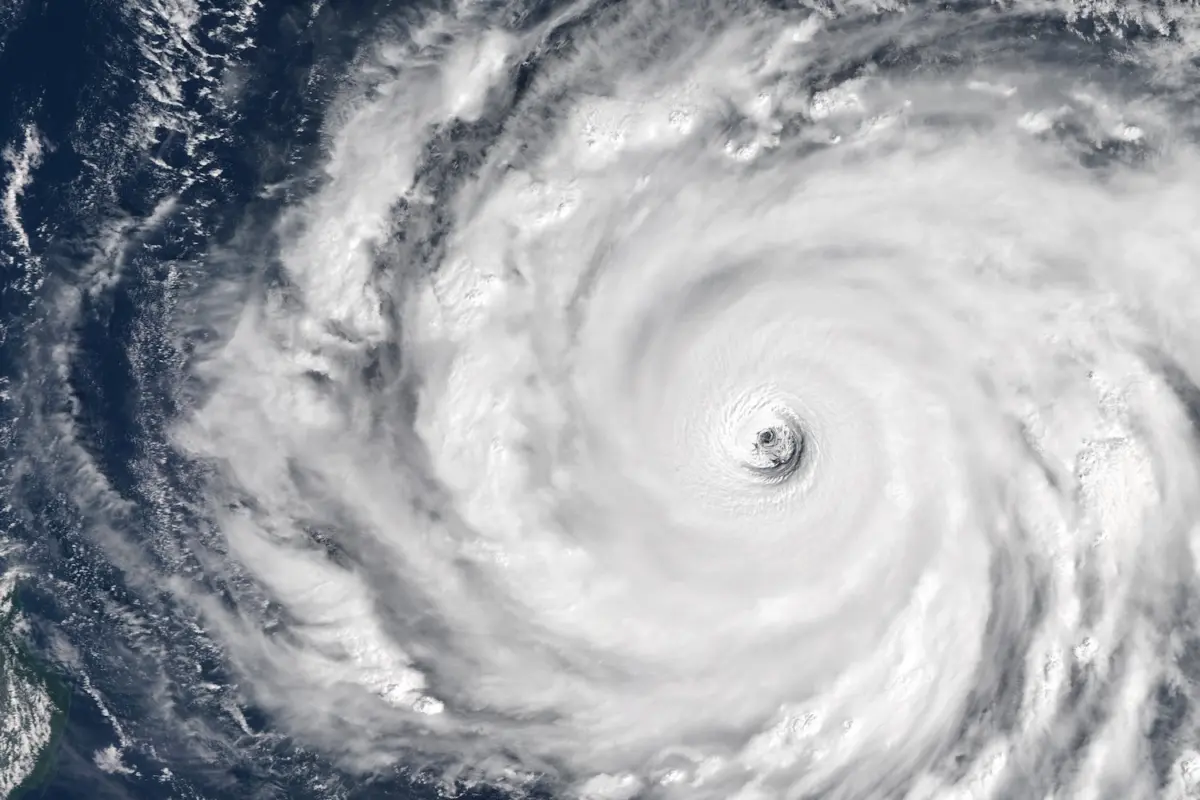
Typhoon Champi is threatening the port recovery that eastern China had only just started to record, bringing renewed anxiety to supply chains as ferry suspensions and maritime emergency responses went into force across Shanghai and the Fujian and Zhejiang provinces on Friday. The storm’s arrival comes at a delicate moment for regional logistics, interrupting a brief window of operational relief that had allowed terminals to make headway on massive backlogs left behind by earlier extreme weather events.
Despite the emergency measures and severe weather warnings triggered by Typhoon Champi, no container terminal closures had been reported as of Friday at major ports, including the crucial hubs of Shanghai and Ningbo-Zhoushan. The operational risk from the storm has manifested primarily through vessel movement and pilotage restrictions rather than through a confirmed, wide-scale shutdown of container handling infrastructure. Kuehne+Nagel reported on Thursday, citing data from Lloyd’s List Intelligence, that terminals at Ningbo, Yangshan, and Waigaoqiao remained fully operational as of 11 a.m. that day, with yards, warehouses, and trucking functioning normally before the full force of the weather system began to impact local waters.
Even so, logistics providers are bracing for immediate fallout. Seko Logistics has projected temporary gate suspensions and pilotage halts for Ningbo, Shanghai, Xiamen, and Fuzhou spanning from Friday night through Monday, alongside intermittent pilotage suspensions at the Yangshan deep-water port across the exact same operational window. Furthermore, Taiwan has compounded the regional picture by closing work and customs operations throughout the country on Friday due to the storm. Seko has warned shippers moving cargo through Taiwan, Xiamen, Fuzhou, Ningbo, Shanghai, and southwestern Japan to anticipate air cargo rollovers, berthing delays, and subsequent customs and trucking backlogs early in the coming week.
The sudden threat posed by Typhoon Champi stands in stark contrast to the modest improvements reported earlier in the week. Maersk had informed customers on Tuesday that conditions at Chinese ports had generally improved and that vessel waiting times had continued to decline from the severe disruptions caused by earlier typhoons. Those previous storms had wreaked havoc on global shipping schedules, at one point being responsible for more than 4 million 20-foot equivalent units waiting to berth at container ports globally through early September, according to comprehensive tracking data from Linerlytica.
That massive congestion-driving figure had since dropped to 3.36 million TEUs, representing roughly 9.7 percent of the global fleet. However, Maersk warned at the time that persistently strong export demand was continuing to place heavy pressure on already congested ports, meaning that intermittent delays would inevitably continue on certain trade lanes even as broader maritime conditions attempted to normalize.
Fresh figures released by Drewry on Thursday offered a clearer look at the recovery taking hold just before the storm arrived. The data showed average waiting times falling significantly from 58 hours down to 38 hours at Shanghai compared to the week prior. Meanwhile, average waiting times at Ningbo had similarly decreased from 40 hours down to 34 hours, offering a glimmer of hope to shippers and manufacturers alike.
Industry analysts attributed this temporary breathing room to seasonal factors and operational adjustments. Golden Week provided a much-needed opportunity for ports to clear accumulated backlogs and improve schedule reliability, an effort heavily supported by reduced overall cargo volumes and an influx of blank sailings, Drewry noted in its weekly update.
Beneath those optimistic regional averages, however, terminal-level data from Seko Logistics on Friday revealed a much more uneven and fragile operational picture on the ground. While the overarching averages were improving, Shanghai’s Waigaoqiao terminal was still experiencing persistent waits ranging from one to two-and-a-half days. At the same time, idling times at Yangshan varied significantly, hovering around four days at one terminal grouping and stretching to six or seven days at the others.
The situation at Ningbo-Zhoushan showed slightly better signs of internal balance, with yard density having returned to normal operating levels following the Golden Week holiday, according to the same Seko update. Even so, actual vessel waiting times across its various terminals still ran between one-and-a-half and three days, underscoring how thin the margin for error remains across the region’s top maritime gateways.
The underlying vulnerability of these supply chains has been laid bare by a brutal storm season. Sea-Intelligence quantified the extensive damage earlier storms had inflicted on schedule reliability before Typhoon Champi even formed, releasing sobering August data in a Sept. 30 press release. According to the maritime research firm, China posted the region’s worst schedule reliability at a dismal 23.9 percent, with Shanghai recording a mere 12.2 percent and Ningbo registering 16.9 percent. Across the wider Asian region, Sea-Intelligence calculated the average delay for late vessels at a staggering 7.28 days.
Looking beyond the immediate horizon, the cumulative damage inflicted by persistent typhoons and port congestion is expected to cast a long shadow over global trade. Sea-Intelligence had separately projected earlier last month that the accumulated backlogs and schedule disruptions could take anywhere from seven to 10 months to fully ease back to the relatively calm operational conditions seen in mid-2025. Such a prolonged timeline means that normalization efforts would extend straight through next summer, while a full return to the baseline conditions seen at the end of 2025 could require six to eight months of uninterrupted terminal performance.
These long-term projections align closely with warnings from other major logistics players. Earlier this month, Dimerco’s October Asia Pacific Freight Report cautioned that the Port of Shanghai was expected to remain heavily congested well into mid-to-late October, with berthing waits projected to consistently stay above five days. The freight forwarder placed Shanghai’s on-time performance at just 21 percent, highlighting the uphill battle facing vessel operators and terminal managers.
Drewry port consultants have provided valuable analytical context regarding why even a short-term weather interruption can significantly outlast the storm itself. In the firm’s Ports and Terminals Insight, analysts estimated that a terminal operating at 90 percent berth utilization takes roughly one full week to recover from a single day of disruption, compared to a much more manageable recovery window of two days for a terminal operating at 75 percent utilization.
In normal years, the operational gap between those two operating points dictates the difference between a competitive and an uncompetitive return on capital, Drewry noted. However, in a shock year defined by relentless weather events and structural backlogs, that exact same margin is the difference between a manageable local event and a cascading crisis that keeps essential cargo stranded on the water for an extra fortnight or more.
Whether Typhoon Champi ultimately succeeds in entirely reversing the fragile October recovery will depend heavily on how much of the forecast suspension window actually materializes at the container terminals over the weekend. As maritime authorities monitor the path and intensity of the storm, the next batch of weekly waiting time readings will ultimately reveal whether the hard-won pre-storm operational averages managed to survive the latest elemental test.