





Just twenty-four hours before sitting down in the studio with hosts Chloe Malle and Nicole Phelps for an episode of The Run-Through, supermodel Paloma Elsesser was doing what she arguably does best: creating an environment of deep, intentional care. She had hosted a backyard barbecue for thirty-five people at her Brooklyn home, an intimate gathering complete with a trio of homemade mocktails and her little brother manning the grill. For Elsesser, hospitality and genuine connection are not just personal pastimes; they are fundamental philosophies that she weaves into every facet of her professional life.
She carries that exact same level of thoughtfulness into her sixth year judging the prestigious CFDA/Vogue Fashion Fund. Elsesser made history as the very first model ever invited to take on the role of judge for the initiative, bringing a historically unprecedented perspective to a panel traditionally dominated by designers, editors, and retail executives. Reflecting on her tenure, Elsesser described how she continually pushes the panel to expand its scope, steering conversations toward crucial considerations of inclusivity—spanning age, gender expression, and body type—alongside traditional business metrics like a designer’s scalability. Her approach to evaluating emerging talent relies on pairing a practical question with an emotional one, a strategy born from a profound shift in her own financial and creative mindset.
Recalling a pivotal piece of guidance she received, Elsesser shared how her perspective on her career was forever altered. "I remember my business manager asked me this question about money. Instead of, ‘Let’s get you rich,’ it’s like, ‘What do you want this money to do for you? What world do you want it to create for you?’ And it shifted my perspective about the work that we do," she explained during the conversation. This ethos of intention and self-determination governs everything from her financial choices to her editorial output.
This season, that commitment to individuality and personal expression took center stage when Elsesser fronted Vogue’s shopping newspaper. Eschewing the conventional top-down approach of letting an external team dictate her look, she styled the entire story herself alongside her longtime friend and stylist, Allie. The project served as a timely style statement, arriving just as the fashion industry begins to pivot away from a prolonged era of minimalist aesthetic restraint. "I think now we’re kind of phasing out of the quiet-luxury era, which was fine and beautiful and really authentic to some people," she noted. "ولكن I also feel like it sanitized a lot of people’s personal identities, and so I’m happy to represent for the kooky-crazies."
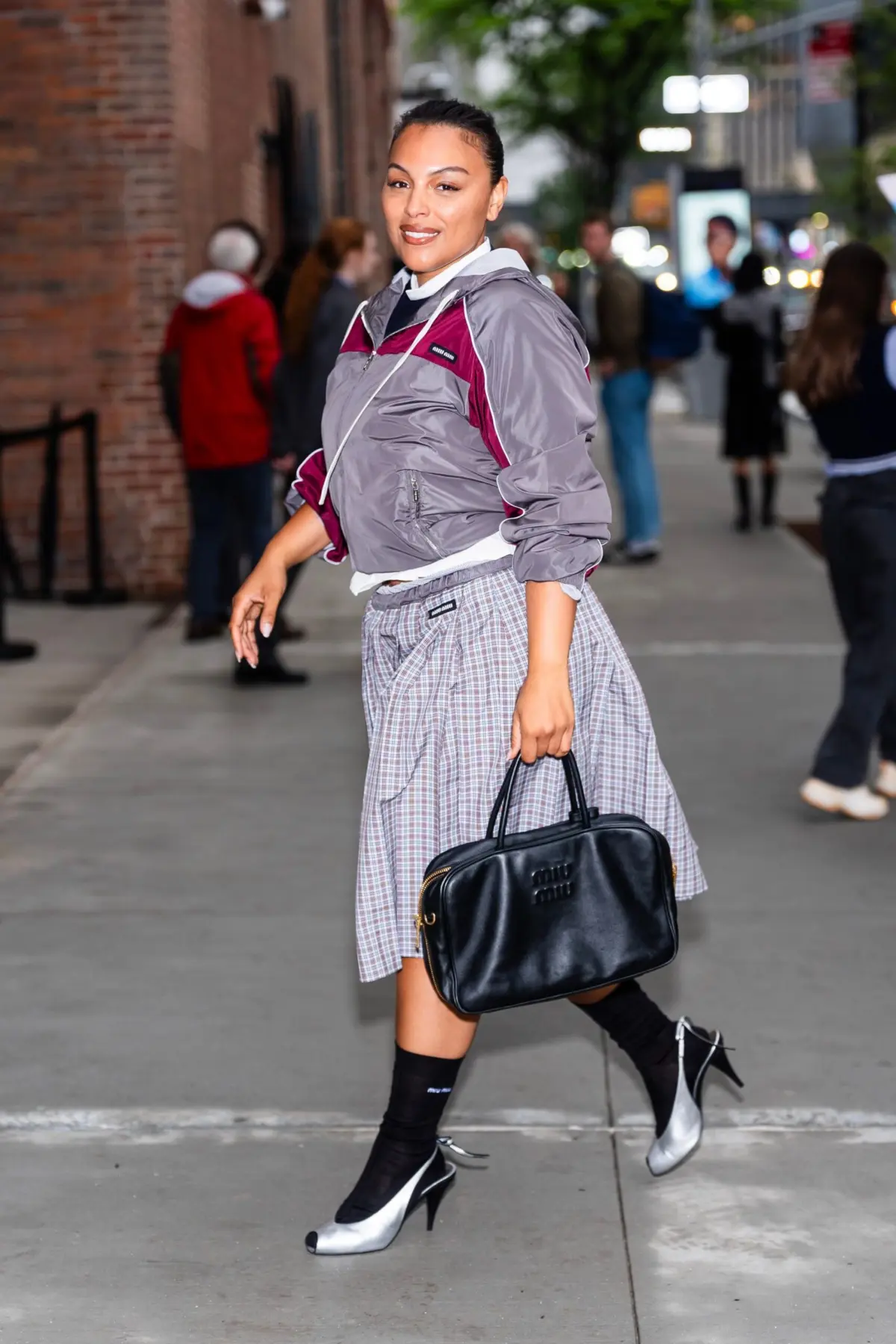
Elsesser’s own distinctive signature uniform is a masterclass in balance, seamlessly mixing hard and soft references in equal measure. It is an instinct forged out of necessity, born from her early years scouring vintage archives and sales for pieces that actually fit her body when the commercial market failed to cater to her proportions. Unable to find tailored trousers cut for her frame at the dawn of her modeling career, she ingeniously built a signature look centered around utilitarian Dickies workwear paired with delicate Chanel flats. That unexpected juxtaposition—a marriage of rugged workwear toughness and ethereal, balletic polish—continues to anchor the way she dresses today, proving that personal style is often born where constraints meet creativity.
Nearly a decade into her stellar runway career, Elsesser acknowledges that the fashion industry has evolved, noting that designers have generally grown more comfortable and adept at working with a diverse range of body types. Yet, true to her critical and thoughtful nature, she is quick to point out remaining shortcomings. Specifically, she has grown increasingly tired of the lazy shortcuts often taken by brands—such as the reflex-driven offering of generic stretch-knit dresses or uninspired jackets handed out to curve models as a box-ticking exercise rather than a true design challenge.
Clarifying her stance on the creative community, she added, "I don’t really like the word ‘lazy’ because I don’t think designers are lazy. But I think that there’s a fear. And then it’s kind of like ping-ponging what fashion is comfortable putting us in." Her critique highlights the ongoing tension between commercial risk-aversion and genuine sartorial inclusion, a dialogue she consistently forces to the surface.
As fashion month descends and the industry enters its most frantic, hyper-visible cycle filled with endless public discourse, critical commentary, and digital noise, Elsesser offers a grounded, centering philosophy. Her ultimate advice for navigating the chaos is disarmingly simple yet profoundly challenging: "The number one central tenet to anything that I try [to] live and encourage is to think critically, not be critical."
The conversation also points listeners toward further explorations of the contemporary fashion landscape, including a behind-the-scenes studio visit with former CFDA/Vogue Fashion Fund finalist Miss Claire Sullivan as she celebrates five milestone years at Dover Street Market New York.