




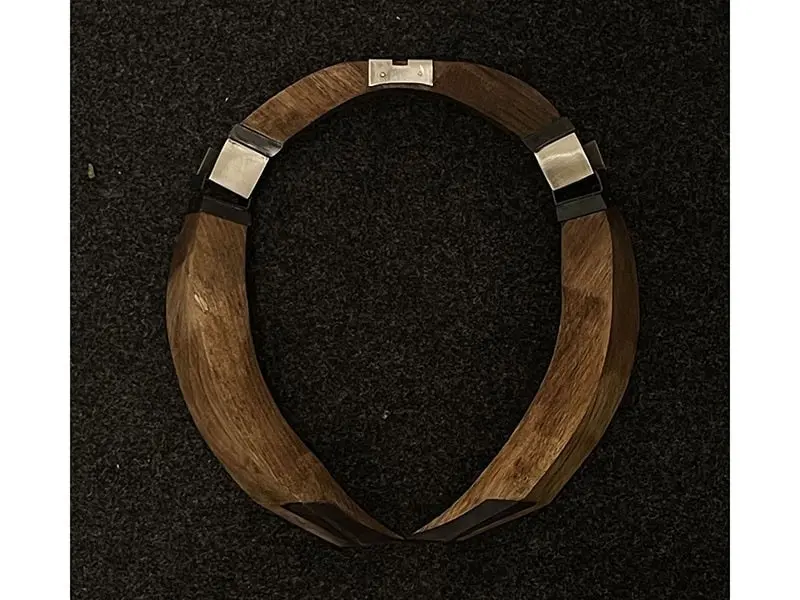
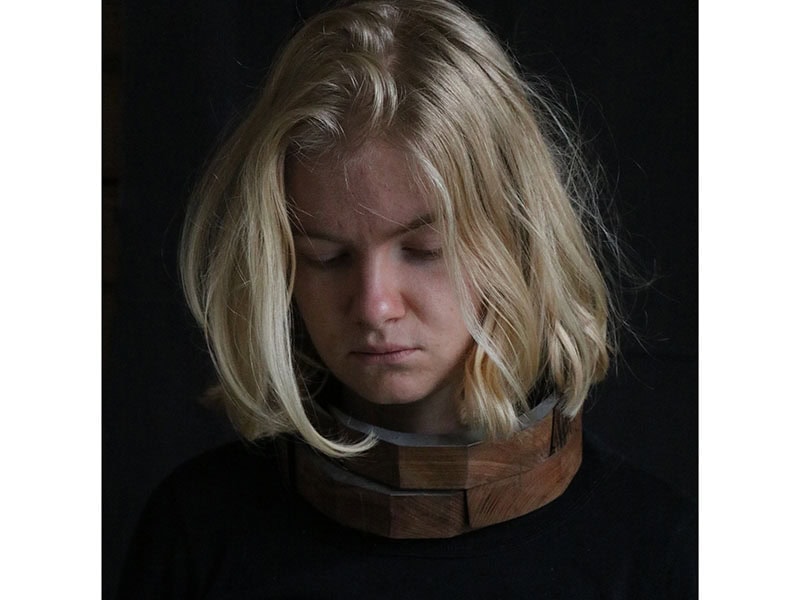
For contemporary jeweler Marie-Caroline Locquet, adornment has never been about comfort, conventional beauty, or the display of social status. Instead, she views jewelry as a conceptual medium capable of provoking discomfort, highlighting shared vulnerabilities, and challenging public space. Her sculptural pieces—often resembling defensive weapons, harnesses, and restraint devices—explore the intense psychological tension between physical confinement and the temptation of an embrace.
Locquet’s radical approach to the medium has earned her recognition as a finalist for the prestigious Young Artist Award. Supported by Karen and Michael Rotenberg, this biennial prize celebrates promise, innovation, and distinct individuality in the work of emerging jewelry artists aged 35 or younger. Through the award, the Art Jewelry Forum (AJF) seeks to champion bold, boundary-pushing work that will actively shape the future trajectory of the field.
In a recent conversation with AJF, Locquet discussed her artistic origins, the conceptual weight behind her unsettling materials, and her vision for the future of contemporary art jewelry.
Challenging the Boundaries of Jewelry from the Start
Locquet’s journey into the discipline began during her foundational years in art school, where she encountered pioneering makers whose works fundamentally challenged traditional definitions of adornment. Rather than gravitating toward classic notions of preciousness and wealth, she found herself captivated by objects that felt strange, uneasy, and inherently dangerous.
Citing radical creators like Bernhard Schobinger and Dorothea Prühl, Locquet explains how their unconventional pieces completely altered her perspective on art. She became fascinated by jewelry’s potential to act as an agent of disruption, reflection, and provocation.
This curiosity sparked a central, driving question for her entire practice: Why make and wear jewelry that appears deeply disturbing at first glance? Exploring the boundaries of what constitutes "un-wearability" quickly became the core focus of her ongoing research.

Recognition as Validation for a Radical Direction
Being named a finalist for the Young Artist Award marks a significant milestone for Locquet, affirming a creative path she has dedicated years to developing.
For the artist, this recognition serves as a powerful vote of confidence. It provides the reassurance needed to continue pushing boundaries, maintaining a radical stance, and intentionally challenging herself alongside both the wearer and the viewer.
Confrontation and the Aesthetics of Discomfort
Growing up in the north of France, Locquet developed an early awareness of the social pressures surrounding self-presentation and the ways personal affiliations are signaled through adornment. This background fostered a deeply conceptual approach to jewelry, treating it less as an aesthetic accessory and more as a subject of rigorous intellectual study.
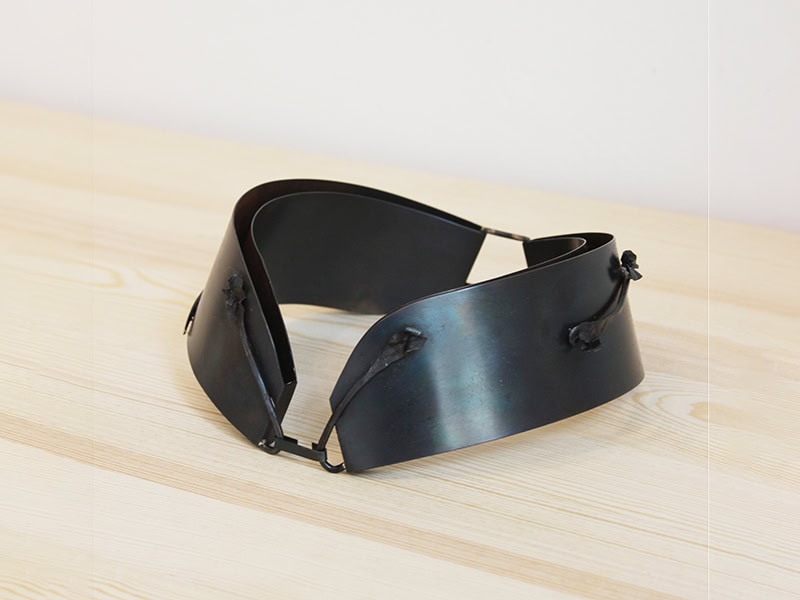
In her practice, each piece reevaluates the role of jewelry, stripping away its traditional function as a showcase for wealth and power. Instead, her works operate as physical confrontations designed to create high disruption in public spaces. Rather than focusing on seduction or traditional representation, her art leans heavily into disturbance, violence, fragility, seduction, domination, vulnerability, and confinement.
By pushing materials to their absolute limits, Locquet allows them to bare their true nature through forms that evoke both desire and death. Whether functioning as defensive weapons or intricate restraint devices, each creation offers a singular wearing experience that investigates human vulnerability, maintaining a permanent tension between social unease and the impulse to embrace.
Tracing History and Mechanical Intimacy in Hands
Locquet’s deep exploration of confinement and physical vulnerability has naturally led her to draw inspiration from historic objects of subjugation. These include the collier d’appartenance—a historical collar used in submissive relationships—and the "slave collar," rooted in 19th-century Norman and Auvergnat traditions as a marriage token of possession. She also examines labor tools designed for animals, such as the heavy horse collar.
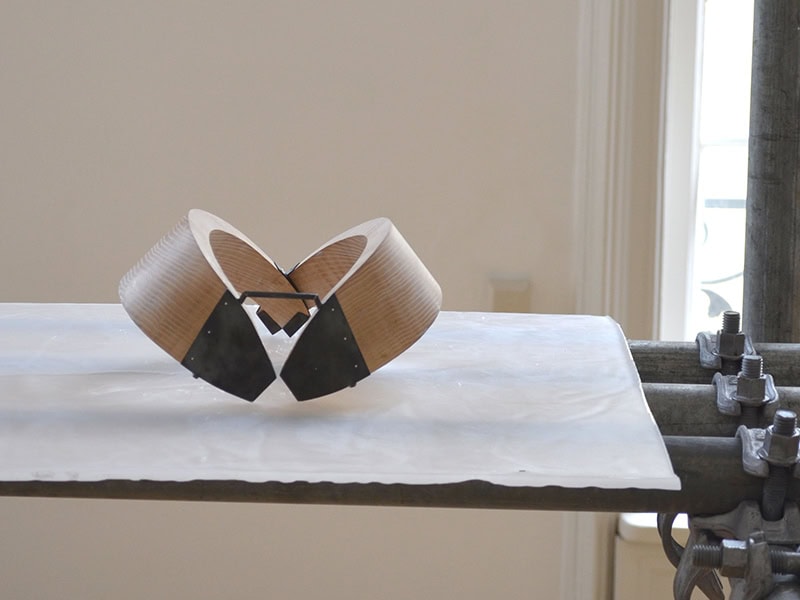
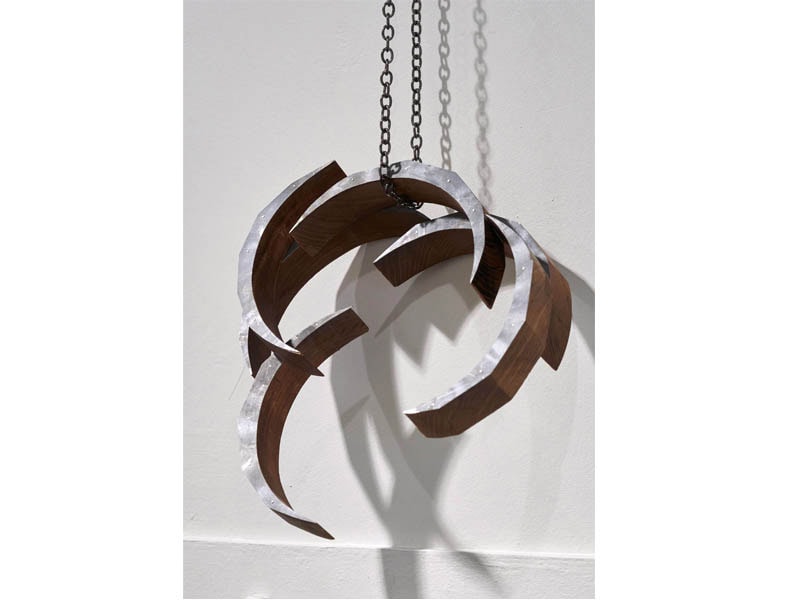
Her neckpiece Hands, created in 2024 using elm wood, zinc-plated steel, and silver, encapsulates multiple layers of her artistic philosophy. The piece highlights her obsessive research into mechanical systems, intricate movements, specialized clasps, and the fluid border between jewelry and sculpture.
Before closing tightly around the neck with a gesture reminiscent of strangulation, the piece unfolds and occupies physical space like a complex machine. For Locquet, Hands stands out as her most intimate and intricate work, directly articulating themes of confinement and violence.
Exploring the Societal Echoes of Body Ornament
What excites Locquet most about contemporary art jewelry is its capacity to anchor a complete, holistic artistic approach—spanning from the physical object itself to theoretical research and the curation of dedicated exhibition spaces that harmonize with the work.
On a broader scale, she is deeply intrigued by how body ornamentation mirrors the image of society. She believes that everything worn on the body reflects the references, boundaries, and values of contemporary culture. This belief inspired her to launch an extensive iconographic research project and collection centered on wearable and unwearable objects, encapsulated by the phrase: "Adornment is impure, makeup is obscene, disguise is an abomination."
Through this ongoing collection, Locquet examines how ornament, when brought into direct contact with the body, reveals profound insights into social structures, cultural representation, and the delicate dance between the private self and the public sphere.
The Ongoing Need for Risk in Contemporary Jewelry
Reflecting on the challenges within her field, Locquet recalls an exhibition she co-curated with colleagues and friends during Munich Jewellery Week in 2018 titled Jewelry Is Still a Risky Business, referencing an earlier work by Paul Derrez. To this day, she firmly believes that jewelry should retain that element of risk.
She notes that contemporary jewelry is frequently subjected to an implicit demand to justify its validity within the broader contemporary art world. During her studies at a French fine art school, she routinely encountered the perception that jewelry was somehow a "lesser," superficial, or niche medium.
While this marginalization presents challenges, Locquet views it as an inherent strength of the medium, as it opens up novel ways of seeing and thinking. However, it also underscores a persistent distance between the specialized art jewelry community and broader audiences.
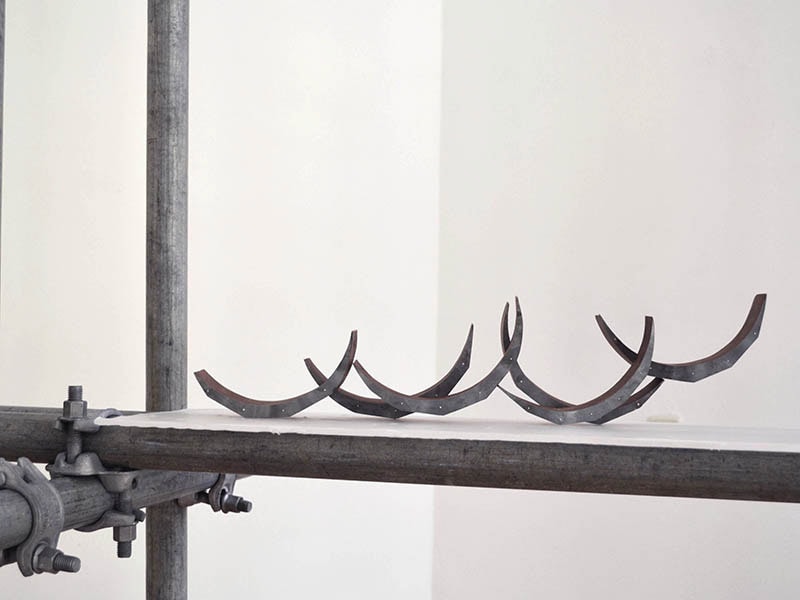
To bridge this gap, some of her pieces incorporate more literal design elements, such as Panicroom Vector I. These works serve as entry points, providing audiences with keys to unlock the deeper layers of the art. Remaining steadfast in her exploration, she aims to forge meaningful experiences for viewers and continually expand the horizons of the medium.
Looking Ahead: Research, Space, and Pedagogy
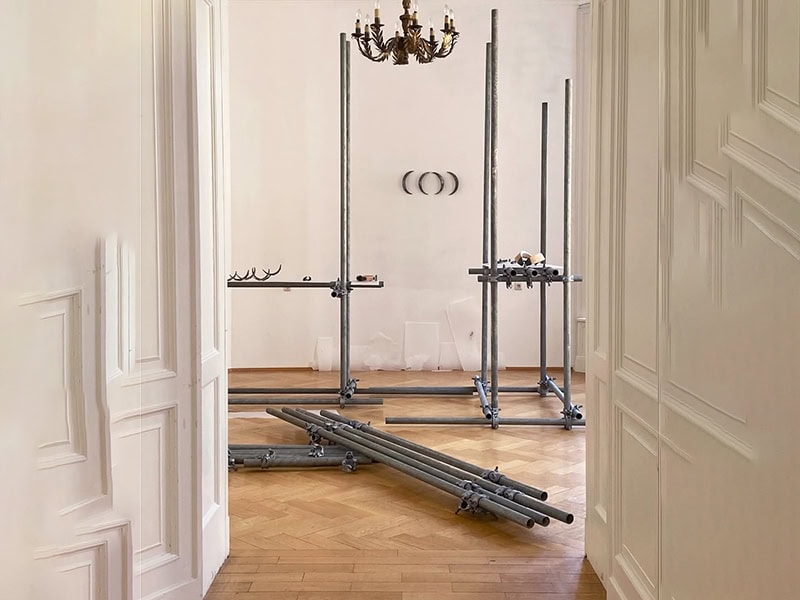
Five years after graduating, Locquet expresses deep satisfaction with the trajectory of her career. Her practice has recently entered a new chapter, expanding its scope to encompass spatial design so that her sculptural pieces and their surrounding environments resonate in unison—a concept she plans to showcase in upcoming exhibitions.
Looking to the future, she intends to keep refining her artistic language, pursuing international artist residencies, and collaborating with fellow creators. Beyond her studio practice, academic research and teaching hold a strong appeal for her. She views education as an ideal space to reinvent and push forward collective understandings of body ornamentation, ensuring that makers can continue to stretch, deform, shape, and question the definition of jewelry for years to come.