





The atoms that shiver throughout the human being are older than organic life itself. The elements that bind our bodies together were born in the earliest moments of the universe and forged inside faraway stars, while the sugars that permit muscles to move were made by plants devouring light from a fiery orb. The oxygen that fills human lungs is borrowed from forests and oceans, and the water that comprises most of our mass once fell from the sky as drops of rain. At our most fundamental level, humanity is constructed of wonder, which is simply another word for nature.
And yet, much of modern human existence on this planet has been deliberately separated from it. The very word used to describe the sum totality of life is frequently defined by the systematic exclusion of our own species. Nature has become a learned way of seeing the world as everything that is not us. To other anything, however, represents the first crucial step toward allowing harm, paving a direct road for ecological extraction and planetary catastrophe. Humanity has bowed out of the active participation and revelry of the biological exuberance that defines the Earth, and in doing so, created a deep, pervasive loneliness.
The historical roots of this profound divide can be traced directly to the Scientific Revolution of 16th- and 17th-century Europe. During this era of intense discovery, human anatomy mapped the body, microscopic life revealed itself, the heavens no longer revolved around our world, and the laws of gravity were demystified. Alongside these revelations, a transformative and mechanical view of the cosmos took shape. Nature began to be perceived as a series of mechanical processes, governed by rigid laws that could be observed, understood, and ultimately harnessed. Humans, endowed with uniquely rational minds, were firmly set apart from this machinery.

Few intellectuals did more to articulate this perspective than French philosopher René Descartes. In his seminal 1637 work, Discourse on the Method, he explicitly described the bodies of animals as mere machines. He firmly believed that scientific knowledge would eventually allow humans to become "the lords and possessors of nature." This Cartesian dualism acted as a fissure that cleaved the world in two: mind and matter, thinking subject and physical object. In order to understand the rest of life, humanity felt compelled to observe it safely from afar.
While Descartes’s famous philosophical declaration, cogito ergo sum—or "I think, therefore I am"—remains widely recognized, its foundational context is less frequently explored. He tied his rationalism intrinsically to the concept of doubt, noting that from the very circumstance of doubting the truth of other things, it clearly followed that he existed. Doubt, a mental state remarkably close to wonder, houses worry, whereas wonder houses awe. Perhaps rather than doubt leading directly to thinking and existing, an intentional cultivation of wonder can lead humanity to feeling and, ultimately, true belonging.
Science has undoubtedly taught extraordinary things about the complex workings of the physical world. However, to learn how to inhabit the planet sustainably, humanity requires something deeper: wisdom.
Within the long memory of the planet and the thousands of years that our species has walked upon it, the modern perception of nature as separate from humanity is a remarkably recent phenomenon. The idea of existential separation has never been a universal human truth. Many Indigenous cultures have long maintained traditions that recognize humans as an integral part of the living world, rooted deeply in reciprocity and environmental stewardship. Seeing ourselves as a single strand in the intricate web of life is not a newly invented worldview, but rather an ancient one.
In her influential 2013 book Braiding Sweetgrass, botanist and Citizen Potawatomi Nation enrolled member Robin Wall Kimmerer advocates for a thoughtful weaving together of Indigenous knowledge systems and Western science. Through poignant stories about plants that skillfully plait personal, cultural, and biological threads, she illuminates a world in which every growing organism acts as a guide, beckoning humanity into a deeper, more reciprocal relationship with the Earth and all the beings it houses. This represents the fertile ground of true ecological wisdom.
If knowledge is merely a collection of facts, wisdom is what society chooses to do with those facts. While science helps humanity gather empirical knowledge to understand the mechanics of the world, sapience—the possession of wisdom—helps individuals discern how to move gracefully through it. For example, scientific knowledge can reveal that forests dynamically exchange nutrients through underground fungal networks. Ecological wisdom goes a step further, asking what those underground relationships might teach human societies about reciprocity, cooperation, and collective well-being.
It remains telling that while generations of students are raised on the absolute importance of scientific literacy, few are ever explicitly taught sapience. Shouldn’t everything humanity has learned about life on Earth guide both individual and collective decision-making? Contemporary crises such as climate change, staggering biodiversity loss, and widespread ecocide serve as undeniable evidence of this disconnect, widening the dangerous chasm between humanity and the rest of the natural world. Ecological wisdom offers the vital bridge needed to mend this divide.
This philosophy forms the core mission at Atmos, a multimedia ecosystem dedicated to weaving nature back into the public consciousness. The publication aims to inspire deep cultural transformation by re-enchanting people with the natural world, revealing the undeniable ways human life is interwoven with the Earth. This connection is seen as the primary catalyst for generating solutions that protect and preserve the planet, fostering a society in complete sync with nature’s efficiencies, reciprocities, and profound beauty.
For years, this ecological perspective has been cultivated through outlets like The Overview, a dedicated newsletter exploring humanity’s environmental relationship. Rather than liquifying completely within a chrysalis, creatures like dragonflies undergo incomplete metamorphoses across numerous moltings, offering a lesson in patience during times of systemic transformation. Long before humans ever invented formal agriculture, species like ants were already farming fungi for food in ways that mutually benefited both parties—prompting questions about how modern agricultural systems might adopt a similarly symbiotic model. Hummingbirds possess the remarkable ability to hover effortlessly, drawing nectar from flowers without ever needing to land on them, demonstrating a way to live lightly while leaving minimal traces behind.
In turbulent times, turning to the natural world for behavioral wisdom offers a continuous practice for navigating existence. When processing grief, observation can turn toward ravens and crows, species that have been documented holding complex gatherings for fallen kin. When struggling with personal vulnerability, humans can look to frogs, which breathe partially through their sensitive skin. When seeking guidance on how to navigate the unknown, comfort can be found in bats, which successfully map the dark entirely through listening. In every life form—whether crawling, winged, scaled, or soaring—valuable lessons await discovery.
At the scale of large systems, one of the most direct ways ecological wisdom can guide human design is through the practice of biomimicry. As Janine Benyus, who popularized the term in her seminal 1997 book, has observed, every species alive today represents an example of life having successfully figured out how to endure with elegance. Humanity faces unprecedented design challenges, yet the intelligence of life surrounds us on every side.
From high-speed bullet trains taking direct design cues from kingfishers and structural color mirroring the brilliant blue of morpho butterflies without synthetic dyes, to shark skin-inspired antimicrobial surfaces and temperature regulation systems modeled after termite mounds, biomimicry provides tangible blueprints. It envisions a society that is not separate from, but functionally intertwined with the wonders of the more-than-human world, viewing every species as an intricate schematic written with evolutionary possibilities.
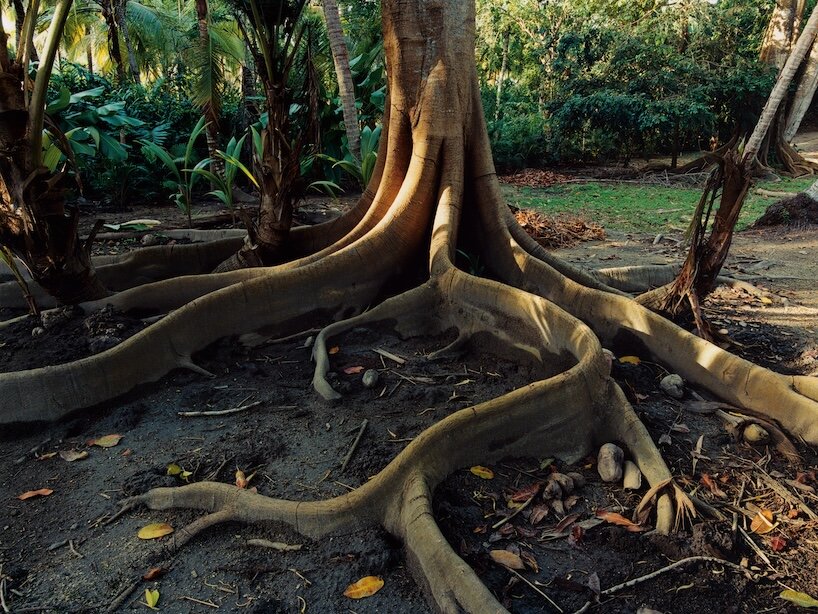
Biomimicry extends far beyond merely taking superficial inspiration from nature or borrowing its aesthetics. True biomimicry involves emulating nature’s artistry in both form and function in a manner that actively gives back to life itself. As Benyus notes, life consistently creates conditions conducive to life. Because humans are a part of that same creative genius, society can design infrastructure that works harmoniously with nature while remembering our rightful place within it.
In her 1991 book World as Lover, World as Self, the late Buddhist scholar and deep ecologist Joanna Macy described three distinct movements in the story of human existence. The first she termed participation mystique, a state in which individuals do not distinguish themselves from surrounding objects and the natural environment. The second movement occurred when humanity departed from that unitive state to view the world as entirely separate—a shift that yielded powerful scientific advancement alongside profound alienation. The third movement represents the transition society must now make: returning to a conscious awareness of ourselves as an inseparable part of nature, bringing along all the technological and intellectual lessons we have learned along the way.
As Macy observed, humanity can finally realize that we are our world knowing itself. The root of the prefix "eco" stems from the ancient Greek word oikos, meaning "home." Modern society can return to a way of living built upon this foundational understanding, reconnecting humanity to the resplendent, abundant aliveness found within the garden of life. Our species currently stands at an important threshold, and ecological wisdom serves as the key. Outside the house of isolation that humanity has constructed for itself, home awaits in a circle of belonging as wide as the world.