



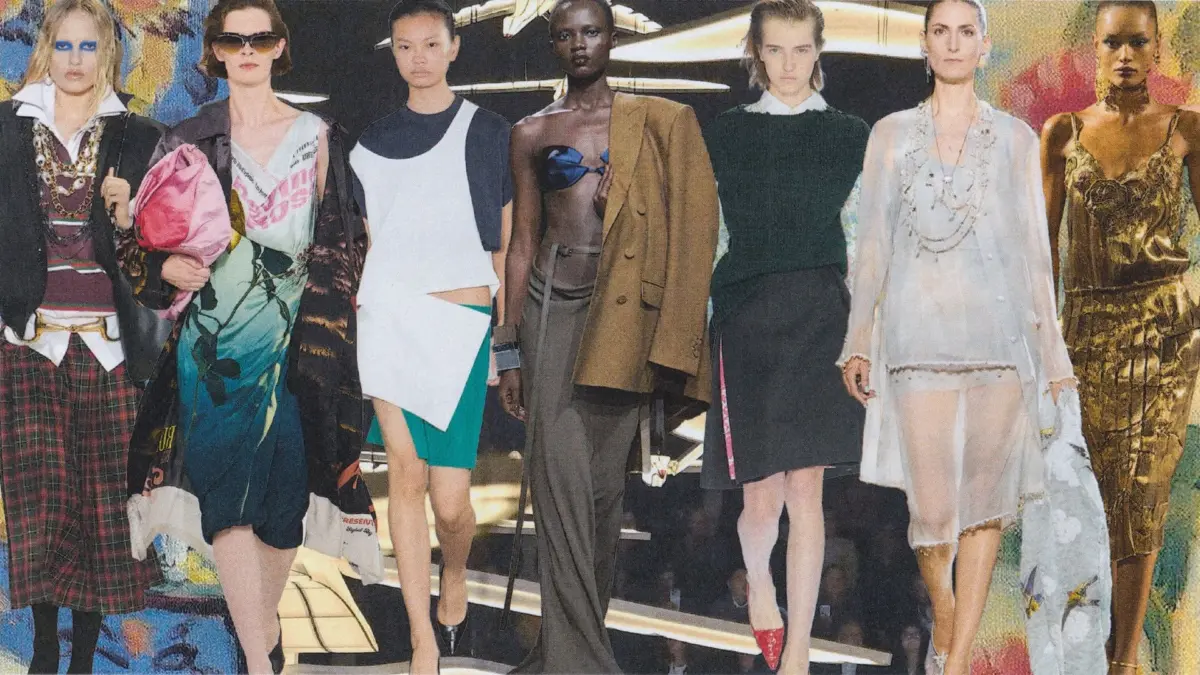
The extreme heat of last summer has left an indelible mark on the fashion landscape, serving as the primary catalyst for the defining trends of the spring 2027 collections. Almost across the board, international designers responded to record-breaking global temperatures by relentlessly chasing lightness—interpreting the concept through color palettes, transparency, and absolute weightlessness. The higher the mercury climbs, after all, the fewer layers anyone wants to wear.
Bra tops have emerged as one direct solution to sweltering conditions. For those seeking a slightly more modest approach, designers leaned heavily into lace, crochet, and semisheer fabrics that play a coquettish game of revelation and concealment, reminiscent of the atmospheric scrim seen in the classic fashion documentary Unzipped. Babydoll dresses, channeled in the spirited, leg-baring tradition of 1960s icon Twiggy, offer another airy alternative for navigating warmer climates.
Beyond weather-driven practicality, the runways offered clear directives on both garment selection and styling philosophy. "The season of the skirt" became an immediate industry headline following a massive Prada showcase that presented 63 distinct variations on the theme. Classic preppy staples like rugby shirts and polo shirts also reclaimed the spotlight, while jeans—the foundational bedrock of the global wardrobe—received a dramatic high-fashion glow-up through elaborate decoration, custom dyes, and novel finishes. These three distinct categories answered the perennial wardrobe question of what to wear.
However, the season’s broader cultural conversation was equally defined by how people wear their clothes. Two prominent directions—mad pattern mixes and deliberately awkward, off-balance fits—took center stage. This preoccupation with nonchalant styling is shared by designers like Celine’s Michael Rider and cultural scholars such as professor Ross Posnock, whose latest book, American Sophistication: How the Casual Became Cool, was published in September. The prevailing contemporary ideal rejects sterile perfection in favor of a rule-breaking individualism, ideally executed with an "if you know, you know" (IYKYK) sensibility. This intentional "offness," which feels distinctly human and proudly anti-AI, has become the ultimate modern turn-on.
At the same time, the collections proved that glamour holds no expiration date. This enduring allure was demonstrated by the widespread predominance of metallics, most notably during Anthony Vaccarello’s Midas-touched swan song at Saint Laurent. The golden age of Hollywood and the gleaming promise of the Oscar statuette were summoned through cascades of gilded designs, fitting squarely into the "Dress for the Award You Want" school of method dressing. Elsewhere, feathers and strass evoked the high-stepping, can-do theatrical flair of classic showgirls, proving that escapism remains a vital pillar of high fashion.
The Stand-Alone Skirt
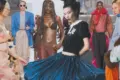
At Prada, the singular object of obsession for Miuccia Prada and Raf Simons was the skirt. By sending 63 distinct variations down the runway, the creative duo effectively proposed the garment not merely as an item of clothing, but as a pure object—an elevated object of desire. Meanwhile, designers Marc Jacobs and Junya Watanabe approached the lower half with a different architectural mindset, utilizing the bodysuit as the foundational anchor for a modular system of dressing.
L’Air du Temps
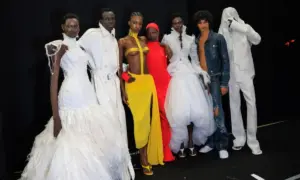
Welcome to the era of "waftcore." Following Chanel designer Mathieu Blazy’s initial pivot toward extreme lightness a year ago, the movement has been broadly adopted across the industry, accelerated in large part by the punishing heat waves of recent summers. Designers achieved a profound sense of physical weightlessness by utilizing floaty, gossamer-thin textiles and semisheer treatments that skim the body without completely laying bare what lies beneath.
Clash Conscious
When it comes to contemporary taste, looking deliberately "bad" has officially become good. Thirty-one years after Prada’s industry-shifting, vibe-altering pretty-ugly collection for spring 1996, the mad pattern mix has evolved into the ultimate marker of individual, in-the-know style across houses like Dries Van Noten, Alberta Ferretti, and Maison Margiela. Polka dots paired with plaid, layered plaid on plaid, or traditional kilts worn in the heat of July are no longer stylistic missteps—they are the blueprint.
Pointed Messages
The proclamation that "the bra top is the new T-shirt" stands right alongside slogans like "Bring Back Shame" as a definitive cultural thesis of the season. With pop culture icon Madonna frequently back in the headlines and widespread industry chatter regarding the dawn of a matriarchal cultural age, the female form has taken center stage, bringing the brassiere firmly out from under its traditional concealment.
The Misfits
Complementing spring’s embrace of graphic visual havoc is an intriguing, calculated offness of fit, prominently featured in the collections of Jil Sander, Givenchy, and Lii. Jackets pull stubbornly at the waist while lapels curve and scallop in unexpected directions. Beyond tailoring distortions, shirts and denim trousers were frequently styled backward on the runways or engineered with construction details designed to mimic that exact reversal.
Jeansmaxxing
Even during a season dominated by skirts, denim managed to hold its ground. These are far from classic, everyday blue jeans; instead, the category underwent a maximalist transformation characterized by heavy ornamentation, synthetic coatings, specialized washes, and creative surface treatments. Dolce & Gabbana smothered denim in coral motifs, while Roberto Cavalli festooned jeans with feathers and intricate appliqués. Balenciaga’s Pierpaolo Piccioli brought a sophisticated, haute couture sensibility to the everyday fabric by cutting denim completely on the bias.
Youthquake
The season’s recurring A-line mini dresses and futuristic moon boots bore the unmistakable architectural influence of André Courrèges. Simultaneously, the nostalgic revival of the babydoll dress evoked the spirit of 1960s supermodel Twiggy, though the silhouette’s modern resurgence was notably jump-started by contemporary pop icon Olivia Rodrigo.
Team Spirit
Spring wardrobes will require an immediate adjustment to popped collars, as preppy staples imbued with athletic heritage enter heavy rotation. At Lacoste, the classic crocodile logo was playfully inverted on polo shirts, while Gucci’s Demna and Dries Van Noten’s Julian Klausner reinterpreted traditional rugby shirts through a distinctly bougie, European lens.
Net Gains
To reconcile the demands of rising temperatures with romantic design codes, creators heavily utilized open-work textiles such as intricate crochet and delicate broderie anglaise, offering both essential ventilation and textural depth. Frothy, cloud-like swathes of lace drifted gently over exposed skin, injecting a vital sense of tactile softness into the overarching mandate for lightness.
That’s Showbiz
While many designers looked to environmental heat for inspiration, others drew their energy from the intense glare of the theatrical spotlight. Unapologetic, high-octane glamour defined the major takeaways of the season, exemplified by Anthony Vaccarello’s final, glittering collection for Saint Laurent. At the same time, showgirl-inspired feathers and dazzling strass injected an infectious sense of showmanship and theatrical excitement into the presentations at Erdem and Matières Fécales.