





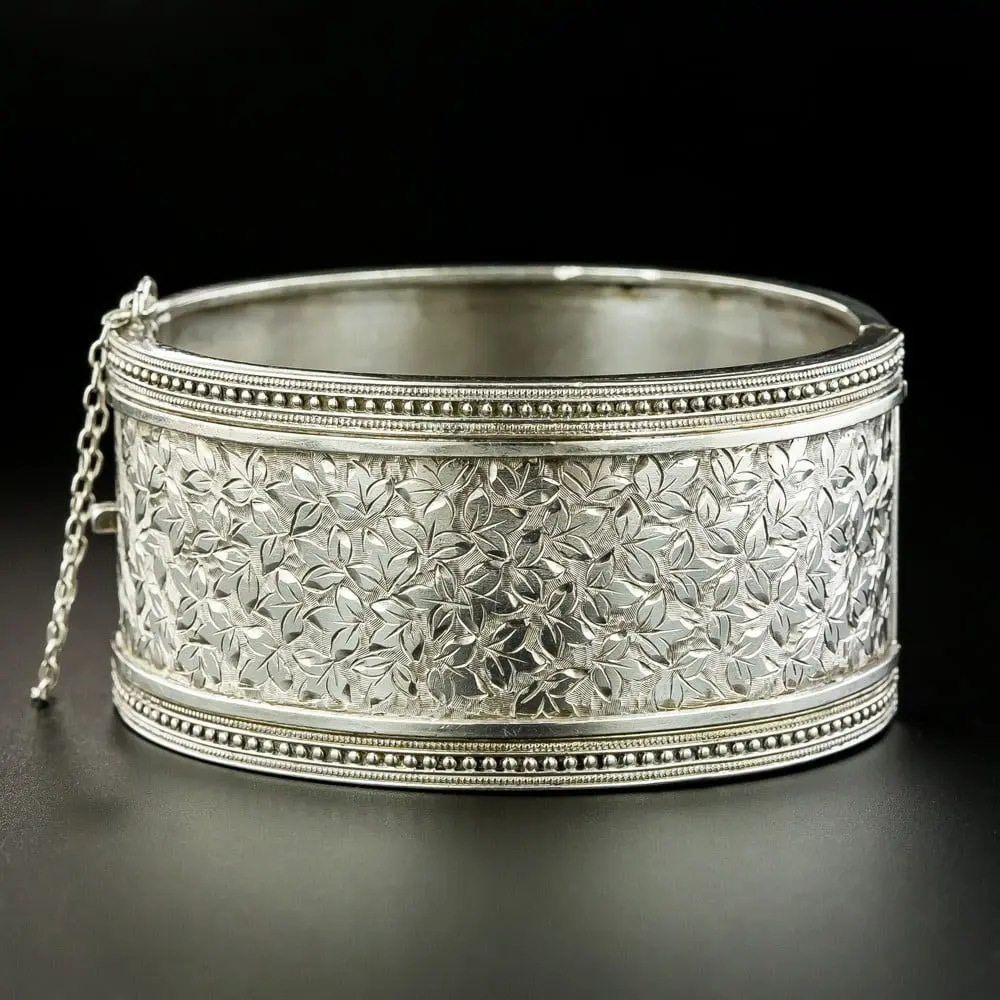
Silver—a lustrous white metallic element denoted by the chemical symbol Ag—has long occupied a paradoxical place in human civilization. While modern markets often price it far below gold and platinum, casting a shadow of perceived inferiority, history tells a vastly different story. Throughout millennia, silver has served as the backbone of global economies, fueled technological leaps in metallurgy, outpaced all other precious metals in jewelry production volume, and even shifted the geopolitical tides of war.
Harder than gold yet softer than copper, silver ranks second only to gold in its exceptional malleability and ductility. Because of its superior resistance to oxidation, it is classified among the noble metals. Furthermore, its unmatched thermal and electrical conductivity makes it indispensable to modern technology. Yet, long before its industrial applications were realized, ancient artisans harnessed its versatility. Usually alloyed with other metals to maintain structural integrity and intricate detailing, silver became the cornerstone of fine jewelry, currency, and objets d’art across successive global empires.
Bronze Age Silver: Mesopotamia, Egypt, and the Mediterranean
The historical narrative of silver begins in the closing centuries of the fourth millennium BC, when innovative inhabitants of modern-day Turkey discovered a revolutionary metallurgical technique: extracting silver from lead ores through cupellation. Though fragile and scarce today, surviving artifacts from this era reveal the remarkable sophistication of early Bronze Age silversmiths.
At the dawn of written history, Mesopotamia utilized silver as a foundational currency. Rather than standardized coins, it circulated by weight or in the form of rings. The Mesopotamian silversmith operated much like a goldsmith—and frequently shared the exact same workshop. Although silver is slightly less ductile than gold and demands more frequent annealing during manufacturing, ancient craftsmen could seamlessly cast it, hammer it into paper-thin sheets, engrave it, emboss it, execute intricate repoussé work, and embellish it with filigree and granulation. Archaeological excavations across the region have uncovered exquisite vessels, delicate statuettes, and high-purity jewelry that underscore the softness and beauty of these early creations.
In ancient Egypt, value was dictated by rarity and geographic distance. Because gold was readily accessible locally from the mountains of the Eastern Desert and Nubia, it was common. Pure silver, however, had to be imported along grueling trade routes that also brought prized Afghan lapis lazuli. Consequently, early Egyptians viewed silver as intensely exclusive and exotic, often valuing it above gold and reserving it strictly for the societal elite.
By approximately 1600 BC, however, the global supply of silver had expanded significantly, causing its market value to drop to roughly half that of gold. It transitioned into a standardized abstract currency. The shifting tides of fashion dictated its prominence; King Tutankhamun’s legendary tomb contained scarcely any silver objects, whereas later pharaohs like Sheshonq II were entombed in magnificent all-silver sarcophagi.
Meanwhile, maritime traders across the Aegean and the Levant—most notably the Minoans, Mycenaeans, and Phoenicians—ensured the widespread circulation of the metal. The Phoenicians played a transformative role by initiating the large-scale exploitation of Spanish silver deposits, flooding the classical world with unprecedented volumes of the metal and permanently stripping it of its exclusively exotic status.
Classical Silver: Greek Currencies, Roman Luxury, and Pliny’s Accounts
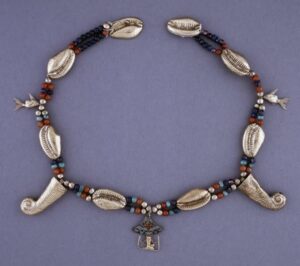
To both ancient Greece and the Roman Empire, silver was the lifeblood of economic stability, providing the raw material for standard minted coinage. While gold dominated surviving jewelry collections from the era—partly due to the perpetual cycle of remelting and recycling silver items—archaeological finds confirm that silver was fashioned into finger rings, anklets, armlets, and hair ornaments.
Romans developed a profound affinity for niello, a surface decoration technique resembling enameling but executed using silver sulfate rather than glass. Niello yielded a tougher finish with a distinctive metallic luster, a stylistic innovation that quickly spread across Northern and Eastern Europe alongside Roman occupation.
Our deepest insights into Roman attitudes toward the metal come from the writings of the Roman author Pliny the Elder. In his monumental Naturalis Historia, Pliny documents both the technological realities of silver mining—describing treacherous deep shafts, lead-silver separation processes, and the legendary mines of Hannibal in Spain—and the staggering heights of Roman luxury. He laments the capricious human appetite for lavish silver plate, noting how artistic preferences constantly shifted between master silversmiths like Mentor, Acragas, Boëthus, and Mys. Pliny contrasts this opulent excess with the Spartan frugality of early Roman generals, painting a vivid picture of a society whose moral fabric was fundamentally altered by the influx of foreign wealth following the conquests of Asia and Greece.
Celtic and Medieval Silver
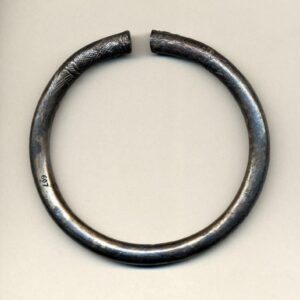
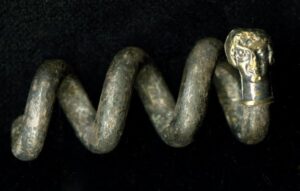
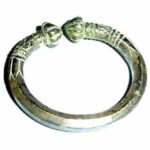
Celtic tribes across Europe integrated silver and bronze seamlessly into their material culture, crafting elaborate torcs, decorated brooches, and crescent-shaped lunulae. Prior to Roman contact, the Celts bypassed coinage entirely, relying instead on standardized silver, copper, and bronze rings functioning strictly as currency rather than wearable adornment.
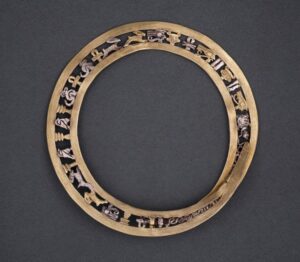
With the collapse of Roman trade routes, gold vanished from much of Europe, thrusting silver into the premier position for jewelry and personal ornamentation. Germanic and Anglo-Saxon societies utilized silver for functional items such as disc brooches, penannular fibulae, and heavy belt buckles, frequently augmenting them with gilding or rich garnet inlay.
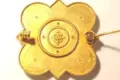
The relentless Viking expansion across Northwest Europe from the ninth century onward injected immense quantities of Scandinavian and newly discovered European silver into circulation, sparking a golden age for silversmiths. The striking visual contrast of the black-white niello technique remained immensely popular among Germanic tribes, beautifully exemplified by masterworks like the ninth-century Anglo-Saxon Fuller Brooch housed in the British Museum. This circular silver-and-niello marvel features intricate personifications of the Five Senses surrounded by geometric animal and human motifs symbolizing Creation.
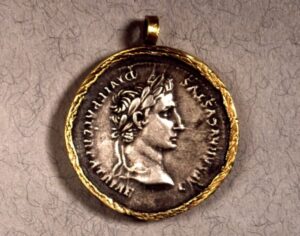
As medieval trade routes to the East gradually reopened, gold reclaimed its status as the metal of choice for elite jewelry. Yet, this same commercial revival birthed a prosperous middle class eager to adorn themselves. Silver emerged as the affordable luxury for those on a budget, paving the way for a more diverse array of decorative and symbolic jewelry—from finger rings and bangles to sophisticated pendants—ultimately leading to the establishment of formal assaying and hallmarking systems by the end of the Middle Ages.
Renaissance, Baroque, and Georgian Innovations
The Renaissance brought profound economic expansion fueled by maritime exploration. Following Christopher Columbus’s arrival in the Americas, Spanish conquistadors such as Pizarro and Cortés subjugated the Inca and Aztec empires, unlocking astronomical silver deposits—notably in Mexico from 1546 onward. While traditional silver-working techniques remained largely unchanged, the sheer volume of metal entering Europe ensured that silver maintained its dual role as a vital currency and an accessible medium for decorative arts.
During the Baroque period of the seventeenth century, European powers vied fiercely for control of Atlantic shipping lanes, frequently intercepting galleons laden with South American silver. Simultaneously, a major technological and aesthetic shift occurred: European artisans began utilizing silver settings to mount diamonds. Intensified direct trade with India—bypassing traditional Arabic middlemen—flooded Europe with high-quality diamonds. The cool, white tone of silver provided an ideal optical complement that enhanced the colorless brilliance of these stones.
This diamond-setting trend reached its zenith during the Georgian era, buoyed by major new diamond discoveries in Brazil beginning in 1727. While fine jewelry continued to utilize gold foundations with silver-fronted surfaces, all-silver pieces and specialized cut-down collet settings became ubiquitous. Furthermore, the 1777 invention of die-striking—the mechanical stamping and cutting of precious metal components using heavy presses and dies—revolutionized production. This cost-effective manufacturing method enabled the first large-scale mass production of jewelry, bringing affordable silver pieces to a rapidly expanding consumer market.
Victorian Industrialization and the Arts and Crafts Reaction
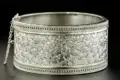
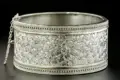
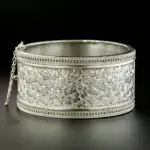
The momentum of mass production culminated during the Victorian era, propelled by the Industrial Revolution. Die-striking and stamping techniques were perfected, allowing for the widespread manufacturing of intricate silver jewelry. Cultural milestones, such as Queen Victoria and Prince Albert’s acquisition of Balmoral Castle in 1848, sparked widespread fashions for Scottish agate jewelry, predominantly executed in silver.
However, the relentless industrialization of the era eventually sparked a powerful counter-movement: the Arts and Crafts movement of the late Victorian period. Rejecting machine-made uniformity, Arts and Crafts artisans prioritized artistic design over the intrinsic market value of raw metals and gemstones. Championing silver over gold and favoring bezel-set cabochon stones over faceted gems, these craftsmen helped secure silver’s enduring reputation as a medium of choice for expressive, hand-crafted artistic integrity.