




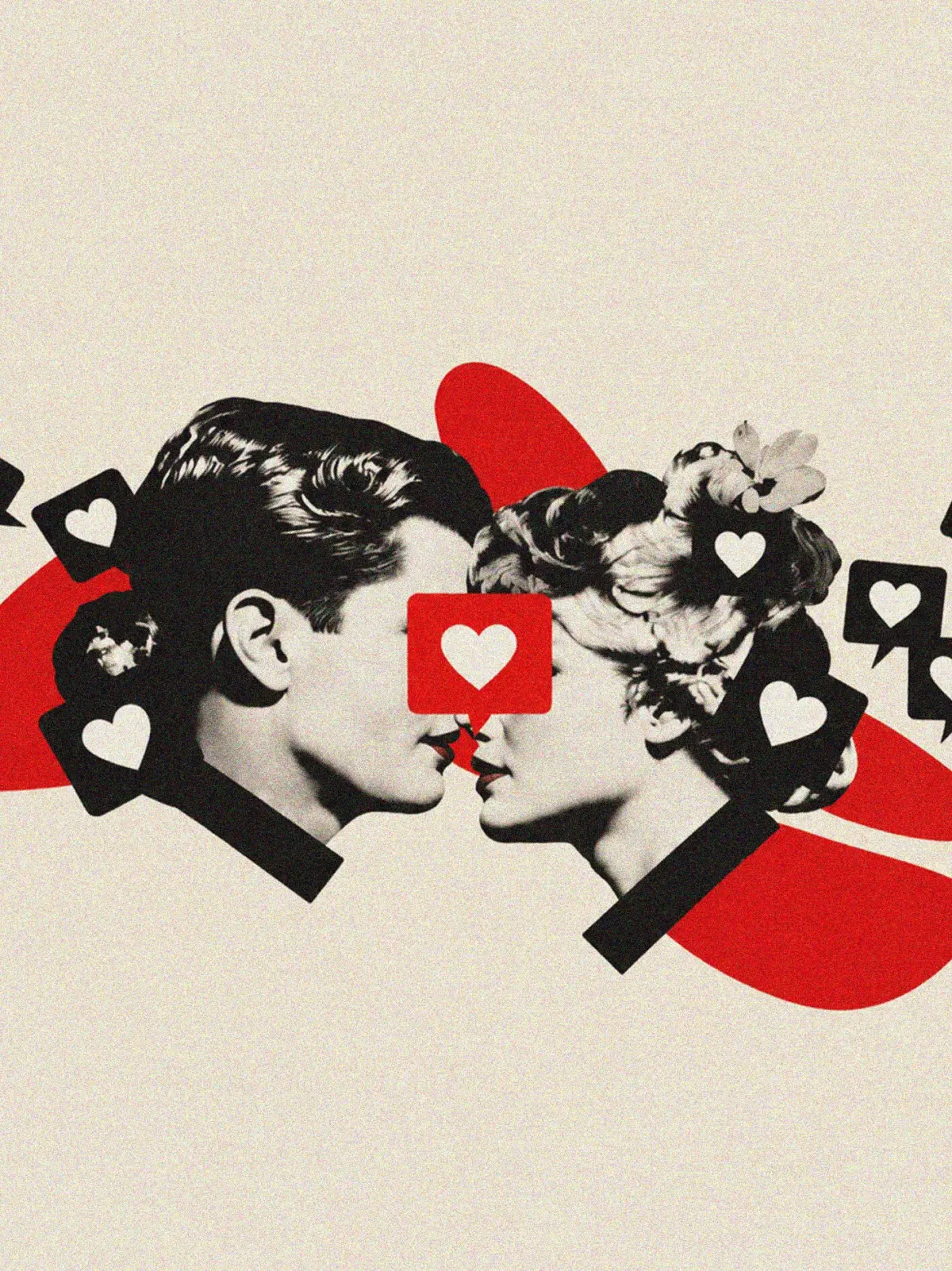
We currently find ourselves in the midst of a modern dating app renaissance, where platforms constantly seek out niche or unique angles to stand out in a saturated market. When news broke of a new dating app designed specifically for book lovers, my inner former literature and creative writing major immediately felt seen, heard, and validated. That wave of excitement was swiftly followed by a familiar, anxious reminder that I urgently need to improve my reading habits and carve out time dedicated exclusively to the literary ritual.
Anxiety and a lingering touch of shame aside, I was entirely on board even before learning the platform’s origin. ReadMe comes from the creators of Co-Star, the go-to astrology app for myself and countless others—an application I have actually made many prospective partners download on a first date to gauge our astrological compatibility.
ReadMe operates under a compelling and poetic motto: "The way you read is the way you love." At this particular stage of my life, love is a concept that occupies a significant portion of my thoughts. It is something I actively desire, yet frequently find myself avoiding the practical steps required to achieve it. It is a space I know I enjoy, yet I often fail to engage with it fully due to limited time and an increasing personal discomfort with slowing down. Committing to a process that might demand a substantial investment of time feels daunting. For better or for worse, I am someone who would often prefer never starting something at all rather than starting something and failing to finish it. According to ReadMe’s central metaphor, my literary habits mirror my romantic hesitations precisely.
How ReadMe Works
Upon signing up for the platform, users are immediately met with a series of multiple-choice prompts designed to explore how they like to talk, listen, interact with others, and conceptualize the world around them. Among the options that resonated with me and that I ultimately selected for my profile were traits like being comfortable with silence, proudly identifying as an overthinker, feeling entirely fine with intensity, being a notoriously slow texter, and holding a strong personal ethos to "decolonize everything."
Following these prompts comes a fill-in-the-blank portion featuring questions such as what is currently sitting on your nightstand, and naming a single book you love talking about. Finally, users select a featured book to display prominently on their profile. I chose Famesick by Lena Dunham, the book I was currently reading, doing my absolute best not to overthink the selection or make it feel overly performative.

The onboarding process culminates in a sophisticated psycholinguistic quiz designed to uncover hidden links between how a person reads and how they relate to others. Questions like, "How do you feel about your own writing?" are interspersed with the presentation of two anonymous passages pulled from published books alongside the prompt, "Which one do you prefer?"
These language preferences ultimately inform a comprehensive character study which, in my personal experience, completely reads you to filth. Phrases like, "Your communication is motivated by the impossible hope that you will one day make perfect sense," "Some of what you project onto others is your own disavowed uniqueness," and "You would do well to partner up with someone who doesn’t exactly match what you think you’re looking for" hit uncomfortably close to home. Feeling particularly targeted—and rightfully so—the final sentiment perfectly encapsulated a mindset I have only very recently adopted. I am entering this dating pool actively rejecting the entire concept of "my type." After navigating two separate relationships with boyfriends who were proudly and shamelessly non-readers—one of whom was even attempting to become a writer, a ridiculous irony in my view—my singular requirement moving forward is simply that he likes books. Conveniently, the app takes care of that prerequisite right out of the gate.
Initially, however, I found myself approaching the app with deeply ingrained modern habits. I began swiping the exact same way I have been consuming media lately: mindlessly, impatiently, and letting my short attention span take the steering wheel. I would look at the first photograph listed on a profile and, if I was not immediately captivated, I would swipe past without giving the full picture a chance—mirroring the unrealistic expectations I often place on television shows to hook me within the opening minutes. Objectively speaking, it is an unfair and impractical standard to hold, particularly when the ultimate goal is to find a human being with whom you can forge a genuine, authentic connection.
My Final Thoughts
When I actively forced myself to slow down my habitually speedy swiping, my entire perspective shifted. I began to properly take in the totality of a ReadMe profile: the specific books that shaped the person, the calculated similarity percentage offered by the platform, and the insightful bullet points curated for each user. Standout descriptors on profiles included observations like, "Thinks everyone has hidden depths," "Don’t touch their notebooks," "Feels personally responsible for the world," and "Remembers exactly what you said last time."
Immersed in these details, I remembered that this platform is not just another standard-issue dating app like Hinge or Bumble. The entire foundational point of ReadMe’s existence is to foster human connection through a deeply shared intellectual interest. The overall experience immediately felt far more intentional—and approachability through intentionality is precisely how I am trying to navigate the dating world right now.