




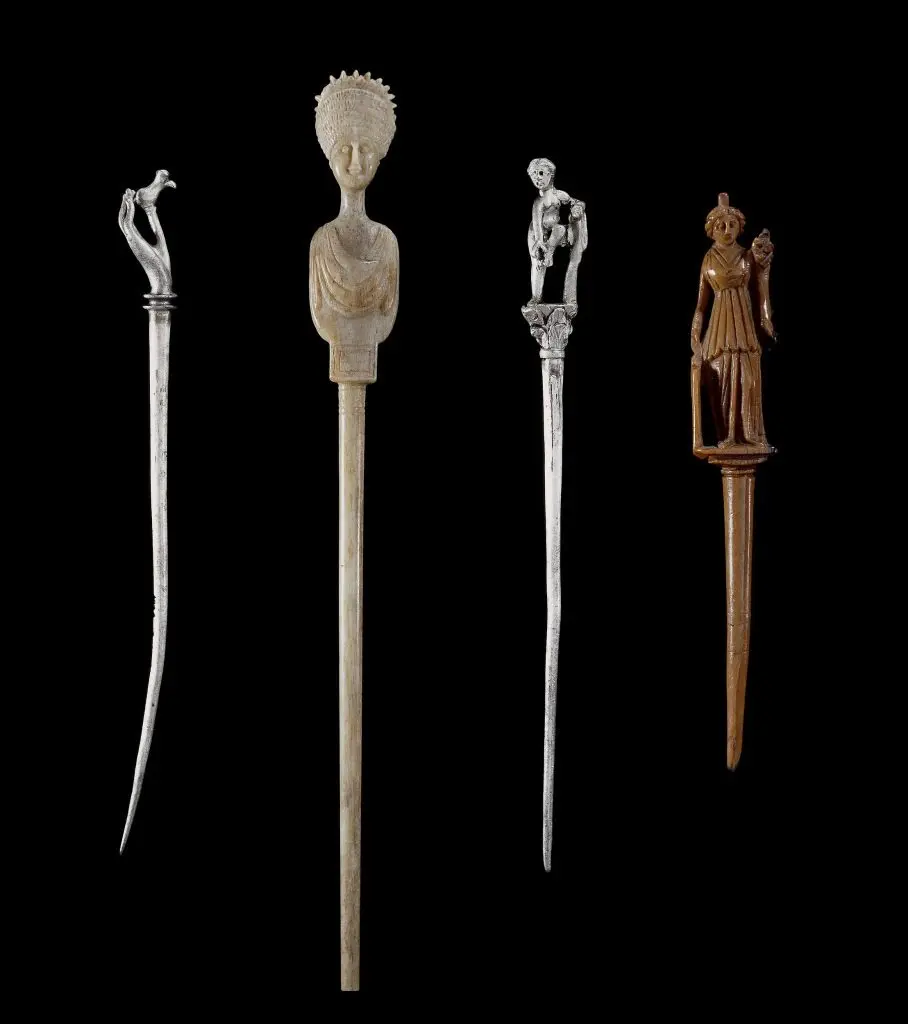
LONDON — Among the most intimate and revealing artifacts left behind by the ancient Roman world are the small, everyday objects that once accompanied individuals through their daily routines. Recent archaeological focus on personal adornments from the Romano-British era has brought renewed attention to a specific category of ancient fastener: the acus. Traditionally designed as a specialized implement to secure intricate hairstyles—in which case it was specifically known as an acus crinalis—these remarkable pieces offer a tangible connection to the fashion, daily life, and material culture of Britain during the Roman occupation.
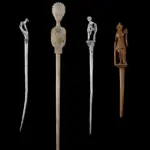
Measuring typically between six and nine inches in length, the acus was far more than a mere cosmetic accessory. Crafted from a diverse array of materials ranging from precious metals like silver and gold to more utilitarian substances such as bone, polished wood, and ivory, these long pins reflect both the personal wealth of their owners and the broad availability of artisanal resources throughout the Roman provinces. Specimens housed within major cultural institutions, such as the extensive collections curated by the Trustees of the British Museum, showcase a stunning variety of these artifacts, highlighting how craftsmanship varied from exquisitely carved bone items to gleaming, high-status silver creations.
To understand the role of the acus in antiquity, one must look closely at the architectural demands of Roman fashion, particularly hair styling. During various periods of Roman history, elite and common women alike favored elaborate, towering hairstyles that required substantial structural support. An acus crinalis served as the crucial anchor for these sculptural creations, piercing through braided or coiled hair to hold heavy arrangements in place throughout the day. Unlike modern bobby pins, which are designed to remain hidden, an acus was intentionally decorative. The heads of these pins were frequently adorned with carved figures, geometric patterns, molded knobs, or stylized representations of animals and deities, ensuring that the fastener functioned simultaneously as a functional tool and a visible statement of personal style.
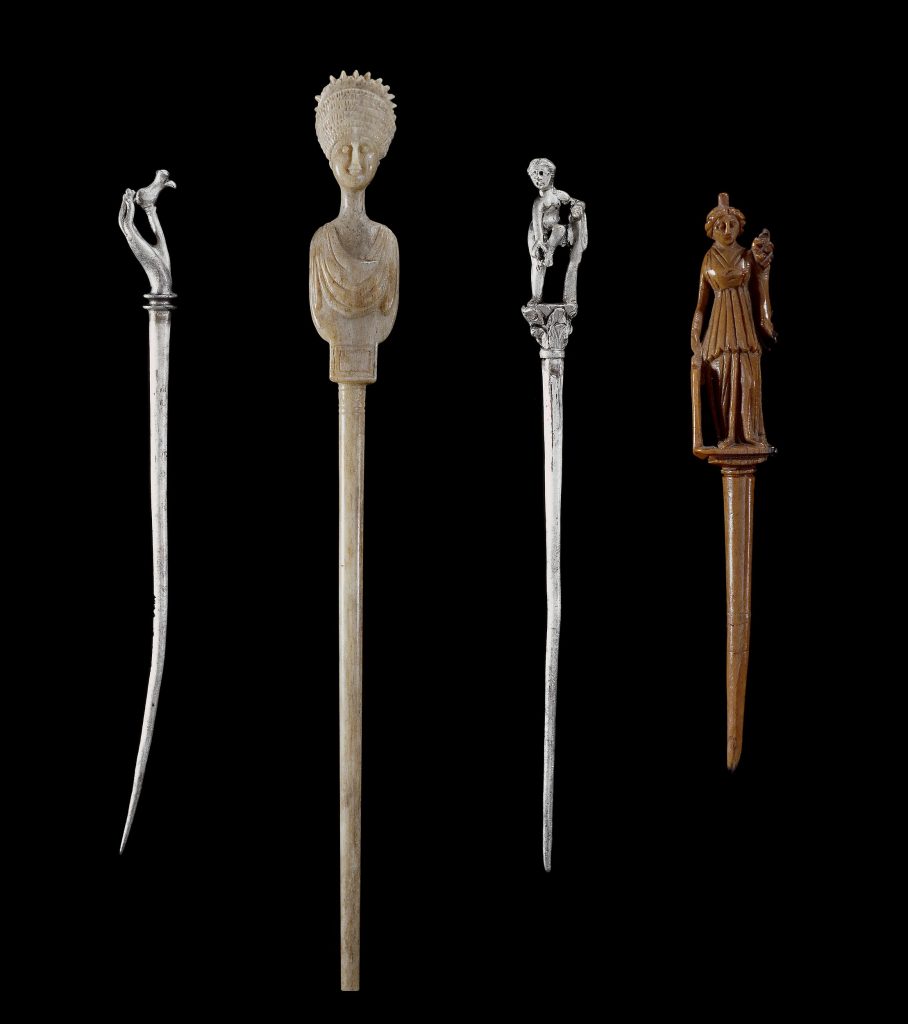
However, the utility of these slender, elongated pins extended well beyond the dressing table. Archaeological and historical evaluations indicate that these versatile long pins could easily double as clothing fasteners. In the context of Romano-British dress, individuals frequently utilized them either independently or in conjunction with a fibula—the traditional Roman brooch—to drape, pleat, and secure garments such as stolas, tunics, and cloaks. Because Roman attire typically relied on draping and folding cloth rather than tailored seams, fastening devices were absolute necessities of daily life. While the fibula functioned much like a modern safety pin, the straight, rigid shaft of an acus allowed it to skewer layers of thick woolen or linen fabric cleanly, holding heavy drapes securely across the shoulder or torso.
The materials chosen for crafting an acus often tell a story of socio-economic status and regional resource availability within the Romano-British provinces. Silver and gold pins, naturally, belonged to the wealthier segments of society, reflecting trade networks that brought precious metals into Britain or supported local goldsmiths and silversmiths. Conversely, bone and antler pins were widely accessible, produced in significant quantities by local craftsmen who repurposed animal remains from food production into polished, durable accessories. Wood and ivory specimens occupied various spaces along this spectrum, with ivory serving as an exotic, imported luxury item indicative of extensive trans-continental trade routes spanning the Roman Empire.
As researchers continue to catalog and analyze personal items recovered from Romano-British settlements, burials, and fort sites, artifacts like the acus provide critical insights into the blending of indigenous British traditions with Roman cultural norms. The widespread adoption of Roman dress styles and cosmetic practices across Britain demonstrates the profound cultural integration that occurred following the conquest in the first century AD. Through these enduring bone and silver hairpins, modern observers gain a rare, personal glimpse into the daily rituals of grooming and attire that defined life in Roman Britain nearly two millennia ago.