



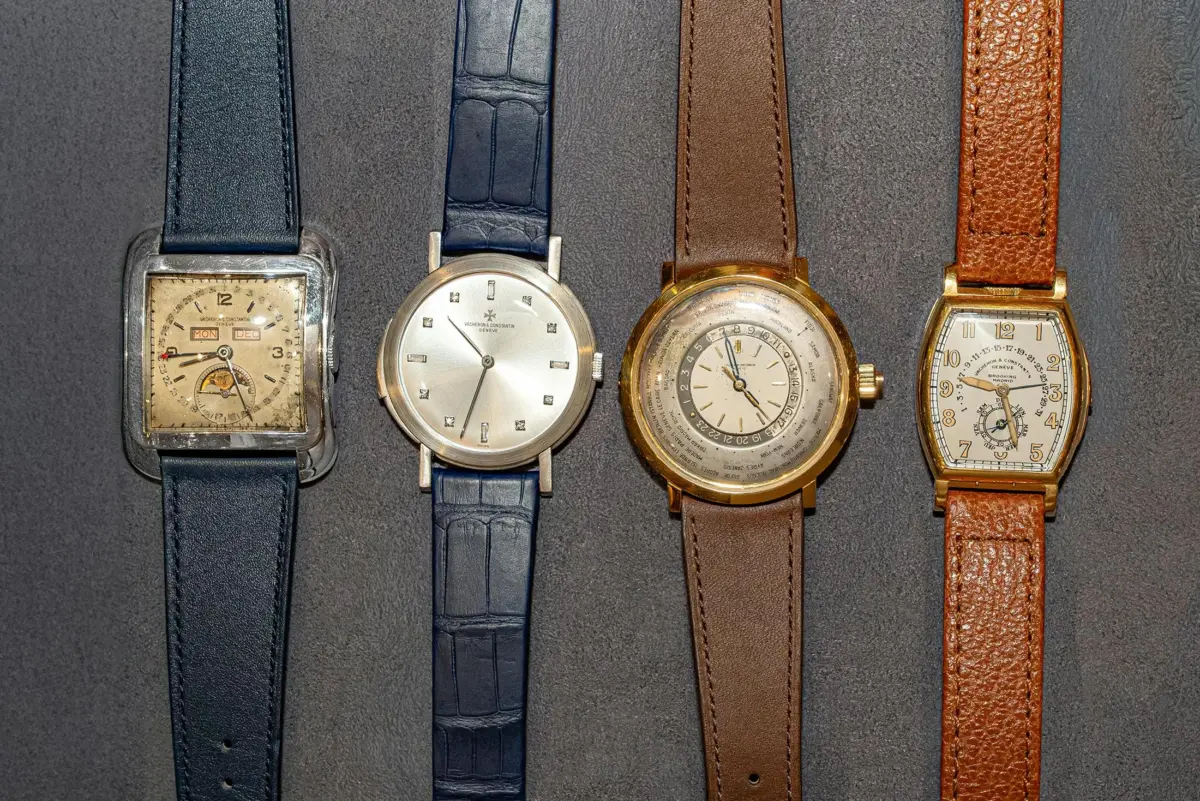
On Tuesday night in Geneva, the historic intersection of haute horlogerie, elite collecting, and deep historical scholarship took center stage as Vacheron Constantin and Phillips, working in association with Bacs & Russo, hosted the world’s first-ever Concours d’Élégance Horlogère. Staged before a rapt, anticipatory, and deeply enthusiastic audience at the Hôtel Président, the event brought together some of the most extraordinary watches ever crafted, alongside the incredible, often deeply emotional human stories behind their survival and preservation.
While the concept of a concours d’élégance has long been a revered fixture of the automotive world—where rare, historically significant cars are judged on their authenticity, elegance, and provenance—this marked the absolute first time such a rigorous, beauty-and-history-focused competition has ever been applied to the realm of high watchmaking. The initiative was first announced in January, immediately sending ripples of excitement through the global collecting community. Vacheron Constantin opened its archives and issued an open call to collectors worldwide, inviting them to submit exceptional timepieces manufactured between 1755—the foundational year of the venerable Geneva-based Manufacture—and 1999.

Over the ensuing months, the response was overwhelming. Approximately 550 watches were submitted from every corner of the globe for consideration. A meticulous pre-selection process winnowed that massive field down to just 34 elite finalists. These remarkable horological artifacts were then transported securely to Geneva from all over the world, setting the stage for an inaugural event that would merge scholarship, connoisseurship, and pure aesthetic wonder.
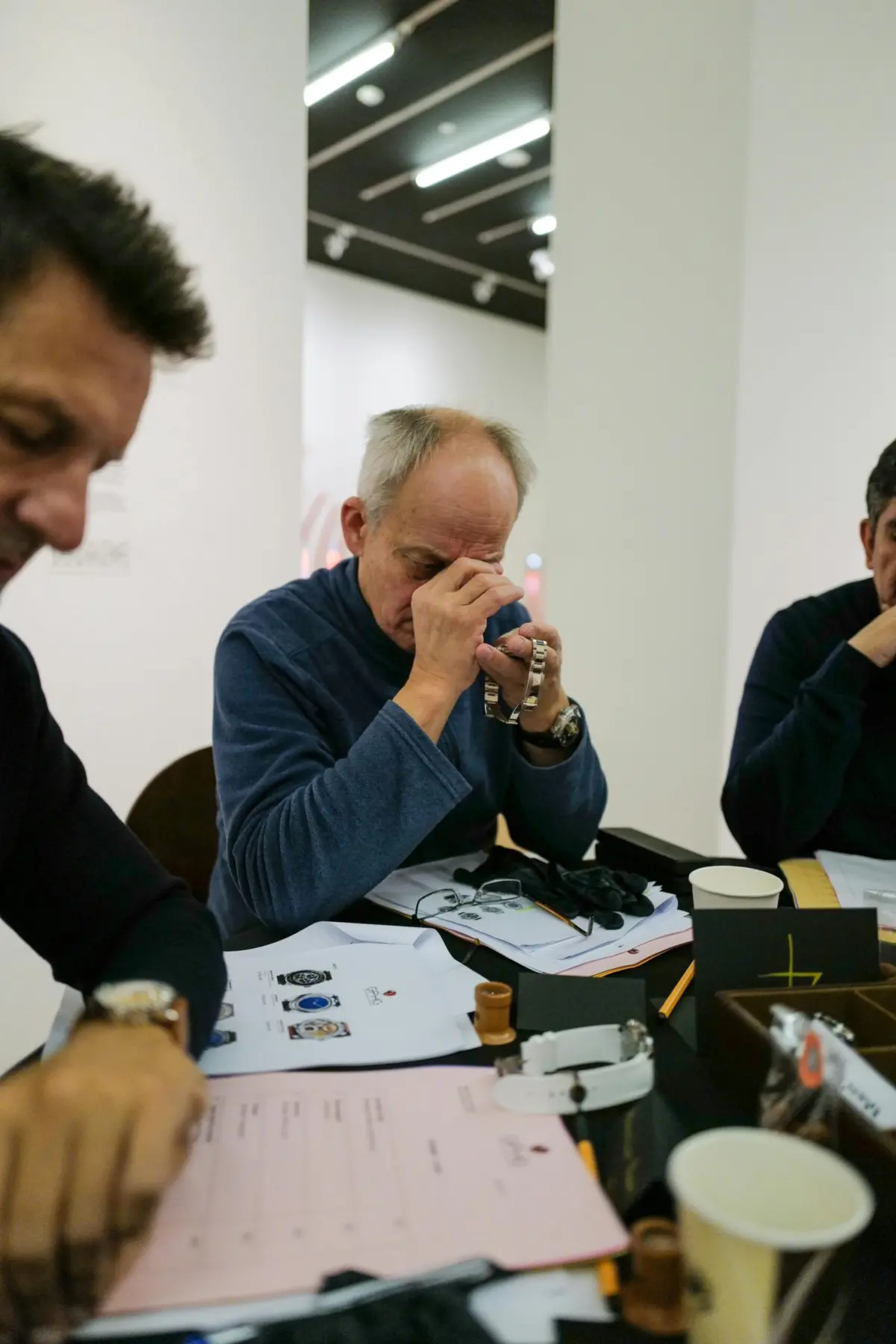
Judging duties fell to an esteemed 12-member panel composed of leading authorities in the watchmaking and auction worlds. The jury was co-chaired by Aurel Bacs, Senior Consultant at Phillips, and Christian Selmoni, Legacy and Style Director at Vacheron Constantin. The remaining panel members were drawn from the upper echelons of horological expertise, including Ben Clymer of Hodinkee.

The jury was tasked with evaluating the finalists across seven distinct categories: Chronographs, Métiers d’Art, Chronomètre Royal, Astronomical Complications, Multiple Complications, Design, and Chiming Mechanisms. A single winner was named in each category, while an eighth, ultra-exclusive watch captured the coveted Jury’s Special Prize for Best of Show—a title that rendered the recipient ineligible for category-specific wins.
Hosted by Justin Hast and Emily Marsden, the awards ceremony played out before several hundred guests who filled the venue, brimming with anticipation as none of them knew precisely what outcomes awaited them. Aurel Bacs remarked during the evening that the ambitious concept had begun as a competition centered on dreams and elegance, eventually evolving into an exercise in scholarship, deep knowledge, and documented history. Over the course of the following hour, as winners were announced one by one, that evolution played out visibly before the eyes and hearts of everyone in attendance.

Vacheron Constantin ensured that the evening remained fundamentally focused on the collectors themselves, their treasured timepieces, and the personal histories attached to them. While not every owner was able to make the journey in person—with proxies graciously accepting awards on behalf of a few—the majority of the collectors were present. Each was given a dedicated moment at the microphone to articulate why their specific watch mattered so profoundly to them.
The scope of these narratives was breathtakingly diverse, ranging from a physician’s precision pulse watch to a royal gift smuggled across war-torn Europe hidden within the lining of a coat, to a minute repeater passed down through generations from a grandfather to a father, and finally to a son. The speeches were widely described as moving and deeply heartfelt. Although it was formally a competition—bearing the title in its very name—the evening quickly transformed into a collective celebration and a powerful reminder of the underlying passions that draw people into the world of horology in the first place.

Following the formal conclusion of the ceremony, guests were invited upstairs for a vibrant cocktail reception where all 34 finalist watches were placed on direct display, allowing attendees to examine the masterpieces up close. Conversations among collectors, dealers, and historians unanimously hailed the night as an overwhelming success.
Executing an event of this scale for the very first time inherently involved substantial unknowns. In many ways, it represented a bold and calculated risk for Vacheron Constantin to step into uncharted territory. Yet, the flawless execution paid off, bringing forth stories that resonated deeply with the audience. Naturally, as the evening wound down, discussions quickly turned to whether the organizers intended to stage a second edition. While no official announcements have been made regarding a future iteration, the sentiment among attendees was a collective and vocal hope that the Concours d’Élégance Horlogère will become a recurring tradition.

Chronographs: Pocket Chronograph from 1929
The opening award of the evening went to a magnificent yellow-gold pocket watch measuring 53mm in diameter. Powered by a 19-ligne RA movement, this single-pusher chronograph features a 30-minute counter and a pristine enamel dial. Its historical provenance is deeply tied to Spanish intellectual history, having belonged to Dr. Gregorio Marañón, one of Spain’s most celebrated physicians, intellectuals, and humanists. Dr. Marañón carried the timepiece throughout his life and, according to enduring family tradition, utilized it regularly to measure his patients’ pulses. The watch was later presented by Gregorio Marañón Moya to Marino Gómez-Santos as a personal token of friendship and gratitude. Adding to its rarity, the case features a stepped bezel and coin-edge borders, architectural details that suggest it may well be a unique piece.
Métiers d’Art: Pocket Watch from 1930
The second award of the night also recognized a pocket watch, this time a 46mm masterpiece crafted from a striking combination of yellow and white gold. Driven by a 17-ligne RA movement, the watch features a bezel meticulously set with sapphires, complemented by sapphire Roman numeral hour markers. Upon stepping up to accept the award, the owner delivered a poignant and unforgettable speech detailing the extraordinary journey of the artifact.

The watch was originally sold to King Alexander I of Yugoslavia, who subsequently gifted it to Dr. Otto von Frangež, the King’s Minister of Agriculture. Dr. Frangež was riding in the official motorcade in France in 1934 when King Alexander I was assassinated. Following Frangež’s death in 1945, the watch was smuggled out of Europe from behind the Iron Curtain. In a daring act of preservation, it was sewn securely into the lining of his daughter-in-law’s winter coat, eventually arriving safely in New York City with the family on Christmas Day in 1947. The current owner is the great-grandson of Dr. Frangež, who inherited the watch following the passing last year of his relative Tom—the very child who had physically escorted the timepiece on its clandestine journey decades prior.
Chronomètre Royal: Royal Chronometer Ref. 2215 from 1976
Shifting to wristwatches from a later era, the Chronomètre Royal category was won by a stainless steel Reference 2215 measuring 35 by 36mm. Driven by the self-winding Calibre 1096, the watch features a striking black dial accented by three baguette-cut diamond hour markers. The owner began his journey collecting Vacheron Constantin approximately eight years prior to the event, a passion sparked when he first encountered the historic Chronomètre Royal line at a Les Collectionneurs exhibition in 2019. Since that pivotal moment, he has methodically built a comprehensive collection representing examples from the 1950s through the 2000s in every case material produced.

Astronomical Complications: Ref. 4764 Cioccolatone from 1957
The Astronomical Complications award was claimed by a rare, unique platinum example of the iconic "Cioccolatone" model. Measuring 34 by 43mm, the watch houses the hand-wound Calibre 495 and boasts a full calendar complication alongside a moon phase display, effectively tracking the date, day of the week, month, and featuring a subsidiary seconds subdial. Its distinctive case geometry and complicated inner workings made it a standout representative of mid-century technical prowess.
Multiple Complications: 1940 Retrograde Full Date and "Don Pancho" Minute Repeater
Dominating the multiple complications category was a unique tonneau-shaped watch in yellow gold, measuring 28 by 42mm. It houses a bespoke, hand-wound 11-ligne movement combining a minute repeater with a full calendar indicated by a retrograde date hand. The timepiece was originally commissioned in 1935 by the prominent Chilean collector Francisco Martinez Llano, affectionately known as "Don Pancho," and was formally delivered to him in 1940. The watch mysteriously vanished in 1947, remaining a legendary lost treasure within the collecting community until it resurfaced decades later. Vacheron Constantin’s dedicated Heritage workshops undertook a meticulous restoration, including the faithful reproduction of a silver dial that matches the original specifications precisely, omitting radioactive radium.

Design: Ref. 6213 World Time from 1957
In the Design category, top honors went to a 40mm yellow-gold wristwatch powered by the self-winding Calibre 1019, equipped with Louis Cottier’s legendary universal time mechanism. Believed to be a unique creation, the watch features modified hands that are not original to its initial manufacture. The current owner acquired the piece in Miami from the distinguished collection of Anna Colombo.
Chiming Mechanisms: Minute Repeater Pocket Watch from 1926
The third pocket watch to claim an award during the evening triumphed in the Chiming Mechanisms category. This 46mm platinum timepiece is driven by a 17/18-ligne RA movement featuring a minute repeater complication. The provenance attached to the watch is deeply personal and straightforward: it originally belonged to the owner’s grandfather, passed down to his father, and finally found its way to the current custodian.

Best of Show: Minute Repeater Ref. 6448 from 1962
The ultimate accolade of the evening—the Jury’s Special Prize for Best of Show—was awarded to a singular platinum wristwatch measuring 36mm in diameter. The watch features a brushed case, a clean silver dial adorned with diamond hour markers, and an ultra-thin, hand-wound 13-ligne repeater movement. According to records and statements from Vacheron Constantin, the Maison was well aware that this specific reference existed in historical ledgers, but the evening marked the first time the company’s modern experts had the opportunity to examine an example up close.