






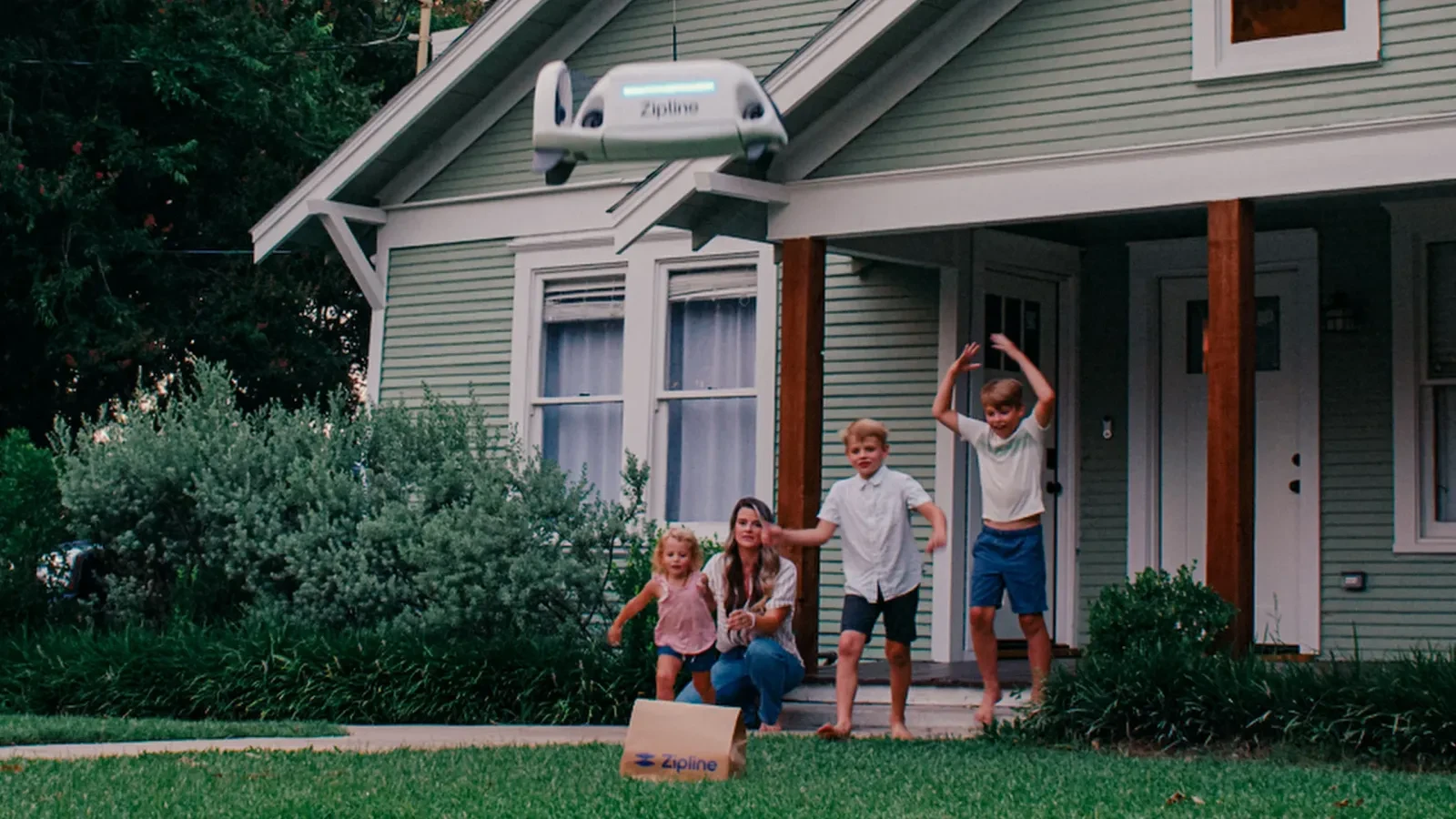
Walmart is dramatically scaling up its aerial delivery capabilities through a newly announced expansion with drone operator Zipline, a move that will make rapid air delivery available to customers nationwide over the next several years. The aggressive rollout represents a massive leap forward for the retail giant’s fulfillment strategy, positioning the company to blanket the United States with a localized network of automated delivery drones capable of dropping off goods in 30 minutes or less.
Shoppers utilizing the Walmart app or website will see drone delivery automatically populated as an available fulfillment option at checkout, provided their shipping address falls within the active operational range of a participating store. This latest development builds on a momentum that has steadily accelerated over the past year as consumer sentiment around automated delivery shifts from initial hesitation to widespread adoption and enthusiasm.
Back in May, Walmart marked a major milestone by announcing it had reached its one millionth drone delivery, with a remarkable pace seeing more than 40% of those total historical deliveries executed during just the first quarter of the year. That milestone has already been left in the dust, with the total delivery count having officially doubled since that announcement.
The retail titan began the year operating 66 active drone delivery locations and has steadily built out its physical footprint following a major expansion announcement with Wing made in January. Under that agreement, Walmart is on track to expand its Wing drone delivery coverage to over 270 locations by 2027.
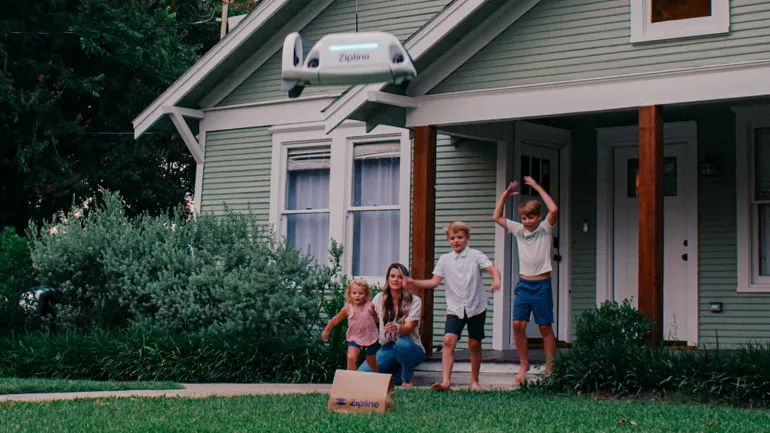
Now, the newly expanded partnership with Zipline will supercharge these figures, propelling the total number of operational drone sites Walmart plans to have active in the coming years to at least 570 locations. This projected infrastructure represents a nearly ninefold increase over the retailer’s starting point at the beginning of the year, signaling a permanent shift in how everyday goods will move from store shelves to front porches.
This aggressive ramp-up keeps Walmart closely matched against its chief rival, Amazon, which has similarly accelerated its own aerial logistics plans and announced intentions to bring drone delivery capabilities to nearly 500 cities by the end of the year. As the race for ultra-fast fulfillment intensifies, both retail juggernauts are betting heavily on the skies to capture consumer loyalty.
At the heart of Walmart’s aggressive push into aerial logistics is the undeniable consumer demand for speed. During a Q2 earnings call, Walmart CEO John Furner emphasized the direct correlation between rapid fulfillment and customer retention.
"Customers who use fast delivery shop with us more frequently," Furner said during the call. "They deepen engagement with us, and they’re more likely to become Walmart+ members. The advances we’re making in speed of delivery create another reason for customers to choose Walmart for more shopping occasions."
Through the combined capabilities of the Zipline and Wing partnerships, qualified customers within the designated delivery ranges can choose from tens of thousands of everyday items spanning grocery, health, beauty, and household essentials. Once an order is placed through the Walmart app or website, the entire fulfillment and flight process is designed to execute seamlessly, with packages arriving at the customer’s destination in as fast as 30 minutes or less.

The physical blueprint for this massive aerial network is already largely in place. With approximately 90% of the United States population living within a 10-mile radius of a physical Walmart store, the company possesses an unmatched brick-and-mortar footprint that serves as an ideal foundation for localized, distributed micro-fulfillment. Rather than relying solely on massive, centralized distribution centers, Walmart can leverage its existing neighborhood stores as launchpads for localized air transit.
"Walmart’s stores put us close to the communities we serve," Greg Cathey, senior vice president of e-commerce fulfillment transformation at Walmart, said in a statement regarding the expansion. "With Zipline, we can build on that proximity and bring this fast delivery option to even more customers across the country."
This structural proximity drastically reduces the complexities and transit times associated with traditional ground-based delivery fleets, which frequently contend with urban traffic congestion, road construction, and parking limitations. Drones bypass traditional ground infrastructure entirely, flying direct point-to-point routes that offer predictable, emissions-conscious transit for lightweight and mid-weight consumer goods.
The momentum behind Zipline is further reinforced by substantial financial backing that aligns directly with the growing demand for commercial drone infrastructure. On the same day the expanded partnership with Walmart was publicly announced, Zipline revealed that it had successfully raised $1.5 billion in new funding. The company plans to funnel this substantial capital injection directly into scaling up its United States manufacturing facilities and accelerating hiring to meet the surging hardware and operational demands of major retail partners like Walmart and Uber.
As regulatory frameworks continue to evolve and consumer acceptance reaches new highs, the commercial drone delivery landscape is transitioning from a futuristic novelty into an essential pillar of modern retail logistics. For Walmart, the multi-year scaling of its Zipline and Wing partnerships underscores a calculated, long-term commitment to redefining convenience, ensuring that the company remains at the absolute forefront of the fast-delivery revolution.