





In the annals of high jewelry history, few names evoke the same sense of whimsical wonder, tactile brilliance, and organic fantasy as Jean Schlumberger. Joining the venerable American luxury brand Tiffany & Co. in 1956, the visionary designer spent the better part of two decades shaping a creatively fecund era that continues to define the house’s aesthetic identity. Now, in a major cultural and historic undertaking, Tiffany & Co. has announced a multi-year partnership with Paris’s prestigious Musée des Arts Décoratifs to safeguard, conserve, and honor the designer’s extraordinary body of work.
Led by The Tiffany Archives—the institution dedicated to cataloging and preserving the brand’s storied design legacy—the collaborative initiative is centered on the meticulous conservation of 5,000 original Schlumberger drawings alongside another 5,000 items of related ephemera. This vast repository of creative thought aims to solidify Schlumberger’s standing not merely as a pillar of Tiffany’s mid-century renaissance, but as a vital, enduring touchstone for the wider global design community.

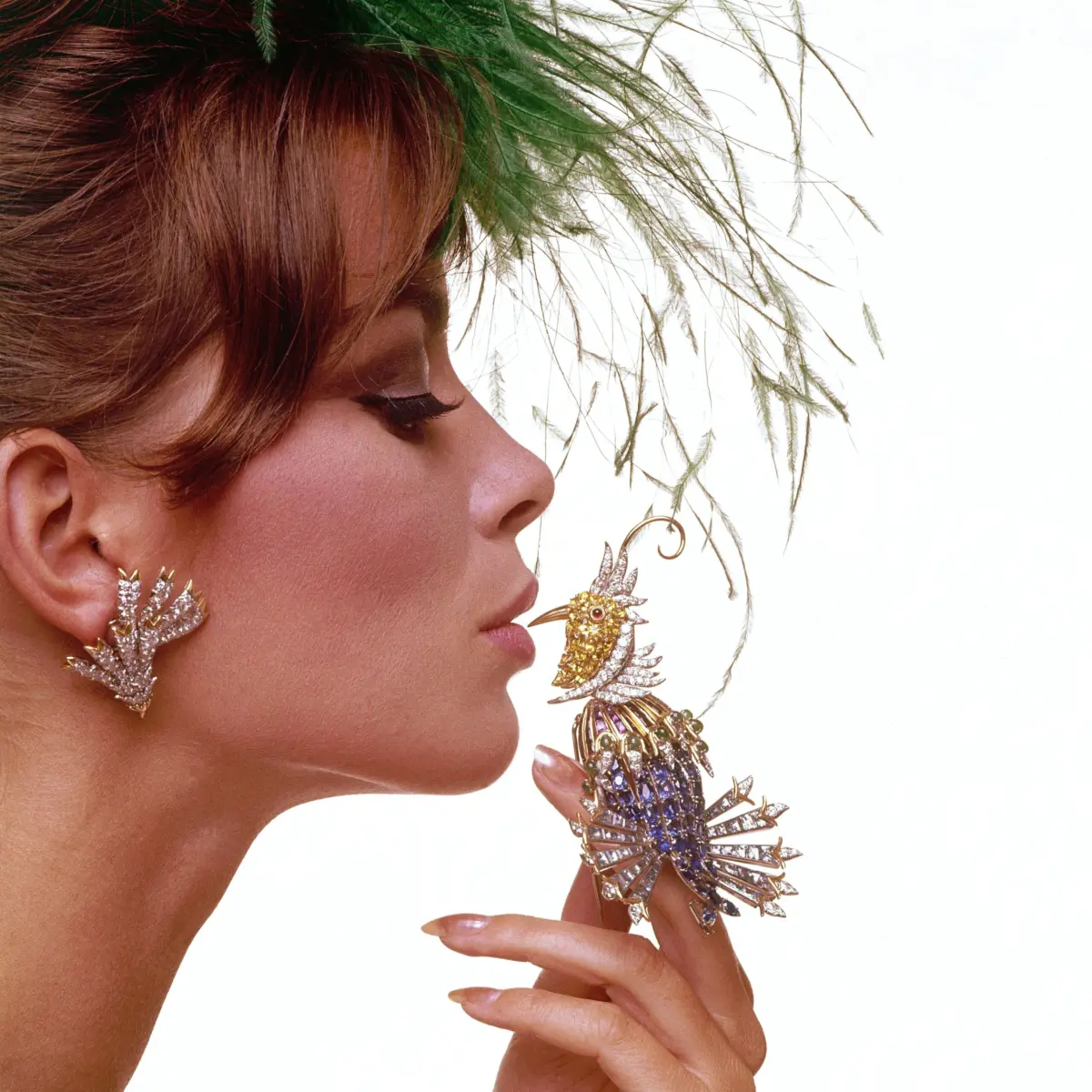
Schlumberger’s tenure at Tiffany & Co., which stretched from the mid-1950s until his retirement in the late 1970s, produced some of the most recognizable and enduring motifs in modern jewelry. Among them is the charmingly opulent "Bird on a Rock" design, a masterpiece featuring a jeweled bird perched triumphantly atop monumental gemstones, which has remained in continuous production since its inception. Known for his profound connection to the natural world and a childlike sense of imaginative scale, Schlumberger translated flora and fauna into fantastical wearable sculptures. Mermaids, butterflies, undulating sea creatures, and vibrant botanical arrangements routinely blossomed from his sketches into breathtaking realities of gold, platinum, and precious stones.
"He appreciates the miracle of jewels," the legendary former Vogue editor Diana Vreeland once observed of the designer. "For him, they are the ways and means to the realization of his dreams."
The announcement of the preservation partnership coincided with Paris Fashion Week, where Tiffany & Co. hosted an exclusive, private viewing showcasing rare sketches, historical photographs, correspondence, and other documents of profound import related to Schlumberger’s creative process. Among the treasures displayed was the original "Bird on a Rock" piece crafted for the iconic American socialite and horticulturalist Bunny Mellon, as well as a striking sketch of the Vogue logo reimagined entirely as resplendent jewels.

Schlumberger’s relationship with Vogue runs deep and spans decades, predating his official appointment at Tiffany & Co. by many years. The publication began chronicling his imaginative creations as early as the mid-1930s, roughly two decades before he formally joined forces with the luxury jeweler. The mutual admiration between the designer and the publication was instantaneous and enduring. Earrings and a pin designed by Schlumberger for Tiffany & Co. were featured prominently in editorial stories the very year he arrived at the house, and just a year later, one of his signature yellow sapphire and diamond creations graced the magazine’s cover.
To fully understand the profound cultural resonance and artistic importance of Schlumberger’s work, one need only trace the roster of legendary women who have worn his pieces across the pages of Vogue through the latter half of the twentieth century and beyond. From Jean Shrimpton captured through the lens of Bert Stern in the 1960s, to Veruschka photographed by Irving Penn in 1964, to Cindy Crawford immortalized by Arthur Elgort in 1993, Schlumberger’s jewels have consistently adorned the defining style icons of successive generations.
The partnership with the Musée des Arts Décoratifs in Paris marks a critical step in ensuring that these historic milestones, along with the foundational sketches that made them possible, are protected for posterity. By securing these 5,000 drawings and associated ephemera, Tiffany & Co. and its Parisian collaborators are opening a window into the mind of a master whose creative vision transformed hard minerals into living, breathing expressions of fantasy. As this multi-year conservation effort unfolds, it promises to deepen our understanding of a designer who did not merely make jewelry, but sculpted dreams into wearable art.