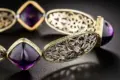






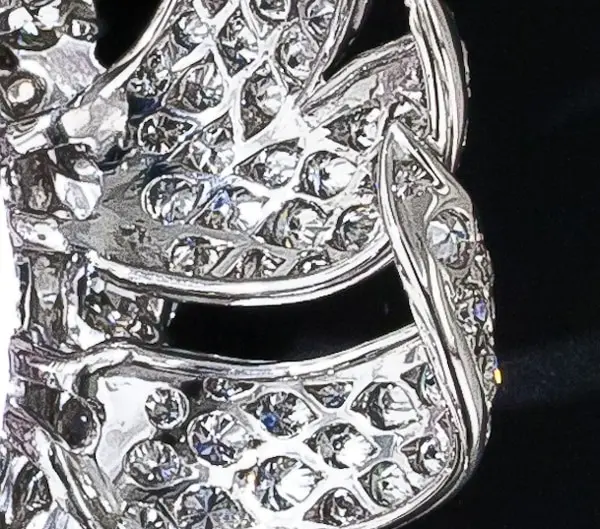
The French phrase à jour, which literally translates to "to the day," has long held a specialized meaning within the intricate world of fine jewelry manufacturing and gem setting. In the lexicon of master artisans and gemologists, the term refers to open-worked backgrounds meticulously created by sawing or piercing the metal framework directly beneath a gemstone. This deliberate removal of metal keeps the pavilion, or back, of the stone completely open to the light of day. By allowing natural light to penetrate the gem from behind rather than blocking it with a solid metal mount, the technique dramatically enhances the stone’s internal scintillation, brilliance, and overall color saturation. The result is a gemstone that appears noticeably more vibrant, dynamic, and lively to the human eye.
The historical adoption and evolution of à jour settings marked a significant turning point in the design and construction of fine jewelry. While occasional early precedents existed in various forms of craftsmanship, à jour settings for gemstones became widely popular around the year 1800, ushering in a new era of refined jewelry aesthetics. Prior to this period, the vast majority of precious and semi-precious gems were mounted in closed-back settings, a traditional approach that frequently utilized colored foils placed behind the stones to artificially enhance or alter their perceived color and brilliance. As lapidary techniques advanced and consumer preferences shifted toward celebrating the natural optical properties of fine gemstones, the closed-back method gradually receded, making way for the light-infused transparency of à jour designs.
Executing fine à jour work requires an extraordinary degree of skill, patience, and specialized tools from the bench jeweler. The process is predominantly accomplished through the careful use of a graver—a traditional hand-held steel cutting tool—to refine, shape, and create clean, well-formed openings on the reverse side of a jewelry piece. Because the back of the jewel is frequently visible to the wearer or exposed during inspection, the craftsmanship applied to the reverse must match the precision and elegance of the front. This dedication to hidden perfection reached remarkable heights during the Art Deco era of the 1920s and 1930s. Art Deco jewelry customarily features exceptional à jour work, transforming the backs of brooches, rings, and pendants into complex geometric tapestries of open metalwork that render the reverse side almost as breathtaking and beautiful as the face of the piece itself.
The underlying philosophy of the à jour technique—celebrating transparency and the interplay of light—also found a remarkable parallel in the specialized discipline of fine enameling. Within the realm of enamel art, a closely related variant known as plique à jour is used to describe an item characterized by an open background framework that is subsequently filled with transparent enamel rather than a gemstone. When light passes through a finished plique à jour piece, it evokes the luminous effect of miniature stained-glass windows, creating a stunning myriad of rich, shifting colors when the object is lifted and held directly to the light. Whether applied to the open mounting of a rare gemstone or integrated into the translucent depths of historic enamelwork, the enduring legacy of the à jour concept remains a testament to the timeless pursuit of brilliance and light in fine craftsmanship.