





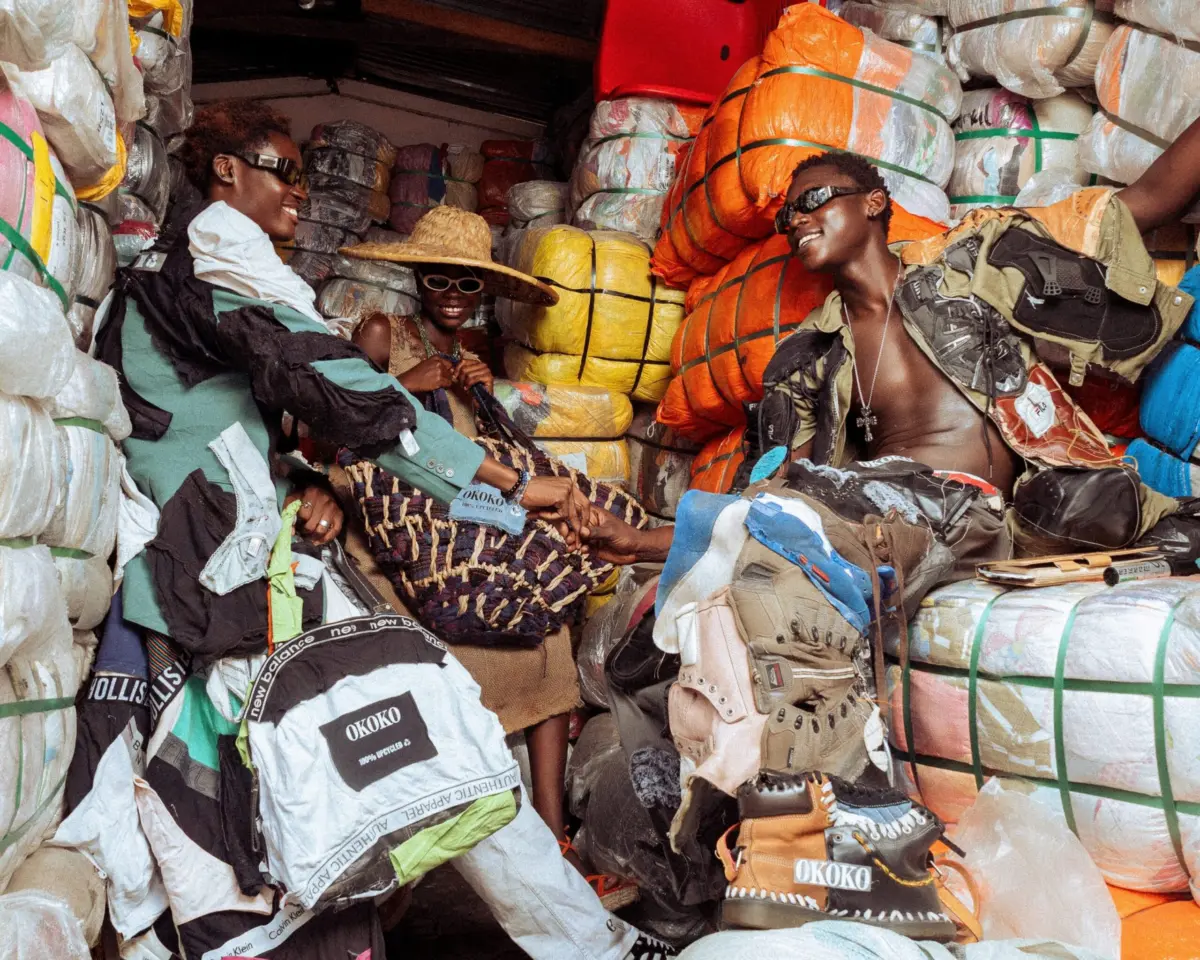
The imagery is jarring, yet undeniably striking: avant-garde garments styled against towering, desolate backdrops of textile waste. For many scrolling through social media, O’koko first appeared on their digital feeds posing amidst the massive heaps and mounds of a Ghanaian landfill. Dressed in striking, self-realized creations, his aesthetic immediately commands attention. A closer look reveals tote bags expertly constructed from dozens of discarded plastic carrier bags, jackets blanketed in a heavy patchwork of worn-out footwear, and unconventional shoulder pieces fashioned by fusing discarded sneakers together.
For the rising creator, these landscapes of discarded goods are more than just a dramatic backdrop—they are the physical manifestation of a global crisis. Moving from Central Africa to Ghana to pursue digital marketing studies, O’koko only recently confronted the sheer scale of the local landfills and the stark atrocities they reveal about Western overconsumption and fast-fashion cycles. Walking among mountains of discarded garments—many of which are far from being genuine "trash" and are entirely deserving of a second life—he realized he could, and must, leverage his creative vision to spread global awareness through design.
His journey into fashion was sparked by necessity and shaped by circumstance. In 2023, just a year after arriving in Ghana, O’koko found himself working grueling hours in construction for a meager salary that barely covered his basic living expenses. With the vital encouragement and hands-on help of a friend, he decided to pivot toward selling secondhand clothes. Venturing into Accra’s legendary Kantamanto Market to source inventory, that foundational first visit completely altered his perception of the fashion industry. The sheer volume of goods, the vibrant community of people he met, and the untold stories embedded within the clothes left an indelible mark on him. Reflecting on those early days, he recognizes that experience as the true genesis of the designer he is becoming today.
The fashion landscape in Ghana offered a stark contrast to what he knew growing up. The local scene is far more developed and accessible, making it a natural haven for individuals migrating from the Central African Republic. Historically, Ghana has been renowned for its vibrant, accessible local prints and textiles. O’koko remembers that during his childhood, his mother and aunties would regularly travel across borders to neighboring Benin, Togo, and Ghana to acquire clothes and fabrics, which they would subsequently bring back to the Central African Republic to trade.
As he began carving out his own path in the creative world, O’koko drew inspiration from a diverse range of visual and musical influences. Early on, the digital content of online creators heavily influenced his perspective on style, particularly through innovative video editing, dynamic outfit styling, and distinct visual languages. Simultaneously, the infectious energy and artistic expression of Afrobeat luminaries like Rema and Asake heavily shaped his creative direction, dictating how he channels his personal identity into wearable art.
That artistic direction ultimately led him into the heart of Ghana’s environmental crisis. O’koko first discovered the sprawling landfills during a production shoot for The Revival Earth. Stepping onto the grounds for the very first time, he found himself utterly unprepared for the sensory overload. The environment was chaotic, stifling, and heavy with the acrid smell of burning textiles and melting plastic. On that initial visit, the air quality made it difficult to breathe. It was a sobering realization for the young designer, who had never imagined that such industrial-scale dumping grounds could exist, let alone that mountains of discarded clothing from across the globe could accumulate in a single location.
This phenomenon is what experts and activists define as waste colonialism—an unequal global economic system where wealthier nations and industrialized economies generate massive quantities of waste, particularly fast-fashion garments and single-use plastics, and export or offload that surplus onto lower-income countries. These recipient nations frequently possess fewer political resources, weaker infrastructural supports, and limited institutional power to safely manage or mitigate the environmental fallout.
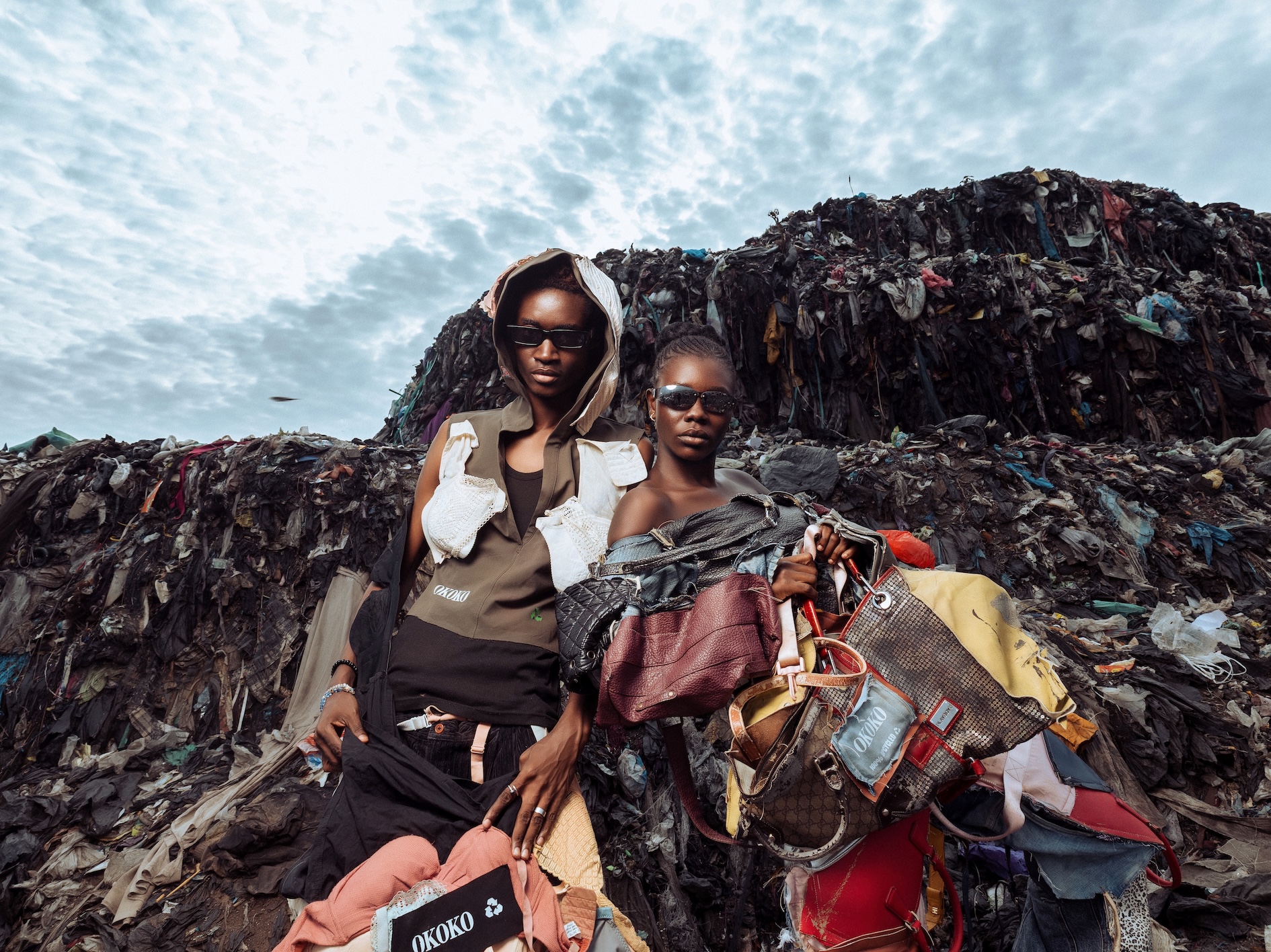
Determined to expose these systemic failures, O’koko transitioned from filming content in Kantamanto Market directly to the landfills. Through his digital videos, his primary objective is to force viewers to confront the stark physical realities of hyper-consumption and to understand the profound consequences that institutional ignorance toward textile waste poses for future generations.
In defining his design aesthetic, O’koko leans heavily into a raw, rebellious vocabulary that marries youth culture with deep-rooted heritage. His work is characterized by craft, avant-garde provocation, Afrocentric identity, upcycled ingenuity, and the conceptual framing of luxury streetwear. Operating primarily with reclaimed and secondhand materials, his brand relies heavily on sourcing discarded textiles directly from Kantamanto Market in Accra. These forgotten items are systematically deconstructed, redesigned, and transformed into entirely new, high-concept garments and accessories.
While he occasionally sketches preliminary concepts on paper, his creative process is largely intuitive. Typically, when an idea strikes, he immediately builds a rough prototype, refining and iterating on the fly until the final piece matches his vision. In his creative ecosystem, he draws ongoing inspiration from contemporaries across the continent, such as Ethiopian designer Kaluputic, who similarly specializes in transforming industrial waste into aesthetic treasure.
Ultimately, O’koko wants his creations to communicate a clear, urgent narrative. Through the transformation of discarded textiles sourced from Kantamanto Market into contemporary fashion, he aims to celebrate authentic African creativity while confronting viewers with the brutal reality of textile waste. His work champions the philosophy of circular fashion, designed to inspire conscious consumption and challenge the global perception that discarded materials cannot be elevated into luxury.
According to O’koko, the broader fashion industry is in desperate need of a fundamental paradigm shift. In his view, the world does not need millions of newly manufactured garments pushed out every single season. Instead, major brands must pivot toward producing durable, easily repairable pieces while taking absolute responsibility for the entire lifecycle of their products. Designers must prioritize circular systems—strategically planning how garments can be easily mended, reused, or recycled—and choose to value genuine human creativity far above mindless mass consumption.
Looking ahead, O’koko’s ambitions are firmly rooted in expanding his creative footprint. His immediate goals include increasing his brand visibility, forging meaningful relationships across the global industry, and cementing O’koko Fashion as a globally recognized leader in sustainable design. While he prefers to keep his upcoming projects under wraps, he remains optimistic that the future holds plenty of positive momentum and unexpected milestones for his evolving brand.