





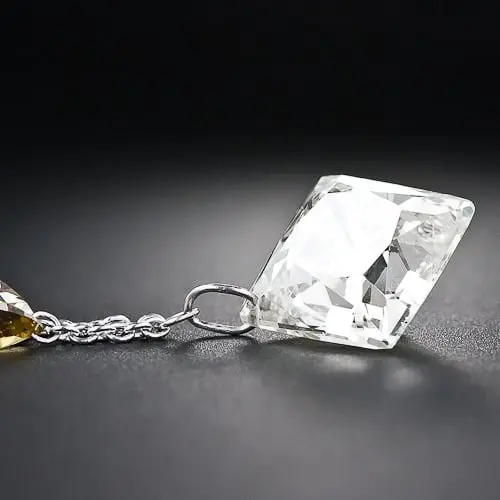
In the intricate world of gemology and mineralogy, the way a gemstone interacts with light dictates much of its beauty, value, and scientific classification. Among the various optical descriptions used by experts to categorize stones, "adamantine" stands out as one of the most striking and exclusive descriptors. Primarily associated with the diamond, this specialized term defines an exceptionally brilliant luster and serves as a testament to the unique physical and optical properties that make certain minerals truly peerless.
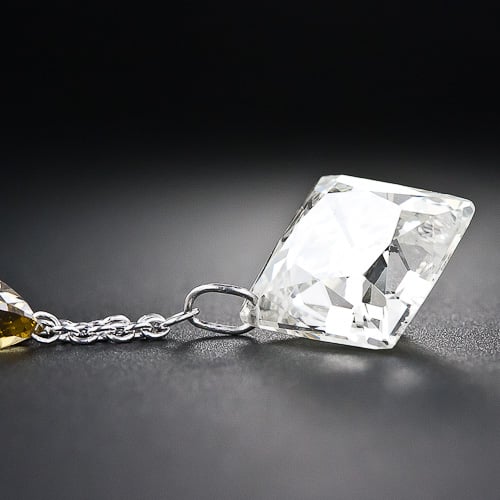
To fully understand what makes a gemstone possess an adamantine luster, gemologists look closely at its refractive index, a measurement of how light bends as it passes through the material. Gemstones that fall into the adamantine category typically exhibit a refractive index ranging from 1.9 to 2.5. This high degree of refraction is what creates the intense, bright, and almost metallic-like brilliance that viewers instantly recognize in a fine diamond. Rather than a dull or greasy shine, an adamantine surface reflects light with a sharp, piercing brilliance that captivates the human eye and has fascinated jewelers and collectors for centuries.
The etymology of the word itself offers a fascinating glimpse into how ancient cultures perceived these remarkable materials. The term "adamantine" is directly derived from the root word "adamant," which traces its origins back to the ancient Greek word adamastos, meaning untameable or invincible. Historically, the word adamant was not restricted solely to the modern concept of a diamond; rather, it was used broadly across various languages and texts to describe any material of extraordinary, unyielding hardness. Over time, as scientific classification became more rigorous, the terminology evolved to specifically characterize the brilliant optical sheen typical of diamonds and other ultra-hard, highly refractive minerals, while still
acknowledging their legendary durability.
While the diamond remains the quintessential standard for an adamantine luster, the spectrum of gemstone optics includes subtle variations that help experts differentiate between various mineral species. Just below the threshold of true adamantine lies the subadamantine luster. Stones that possess a subadamantine luster display a brilliance and shine that is only slightly less intense than that of a diamond. A classic and widely recognized example of this phenomenon is zircon.
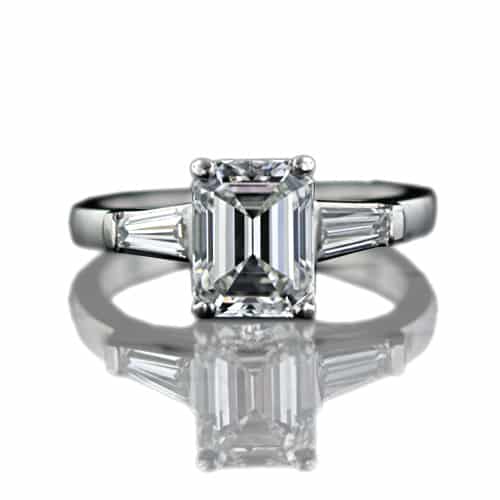
Zircon is a mineral renowned in the gemological community for its exceptional dispersion—the ability to split white light into its spectral colors, creating fiery flashes often referred to as "fire." Despite this high level of dispersion and its impressive sparkle, zircon’s overall surface reflection places it firmly in the subadamantine category rather than the pure adamantine class achieved by diamonds. This distinction is crucial for gemologists examining cut and polished stones under specialized lighting, as the quality of the luster provides immediate visual clues regarding the stone’s internal optical characteristics and chemical composition.
The study of luster, alongside other diagnostic properties such as hardness, cleavage, and specific gravity, forms the backbone of gemological identification. When an appraiser or mineralogist observes a newly cut stone, evaluating whether its surface reflection qualifies as vitreous, greasy, pearly, or adamantine helps narrow down its identity before more advanced testing equipment, such as refractometers, is employed. The adamantine luster, with its bright and near-metallic flash, remains one of the most reliable macroscopic indicators that a gem possesses both a high refractive index and the dense atomic structure necessary to bend light with maximum efficiency.
As the appreciation for fine gemstones continues to evolve among modern collectors and jewelry enthusiasts, the fundamental science behind terms like adamantine and subadamantine bridges the gap between historical lore and precise scientific measurement. From the untameable strength implied by its ancient Greek roots to the precise numerical parameters of the refractive index scale, the concept of adamantine luster encapsulates the enduring allure of Earth’s most brilliant and enduring crystalline treasures.