





The history of the diamond is a captivating journey that stretches from ancient linguistic misunderstandings and early Indian trade routes to the high-tech, laser-guided cutting facilities of the modern era. For centuries, humanity has projected fascination, mysticism, and economic value onto the hardest known substance on Earth. Yet, tracing the true origins of how diamonds were perceived, traded, and eventually fashioned into brilliant gems reveals a narrative filled with scholarly debates, ancient texts, and remarkable technological evolution.
Pre-Roman Diamonds
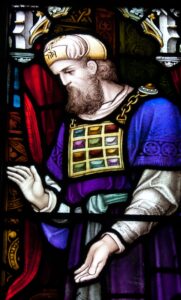
For generations, references in ancient texts led many to believe that diamonds were well-known and widely utilized during biblical times. Passages such as those found in Exodus 18:15–18 describe a breastpiece of judgment set with four rows of stones, including a stone translated in various versions as a diamond. However, historians and linguists note that these references stem from erroneous translations of the Hebrew word yahalom—derived from halam, meaning to beat—and the Greek adamas, meaning indomitable or invincible.
While these ancient terms certainly denoted an exceptionally hard mineral, assuming they explicitly referred to the diamond as we know it today is a modern retrospective assumption. Greek literature similarly employs the word adamas, as seen in the writings of Plato, but there is zero concrete proof that the ancient Greeks possessed actual diamonds. The term was likely used broadly to describe gold, non-noble metals, or perhaps corundum.
The earliest indisputable evidence of diamonds emerges from India, documented in an ancient Sanskrit text known as the Arthasastra, dating back to the 4th century BC. By this period, diamonds were actively mined, traded, taxed, and classified by specialists in India, implying a deep and long-standing familiarity with the gemstone. Early gemological historians, lacking access to translated Sanskrit sources for centuries, frequently overlooked India’s vital historical contributions to the diamond trade, focusing instead on European and Mediterranean accounts.
Roman Diamonds
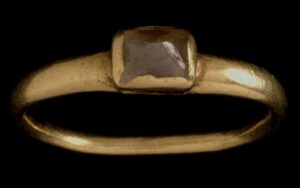
By the time of the Roman Empire, diamonds had firmly entered the Western consciousness. Highly prized as ring stones, a few surviving examples of uncut Roman diamond rings are preserved today in the collections of The British Museum. The Roman scholar Pliny wrote extensively about diamonds in his monumental Naturalis Historia, describing them as the most valuable of all human possessions.
Pliny marveled at the stone’s incredible hardness, noting that diamonds would resist blows on an anvil to the extent that the iron hammer would rebound and the anvil itself would split. Interestingly, Pliny also inadvertently described the diamond’s perfect cleavage, observing that when the stone did break, it fractured into microscopic particles that engravers eagerly sought to cut other hard substances.
Despite these accurate observations, Pliny clearly confused certain other minerals with diamonds, and contemporary historians suggest the Romans rarely, if ever, had access to top-quality crystal rough. Indian suppliers naturally reserved the finest stones for their domestic markets. Culturally, diamonds were widely believed to protect their owners from mishaps, and prevailing superstitions dictated that altering a stone’s natural form would strip it of its divine powers. Consequently, cutting or shaping diamonds was largely considered both a technical impossibility and a cultural taboo in antiquity.
The Introduction of Diamond Cutting
Following the decline of the Roman Empire and the disruption of overland trade routes, diamonds virtually vanished from European jewelry for centuries. The rise of Christianity further suppressed the gem’s popularity in Europe due to its association with pagan superstitions. Conversely, diamonds retained their high status across the Indian subcontinent and the Islamic world.
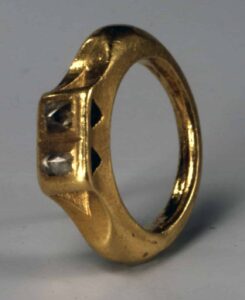
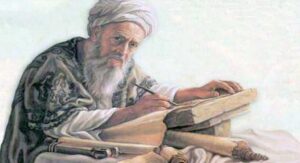
Texts from these regions offer crucial insights into the evolution of diamond handling. The Ratnapariska by Buddha Bhatta, dating back to at least the 6th century, advises that flawed diamonds should be ground down for polishing other gems, indicating the early production of diamond powder. Later, in the 10th century, the scholar Al-Biruni detailed how lapidaries utilized lead and diamond dust to grind and pulverize stones.
By the 13th century, more definitive cutting practices began to emerge. Notable jewelry historian Jack Ogden reported examining medieval Islamic jewelry dating to the 13th century featuring simple table-cut diamonds, marking some of the earliest known cut stones in existence. This timeline aligns with the Indian text Agastimata, which notes that diamonds could only be polished using other diamonds.
Europe
European diamond cutting experienced a revival in Venice shortly after 1330, following the re-opening of Eastern trade routes by Venetian merchants. While the precise origin of European cutting techniques remains debated, it is plausible that the knowledge traveled alongside the stones imported from Islamic and Indian merchants.
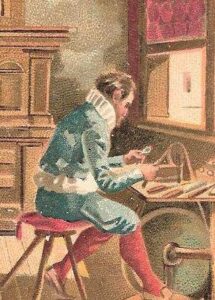
Faced with a scarcity of perfect crystal rough—since premium stones were retained in the East—European cutters began experimenting with shaping rough stones. The introduction of continuous rotary motion in craft tools during the 15th century revolutionized the trade, allowing artisans to grind facets onto diamonds with unprecedented precision and creativity.
Transition
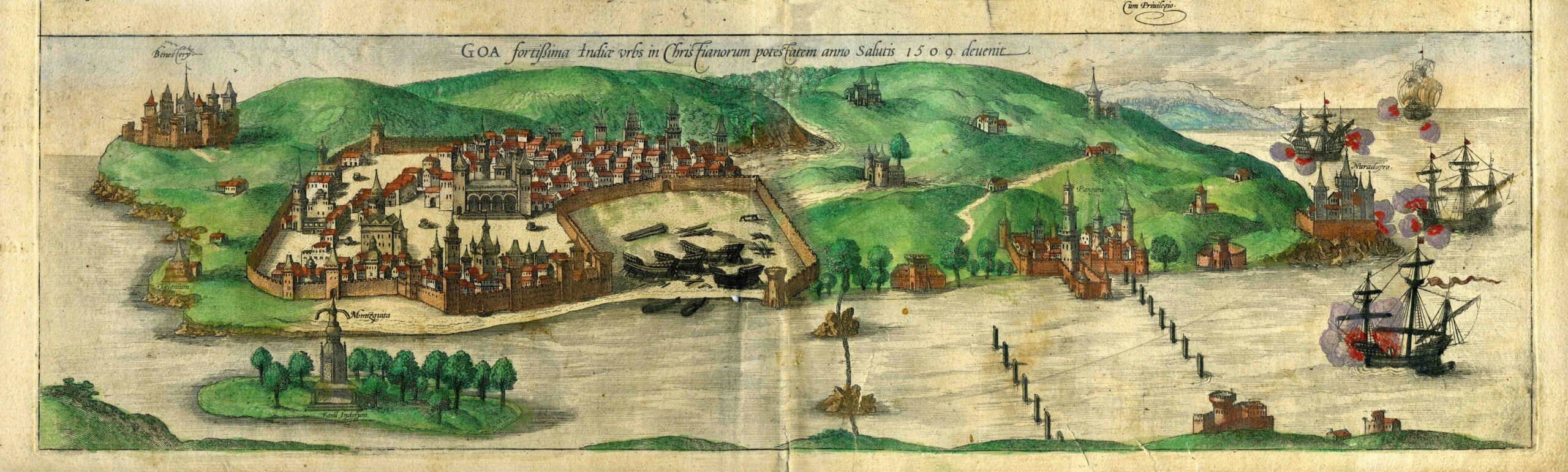
As Europe’s economic center shifted toward the North Sea in the late 15th century, cities like Paris, Bruges, and Antwerp emerged as the continent’s primary diamond polishing centers. Because these cutting communities operated outside strict guild systems, Jewish artisans fleeing religious persecution and the Inquisition in Spain, Portugal, and France were able to participate in the trade, driving rapid technological and commercial development.
By the 16th century, diamond shaping evolved beyond the mere polishing of natural crystals into genuine faceting. Court documents from the era illustrate a dramatic reduction in stone weight during processing—such as an 11.50-carat rough stone polished down to 5.00 carats—underscoring the sophistication of emerging cutting techniques. The Rose cut and early table cuts gained prominence, while elongated stones known as hogbacks served as precursors to the modern baguette cut.
Detailed documentation from this era comes from the famous goldsmith Benvenuto Cellini, whose 1568 treatises described the complex process of rubbing two diamonds together to shape them—a rudimentary form of bruting—while utilizing the resulting diamond dust mixed with oil on steel wheels to achieve a brilliant final polish.
Grinding
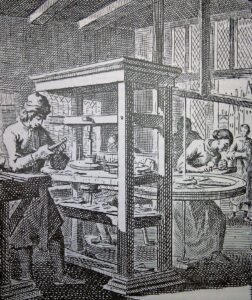
Understanding historical diamond cutting requires acknowledging the physical properties of the stone. Beyond being the hardest substance on Earth, diamonds possess directional hardness, meaning they resist scratching more effectively in certain crystallographic directions than others. For instance, octahedral planes are significantly harder than dodecahedral planes. Because octahedral crystal faces lie within planes of extreme relative hardness, they are virtually impossible to polish directly, forcing historical cutters to introduce facets at slight angles relative to these primary planes.
Cleavage
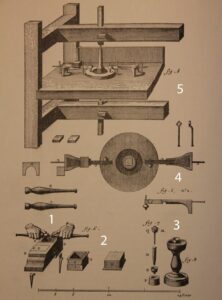
Another defining characteristic of diamond is its perfect cleavage. Although diamonds score at the absolute peak of the Mohs hardness scale, they possess lower relative toughness, meaning specific forces applied in precise crystallographic directions cause the stone to fracture along smooth, predictable planes.
While ancient craftsmen utilized random diamond fragments for engraving, and mid-13th-century Islamic writers recognized diamond cleavage, utilizing intentional cleavage as a primary gem-cutting technique became widespread in post-medieval Europe. The natural apexes of dodecahedral crystals provided thin, flat slivers of rough that naturally lent themselves to the creation of the Rose cut, a style that remained exceptionally popular well into the 20th century.
Sawing
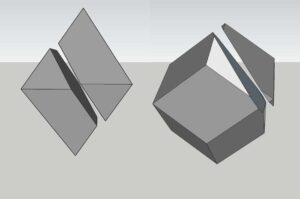
The final foundational technique added to the cutter’s repertoire was diamond sawing, described by the scholar de Laet in 1647. This labor-intensive method involved running a thin wire dressed with a mixture of oil and diamond powder across the stone to sever it. Though tedious, sawing allowed artisans to bypass the limitations of cleaving and grinding until the technique was eventually mechanized centuries later.
Indian Diamond Cutting
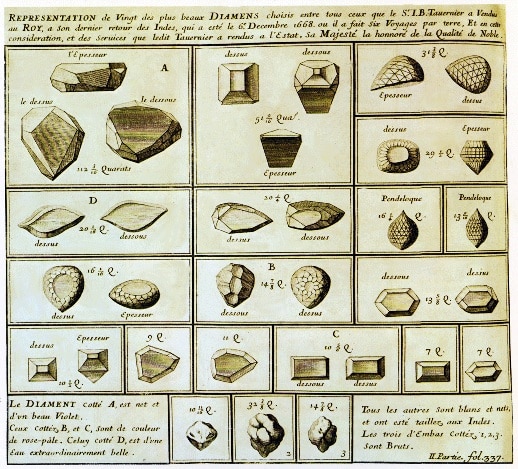
Travel accounts by Jean-Baptiste Tavernier in the 17th century provide a vivid window into Indian diamond-working practices of the period. Tavernier described traditional Indian mills operated by manual labor, where artisans meticulously applied diamond powder and oil to rotating steel wheels. Despite equipment that ran less smoothly than contemporary European machinery due to frequent maintenance requirements, Indian cutters demonstrated remarkable skill. They routinely worked complex stones featuring internal knots that European cutters typically refused to tackle. The resulting style of gems produced in India during this period is collectively known as the Mughal Cut.
Baroque Roses and Brilliants
During the late 17th century, the cultural shift toward candle-lit Baroque interior gatherings sparked a demand for jewelry with enhanced sparkle. This environment fostered the standardization of the Rose cut, featuring a flat base and a dome-covered crown adorned with triangular facets. Concurrently, the earliest precursors to the brilliant cut emerged.
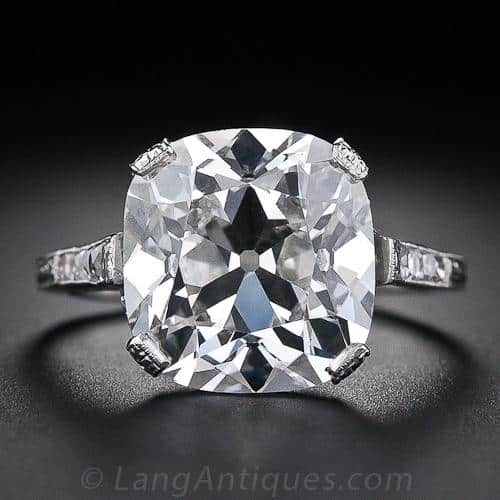
Unlike modern round brilliants, these early brilliants were highly asymmetrical and dictated entirely by the shape of the original rough. Dodecahedral rough yielded roundish outlines, while octahedral rough produced square shapes with rounded corners, forming the historical foundation for cushion-cut diamonds. Famous historic examples, such as the Wittelsbach and the Grand Sancy, highlight this transitional design era, though table, point, and rose cuts remained dominant throughout the 18th century.
Enter Brazil
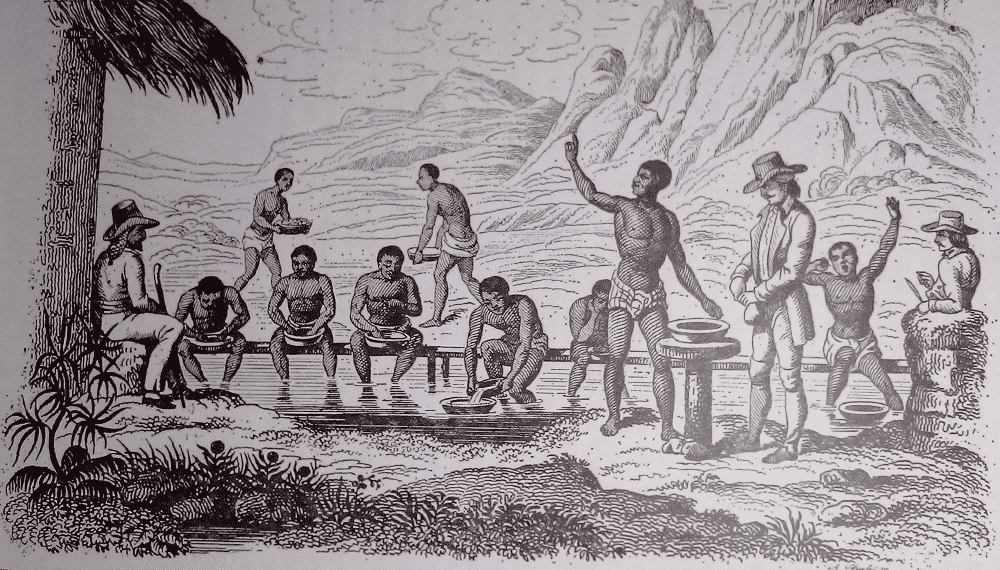
Just as India’s traditional diamond mines began facing exhaustion, a major new source was discovered in the alluvial deposits of Brazil around 1725, centered in the region of Diamantina. By 1730, steady production was underway, flooding the global market with diamond rough and causing prices to plummet to roughly 30 percent of their prior values.
This dramatic increase in availability transformed diamonds from a luxury reserved exclusively for European nobility into a commodity accessible to a broader prosperous public. The resulting surge in demand fueled the expansion of cutting industries across Europe and accelerated the transition toward brilliant-cut stones, paving the way for the Old Mine cut gems of the 18th and 19th centuries.

Eureka
The rise of a prosperous middle class across Europe and the United States during the 19th century drove another massive wave of demand for diamond jewelry. As Brazilian production gradually declined by the mid-19th century, diamond prices climbed once more, placing financial pressure on cutting centers in London, Antwerp, and Amsterdam.
The crisis was averted by the discovery of the historic Eureka diamond in South Africa in 1866–1867. This monumental find rescued the struggling European cutting houses and inaugurated the modern South African diamond era, ensuring a steady, unprecedented influx of rough material for the global market.

Modernization
The turn of the 20th century marked the industrialization of the diamond cutting trade. The invention of steam and later electric bruting machines by innovators like Henry D. Morse and Charles M. Field in the 1870s and 1890s enabled the commercial production of truly symmetric, round brilliant diamonds. Furthermore, the invention of the motorized diamond saw by a Belgian immigrant in the United States in 1900 revolutionized rough stone shaping.
These technological milestones transformed an ancient, manual craft into a modern industrial powerhouse. The standard round brilliant evolved into the ideal cut, while specialized cutters introduced novel geometries, such as the Asscher cut in 1902, the re-introduction of the baguette cut in 1912, and the princess cut in the 1960s.
The devastating impact of the Holocaust during World War II severely disrupted the historic diamond cutting hubs of Antwerp and Amsterdam, shifting global industry prominence toward newly emerging centers in Israel and, later, India. Today, the ancient traditions of manual bruting and rudimentary polishing have evolved into ultra-precise operations driven by virtual 3D computer modeling and computer-guided laser sawing, designed to maximize both yield and brilliance from every raw stone mined from the earth.