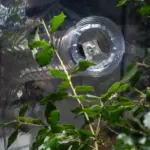





The intersection of art, technology, and ecological anxiety has long provided fertile ground for contemporary creators, but few have visualized the fragility of our biosphere quite as starkly as Danish artist Rune Bosse. In his provocative installation Tree Lungs (known in Danish as Lungetræer or Lungenbaum), Bosse places living trees on artificial life support, encasing them within transparent, inflatable chambers complete with mechanical respirators and specialized artificial lighting.
Recently featured at the Danish Architecture Center in Copenhagen as a prominent centerpiece of its extensive Age of Nature exhibition, the installation confronts viewers with an unsettling paradox. By treating living vegetation as patients in an intensive care unit, the artwork reimagines a near-future scenario where the natural systems sustaining human existence can no longer survive autonomously, forcing technology to step in as a fragile proxy for the Earth’s own life-support mechanisms.
Rune Bosse’s Lung Trees Imagine a Forest on Life Support
For generations, humanity has anthropomorphized forests as the green lungs of the planet, marveling at their silent, enduring capacity to inhale carbon dioxide through photosynthesis and exhale the oxygen necessary for animal and human life. Forests are traditionally viewed as the ultimate caregivers—vast, self-sustaining networks that stabilize climates, purify air, and anchor terrestrial biodiversity without requiring human intervention.
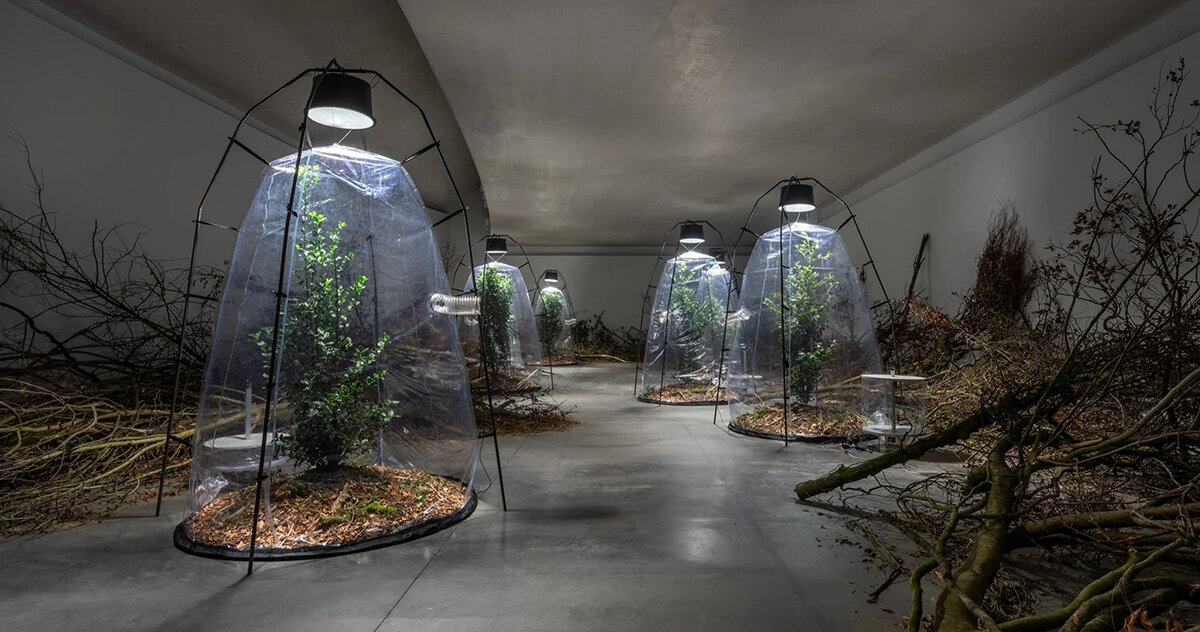
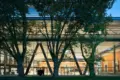
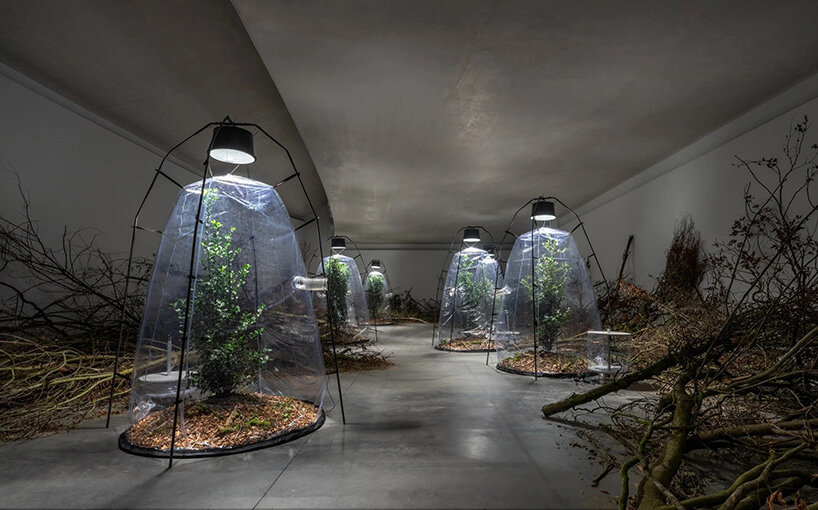
Bosse’s installation deliberately inverts this foundational relationship. In Tree Lungs, each living tree stands isolated inside an inflated plastic enclosure, surrounded by an exposed network of mechanical equipment and intense overhead lighting. With their delicate branches reaching upward toward artificial lamps rather than an open sky, the trees evoke the haunting imagery of hospital patients connected to ventilators.
The installation asks a deeply uncomfortable question: what happens when the very ecosystems we rely upon for survival become so degraded that they depend entirely on human-made machinery to persist? Rather than positioning technology as the ultimate destroyer of nature—a standard trope in contemporary environmental discourse—Bosse creates a nuanced, speculative space where technology becomes a desperate, precarious caretaker, struggling to maintain a pulse within a dying biosphere.
Transparent Chambers Breathe Around Living Trees
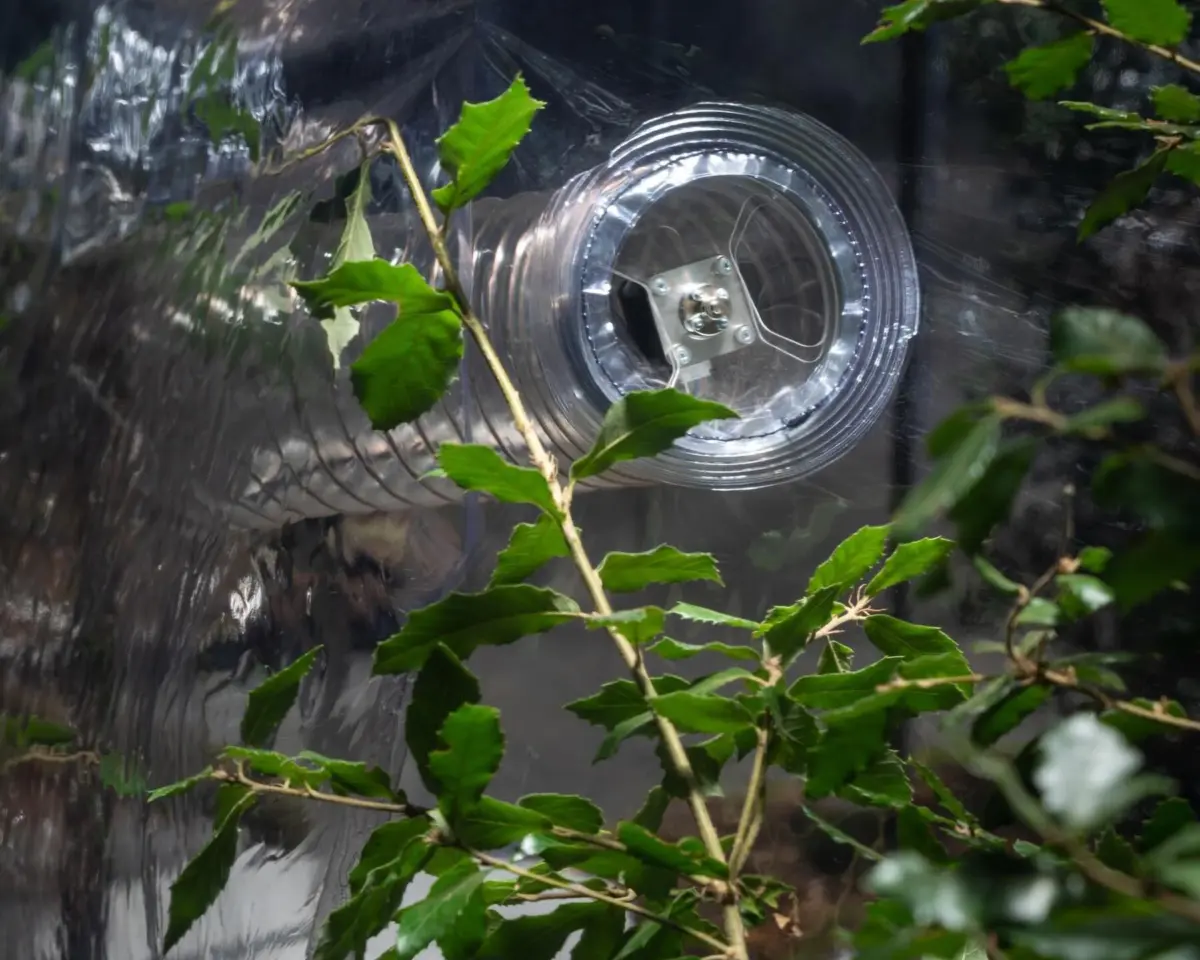
The physical architecture of the installation merges living botany with clinical biomedical engineering in a striking aesthetic display. Transparent plastic sheeting is stretched securely over rigid metal frames, encapsulating the trunk, foliage, and even a patch of the forest floor, yet remaining entirely transparent so visitors can observe every detail inside. Artificial lights cast a sterile glow over the leaves, while auxiliary machinery pumps air into the sealed environment to regulate its atmosphere.
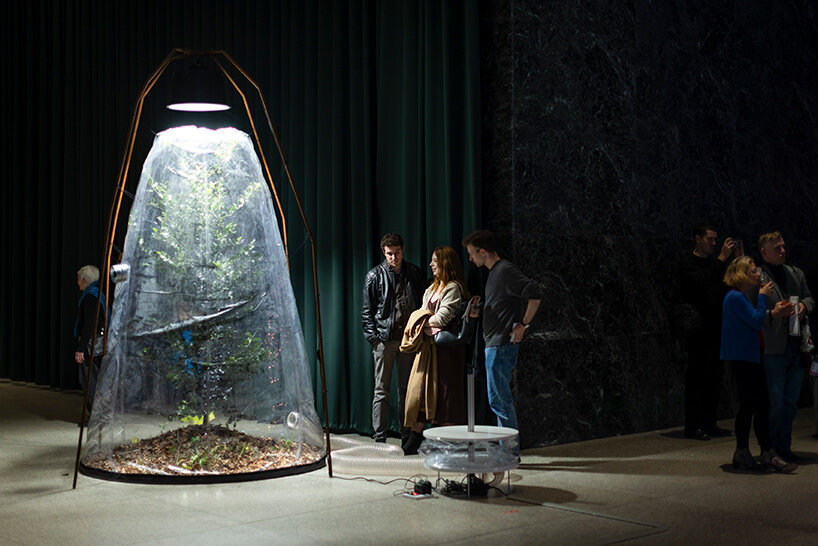
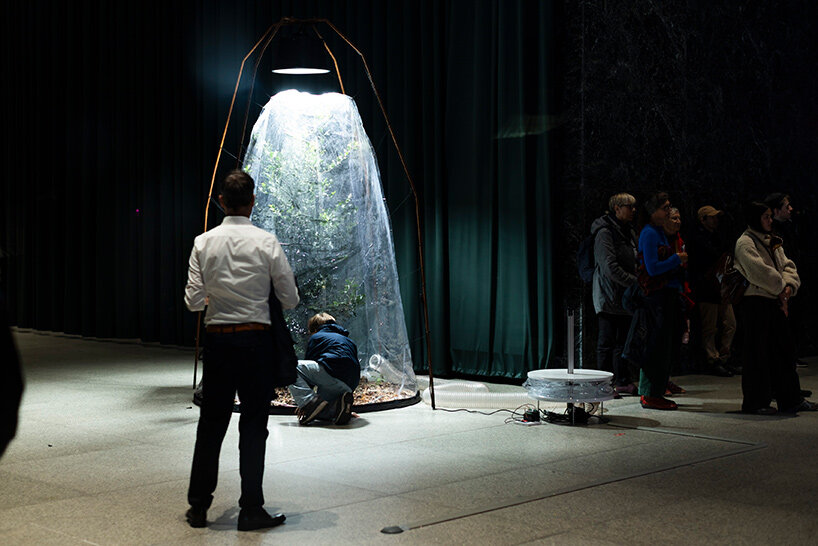
While these temporary structures superficially resemble makeshift greenhouses or botanical laboratories, their stark association with medical apparatuses imbues them with a clinical, unsettling character. This dynamic was most visibly pronounced during Bosse’s 2025 presentation at Berlin’s prestigious Neue Nationalgalerie. There, a living tree and its immediate patch of earth were sealed inside a flexible polyvinyl chloride (PVC) membrane attached to an industrial framework.
At regular, metronomic intervals, an attached respirator forced air into the chamber, causing the flexible plastic envelope to expand outward before slowly collapsing back down around the tree. This rhythmic inflation and deflation mimics the biological mechanics of a human lung, translating the normally invisible, imperceptible exchange of gases between a tree and its surrounding atmosphere into a visible, theatrical performance of breath.
Making Art with Living Forests
Bosse’s artistic inquiry into the life cycles of trees extends far beyond the controlled environment of the modern art gallery. Alongside his formal training at the Royal Danish Academy of Fine Arts, Bosse studied forestry and nature management, developing a rigorous multidisciplinary practice that tracks the organic growth of living plants over extended periods.
On the grounds of Oremandsgaard, an estate located in southern Denmark, the artist established an outdoor forest laboratory. In this living workspace, he experiments with guiding and shaping trees as they mature. Some specimens are gently bent into unusual geometric configurations, while others are coaxed to graft together naturally. These final sculptural forms emerge slowly over years, shaped continuously by the fluctuating conditions of the surrounding landscape and weather patterns.
This unconventional approach developed largely out of Bosse’s growing frustration with the traditional methods of exhibiting nature within museum spaces. Historically, botanical art and natural history exhibitions have relied on cutting, drying, preserving, or taxidermising organic materials, effectively killing the subject to display it. Bosse’s outdoor experiments allow trees to remain alive, continuing to grow and change long after his initial artistic intervention has concluded.
Tree Lungs approaches this core relationship from a contrasting direction. Inside the gallery, keeping the trees alive becomes the central logistical and conceptual challenge of the artwork itself. By exposing the complex mechanical equipment and artificial conditions required to sustain these plants away from their natural habitats, the installation lays bare the artificiality of our current approaches to environmental conservation.
Who Keeps Whom Alive?
At its core, Tree Lungs touches upon a profound and uncomfortable contradiction inherent in modern ecological preservation. By enclosing living trees within a sealed, technologically managed microclimate, Bosse generates an immediate visual image of protection, yet that protection is inseparable from absolute dependency. The machinery appears to nurture the living organism, yet that very arrangement places the tree’s ongoing survival entirely within a fragile system designed, maintained, and operated by humans. The trees remain living participants in the artistic experience, but their fundamental relationship with the broader environment has been thoroughly severed and artificially mediated.
First conceptualized by Bosse in 2019, the ongoing relevance of the Lungetræer series has only intensified amid mounting global anxieties concerning rapid biodiversity loss, climate change, and the systematic deterioration of natural ecosystems worldwide. The installation functions as a speculative glimpse into a potential future where technological intervention is the only barrier keeping ecosystems from total collapse.
The most unsettling element of the installation remains its stark simplicity. A living tree stands silently inside a clear plastic chamber while a mechanical pump circulates air around its leaves. As visitors watch the artificial lung rhythmically expand and contract within the dim gallery space, they are confronted with the fragile reality of our planetary interdependence, forced to consider a future where the boundary between nature and life support has vanished entirely.