






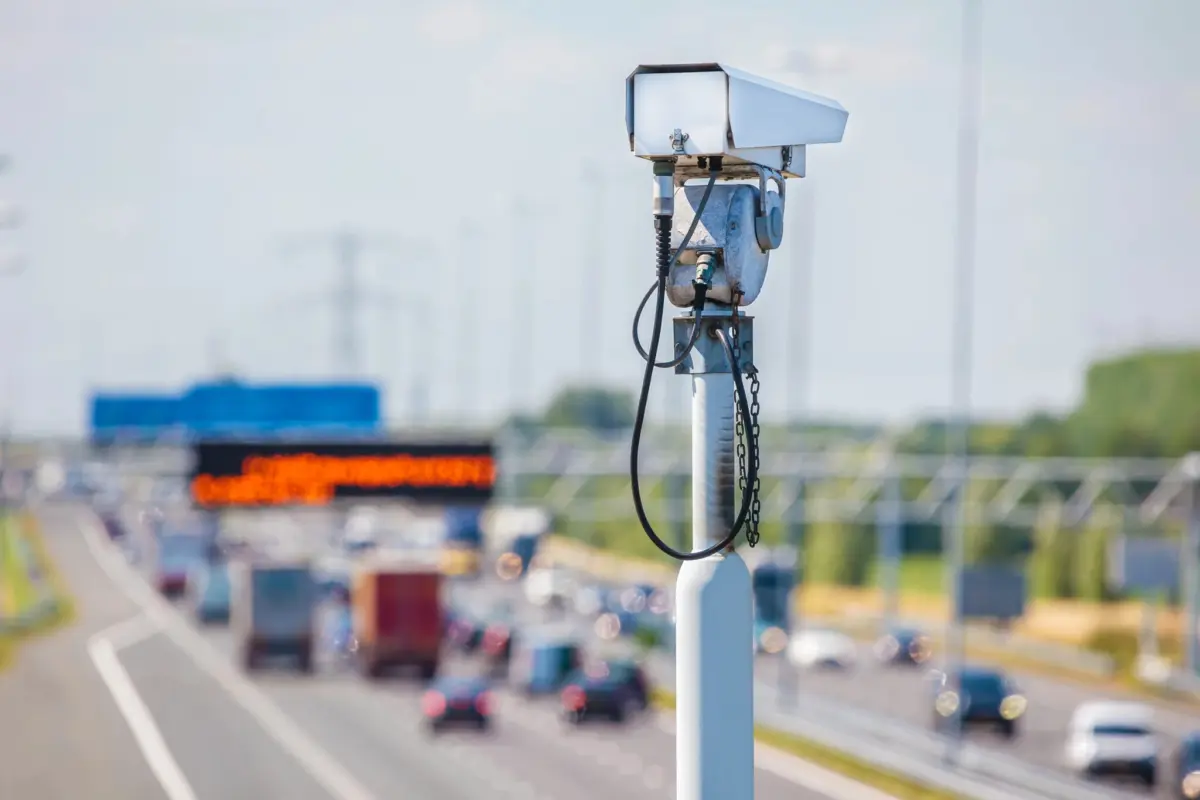
The highest advisory body to the Dutch government has called on the cabinet to reconsider its controversial plans to increase traffic fines next year. In a sharply worded advisory published on September 21, 2026, the Council of State warned that motoring penalties have grown entirely out of proportion when compared to punishments for other criminal offenses and civil infractions. The advisory challenges a core fiscal assumption of the Ministry of Justice and Security, arguing that using traffic enforcement as a revenue generator to balance ministerial budgets violates the fundamental legal principles of deterrence and road safety.
The friction centers on Justice Minister David van Weel’s proposal to implement a standard 2.7% inflation adjustment across the board for all traffic violations starting next year. Under the minister’s current framework, approval of the indexation would see common road infractions incur steeper financial burdens. Unauthorized parking would cost motorists €130, while running a red light would carry a hefty penalty of €330. Drivers caught handling a mobile phone behind the wheel—a major focus of recent road safety campaigns—would face a fine of €450.
Speeding penalties, which are calculated progressively based on the extent to which a driver exceeds the legal limit, would also rise. Minor infractions, such as exceeding the limit by just 4 km/h, would start at €33, whereas driving 30 km/h over the posted limit would result in a €424 fine. Furthermore, stricter tariffs apply within built-up areas and 30 km/h zones to protect vulnerable road users, where clocking 50 km/h in a 30 km/h zone would command a staggering penalty of €351.
While the cabinet maintains that indexing fines to inflation is a standard administrative practice to preserve the deterrent value of monetary penalties, the Council of State has questioned whether the increases remain "necessary, fair and proportionate." This authoritative intervention echoes a chorus of ongoing criticism voiced by various legal and judicial bodies over recent years, including the public prosecution service, known as the Openbare Ministerie, the judiciary, and the Central Fine Collection Agency, the CJI.
Critics have repeatedly pointed out a glaring systemic imbalance between the costs of minor traffic infractions and the penalties assigned to more serious crimes. For instance, a common assault, which inflicts direct physical harm upon another person, typically carries a standard judicial penalty of around €400. Under the current and proposed scaling of traffic fines, a driver caught using a smartphone or significantly exceeding the speed limit can easily face a financial sanction that eclipses the price tag of committing an act of physical violence. This inversion of societal values has left legal experts questioning the rationale behind the tariff structures.
Debt Problems
The debate over soaring traffic fines extends far beyond abstract legal philosophy, touching heavily on socioeconomic realities and household stability across the Netherlands. Over the past three decades, traffic fines have experienced a cumulative increase of 220%. As these monetary penalties have climbed, they have increasingly collided with the financial stability of low-income households.
Data from consumer and human rights advocacy spaces underscore the severity of the issue. In 2024 alone, approximately 127,000 families across the Netherlands found themselves grappling with severe debt crises directly triggered or exacerbated by outstanding traffic penalties. Because traffic fines must be paid swiftly to avoid compounding administrative surcharges and bailiff fees, a single momentary lapse in judgment on the road can spiral into a long-term cycle of poverty and financial exclusion for vulnerable individuals.
Addressing this compounding crisis, the Council of State asserted that freezing the tariff rates rather than allowing them to march upward with general inflation would serve as a "first obvious step" toward restoring equilibrium and fairness to the sanctioning system. The advisory body pushed back firmly against the financial justification frequently offered by government officials. Ministers have historically argued that the revenue generated from traffic enforcement is necessary to cover the operational costs incurred by the justice ministry and law enforcement agencies.
However, the Council of State dismissed this fiscal defense as legally invalid within the framework of penal law.
"The aim of these fines is to sanction behaviour that breaks the rules and improve road safety," the advisory states. "Raising the tariffs for traffic fines should relate to serving that purpose."