






The sauna is undeniably Finnish in its historical roots, born from a centuries-old tradition of timber-built heat houses and communal cleansing. Yet, the company currently reimagining its place within contemporary homes and high-end spas is decidedly German. Based in Schwäbisch Hall, Germany, Klafs sees no fundamental contradiction in this cultural crossover. Instead, its designers approach the ancient wellness ritual through the rigorous lens of precision engineering, constantly experimenting with the variables of heat, air circulation, and cutting-edge materials.
As global wellness culture continues to expand rapidly, the vernacular surrounding its rituals has become increasingly fluid. Within many modern friend groups, terms like “banya” have morphed into a loose, all-encompassing shorthand for any kind of spa visit, even though the word specifically designates the traditional Russian-style bathhouse. Klafs, by contrast, brings a distinctly German engineering sensibility to these diverse traditions, persistently asking a singular question: How far can the physical experience of heat and cold therapy actually be pushed?
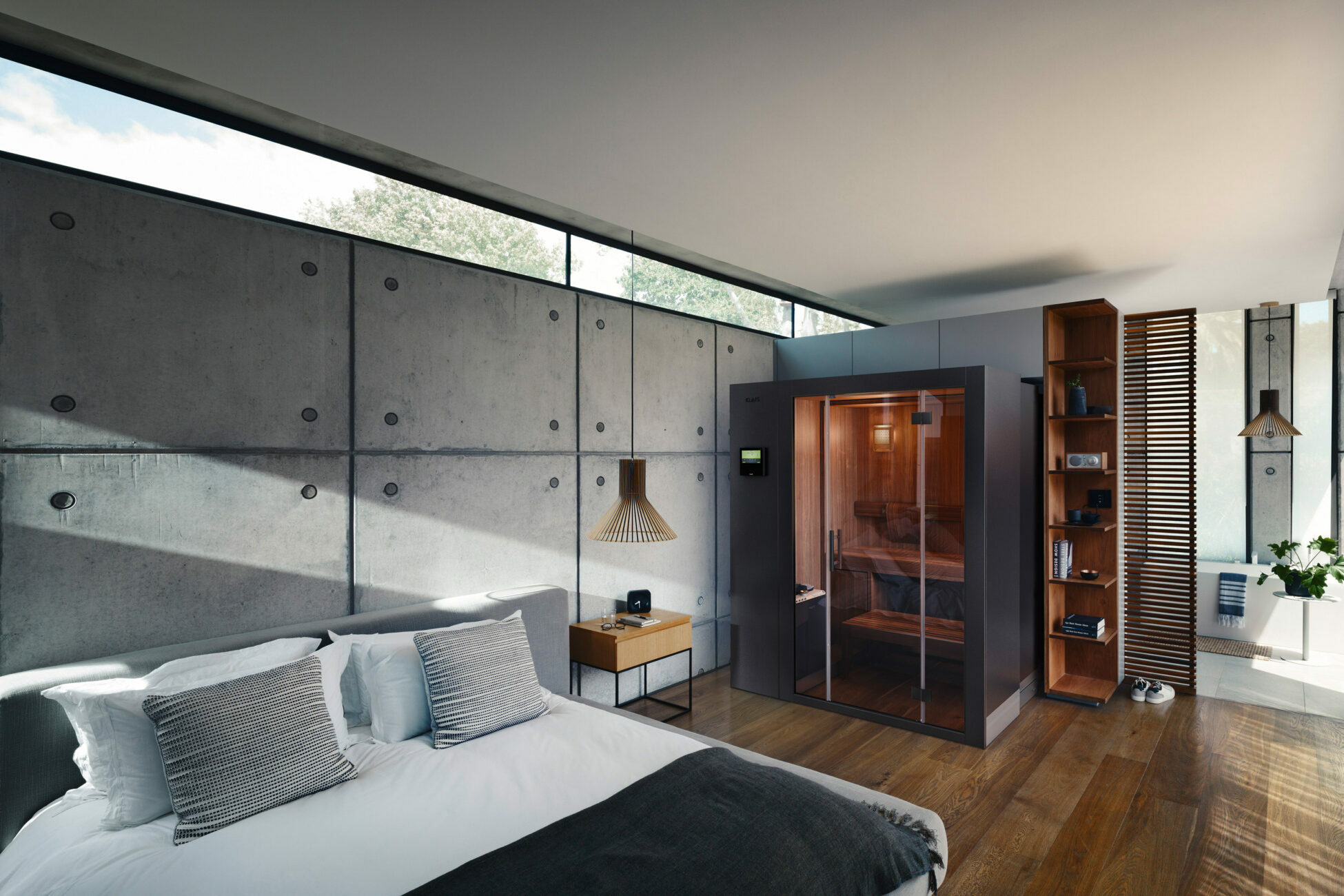
At the sprawling Klafs headquarters in Germany, where the company’s newest and most ambitious ideas are meticulously developed and rigorously tested, a visitor’s tour typically begins inside a striking, two-tiered, glass-enclosed sauna. During a recent walkthrough, the guide—an experienced training manager named Heinrich—demonstrated the intersection of technology and tradition by speaking directly to the heater tucked away in the corner. “Hey, Klafs,” he said, instantly evoking the familiar intonation that consumers worldwide have learned from voice-activated smart home assistants like Alexa. The prospect of interacting with a smart aufguss guide highlights how deeply automation is infiltrating spaces traditionally prized for their analog simplicity.
In German, the word aufguss translates literally to “infusion” or “pouring over.” Within the context of modern wellness and spa culture, it refers to a carefully guided sauna ritual. This practice typically involves water being ladled over intensely hot stones, the strategic use of aromatic plant infusions, and the active circulation of heated air by a sauna master using towels. Over the years, this ritual has helped transform sauna-going from a solitary, utilitarian sweat session into a deeply communal and sensory-rich experience, particularly across North American spas.
To bring elements of that theatrical ritual into an automated setting, Klafs developed its Vitality Boost system. Described by the company as the world’s first personalized heat-waving system, the technology replicates the effects of traditional air circulation without requiring a towel-spinning guide to stand watch, and without forcing guests to abandon the comfort of their wooden benches.
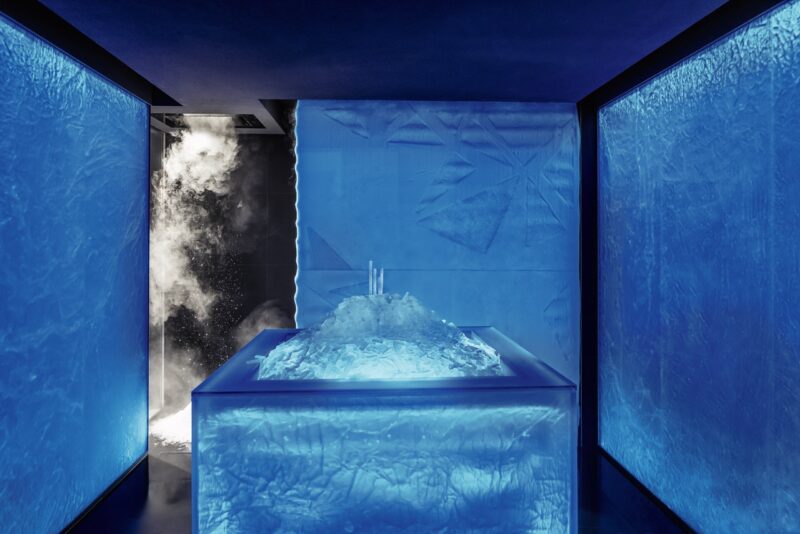
From the intense heat of the experimental sauna, a visitor’s tour naturally moves into an altogether different climatic zone. Stepping away from the timber-lined heat, one can retreat into the cool, calming blue light of a Frimas ice steam room. In this specialized environment, a glowing central ice fountain slowly grows delicate, flower-like crystal formations, offering a visual and tactile counterpoint to the dry warmth of the sauna.
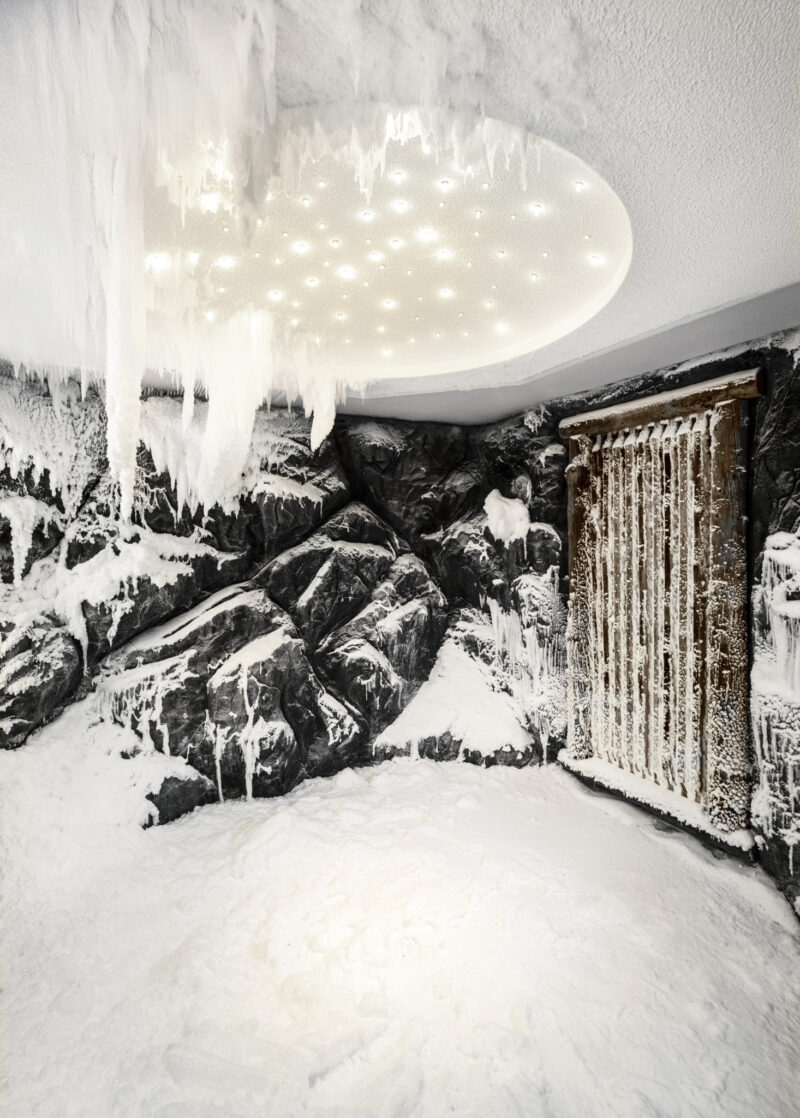
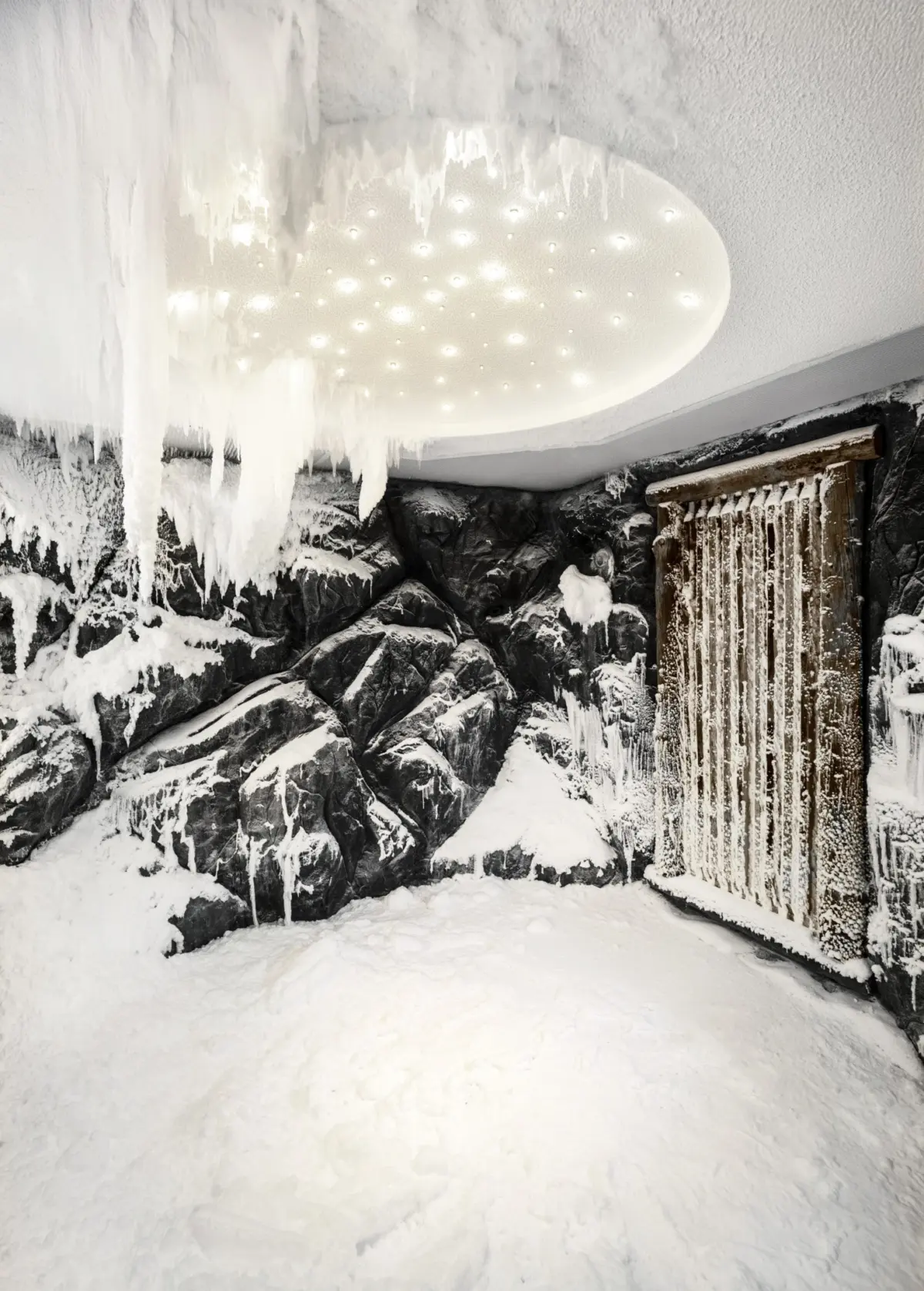
Around the corner in these testing facilities, a wall-mounted button simply labeled “snow” can be pressed to summon gentle flurries cascading down from the ceiling of the ice steam shower. Traditionally, the cold-water plunge or cooling phase of a classic hot-and-cold bathing circuit is a brief shock to the system—something many bathers prefer to rush through or endure rather than enjoy. However, spaces like these make a compelling architectural and experiential case for slowing down. Rather than treating cold exposure as a harsh element to be quickly tolerated, Klafs creates immersive environments that integrate the cold seamlessly into the broader narrative of the spa journey.
Beyond ice and snow, the company’s sensory experiments extend into unexpected mediums, including foam. Visitors to the facility can discover specialized foam steam baths, which replace the sharp intensity of a traditional aufguss with a far more playful and tactile sensory experience. Steam rooms fully equipped for foam treatments can easily be integrated into contemporary hotel and spa programming as scheduled group events. The billowy suds—reminiscent of childhood bubble baths and the elaborate foam sculptures they once inspired—tend to evoke a sense of uninhibited playfulness that most adults have long since left behind.
The proprietary foam essence utilized in these installations, known as Espuro, is formulated using plant-based ingredients. This includes coconut-derived compounds, which the company notes are specifically chosen to help nourish and protect skin that has been exposed to high heat.
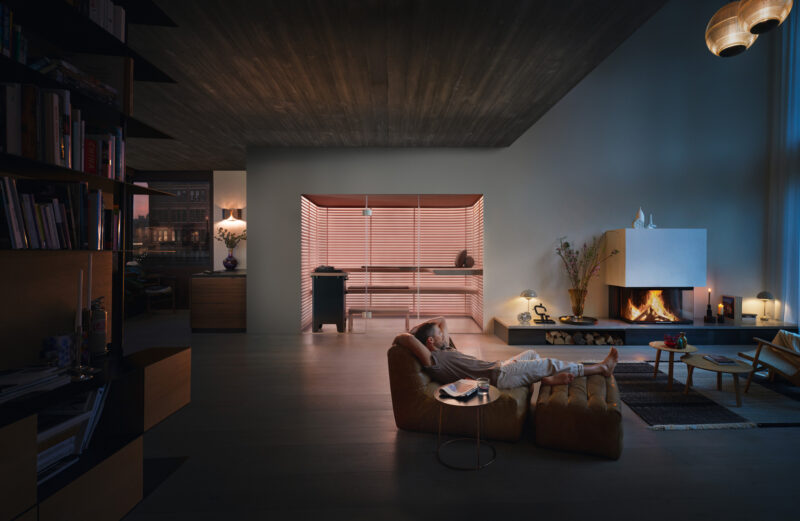
Alongside these sensory and atmospheric experiments, Klafs has fundamentally reconsidered the sauna itself as a sophisticated architectural object. Spatial constraints have historically kept many homeowners from installing a traditional sauna in their residences. To solve this, the company developed the retractable S1 sauna, an ingenious design that expands outward from a compact, closet-depth enclosure into a full-size, fully functional sauna room when needed.
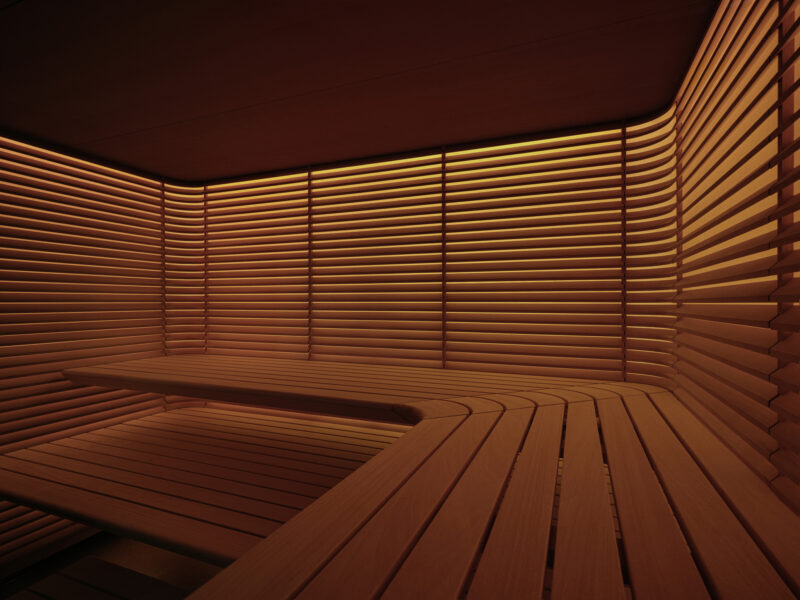
Building on this dedication to high-end design, the company also collaborated with Studio F.A. Porsche to create the S11 sauna. This design-led residential piece pairs delicate washi paper elements and multicolor light panels with smooth, sinuous lines, bridging the gap between utilitarian wellness equipment and high-concept interior architecture. Inside the S11, continuous horizontal wooden slats, gently curved corners, and concealed lighting combine to create a sculptural interior that places a heavy emphasis on materiality and clean form.
While Klafs has long maintained a dominant market presence throughout Germany and Europe, the brand has been steadily expanding its footprint into the American market, accelerated significantly following its acquisition by Kohler in 2024. Premium fitness and wellness clubs in major North American cities now feature Klafs installations, including specialized amenities like the Sanarium and the Polaris Ice Room.
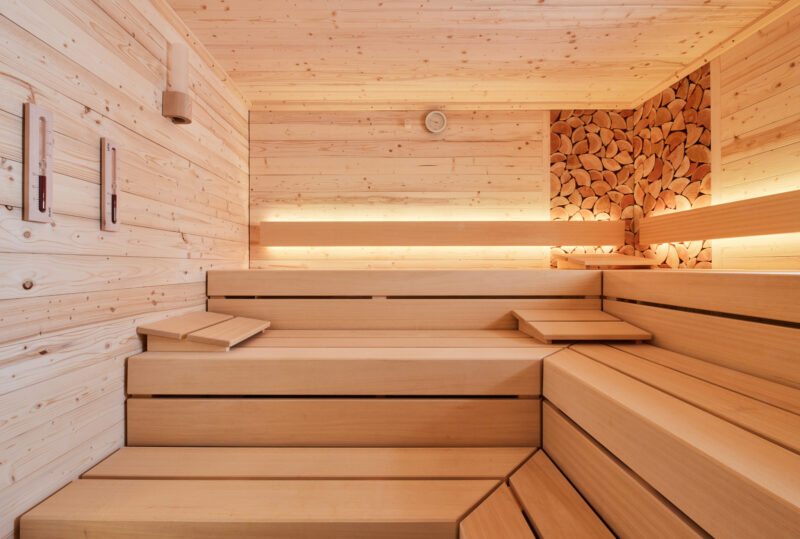
Yet, for those who tour its German headquarters or experience its engineering firsthand, the most lasting impression is rarely tied to a single commercial product. Instead, it is the company’s persistent willingness to question long-held assumptions about what a sauna, a steam room, or a cooling space can and should be. At Klafs, even the most familiar and time-honored wellness rituals remain perpetually open to reinvention, proving that traditional practices and modern engineering can coexist within the same architectural envelope.
Bianca Weeko Martin is a writer and researcher whose professional work explores the intersection of architectural practice, cultural theory, and personal narrative. She is the author of the Architectural Guide Manila.