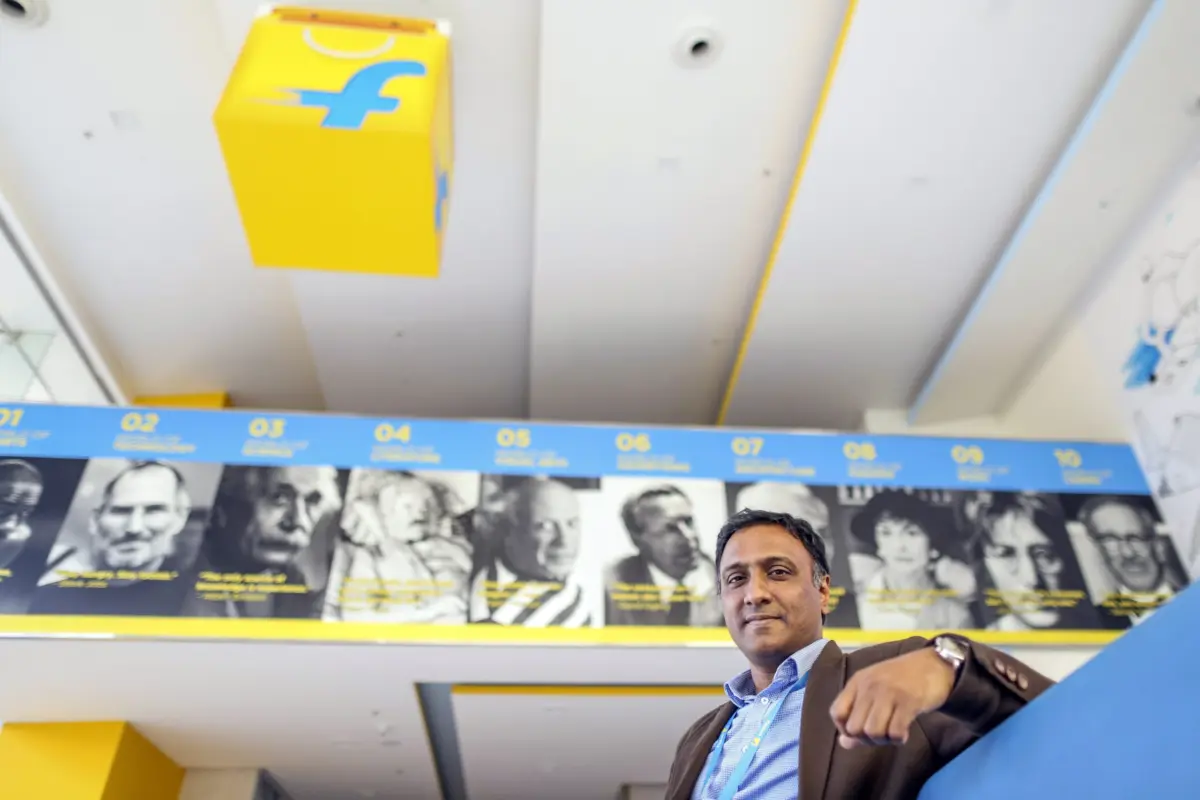
Flipkart, the prominent Indian e-commerce giant backed by retail titan Walmart, is gearing up to challenge the entrenched food-delivery duopoly of Zomato and Swiggy. In doing so, the Bengaluru-based company is stepping into a fiercely competitive arena that has previously repelled high-profile international and domestic contenders, including prior entry and exit attempts by global tech behemoths Amazon and Google.
According to sources familiar with the internal operations, Flipkart is actively testing its food-delivery service internally. The pilot program has grown substantially, expanding from an initial group of a few hundred employees to upward of 8,000 corporate testers. To support the upcoming public rollout, the company has deployed a dedicated fleet of delivery riders through its logistics arm, Ekart. These personnel operate separately from the couriers who handle Flipkart’s rapid-fire quick-commerce deliveries.
For participating employees, the food-delivery option currently appears as a distinct tab embedded directly within Flipkart’s main shopping application. It sits alongside the platform’s "Minutes" quick-commerce offering and its travel booking services. To source culinary options, the service integrates restaurants listed through ONDC—the government-backed open network designed to connect digital buyers and sellers across diverse platforms—alongside dining establishments that Flipkart has signed up through direct partnerships.
On the streets of Bengaluru, where Flipkart maintains its corporate headquarters, residents have begun spotting delivery riders wearing distinct jerseys bearing the "Eat-in by Minutes" branding as they fulfill internal test orders.
This ambitious expansion unfolds within a rapidly evolving digital marketplace. According to estimates from brokerage firm Bernstein, India’s online food-delivery sector is expanding at a robust annual rate of 18% to 20%. Nevertheless, online delivery still accounts for just over 15% of the country’s broader food-services industry. Meanwhile, Zomato—owned by Eternal—and Swiggy collectively serve an estimated 85 million to 95 million paying customers annually, according to Bernstein’s market data. This massive footprint underscores both the entrenched dominance of the two incumbent platforms and the vast room for growth that remains for new entrants within the world’s most populous nation, which boasts more than a billion internet subscriptions.
Flipkart is far from the only player attempting to disrupt India’s food-delivery landscape. Ride-hailing firm Rapido, which has already mounted a formidable challenge against Uber and its Indian rival Ola, has been expanding "Ownly," its proprietary food-delivery service that operates on a zero-commission model for restaurants. Simultaneously, Swiggy has rolled out "Toing," a separate application specifically tailored for budget-conscious consumers seeking more affordable meal options. Both strategic developments reflect escalating pressure on the industry’s traditional pricing structures and the steep commissions that food establishments are typically required to pay.
"Monopoly is bad, but duopoly is more pathetic," said Sagar Daryani, president of the New Delhi-headquartered National Restaurant Association of India, which represents more than 500,000 restaurants nationwide. "What one does, the other follows suit."
Daryani noted that restaurants have long desired viable alternatives to the two dominant platforms that currently control the market.
Despite the high stakes, Flipkart is not the first deep-pocketed corporate player to test the waters of India’s food-delivery ecosystem. In May 2020, Amazon launched its own food-ordering service in Bengaluru, only to shut it down two years later. Similarly, Google introduced the Areo app, which combined food ordering with various home services, but failed to secure meaningful market traction. Uber also exited the sector in March 2020 by selling its Indian Uber Eats business to Zomato for $206 million.
Daryani points to a fundamental strategic difference between Flipkart and the predecessors that attempted and failed to conquer the sector. While Zomato and Swiggy initially built their core business models around meal delivery before eventually branching into quick commerce, Flipkart is pursuing the exact reverse strategy. The company is leveraging its established e-commerce infrastructure and expanding quick-commerce operations as a sturdy springboard into the food-delivery vertical.
"Flipkart’s quick commerce benefit will get passed on to food delivery, so it will be leaner, more efficient," Daryani explained.
For the restaurant industry, new market entrants offer a welcome promise: relief from soaring online sales costs. Daryani, who also serves as the co-founder and CEO of the popular dumpling chain Wow! Momo Foods, revealed that Flipkart has proposed a base commission rate of approximately 10%. This figure stands in sharp contrast to the 20% to 25% commission rates typically levied by Zomato and Swiggy.
However, base commissions represent only a fraction of the total expenditure incurred by restaurants. Once advertising fees, consumer discounts, and other promotional overheads are factored into the equation, dining establishments frequently find themselves spending between 40% and 50% of an order’s total value on established platforms. Daryani anticipates that Flipkart’s operational model could keep those aggregate costs closer to 15% or 16%, potentially allowing restaurants to retain a significantly higher share of revenue from each transaction.
Even so, industry analysts emphasize that securing restaurant partnerships is only part of the challenge; winning over everyday consumers is an entirely different hurdle. Bernstein estimates that new market entrants might only save consumers roughly 20 to 30 rupees per order through streamlined operational efficiencies. Analysts question whether such modest savings will prove sufficient to lure loyal users away from Zomato and Swiggy, particularly given that the incumbent platforms possess the financial muscle to deploy deeper promotional discounts to defend their customer bases.
Flipkart’s current pilot phase in Bengaluru is designed to be short-lived. The company has informed restaurant partners of its intention to launch the food-delivery service publicly by the end of October, with plans to expand operations to five or six major urban centers before the close of the year.
This aggressive food-delivery push also coincides with ongoing uncertainty surrounding Flipkart’s long-anticipated initial public offering. Chief Executive Kalyan Krishnamurthy recently declined to commit to a specific timetable for an IPO, even as the enterprise continues to aggressively expand into adjacent business segments engineered to drive more frequent consumer engagement with its application.
Flipkart’s wider strategic moves arrive as competition across India’s digital commerce sector reaches a fever pitch. Quick-commerce platforms that initially built their reputations on delivering household groceries in minutes have rapidly evolved to stock high-end discretionary merchandise, including the latest iPhone models. This expansion places them in increasingly direct competition with traditional e-commerce giants like Flipkart and Amazon.
Flipkart did not respond to requests for comment regarding its upcoming food-delivery rollout.