






Denim is an enduring staple of modern wardrobes, recognized globally for its timeless appeal, rugged durability, and versatility. Beyond its status as a fashion essential, genuine denim crafted from the natural, sustainable properties of cotton fibers holds a distinct environmental advantage: it can be recycled. This foundational ethos of sustainability resonates deeply with a growing community of stylish creators who understand that everyday lifestyle choices can accumulate to create a meaningful, positive impact on the planet.
To address the broader challenge of textile waste, initiatives like Cotton’s Blue Jeans Go Green program offer a practical pathway for consumers and creators alike. Rather than discarding worn-out denim garments into landfills, the program provides a system where authentic pieces can be collected and repurposed into entirely new products. The transformation process turns old jeans, jackets, and shirts into a variety of useful materials, including home insulation for building projects, pet bed inserts, and thermal packaging designed for sustainable food and pharmaceutical delivery.
The environmental necessity of such programs is underscored by staggering industry statistics. According to data cited from the U.S. Environmental Protection Agency, approximately 17 million tons of textile waste are discarded annually in the United States alone. Programs like Blue Jeans Go Green, which has been in operation for nearly two decades, work directly to combat this surplus by diverting cotton textiles from landfills, conserving natural resources, and saving energy throughout the recycling lifecycle. Participating in the initiative is designed to be accessible, allowing individuals to drop off their well-loved denim items at participating retail locations or utilize dedicated mail-in services.
Across the country, a diverse group of creatives, photographers, artisans, and musicians have integrated this sustainable mindset into their daily lives and professional practices. Five distinct creators have recently shared how they rely on the initiative to ensure their favorite denim pieces find a meaningful second life rather than being discarded.
1. Ben Christensen
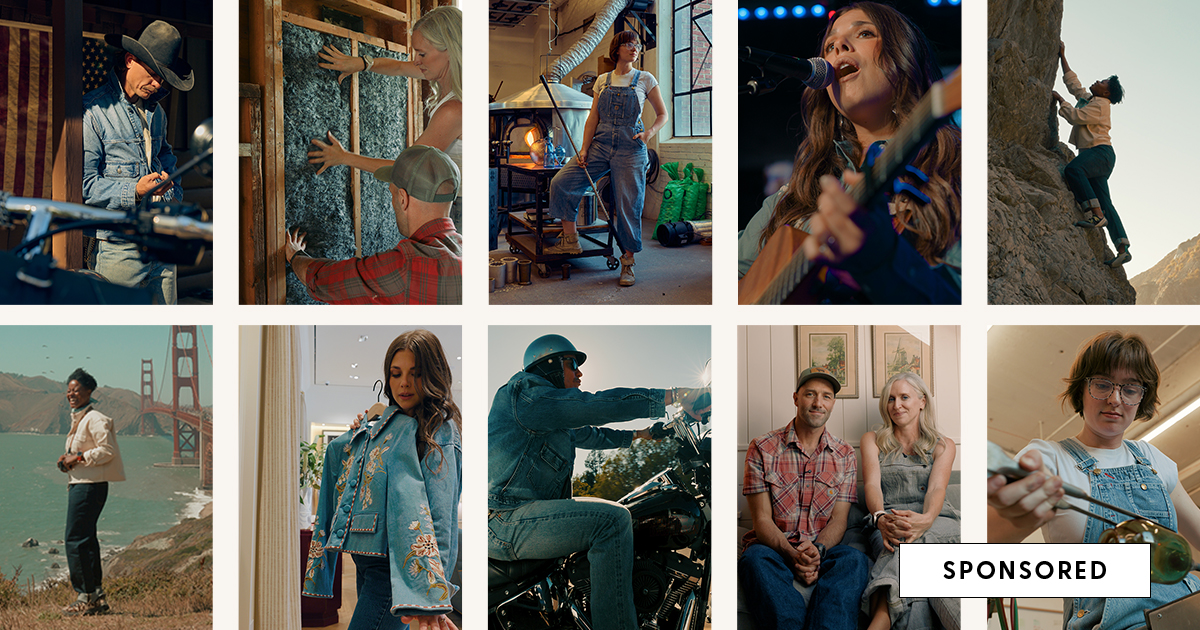
Operating out of Arizona, photographer and creative director Ben Christensen often describes his daily life and aesthetic through the lens of a classic Western. His creative pursuits require gear that can withstand rugged environments, leading him to value items built with longevity in mind. Because of the demanding nature of his work, Christensen admits to being particularly hard on his denim wardrobe. Once those garments reach the end of their wearable lifespan, he ensures they do not go to waste. Christensen utilizes the Blue Jeans Go Green program to recycle his worn denim pieces by dropping them off at Madewell, a prominent participating retailer that partners with the initiative to collect and repurpose cotton textiles.
2. Gemma Hollister
In Philadelphia, professional glass blower and Antolini Glass Co. co-founder Gemma Hollister relies heavily on materials that can withstand extreme environments. Hollister works extensively in denim precisely because the fabric is manufactured from natural cotton, allowing it to endure high-heat environments and heavy daily wear in the workshop. When a favorite pair of jeans finally succumbs to the demands of her craft, she knows exactly how to handle them responsibly. Through the Blue Jeans Go Green program, Hollister brings her retired denim to participating retailers such as Rails, ensuring the materials are funneled into the recycling stream to be transformed into new, functional insulation products.
3. Cathy and Garrett Poshusta
For Cathy and Garrett Poshusta, the philosophy of renewal extends far beyond their wardrobes and into the physical structures they restore. As professionals specializing in historic home renovation through their work, the couple has built a career on bringing old, neglected spaces back to life. Garrett notes that while many people walk into a dilapidated historic home and focus entirely on its flaws, their perspective centers on potential and transformation. Whenever an opportunity arises to reuse materials and grant them a second chapter, the duo embraces it enthusiastically. This philosophy naturally aligns with their personal habits, leading them to utilize the Blue Jeans Go Green program to recycle their well-loved Carhartt workwear and denim garments. For Cathy, participating in the program represents an extension of the preservation work they already value, offering yet another opportunity to be part of a sustainable cycle of reuse.
4. L. Renee Blount
As an outdoor climber, explorer, and professional adventure photographer, L. Renee Blount spends a significant portion of her time immersed in natural landscapes. Blount explains that exploring the great outdoors inspires a profound sense of wonder, driving her desire to capture moments of joy through her camera lens. That deep connection to nature fosters a strong sense of personal responsibility to protect the environment and ensure that future generations can experience the outdoors in the same pristine condition. To align her wardrobe with her environmental values, Blount deliberately chooses denim made from at least 90 percent cotton, citing the fabric’s durability, comfort, and classic aesthetic. When her trusty denim apparel eventually wears out from outdoor excursions, she gathers her well-worn pieces and brings them to MUJI, another retail partner participating in the Blue Jeans Go Green program, ensuring her clothing contributes to waste reduction efforts.
5. Kylie Frey
In Nashville, musician Kylie Frey is actively pursuing her country music ambitions while maintaining a firm commitment to authenticity in both her art and her lifestyle. Frey notes that the intrinsic connection between cotton, denim, and country music lies in their shared pursuit of genuine expression. Drawing a parallel between her craft and her wardrobe, she observes that just like a timeless song, a great pair of jeans continues to make an impact long after the fabric begins to fade and show its age. This perspective fuels her active support for the Blue Jeans Go Green program. When her denim pieces have reached the end of their road on stage or in the studio, Frey brings her well-loved apparel to Veronica Beard, where the garments are collected and repurposed, allowing them to live on through the sustainable infrastructure of the program.