






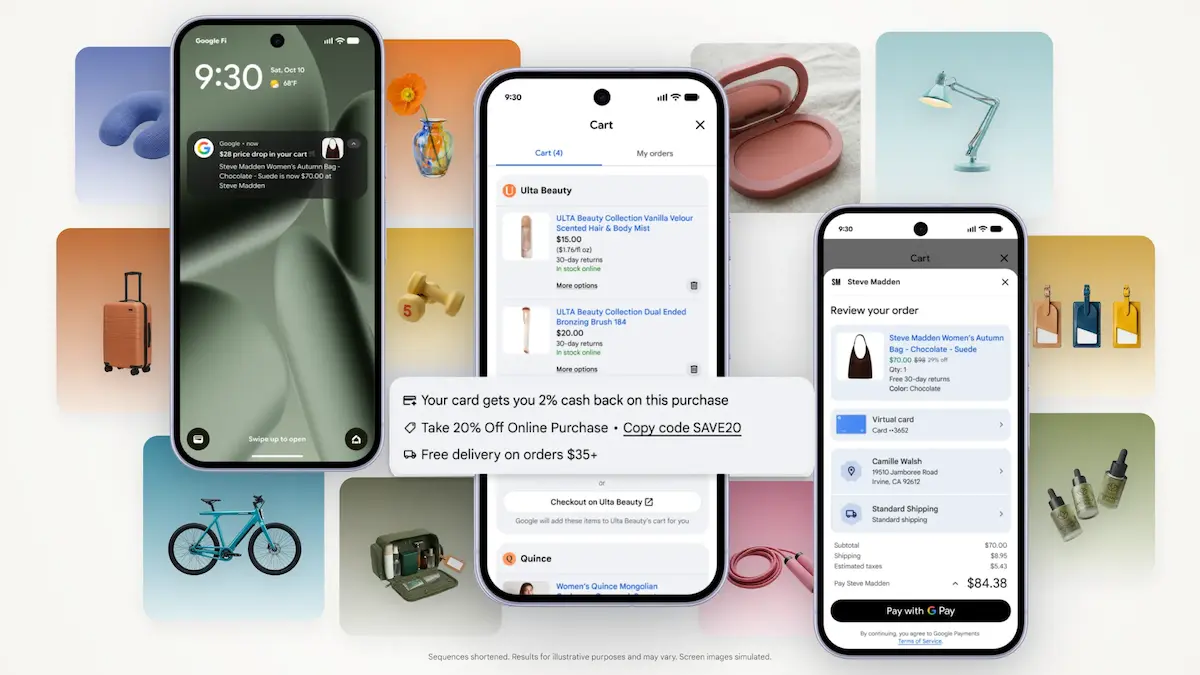
The core concept behind Universal Cart is to make online shopping significantly easier to manage from a single, unified interface. Under the traditional digital shopping experience, consumers frequently bounce between dozens of different retailer websites, open countless browser tabs, and lose track of prospective purchases scattered across disparate platforms. Universal Cart fundamentally changes this dynamic by letting shoppers find a product they like anywhere within Google’s supported ecosystems, save it instantly to their cart, and effortlessly move on with their browsing.
When users eventually return to their shopping journey later, their saved items and ongoing progress remain intact, sparing them the tedious task of hunting down the exact same products or starting their searches completely over from scratch. Because Universal Cart is built to aggregate items from multiple different retailers into one cohesive space, it effectively serves as a central headquarters for browsing, comparing, and keeping track of potential purchases over time. This cross-platform persistence is intended to reduce the cognitive load of digital shopping, creating a continuous thread that connects a consumer’s initial exploratory searches all the way through to their final purchasing decisions.
Beyond simply acting as a persistent digital basket, Google highlights that Universal Cart is equipped with intelligent monitoring capabilities designed to help shoppers stay on top of shifting prices and product availability. In an era where online prices fluctuate rapidly and popular items frequently drift in and out of stock, the tool can proactively send notifications to users. These alerts trigger when a saved product undergoes a price drop, allowing consumers to snag better deals without constantly checking back manually, or when an out-of-stock item finally becomes available for purchase again.
The utility of Universal Cart extends further into the transaction process by offering tailored, intelligent assistance designed to optimize how and where users spend their money. According to Google, the tool is capable of factoring in specific credit card perks and rewards programs when helping users determine the most financially advantageous way to pay for their items. Furthermore, the system can automatically surface relevant promotional codes and discounts, ensuring that shoppers do not miss out on potential savings during checkout.
Underpinning the checkout functionality of Universal Cart is Google’s Universal Commerce Protocol, commonly referred to as UCP. This open standard was initially introduced by the company earlier this year to establish a common framework for digital transactions. UCP is specifically engineered to help artificial intelligence agents and various independent retailers work together harmoniously across different phases of the online shopping journey, extending all the way through to the final checkout stage. By establishing an open protocol, Google hopes to foster an ecosystem where AI-driven tools can securely and reliably interact with diverse merchant platforms without hitting proprietary technical roadblocks.
The launch of Universal Cart does not happen in a vacuum; rather, it represents the latest strategic push in Google’s deep and ongoing investment in AI-powered shopping experiences. The new tool joins a growing suite of features designed to weave artificial intelligence into the fabric of everyday commerce. These include conversational product discovery experiences embedded directly within Search’s AI Mode, as well as Google’s innovative "Let Google Call" tool. That particular feature utilizes an advanced AI agent to make actual phone calls on behalf of the user to nearby brick-and-mortar stores, querying human staff directly to check whether a specific item is currently in stock before a consumer makes a physical trip.
Google is far from alone in its pursuit of transforming e-commerce through the integration of artificial intelligence and autonomous agents. Across the technology sector, major competitors are aggressively racing to capture the next evolution of online retail. Industry titans such as Amazon, OpenAI, and various other rivals have rolled out their own agentic commerce features and systems over recent months. These moves highlight a broader industry-wide shift as technology companies look for concrete ways to make their conversational chatbots and AI systems genuinely useful for everyday consumers, pushing utility far beyond simple question-and-answering into active, real-world execution.