


“I think it’s fascinating how much of someone’s identity can exist in the things they leave behind,” Jildevik reflects, encapsulating the underlying thesis of his year-long endeavor.

While the rising prominence of the flat-lay aesthetic in modern fashion photography may coincidently parallel shifting cultural conversations about bodies and physical presence—arriving at a time when medical interventions like Ozempic are reshaping silhouettes across popular culture—Jildevik’s choice of format was driven by deeply personal, artistic impulses rather than broader industry trends.

Born in Stockholm, Jildevik initially pursued a more conventional path, earning a law degree in his hometown before relocating to Paris to study fashion business and communication at ESMOD. Following his studies, he gained industry experience working with contemporary labels such as CMMN SWDN and Hodakova. However, an unexpected accident disrupted the linearity of his career, prompting a significant reorientation toward fine art.

This artistic pivot was rooted in a lifelong passion for collecting. “I’ve been creating since I was a kid, always exploring, collecting, and making things,” Jildevik says. “I was an overly nostalgic child, always drawn to, almost obsessed with, old objects, materials, and the lives they carry. I think that fascination has followed me through everything I’ve done.”

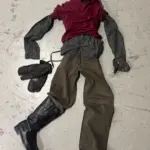
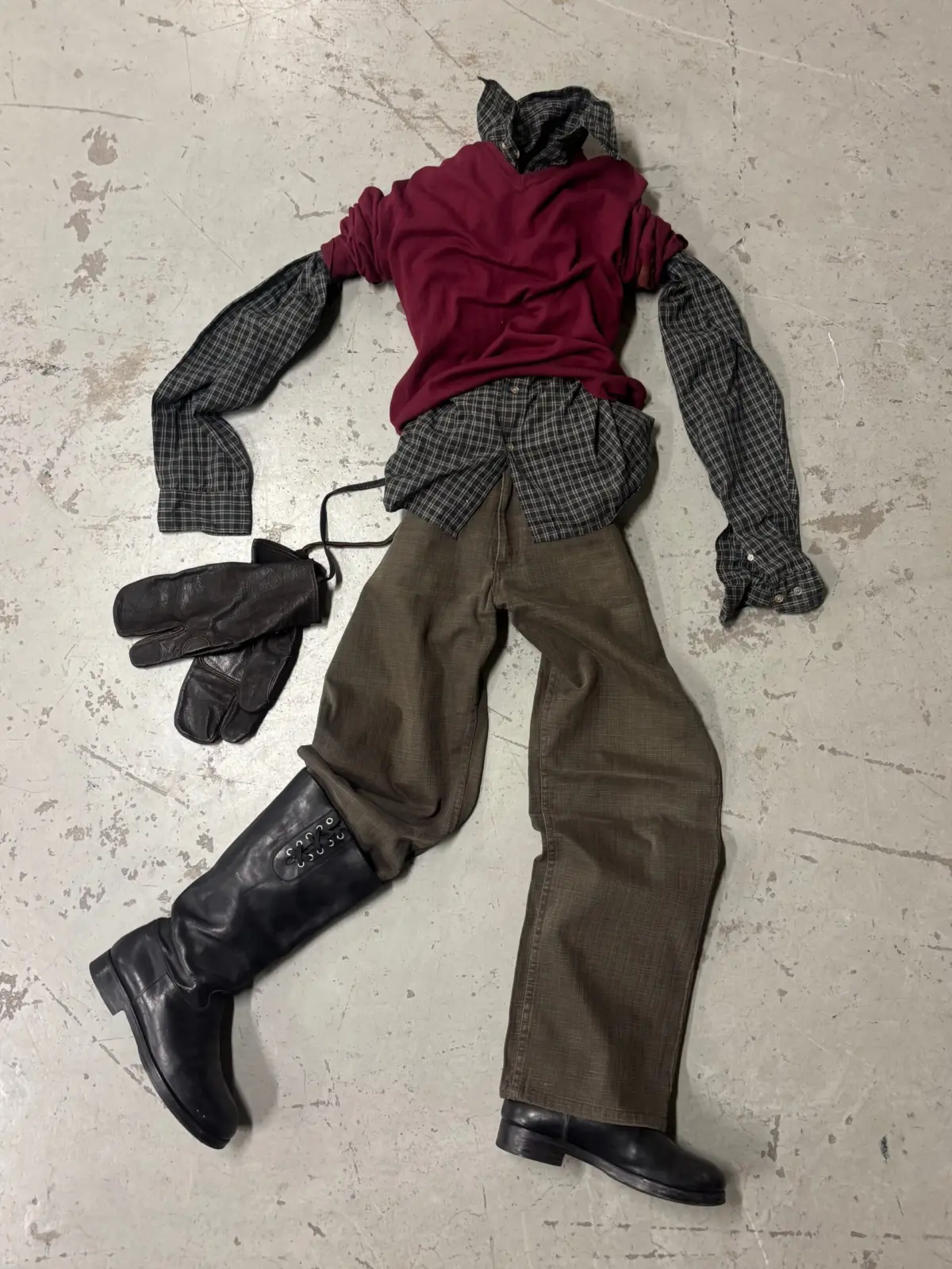
That deep-seated reverence for objects forms the bedrock of Portrait of the Absent. In an era dominated by digital narcissism, hyper-curated selfies, and the mandatory centrality of the human body in visual culture, Jildevik’s project offers a radical counter-narrative. By removing the body entirely, the artist shifts the focal point from physical visage and gesture to spatial arrangement, silhouette, and material history. The photographs function equally as portraits of garments and portraits of the artist himself.

This conceptual framework directly challenges the conventional wisdom that a garment requires a human body to achieve its true purpose or complete its narrative. “Removing the body altogether and letting the things that would normally surround or cover it take its place is something that really interests me,” Jildevik explains. “I’ve spent over 15 years collecting clothes and objects, and they’ve all become part of my life in different ways. They carry memories, different periods of my life, and sometimes versions of myself that no longer exist. With Portrait of the Absent, I started taking these things out of their original context, rearranging them into new compositions and photographing them as self-portraits… The person is absent, but in a way everything that makes the portrait personal is still there.”

Traditionally, the human face serves as the indisputable focal point of portraiture. By subverting this expectation, Jildevik’s book forces viewers to contemplate how clothing communicates identity through arrangement, texture, and spatial orientation alone.

Berlin-based art director Elsa Mueller, who collaborated with Jildevik on the book and published it through her newly established publishing house, Prince, notes the peculiar power of this methodology. “I find flat-lay fascinating because it can expose the essence of an object while simultaneously distorting its shape,” Mueller observes. “It reveals and conceals at the same time, making something ordinary feel strangely mysterious.”

For Mueller, the physical design of the publication was just as deliberate as the photography within it. Every image in Portrait of the Absent is positioned in precisely the exact same location on the page, allowing readers to slowly perceive subtle shifts and developments as they turn through the volume. Furthermore, the book intentionally rejects a traditional linear narrative, featuring neither a definitive beginning nor a rigid end, inviting readers to enter and exit the visual journey at any point.

The physical slipcase of the book was similarly conceived to honor the themes of trace and absence. Mueller created the slipcase print by pressing an actual shirt onto an inked gel plate, transferring the resulting physical imprint onto paper. Though the garment itself is gone, its physical impression remains behind.

Jildevik’s relationship with fashion and material culture runs deep, rooted in years of obsessive hunting through flea markets, vintage archives, and European storefronts. Long before entering the commercial fashion sphere, he began collecting clothes at the age of 15. His curation leans heavily toward vintage finds and designer pieces acquired from older collectors in Italy and flea markets in Paris. Eschewing the fast-paced cycles of major commercial fashion houses, Jildevik found his earliest and most enduring stylistic touchstone in the visionary work of Martin Margiela.

The concept for Portrait of the Absent grew organically out of personal habit. Growing up, Jildevik frequently experimented with creating character-driven outfits on the floor of his room before going out, occasionally photographing them simply because he found the arrangements compelling. Over time, what started as a casual creative exercise expanded into a month-long commitment, which ultimately evolved into a rigorous 365-day challenge.

For Jildevik, getting dressed has historically served as a psychological refuge—an armor against anxiety and overthinking. “Putting on my armor for the day, becoming whoever I wanted to be in that moment,” he recalls. Yet, as he embraced his identity as an artist, his relationship with that armor shifted. While internal doubts and anxieties persist, the compulsive need to hide behind external personas has given way to a profound sense of creative freedom.

Though some individual pieces reappear across the span of the project, no two outfits in the 365-day series are identical. Each arrangement poses a daily existential question for the artist: Who do I want to be today?

Reflecting on what the collection reveals about his inner self, Jildevik points to an enduring obsession with the intrinsic value of objects. “When you remove the body, it’s just clothes. But I think just clothes can be so much more than just clothes,” he says. “I want to be able to see me; even if the 365 outfits are so different, you can still see that it’s me, even if I’m not there.”

As he brings Portrait of the Absent into the world, Jildevik is already looking toward future creative endeavors, including potential plans to apply his bodiless portraiture technique to capture the identities of other individuals. Whether exploring the psychology of dressing, the quiet eloquence of vintage textiles, or the protective function of style in modern Scandinavian society, Jildevik remains firmly committed to the raw, exposing power of artistic creation as a bridge between inner solitude and shared human experience.