






Time is running out for contemporary jewelry artists around the globe to secure a major career milestone. With the application window closing on November 15, 2026, less than a week remains to apply for the prestigious 2027 Solo Exhibition Award. Offering a remarkable $20,000 prize to support the creation of a dedicated solo exhibition, the international grant is open to jewelry artists of any age and nationality. Proposed projects should engage with jewelry in a loosely defined sense, pushing the boundaries of the medium, the body, and traditional artistic spaces.
Presented for only the second time by Art Jewelry Forum (AJF), the grant is made possible through the generosity and enduring love for art jewelry shared by benefactor Linda Peshkin. The initiative was established with a clear mission: to advance the practice of exceptional artists working within the field of art jewelry by providing them with the vital financial resources, institutional backing, and professional independence needed to realize ambitious projects.
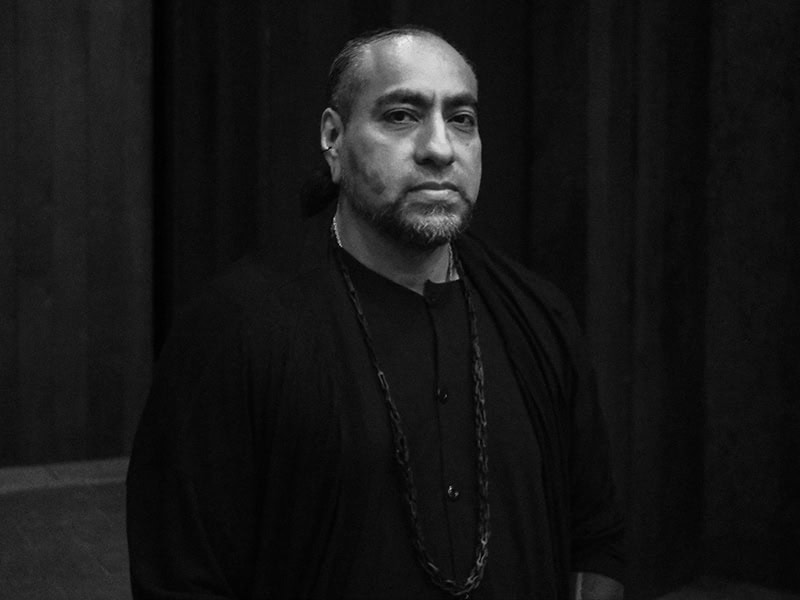
To gain deeper insight into what the selection panel is looking for in this year’s submissions, AJF spoke with one of the esteemed jurors for the 2027 cycle, Jorge Manilla. Manilla joins fellow jurors Geraldine Fenn and Bella Neyman on the expert panel tasked with evaluating this year’s international pool of applicants.
Exploring the Boundaries of Contemporary Jewelry
Reflecting on his introduction to the discipline, Manilla explains that his relationship with contemporary jewelry grew out of a deep-seated fascination with art, materials, the human body, and the unique capacity of objects to communicate far beyond their conventional functions. Coming from Mexico—a cultural landscape where craftsmanship, rituals, and historical traditions are deeply interconnected—he has always been drawn to the ways physical objects carry both personal and collective memories.
For Manilla, contemporary jewelry ultimately provided a vital creative space to question established definitions and explore the fluid boundaries where jewelry, sculpture, the human body, and broader artistic expression intersect. Today, he maintains a rigorous international artistic practice while simultaneously dedicating himself to education, research, and collaborative initiatives. He serves as the Head Professor of Metal and Art Jewellery at the Oslo National Academy of the Arts, where he teaches, mentors emerging voices, and supervises advanced artistic research, including doctoral projects.
Beyond his academic role in Norway, Manilla develops exhibitions, lectures, curatorial projects, and educational initiatives across Europe and Latin America. Among these is Múltiple, an independent study program he developed alongside Batek Escuela de Joyería in Mexico. For Manilla, being an active artist and an engaged educator are two halves of an inseparable whole. Teaching constantly challenges his own artistic thinking, while his hands-on studio practice directly informs the guidance he offers to students. After years in the field, he believes a creator’s true contribution is measured not only by the physical work they produce, but also by the knowledge they share, the artists they accompany, and the new opportunities they help bring to life.
What Makes a Successful Solo Exhibition?
As the art community prepares for the winner of the 2027 Solo Exhibition Award, the conversation naturally turns to what distinguishes an exceptional solo show from a routine display of finished pieces. Manilla emphasizes that a solo exhibition is vastly more than a collection of completed works hung on a wall or placed in vitrines. Instead, it serves as a crucial platform for an artist to articulate a distinct position, construct a cohesive narrative, and reveal the intellectual and conceptual framework driving their studio practice.
A strong exhibition, according to Manilla, must establish meaningful relationships between core concepts, physical materials, underlying processes, and finished objects. Coherence does not require strict aesthetic uniformity; rather, it demands that every artistic decision carries clear purpose. He expresses a particular admiration for exhibitions that are willing to take creative risks, challenge viewer expectations, and open up fresh, unexpected questions.
For contemporary jewelry artists in particular, a solo exhibition holds transformative potential. It creates an essential physical and conceptual space to move away from conventional definitions of ornamentation and engage directly with wider, interdisciplinary artistic discussions.
The Career Impact and the Reality of Access
While a high-profile solo exhibition can profoundly alter the trajectory of an artist’s career through heightened visibility, valuable professional connections, and critical recognition, Manilla sounds a note of caution regarding equity within the arts. He points out that access to these life-changing opportunities is far from equal across the global creative community. Grants and awards like the Linda Peshkin Solo Exhibition Award are vital precisely because they provide critical resources and independence to practitioners who might otherwise lack necessary institutional or financial backing.
Ultimately, Manilla argues that the greatest value of a solo exhibition lies less in what it immediately represents on a resume and far more in what it makes possible for the artist afterward. An ambitious exhibition should never function as a neat endpoint, but rather as the chaotic and fertile beginning of an entirely new wave of artistic investigation.
Navigating Responsibility and Relevance Today
Addressing the broader cultural landscape, Manilla identifies artistic responsibility as the single most urgent conversation for creators to engage in today. Artists must continuously ask themselves what they are producing, why they are producing it, and what real relevance their work holds in the modern world. In an era where artistic visibility is increasingly tied to the fast pace of consumption and the relentless pressure to maintain a marketable, easily recognizable personal brand, creators run the risk of simply reproducing safe, accepted languages and aesthetics rather than conducting genuine investigations.
Manilla notes that contemporary jewelry has spent decades courageously challenging traditional ideas of value, preciousness, and fine craftsmanship. However, he sometimes questions whether the field has inadvertently generated new conventions that are just as restrictive as those it originally sought to dismantle. He warns against confusing unconventional materials with genuine conceptual depth, technical complexity with true artistic relevance, or international recognition with intrinsic artistic quality.
Having worked extensively between Europe and Latin America, Manilla is acutely aware of how differently creative practices are supported and recognized across different economic and cultural contexts. If contemporary jewelry is to remain a truly open and critical discipline, its community must constantly question who defines its core values and whose voices are being represented. For him, the ultimate question is never whether a specific object technically qualifies as contemporary jewelry, but rather what it contributes to the broader dialogue, what it questions, and why it needs to exist in the first place. Art, in his view, should never simply comfort viewers or confirm what is already known; it should actively challenge how people think.
Fostering Sustainable Growth Beyond Financial Grants
While financial awards provide an indispensable foundation, Manilla firmly believes that supporting artists requires a holistic approach that extends far beyond monetary assistance. Sustained artistic development relies heavily on continuous education, rigorous critical dialogue, uninhibited access to knowledge, and long-term mentorship platforms.
Throughout his career, Manilla has remained dedicated to building these platforms for artists at various stages of their development, bridging academic environments with independent grassroots initiatives across continents. He stresses that education must never be reduced to the simple transmission of technical skills or established historical knowledge. True educational responsibility lies in encouraging independent thinking, radical experimentation, and the patient development of a distinct personal artistic language.
International exchanges, artist residencies, independent study groups, and long-term mentorships are vital components of a healthy creative ecosystem. Artists need safe spaces where they can experiment freely, make mistakes, reconsider failed ideas, and develop their work without the constant, suffocating pressure to produce immediately marketable commodities. Furthermore, established practitioners, educators, and major cultural institutions share a collective responsibility to open doors and actively dismantle the structural barriers that limit access to opportunities.
By contributing to contemporary jewelry through both personal studio work and dedicated mentorship, Manilla hopes to help foster conditions where emerging artists can grow, challenge established conventions, and ultimately transform the discipline from the inside out.
Artists interested in applying for the 2027 Solo Exhibition Award have until the November 15, 2026 deadline to submit their proposals. Additional information and application guidelines are available through Art Jewelry Forum.