




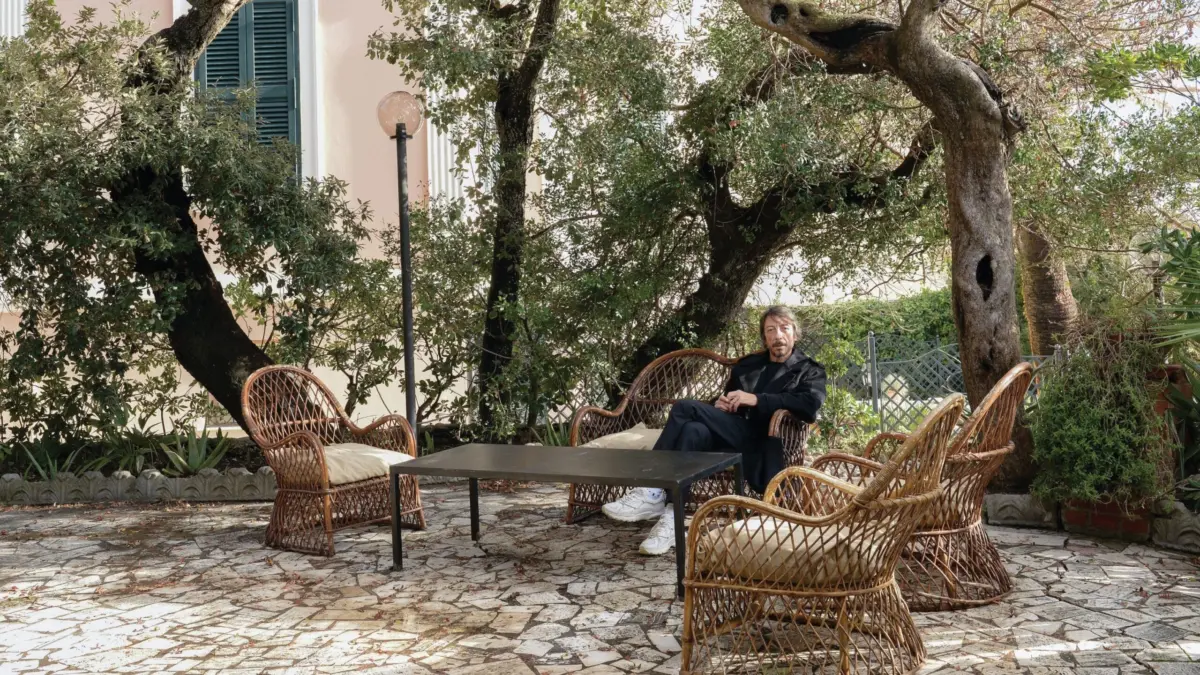
Pierpaolo Piccioli is stepping down as creative director of Balenciaga, parent company Kering announced on Thursday. The luxury fashion house stated that a new creative direction for Balenciaga will be announced shortly, marking another high-profile leadership transition within the broader Kering luxury portfolio as the group navigates a shifting retail environment and implements an ambitious turnaround plan.
“Pierpaolo is an exceptional couturier and creative talent for whom we have the greatest respect,” Kering CEO Luca de Meo said in a statement. “Our ambition is to build on Balenciaga’s avant-garde spirit, honor its remarkable heritage and continue to push creative boundaries, further establishing the house as a powerful and relevant voice.”
The sentiment was echoed by Balenciaga CEO Gianfranco Gianangeli, who expressed deep gratitude for the Italian designer’s impact during his brief time at the helm. “We are deeply grateful for Pierpaolo’s contribution to Balenciaga,” Gianangeli said. “Through his vision, he reaffirmed the couture origins of the house, bringing his considered approach to craftsmanship, construction and creativity. I would like to sincerely thank him for his dedication, generosity and collaboration.”

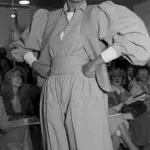
Piccioli’s appointment at Balenciaga in May 2025 came just a year after the celebrated Italian designer exited Valentino, where he had spent an illustrious 25-year career. His transition to Balenciaga became officially effective in July 2025, following the final haute couture presentation of his predecessor, Demna, which closed out an era defined by bold social commentary and streetwear-infused silhouettes.
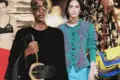
Piccioli’s debut collection for Balenciaga was presented during Paris Fashion Week last October, positioning itself as one of more than a dozen major designer debuts for the Spring 2026 season. Staged at the Kering headquarters inside the historic Laennec landmark, the star-studded show drew deeply upon founder Cristóbal Balenciaga’s rich archives, offering a more formal and structured approach compared to Demna’s tenure. Subtle homages to his predecessor were integrated into the collection, appearing in the form of oversized eyewear, a traditional bomber jacket ingeniously transformed into a leather bubble, and an enormous white shirt so voluminous it extended into a dramatic train. The collection received measured, thoughtful praise from industry critics.
However, the reception to his sophomore ready-to-wear show in March proved to be more mixed as the designer attempted to balance divergent creative legacies. “Piccioli’s significant talents have always included the ability to spread joy and delight through his exuberant color sense and love of women’s intellect. It didn’t show up in the dark this season, but he should know the fashion world still craves to see it,” Vogue Runway critic Sarah Mower wrote, while noting that his mastery of radiant color had previously shone brightly during his debut couture show for the house in July.
In her review of his Spring/Summer 2027 ready-to-wear show in October, Mower further contextualized the creative challenges of the role. “He’s needed to figure out where he stands between the monumental Cristóbal couture legacy and the monumental Demna social satirist street-style legacy, and to do so in real time. That’s no easy task for anyone, no matter how experienced they may be,” she wrote, adding that there were still many distinct moments where Piccioli successfully asserted his own unique identity, particularly within eveningwear.

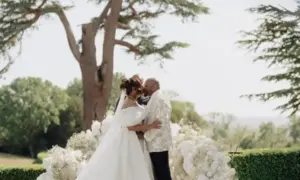
Celebrities quickly embraced the couture flourishes of his designs on international red carpets. The red-carpet momentum began with a surprise appearance by Meghan Markle in a custom ivory ensemble at his debut show, followed by high-profile moments such as Ariana Grande in a striking pink custom gown, Rosalía in a low-rise maxi skirt, and Demi Moore wearing a memorable look for the Cannes Film Festival closing ceremony.
Despite critical engagement and red-carpet visibility, parent company Kering does not publicly break out financial sales figures for individual fashion houses, with the exception of its largest brand, Gucci. However, according to estimates compiled by Morgan Stanley, Balenciaga sales reached approximately €1.47 billion in 2025, dipping from €1.65 billion a year earlier. This followed a decade of significant, rapid growth under Demna, during which annual sales had climbed from €360 million in 2015.
Financial results throughout 2026 reflected a complex recovery path for the brand. In the first quarter, Kering reported that Balenciaga had delivered another quarter of steady growth, supported by sustained consumer demand for leather goods. However, the trajectory shifted in the second quarter, when the group noted that the brand faced a more challenging retail environment. The third quarter proved similarly demanding, according to Kering CFO Armelle Poulou.
“Balenciaga is seeing very good results on the leather goods, with the City and the Rodeo, and we just launched a new bag, Hourglass Avenue, that has a very good start,” Poulou explained regarding the brand’s performance. “And at the same time, it’s suffering on ready-to-wear and shoes, where we need to focus on introducing new lines and new products.” When asked earlier by reporters to confirm whether Piccioli would remain at the creative helm of the house, Poulou had declined to comment on ongoing market rumors.

Piccioli had originally taken on the creative role just two months before Luca de Meo assumed the position of Kering CEO and established a sweeping new strategic roadmap for the luxury group, which included a targeted revitalization strategy for Balenciaga. During Kering’s Capital Markets Day in April 2026, de Meo emphasized the brand’s unique market position. “Balenciaga is one of the brands that better understands the vibes of the new generation,” he said, outlining corporate goals to double women’s ready-to-wear sales, further accelerate the leather goods category, and double business operations in the Americas by 2030.
Piccioli’s departure coincides with a broader period of creative restructuring across the Kering luxury portfolio. Major fashion houses Saint Laurent and Alexander McQueen currently remain without creative directors following the respective departures of Anthony Vaccarello and Seán McGirr.
Shortly after Kering published its official announcement—which did not include a personal statement from the departing designer—Piccioli took to Instagram to share his reflections. He posted a photograph of himself inside the historic Balenciaga couture salons on Avenue George V, alongside behind-the-scenes images from his Fall 2026 couture preparation, accompanied by an emotional letter dedicated to the art of couture and his atelier team.
“Over the years, my passion for couture has defined who I am, shaping my choices and the paths I have taken,” Piccioli wrote. “Thank you, then. For the work done, for the hands, for the courage, for the care; thank you to all those who have shared this perspective and walked beside me along this path. Without maps and without compromise. You know who you are. And, despite everything, keep shining. Always. Love, Pp.”