





Pre-Roman Diamonds
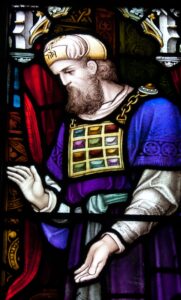
The history of the diamond is deeply shrouded in mystery, beginning long before accurate records were kept and punctuated by centuries of linguistic confusion. For generations, readers of sacred texts have encountered references that appear to describe diamonds in antiquity. One of the most famous examples appears in the Book of Exodus (28:15–28:18), detailing the construction of a sacred breastpiece of judgment set with four rows of precious stones, including a second row featuring an emerald, a sapphire, and what English translations typically render as a diamond.
However, gemological historians emphasize that these references are almost universally the result of mistranslations. The English word "diamond" in these contexts typically stems from the Hebrew yahalom—derived from halam, meaning "to beat"—and the Greek adamas, meaning "indomitable" or "invincible." While these ancient terms unquestionably referred to exceptionally hard minerals, assuming they specifically designated the modern diamond is a retrospective projection. Similarly, classical Greek literature features references by writers like Plato to adamas, yet modern scholars find zero proof that the Greeks had access to true diamonds. The term was likely used broadly to describe exceptionally durable materials such as early forms of non-noble metals, gold, or corundum.
Early gemological historians lacked access to translated Sanskrit texts, which obscures how early India understood and utilized the gem. While when diamonds first entered human use remains unknown, where they first appeared is historically certain: ancient India.
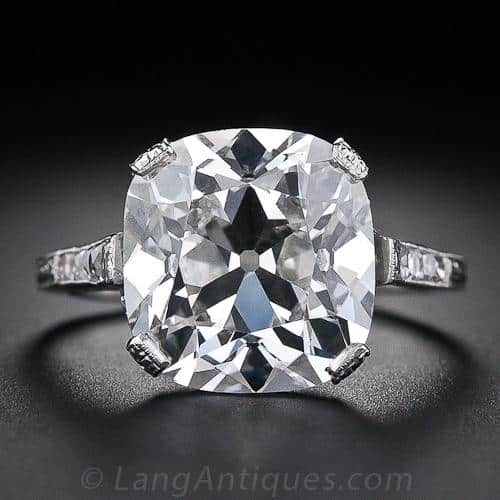
An ancient Indian treatise titled the Arthasastra, dating back to the 4th century BCE, provides the earliest definitive insight into the commercial use of diamonds. By this era, diamonds were already known, actively traded, and taxed in India. The text even mentions specialized diamond experts and outlines a formal classification system, indicating a level of familiarity that suggests diamonds had been utilized for a considerable period prior to the writing of the text.
Roman Diamonds
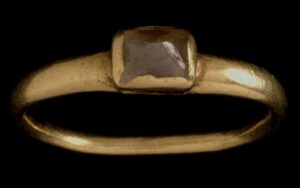
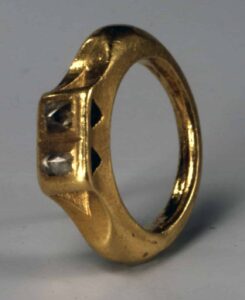
As trade networks expanded, diamonds eventually became known to and prized by the Romans, who favored them primarily as ring stones. Several surviving Roman rings featuring uncut diamond crystals now reside in the collections of the British Museum. The Roman scholar Pliny the Elder wrote extensively about diamonds in his Naturalis Historia, describing them as the most valuable substance on Earth, surpassing all other human possessions.
Interestingly, Pliny did not mention any fashioning or cutting of the stones. Instead, he marveled at their incredible hardness, noting how they resisted blows on an anvil to the point of splitting the iron anvil itself. Without explicitly recognizing it, Pliny also documented the diamond’s perfect cleavage, noting how the rare fragments resulting from accidental breakage shattered into micro-particles so fine that engravers enclosed them in iron to easily cut other hard substances.
Despite these accurate observations, modern researchers like Herbert Tillander note that Pliny likely confused other minerals with diamonds. Furthermore, Indian suppliers at the time almost certainly kept the highest-quality crystals for their native markets, meaning the Romans rarely, if ever, had access to pristine stones. Throughout antiquity, diamonds were widely believed to possess divine protective powers against mishaps. For a long time, a strong cultural taboo persisted dictating that the divine crystal would lose its mystical potency if altered from its natural state. Consequently, early practices were limited to removing extraneous mineral matter from freshly mined crystals rather than intentional cutting.
The Introduction of Diamond Cutting
Following the decline of the Roman Empire, diamonds temporarily disappeared from European jewelry altogether. India remained the sole global source of diamonds until the 18th century, but the disruption of trade routes with the West—coupled with the rise of Christianity, which frowned upon the superstitious attributes historically attached to the gems—severely dampened European demand.
Conversely, the gem retained its popularity across the Indian and Islamic worlds, leaving behind a wealth of historical documentation. The Ratnapariska by Buddha Bhatta, an Indian text dating back at least to the 6th century CE, advises that flawed diamonds should not be worn as gems but instead repurposed for polishing other stones. Because full crystals cannot effectively polish other gemstones, this reference points directly to the early practice of pulverizing low-quality diamonds to create diamond powder.
By the 10th century, Islamic scholars such as Al-Biruni documented similar practices, noting that jewelers ground down diamonds to utilize the dust for polishing. Intriguingly, Al-Biruni also noted that a stone whose crystal faces could be polished was dismissed as a non-diamond, indicating that polishing diamonds with diamond dust had not yet been invented in the Islamic world during the 10th century.
The earliest known cut diamonds in existence emerged centuries later. Notable jewelry historian Jack Ogden reported examining medieval Islamic jewelry dating back to the 13th century featuring simple table-cut diamonds. This discovery aligns with contemporary Indian texts like the Agastimata, written shortly after the 13th century, which explicitly states that diamonds cannot be cut by metals or other gems and can only be polished by other diamonds.
Europe
European diamond cutting likely originated in Venice shortly after 1330, following the re-establishment of trade routes to the East by Venetian merchants. While it remains unclear whether cutting techniques were directly imported from Islamic merchants—who already understood cleaving and the production of diamond dust—the growing European demand for perfectly shaped stones eventually spurred domestic innovation.
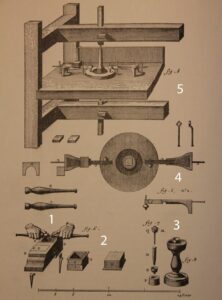
Technical limitations dictated early European efforts, which initially focused on the superficial polishing of natural rough. However, the introduction of continuous rotary motion in craft tools during the 15th century revolutionized the trade. Cutters could now grind facets into diamonds with greater precision, unlocking new creative possibilities and a broader variety of cuts.
Transition
The geopolitical and economic shifts of the late 15th century redirected the center of European trade from the Mediterranean to the North Sea, allowing cities like Paris, Bruges, and Antwerp to rise as major polishing centers. Because these cutting communities operated outside traditional guild systems, Jewish artisans fleeing the religious extremism and Inquisition of Spain, Portugal, and France were able to enter the trade and help advance diamond-cutting techniques.
By the 16th century, the traditional reverence for the natural crystal shape had largely faded, giving way to genuine faceting. Court documents and historical treatises from the era—most notably Benvenuto Cellini’s 1568 work on goldsmithing and sculpture—provide extraordinarily detailed accounts of how artisans performed bruting, faceting, and polishing. Cellini described how cutters rubbed two diamonds together to achieve desired shapes while collecting the resulting diamond dust to polish the stones against high-tempered steel wheels.
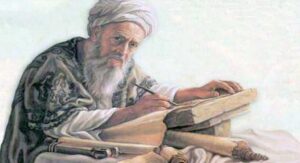
These developments led directly to the emergence of early standardized cuts, including the Rose cut and enhanced table and point cuts, alongside elongated rectangular stones known as hogbacks, which served as forerunners to the modern baguette cut.
Grinding
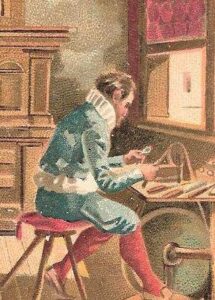
Understanding the evolution of diamond cutting requires examining the unique physical properties of the stone. Beyond its supreme hardness—meaning it can only be cut by another diamond—diamonds possess "directional hardness," meaning they resist scratching more effectively in certain directions than others. For instance, the sides of an octahedral crystal plane are harder than dodecahedral planes.
Furthermore, gemological hardness must be distinguished from toughness, which governs a stone’s resistance to breakage. Because diamond dust particles strike a stone from random orientations during the polishing process, cutters must carefully orient facets a few degrees away from rigid crystallographic planes, such as octahedral faces, which are virtually impossible to polish directly.
Cleaving
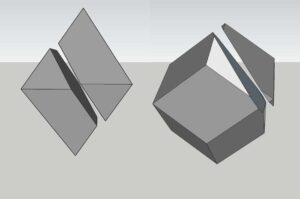
The second major property influencing diamond processing is cleavage. Although diamonds score the highest on the hardness scale, their toughness is compromised by perfect cleavage planes, allowing smooth fractures to occur when targeted force is applied in specific directions.
While the ancient practice of breaking diamonds into tiny fragments for engraving is well-documented, the intentional use of cleaving to shape gems appears to be a post-medieval innovation. By the 17th century, observers like Jean-Baptiste Tavernier noted that Indian miners possessed exceptional skill in cleaving flawed stones. The thin, naturally faceted slivers knocked off crystal apexes formed the basis of the highly popular Rose cut, which remained fashionable well into the 20th century.
Sawing
The final foundational technique added to the cutter’s repertoire was diamond sawing. Described in 1647 by Johannes de Laet, the method involved running a thin wire dressed with a mixture of diamond powder and oil back and forth across the stone. Although extremely labor-intensive, this technique persisted into the 19th century, complementing the established methods of cleaving, grinding, and polishing.
Indian Diamond Cutting
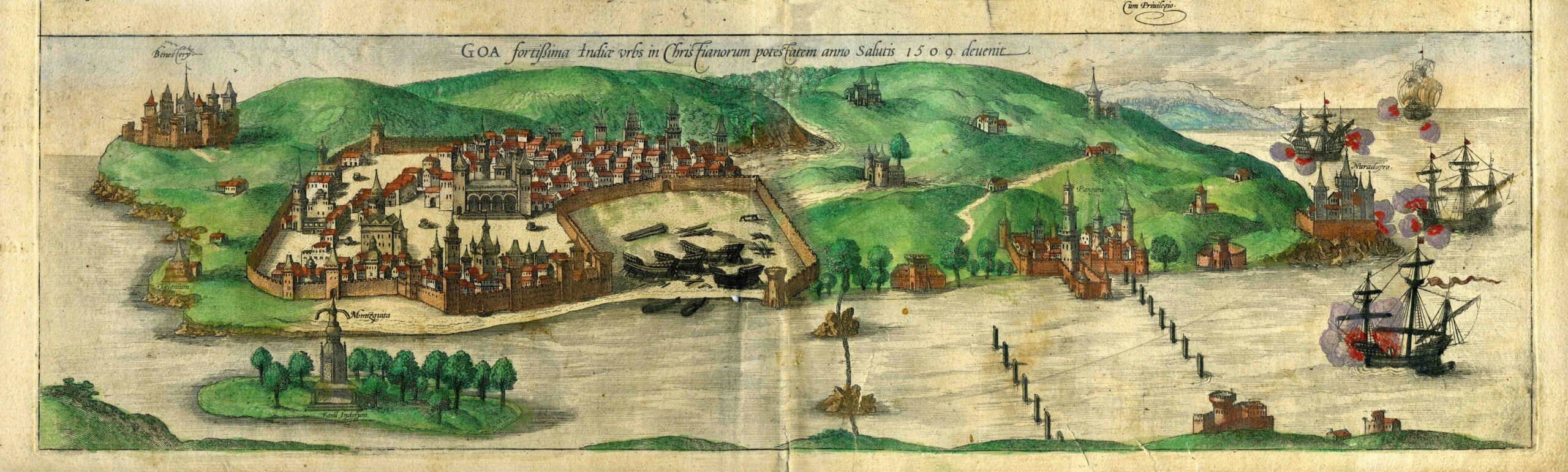
Travel accounts written by Jean-Baptiste Tavernier in the 17th century offer invaluable insight into traditional Indian diamond fashioning. Tavernier described how Indian mills operated with teams of workers turning large wheels, utilizing a constant application of oil and diamond powder administered with wooden spoons.
Although Indian cutters lacked the perfectly smooth steel wheels used in Europe, they demonstrated remarkable skill, often tackling stones with internal structural knots that European cutters routinely refused to work on. The distinctive aesthetic of these Indian-worked gems from the 16th through the 18th centuries is broadly categorized as the Mughal Cut, referring to origin rather than a specific geometric facet arrangement.
Baroque Roses and Brilliants
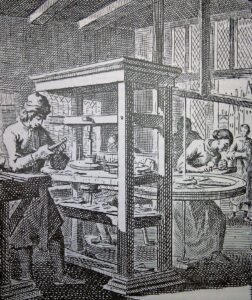
During the late 17th century, the candle-lit social gatherings of the Baroque era demanded stones with greater sparkle, leading to the birth of the early brilliant cut. While these early brilliants lacked the strict symmetry of modern stones, they relied on pavilion-based designs featuring triangular and diamond-shaped facets on both the crown and pavilion. Historical examples like the Wittelsbach and the Grand Sancy showcase these transitional designs, though table, point, and rose cuts continued to dominate the market.
Enter Brazil
By the early 18th century, Indian diamond mines began to face exhaustion. Salvation arrived in 1725 with the discovery of alluvial diamond deposits in the Diamantina region of Brazil. By 1730, steady production was underway, flooding the global market and causing the price of diamond rough to drop to roughly 30 percent of its previous value.
This dramatic increase in availability transformed diamonds from exclusive treasures reserved for European nobility into luxury items accessible to a much broader public. The expanding market fueled growth across the cutting industry, allowing the brilliant cut to steadily eclipse older historical styles throughout the 18th and 19th centuries.
Eureka
The rise of a prosperous middle class across Europe and North America during the 19th century drove demand for diamond jewelry to unprecedented heights. As Brazilian production tapered off toward the middle of the century, prices climbed again, placing immense pressure on cutting centers in London, Antwerp, and Amsterdam.
The crisis eased dramatically with the discovery of the Eureka diamond in South Africa between 1866 and 1867. This monumental find revitalized the European cutting industry and signaled the dawn of a new era of large-scale diamond production.
Modernization
The turn of the 20th century transformed the ancient craft of diamond cutting into a mechanized modern industry. The invention of the steam-driven bruting machine by Henry D. Morse and Charles M. Field in the 1870s—followed by electric bruting machines in 1891 and motorized diamond saws in 1900—enabled unprecedented precision and efficiency.
These technological leaps allowed the round brilliant to evolve into the standardized "ideal cut," while specialized designs like the Asscher cut (1902), the baguette cut (reintroduced in 1912), and later the princess cut (1960s) catered to diverse aesthetic preferences.
Although historical centers like Antwerp and Amsterdam suffered devastating losses to their Jewish cutting communities during the Holocaust, the global industry adapted. New hubs emerged in Israel and India, ensuring the trade’s continued evolution. In modern times, the ancient art of the cutter has been further augmented by virtual 3D modeling and high-precision laser sawing, ensuring maximum efficiency and yield from every stone recovered from the earth.