




In recent years, the "open call" has become an almost unavoidable mechanism within the contemporary jewelry sector. Exhibitions, international competitions, prestigious residencies, and bustling festival weeks increasingly rely on this format as a democratic way to discover fresh artistic voices and generate broad visibility. Yet, beneath the surface of this seemingly egalitarian practice, critical voices are beginning to emerge from artists, curators, and cultural organizers alike. Why is this wave of skepticism rising now? Behind the rhetoric of radical openness often lies a taxing administrative structure in which creators bear an escalating share of the financial risk, emotional investment, and logistical labor.
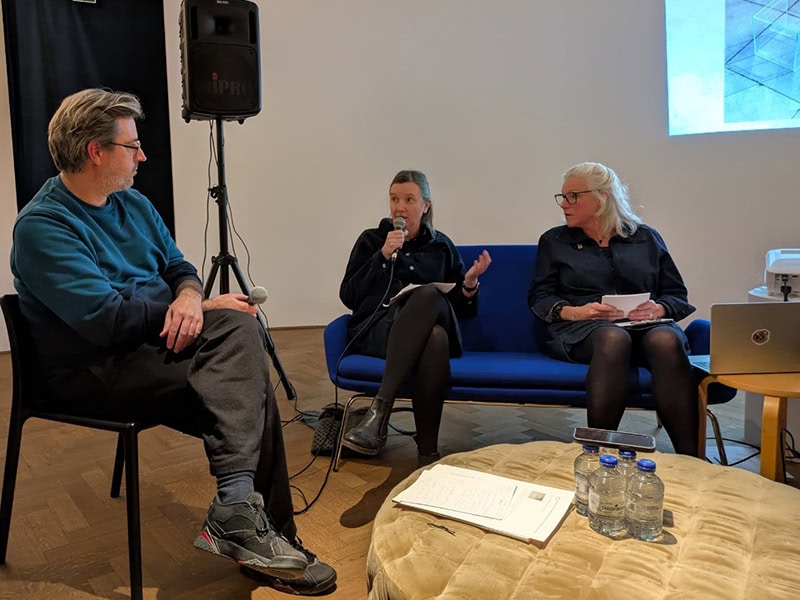
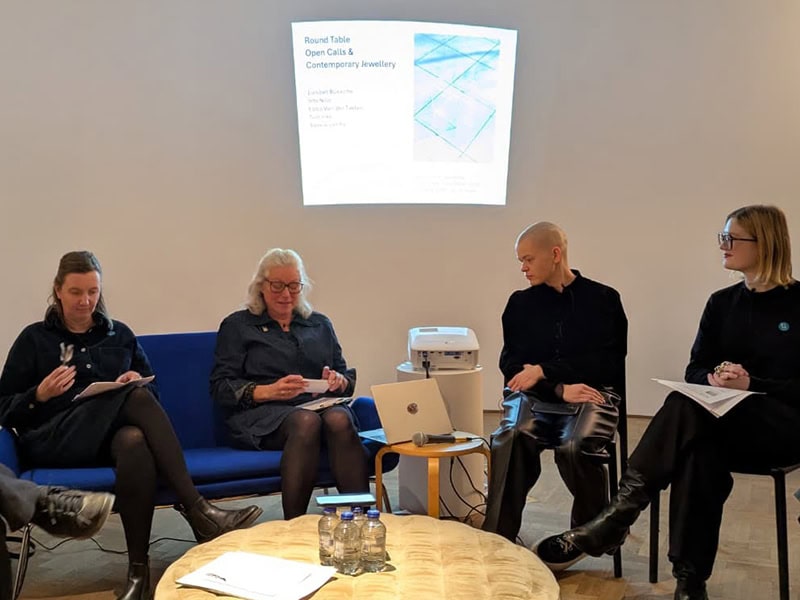
This critical examination of the open call traces its roots back to a roundtable discussion titled Open Calls and Contemporary Jewelry, held on November 22, 2025, at the DIVA museum in Antwerp during the Obsessed! festival. Moderated by art historian Saskia van Es, the panel convened artists Into Niilo and Liesbet Bussche alongside freelance curator Ebba Van der Taelen and Tom Iriks, a curator at DIVA. From the outset, the dialogue revealed a striking disconnect: event organizers and artist applicants frequently view the open-call format through fundamentally different lenses.

Rejection as Part of Professional Life
The roundtable conversation commenced with Saskia van Es presenting slides of Open Calls, a poignant installation by artist Ana Escobar Saavedra. The artwork draws direct inspiration from Rachel Mason’s widely discussed essay Artist as Applicant, which details a shifting cultural paradigm where the day-to-day labor of a working artist slowly migrates from studio production to the endless submission of applications.
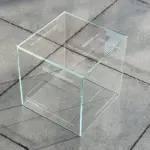
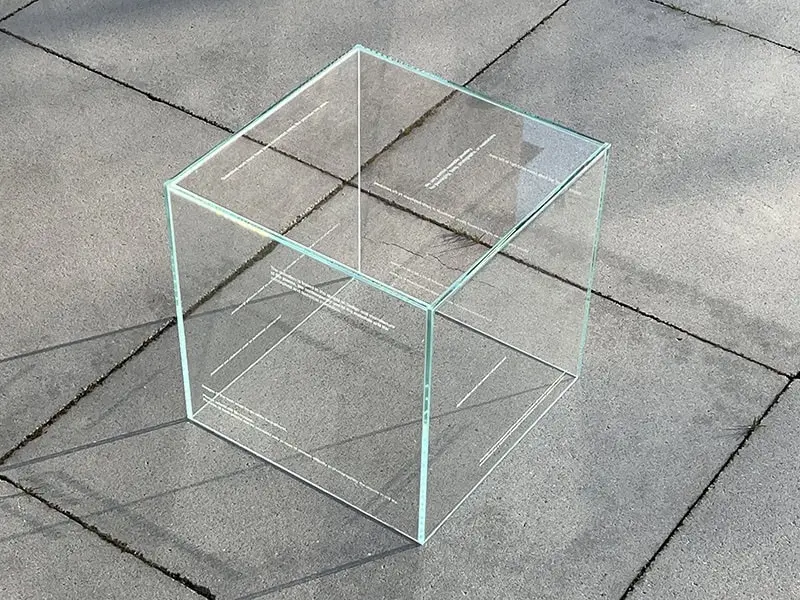
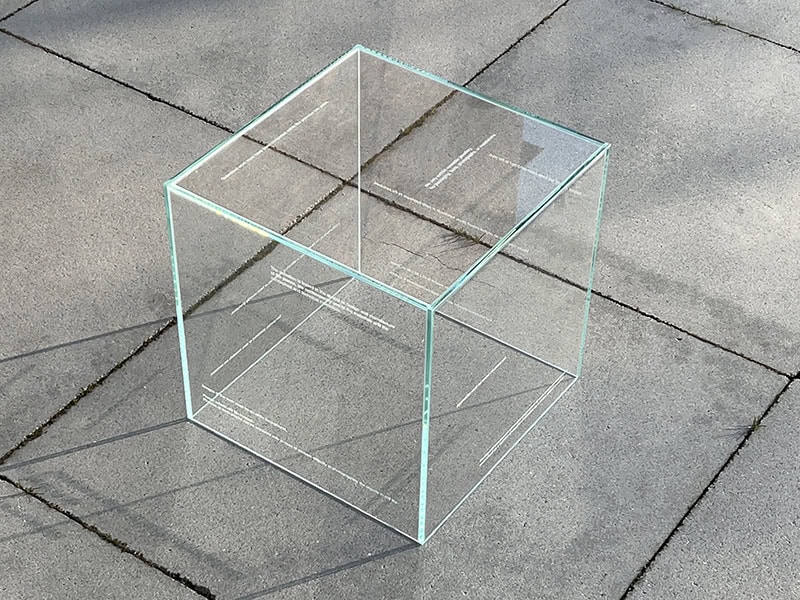
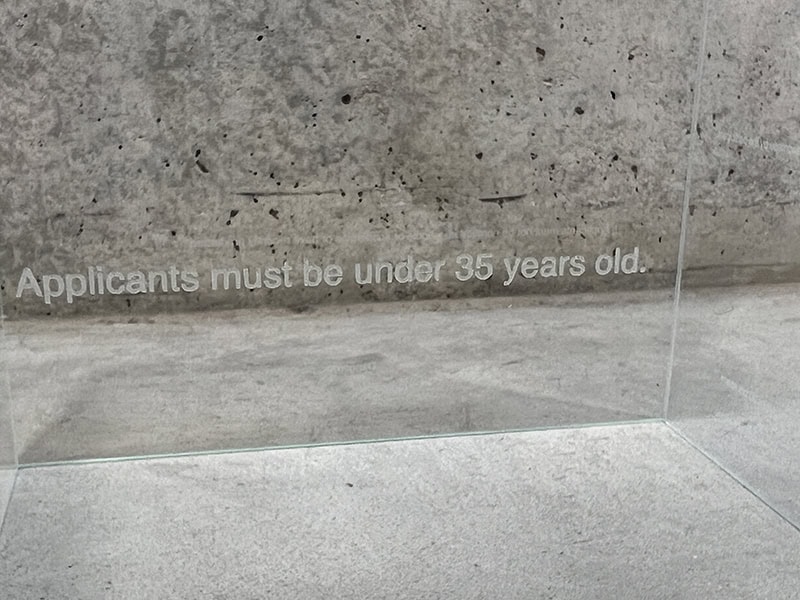
Escobar’s installation centers on a glass cube meticulously engraved with the ubiquitous, often restrictive phrases extracted directly from open-call briefs. Spectators encounter directives such as "Work must fit in 30 x 30 x 30 centimetres," "We only exhibit wearable jewelry," and the perennial exclusionary staple, "Applicants must be under 35." The sculpture serves as an airtight metaphor for the system it critiques, trapping the restrictive vocabulary of the art world inside glass walls with barely enough room to breathe.
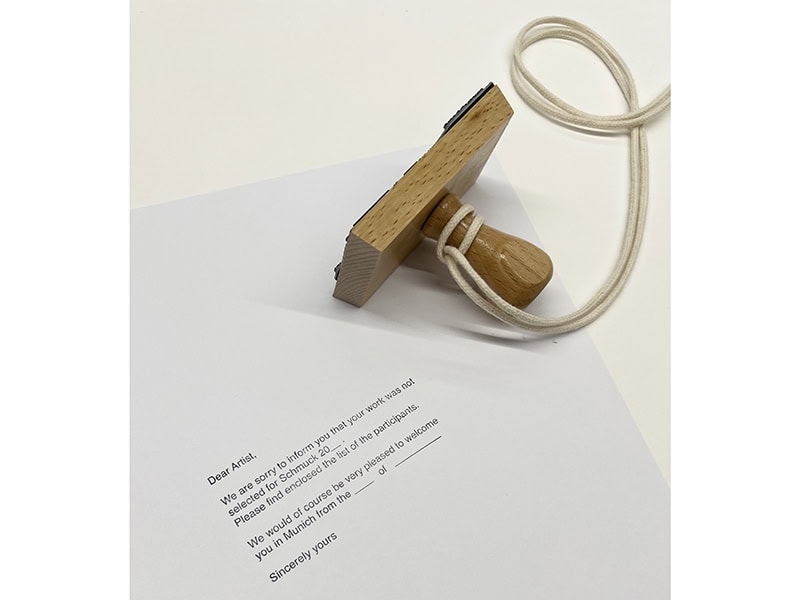
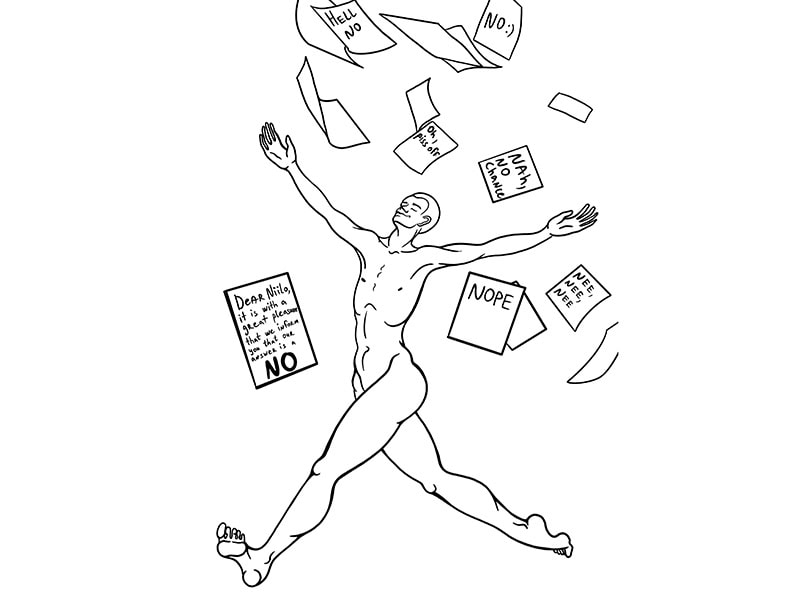
The second component of Escobar’s project, titled Maybe Next March, reproduces the standardized, impersonal rejection emails sent out year after year by the organizers of Schmuck in Munich. Standard templates reading "Dear Artist, we are sorry to inform you that your work was not selected…" are paired with a polite, automatic invitation to travel to Munich anyway. Through this repetition, rejection transforms into a routine bureaucratic gesture—a polite administrative form letter that produces emotional distance while feigning professional proximity.
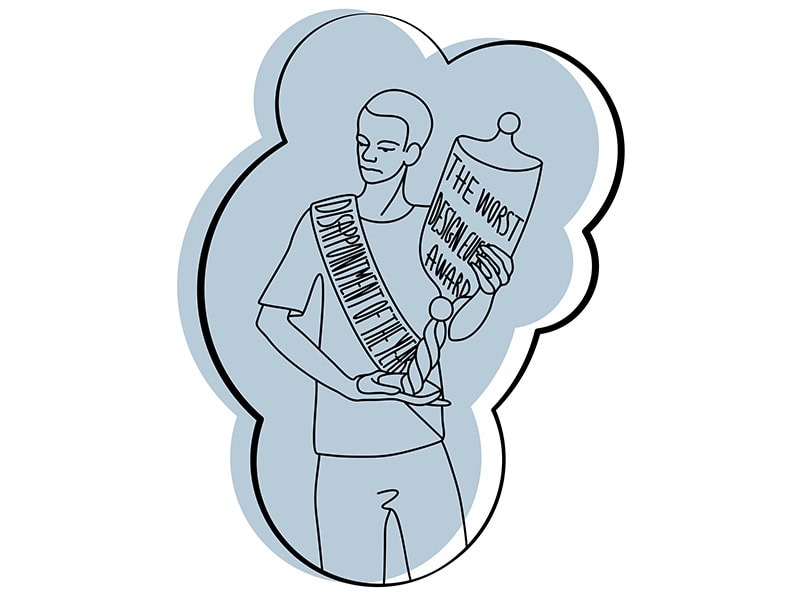
A bitter laugh rippled through the audience as these familiar texts flashed across the screen. Most contemporary artists have reluctantly internalized rejection as an inescapable aspect of professional life. However, the true arbitrariness of these selection metrics becomes painfully apparent when examining age limits. While often defended by institutions as a well-intentioned mechanism to support "emerging artists," these caps operate on the flawed assumption that youth and emergence are synonymous. In reality, many creators begin their artistic journeys later in life, transition from entirely different careers, or gain access to higher education and vital resources much later. Consequently, a framework intended to foster talent frequently functions as a rigid tool of exclusion.
The Many Faces of the Open Call
Open calls reveal a great deal about how the contemporary jewelry community understands, values, and organizes its collective ecosystem. During the Antwerp panel, the term was stretched to encompass a dizzying array of definitions, functioning simultaneously as a democratic opportunity, a practical administrative selection tool, a curatorial method, a nascent business model, and a networking platform.
From his vantage point as a curator and public mediator at DIVA, Tom Iriks views the open call primarily as a pragmatic instrument. Because active scouting demands extensive institutional time and resources, open calls serve as a vital pipeline for bringing unfamiliar work and diverse makers to light. At the same time, Iriks expresses a strong desire to rescue the format from its worst systemic abuses, emphasizing that the open call remains a valuable tool when executed with care, fairness, and ethical consideration.
The core issue does not necessarily stem from the existence of open calls per se, but rather from how they are deployed today. Too often, institutions utilize the format as a default, lazy patch for structural shortages of time, institutional resources, and genuine curatorial imagination.
For panelist Ebba Van der Taelen, founder of the platform Unpolished, open calls played a distinct role in championing emerging Belgian jewelry artists. Seeking to carve out space for marginalized and unfamiliar voices, an open call felt like the most natural starting point for an exhibition centered on identity and transformation. The resulting selection operated not merely as a group exhibition, but as the foundational curatorial statement of the platform itself.
Even in these grassroots contexts, the utopian ideal of absolute openness quickly collided with inescapable practical limitations. Launched just prior to the summer holiday season—a period when academic institutions and studios sit dormant—Van der Taelen’s call relied heavily on Instagram advertisements and digital circulation. Long before a jury ever convened to evaluate submissions, digital algorithms and arbitrary seasonal calendars were actively dictating the pool of applicants. Artists first had to encounter the notice online, possess the specific prerequisites, and muster the time and financial resources necessary to compile a competitive portfolio during the height of summer. Thus, platforms striving for radical accessibility remain hopelessly tethered to the very digital infrastructures that govern modern visibility.
Open Call Season and the Artist’s Burden
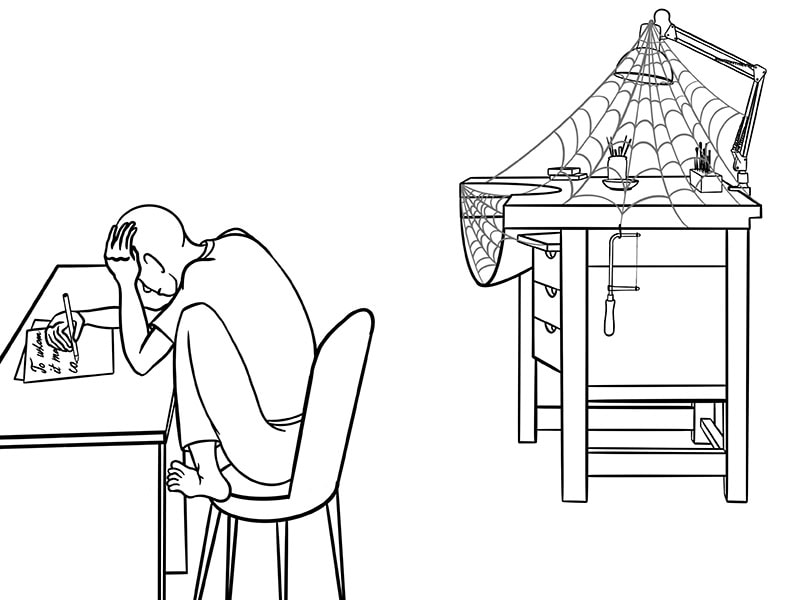
While organizers view open calls through the lens of efficiency and discovery, the perspective from the applicant pool is starkly different. Artist Into Niilo characterized the application cycle as an exhausting marathon concentrated heavily around the months of October and November—jokingly dubbed "open call season." Niilo also likened the exhausting process to a form of high-stakes gambling, evoking the vivid mental image of artists casting messages in bottles out to sea, praying against all odds that an institution might eventually respond. Yet, as Niilo noted, this metaphor underscores an exhausting, everyday reality for contemporary makers.
Beyond the mental toll, the financial burden is substantial. Artists routinely shoulder non-refundable application fees, steep international transport costs, and mandatory insurance premiums. Furthermore, creators whose work is accepted are frequently expected to cover their own travel and lodging expenses to attend openings and symposiums. These expenses stack on top of countless hours of unpaid labor spent drafting artist statements, editing precise photographs, formatting portfolios, and filling out repetitive digital forms.
Ultimately, this dynamic shifts a disproportionate amount of financial and emotional risk away from the exhibiting institutions and onto the individual creator. For museums and galleries, open calls provide an inexpensive, streamlined method of gathering vast quantities of submissions. For artists, however, participation transforms into a speculative financial investment devoid of any baseline guarantee of visibility, critical dialogue, sales, or financial compensation.

Curatorial Poverty and Narrative Theft
Liesbet Bussche voiced deep reservations regarding her own participation in open calls, directing her critique not only at the application mechanics themselves, but also at the rich curatorial traditions they have aggressively displaced. Bussche lamented the steady decline of thoughtfully curated, thematic group exhibitions built on rigorous intellectual criteria, substantive dialogue, and long-term relationships between curators and artists.
According to Bussche, open calls frequently culminate in "one-piece shows"—disjointed exhibitions where each accepted artist is restricted to displaying a single object. In such compressed environments, complex bodies of work can never be presented as originally intended, leaving virtually no room for contextual nuance or overarching narrative. Jewelry is systematically reduced to an isolated artifact forced to represent an entire artistic practice while fighting for visual scraps of attention among dozens of competing entries.
When objects are divorced from the ideas, research, and bodies that birthed them, jewelry suffers a form of narrative theft. Because contemporary jewelry is fundamentally tied to intimate human stories, presenting objects stripped of their context turns the open call into a mere distribution mechanism rather than a meaningful curatorial proposition. The resulting exhibition reads less like an articulated argument and more like an accidental accumulation of objects. Bussche contends that art schools must actively train students to critically evaluate these systems, teaching them to recognize when open calls commodify art into flat images circulating within an unforgiving economy of digital visibility.
Transparency, Responsibility, and the Way Forward
A revealing moment during the roundtable occurred when the panel compared open calls issued by two respected entities: a themed exhibition organized by the WearHouse in Amsterdam and the Italian Montebello Award. The comparison underscored a broader systemic confusion: the catch-all label of "open call" is currently applied to vastly different frameworks—including group shows, competitive prizes, artistic residencies, commercial festivals, and digital networking platforms—each bearing distinct economic realities and power dynamics.
Throughout the discussion, the conversation consistently gravitated back to the question of institutional responsibility. What does genuine "openness" signify when submission criteria remain vague, background context is absent, and artists are left to subsidize the physical realization of an institution’s exhibition? Openness unaccompanied by structural clarity does not foster accessibility; it breeds confusion and fatigue.
Concluding the session, the participants advocated for a much-needed cultural pivot: moving away from "openness as a marketing strategy" and toward "openness as a fundamental responsibility." This calls for an art world where radical transparency, contextual framing, fair artist fees, and shared care replace administrative indifference. If contemporary jewelry is to preserve its vital relationship to the body, touch, intimacy, and the social resonance of objects, the cultural sector must consciously cultivate infrastructures that sustainably support those values.
Ana Escobar’s engraved glass cube stands as a lasting symbol of this paradox—a transparent structure that simultaneously encloses and confines. As the contemporary jewelry field moves forward, the most pressing question facing institutions and creators alike is no longer how to make the glass cage more visually appealing, but whether artists can still find enough air to breathe inside it.