




oring the Legacies of Engineering Giants: Remembering Bishnu Saroop Atal and Fellow Pioneers
The engineering community is mourning the loss of several pioneering minds whose decades of research, innovation, and leadership laid the technical foundations of modern digital communications, space exploration, and consumer electronics. Among those recently lost is Bishnu Saroop Atal, a monumental figure in acoustics and signal processing whose groundbreaking voice-coding techniques made efficient cellular telephony possible worldwide. Alongside Atal, the engineering world has bid farewell to several other influential technologists, including space program veterans, power systems experts, and electronic packaging innovators, whose collective contributions shaped the technological landscape of the latter half of the 20th century.
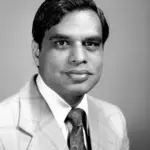
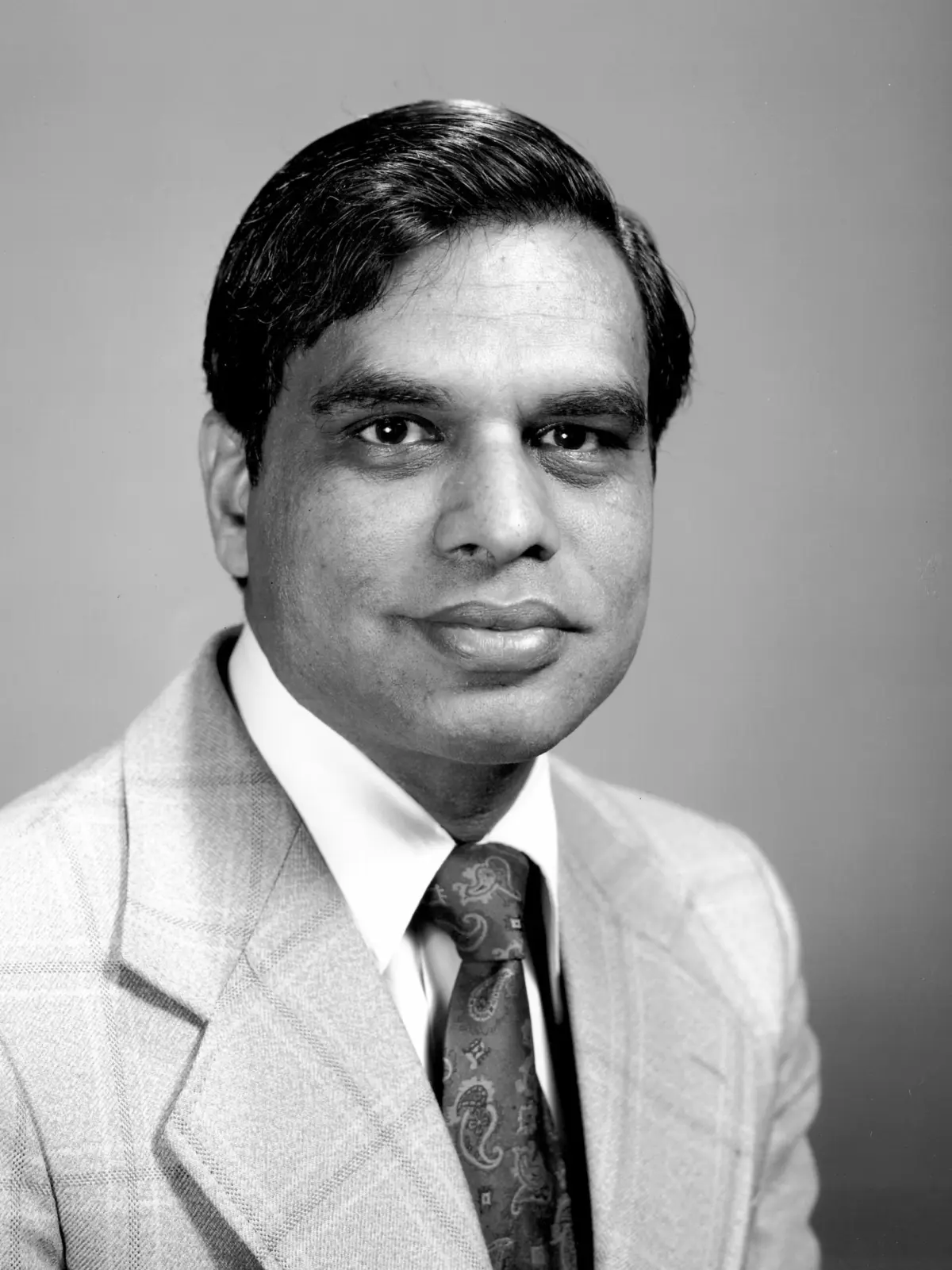
Speech Processing Pioneer Bishnu Saroop Atal Dies at 93
Bishnu Saroop Atal, an IEEE Life Fellow whose foundational work in acoustics and signal processing revolutionized how human speech is transmitted, processed, and compressed, passed away on 19 August at the age of 93.
Atal spent the core of his illustrious career as a preeminent researcher at Bell Labs in Murray Hill, New Jersey, and later contributed his expertise at AT&T’s Shannon Laboratory in Florham Park, New Jersey. His research fundamentally changed the trajectory of telecommunications, providing the underlying technologies that allowed cellular networks to transmit high-quality voice efficiently and at scale. In recognition of his monumental impact, he received the prestigious 2013 IEEE Jack S. Kilby Signal Processing Medal for what the organization cited as "fundamental and pioneering contributions to speech coding."
Born in India, Atal earned his bachelor’s degree in physics in 1952 from the University of Lucknow and subsequently secured a master’s degree in electrical engineering in 1955 from the Indian Institute of Science in Bengaluru. He immigrated to the United States and joined Bell Labs in 1961 as a communications researcher. His early investigations at the laboratory centered on speaker identification technology, setting the stage for broader breakthroughs in voice analysis.
During the 1960s, Atal helped develop linear predictive coding (LPC), a powerful and efficient mathematical method for analyzing and compressing speech signals. While maintaining his demanding full-time research schedule at Bell Labs, Atal pursued advanced academic studies, earning his Ph.D. in electrical engineering in 1968 from the Polytechnic Institute of Brooklyn—now known as New York University’s Tandon School of Engineering—in New York City. Over the ensuing decades, LPC became the most widely utilized method for encoding speech at low bit rates across the global telecommunications industry.
Building upon his early successes, Atal continued to develop increasingly sophisticated low-bit-rate speech-coding techniques. Among these was multipulse LPC, a technical advancement that significantly improved the naturalness and quality of compressed speech signals. In a particularly influential collaboration with his colleague Manfred R. Schroeder, Atal developed code-excited linear prediction (CELP). This advanced method enabled the production of remarkably high-quality speech at extremely low bit rates.
CELP quickly became a foundational technique in modern digital speech coding, allowing digital communications systems to carry clear human voices while utilizing substantially less bandwidth. The resulting surge in network efficiency vastly expanded cellular capacity, empowering wireless networks to handle significantly more simultaneous calls and paving the way for the mobile communication boom of the late 20th century.
Later in his professional journey, Atal stepped into administrative and scientific leadership roles, directing the acoustics and speech research departments at Bell Labs. His contributions were formally recognized by the company when he was named a Bell Labs Fellow in 1994. When AT&T Bell Laboratories split into separate corporate research entities in 1996, Atal continued his pioneering work at AT&T’s Florham Park headquarters, earning the title of AT&T Fellow the following year.
After retiring from corporate research in 2002, Atal transitioned into academia, accepting a position as an affiliate professor of electrical engineering at the University of Washington in Seattle. In this academic setting, he remained actively engaged in advanced research, exploring speech processing, speech recognition, and high-dimensional computing.
Atal’s extraordinary scientific achievements earned him election to some of the nation’s most prestigious scholarly bodies. He was inducted into the National Academy of Engineering in 1987 and the National Academy of Sciences in 1993. His accolades also included the 2018 International Speech Communication Association Medal for Scientific Achievement and a 2003 medal from the Franklin Institute, cementing his legacy as one of the most influential acoustic scientists of the modern era.
Remembering Darryl Palmer Jr., Space-Age Software Innovator and Dedicated IEEE Leader
The engineering community also mourns the loss of Darryl Palmer Jr., chair of the IEEE Central Illinois Section and a dedicated senior member who passed away on 30 August at the age of 55.
Palmer’s extensive career bridged aerospace research, industrial automation, and software engineering. At age 16 in 1986, he completed a formative summer internship at NASA’s Glenn Research Center in Cleveland, Ohio, where he assisted in developing FoilSim, an interactive educational software program designed to introduce foundational aerodynamic engineering concepts to pre-university students.
While studying computer science at Cleveland State University in 1996, Palmer joined the institution’s Allen-Bradley PLC lab as a research assistant. In this capacity, he designed hardware and software systems for the Glenn Research Center to collect and process complex thermal wave imaging data. Simultaneously, he applied his programming skills to the industrial sector, designing software for General Motors’ North American robotic and welding division.
Returning to NASA in 1999 for a second internship, Palmer helped develop EngineSim, another influential educational software tool that accurately models jet engine design and operational testing. For these valuable contributions to educational technology and aerospace data systems, NASA recognized him with a prestigious Space Act Award.
After earning his bachelor’s degree in computer science in 2000, Palmer worked as a software engineer at the Danfoss Drives manufacturing facility in Loves Park, Illinois. There, he focused on embedded control systems for variable-frequency drives and high-power industrial equipment, while also pioneering sensorless control technology utilized in beam pumps within the oil and gas sector.
Beyond his corporate engineering roles, Palmer demonstrated a deep entrepreneurial spirit. In 2014, alongside his wife, Alexandra "Sasha" Goodwin, he founded Janus Choice, an innovative health technology platform designed to match hospital patients with appropriate post-acute care facilities. He served as the startup’s chief executive officer until its closure in 2020.

In his later professional years, Palmer served as a lead software engineer at Adept Coalescence, a startup in Rockford, Illinois, developing front-end software for complex control systems, before taking on a role as a control systems team lead at Caterpillar in Peoria, Illinois, working on heavy construction and mining machinery. Throughout his busy professional life, Palmer remained deeply committed to the engineering profession through the IEEE, serving as chair of the Central Illinois Section, government relations chair of Region 4, a member of the IEEE Industrial Electronics Society, and an associate editor of IEEE Transactions on Industrial Informatics.
Henry Leopold Richter: Space Program Veteran and Communications Consultant
Henry Leopold Richter, a pioneering spacecraft engineer and telecommunications expert who played an instrumental role in the dawn of the American space program, died on 12 August at the age of 99. A Life Senior Member of the IEEE, Richter’s career spanned decades of groundbreaking work at NASA’s Jet Propulsion Laboratory (JPL) in Pasadena, California, followed by a distinguished career in public safety communications consulting.
Richter earned both his bachelor’s degree and his Ph.D. from the California Institute of Technology, completing his doctoral studies in 1956. In 1955, he joined JPL as an engineer and quickly rose to supervise its newly established circuit elements group. As the United States accelerated its space efforts, Richter was assigned to NASA’s Explorer program as project manager for satellite design. In this vital role, he served as the primary liaison between the organization’s satellite instrumentation group and its operations and data teams. Since its inception in 1958, the Explorer program has launched more than 90 scientific missions dedicated to exploring physics, geophysics, and astrophysics.
As NASA prepared for the historic launch of Explorer 1 in January 1958, Richter coordinated with the San Gabriel Valley Radio Club in Los Angeles to establish a network of tracking stations across the United States to monitor the satellite’s orbital progress. He subsequently became a JPL section chief, holding direct responsibility for the scientific instruments deployed on the ambitious lunar Ranger, Surveyor, and Mariner programs. Furthermore, he contributed significantly to the development of NASA’s Deep Space Network, the critical international radio antenna communications facility that supports interplanetary spacecraft missions.
After leaving NASA, Richter served as vice president and technical director at Xerox Electro-Optical Systems in Pasadena. By the mid-1970s, he transitioned to municipal public safety, joining the Los Angeles County Sheriff’s Department as a communications engineer to oversee its expanding microwave and mobile radio networks. For more than two decades afterward, he operated an independent telecommunications consulting practice, advising federal, state, and local government agencies, school districts, and universities on strategic technology planning, public safety radio systems, microwave links, CCTV networks, and paging infrastructure.
Richter documented his historic experiences in his 2015 book, America’s Leap Into Space: My Time at JPL and the First Explorer Satellites. In recognition of his enduring technical legacy, the Radio Club of America presented him with its Lifetime Achievement Award in 2019 for significant achievements that substantially advanced the art and science of wireless technology.
Raymond L. Giordano: Master of Integrated Circuit Design and Defense Electronics
Raymond L. Giordano, an accomplished electrical engineer whose career was defined by innovative integrated circuit design and defense electronics contributions at major firms including RCA, Intersil, and Harris, passed away on 19 July at the age of 91.
A 1956 graduate of the Newark College of Engineering—now known as the New Jersey Institute of Technology—with a bachelor’s degree in electrical engineering, Giordano immediately joined RCA in Moorestown, New Jersey. Within the company’s missile and surface radar division, he helped develop a sophisticated video formatter and taught internal engineering courses, eventually achieving the distinction of senior technical staff member.
Following his tenure at RCA, which was acquired by General Electric in 1986, Giordano developed advanced technologies for Intersil and Harris. His commercial design portfolio included custom circuitry for Eastman Kodak’s Cameo cameras as well as one of the company’s early laser printers. An inventive engineer, Giordano earned multiple patents for industrial and consumer electronic designs, including a smoke detector chip for Siemens, a speed control chip for Ford, an engine control system for Delco Remy, and a specialized control component for Chrysler. He balanced his intensive industrial work with continued education, earning a master’s degree in electrical engineering in 1964 from the University of Pennsylvania in Philadelphia.
Delano D. Wilson: Electric Power Systems Expert and Dedicated Community Advocate
Delano D. Wilson, an IEEE Life Fellow and former president of Power Technologies, died on 26 May at the age of 92. Wilson built a distinguished career dedicated to the advancement and reliability of electric power systems.
Before joining Power Technologies as a principal engineer in Schenectady, New York, in 1974, Wilson served as director of research and development at General Electric in the same city. Throughout his career, he focused heavily on utility systems analysis and specialized software development for electrical grids. An accomplished author and researcher, Wilson penned six books and authored 65 technical papers, while also holding two patents related to power system technology.
Outside of his demanding engineering career, Wilson maintained a profound commitment to civic engagement. He served on the governing boards of numerous hospitals, YMCA chapters, Rotary clubs, and local chambers of commerce. Following his retirement and return to his hometown of Great Falls, Montana, in 1995, he dedicated his time to volunteering as a court-appointed special advocate, representing the welfare of children navigating the foster care system.
Daniel I. Amey Jr.: Electronic Packaging Visionary
Daniel I. Amey Jr., an IEEE Life Fellow and preeminent electronic packaging engineer who contributed his expertise to major corporations including General Dynamics, Sperry Univac, and DuPont, passed away on 12 March at the age of 84.
Amey began his professional career in 1963 within the electronics division of General Dynamics, designing military electronic hardware, including analog and digital support equipment intended for rigorous aerospace applications. In 1967, he transitioned to Sperry Univac in Blue Bell, Pennsylvania, where he served from 1972 to 1981 as engineering manager of packaging techniques. In this capacity, he oversaw interconnection hardware for small and medium computer systems, concentrating on large-scale integration packages, hybrid circuits, connectors, and printed wiring board manufacturing processes.
Seeking new leadership challenges, Amey subsequently served as director of electronics technology at Thomas & Betts in Raritan, New Jersey, and later as a director at Elco, an electrical component manufacturer in Huntingdon, Pennsylvania, directing the design of connector and packaging hardware. In 1988, he joined E.I. du Pont de Nemours as director of its electronics and communications technology group in Research Triangle Park, North Carolina, where he advanced packaging technology, high-frequency materials characterization, and applications engineering before retiring as a research fellow.
Prolific in technical literature and innovation, Amey wrote or co-wrote more than 70 technical papers and secured over 14 patents. He also shared his extensive knowledge by developing professional educational courses on electronic packaging and printed wiring technology for McGraw-Hill and Cobblestone. His professional excellence was recognized widely, earning him the International Microelectronics Assembly and Packaging Society’s 2004 Wagnon Technical Achievement Award and the Electronic Industries Association’s 1984 Distinguished Engineering Contribution Award. Amey earned a bachelor’s degree in electrical engineering and a master’s degree in engineering science from Pennsylvania State University, followed by an MBA from Lehigh University in Bethlehem, Pennsylvania.