





The world of fine jewelry is defined not only by the breathtaking stones that adorn each piece, but also by the intricate engineering and meticulous craftsmanship hidden from plain view. Among the most revered techniques in the history of gem-setting is the à jour method, a sophisticated approach designed to maximize the optical performance of precious stones. Derived from the French phrase translating literally to "to the day," à jour refers to open-worked backgrounds meticulously created by sawing or piercing the metal mounting. This deliberate opening keeps the back of the gemstone entirely open to the light, allowing illumination to pass freely through the pavilion and pavilion facets.
By welcoming light from both the front and the back, this historic technique fundamentally transforms how a gemstone interacts with its environment. The result is a dramatic enhancement in the stone’s scintillation—the flashes of light sparkling across its surface—as well as a richer, more vibrant display of its natural color. Deprived of a heavy, reflective metal backing that can sometimes dull or darken a stone, gems set in this manner appear remarkably more lively and radiant.
The widespread adoption of à jour settings for gemstones set in fine jewelry marked a significant turning point in goldsmithing, gaining prominent popularity around 1800. Prior to this era, the prevailing practice across European and global jewelry workshops was to mount most gems in closed-back settings. These traditional closed-back mountings frequently utilized reflective foils placed behind the stones to artificially enhance their brilliance or alter their perceived color, a necessity given the candlelit and dimly lit environments in which jewelry was historically worn. As lighting technology evolved and the aesthetic appreciation for the true, natural optical properties of gemstones grew, artisans began to champion open-backed designs that relied on pure physics and exceptional metalwork rather than foil enhancements.
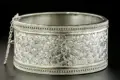
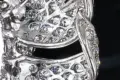
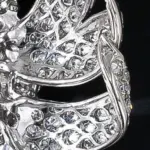
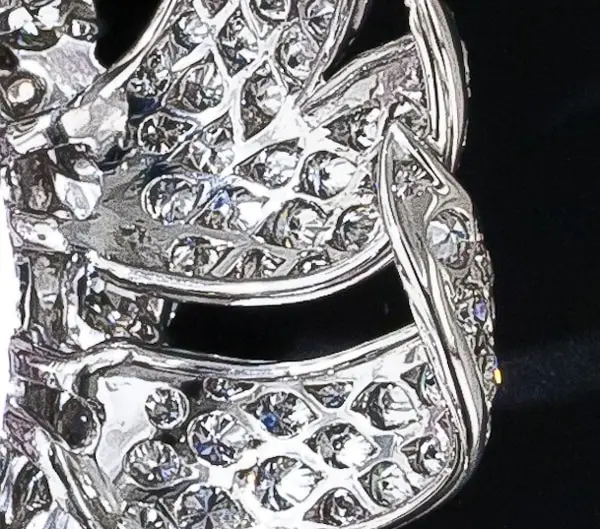
Achieving a masterclass in à jour work requires an extraordinary level of skill, patience, and precision from the metalsmith. Fine à jour work is typically accomplished through the careful use of a graver—a specialized handheld cutting tool used by lapidaries and jewelers to carve, refine, and shape metal—to meticulously carve and create well-formed, symmetrical openings on the reverse of a jewelry item. Because the back of the piece is frequently exposed to the wearer’s skin and visible under close inspection, the craftsmanship on the underside must match the aesthetic perfection of the front.
This dedication to hidden beauty reached a remarkable zenith during the Art Deco era of the early 20th century. Art Deco jewelry customarily features exceptional à jour work that makes the back of the piece almost as beautiful as the front. Master jewelers of this period viewed every square millimeter of a mounting as an opportunity for artistic expression, ensuring that geometric piercings, open-worked scrollwork, and lace-like metallic frameworks were executed with the same flawless precision as the diamond-paved bezels facing outward. This philosophy reflected a broader movement in decorative arts where functional elements were elevated to artistic heights, ensuring that a piece of jewelry was a complete, holistic work of art from every conceivable angle.
The foundational concept of the à jour open background also crosses over into the distinct discipline of enameling, giving rise to one of the most mesmerizing decorative techniques in the decorative arts. In enameling, the specialized term plique à jour is used to describe an item featuring an open metallic background that is subsequently filled with transparent enamel rather than a gemstone. Because the metal backing is entirely pierced away, the suspended enamel catches and filters the light like a miniature stained-glass window. This intricate process creates a myriad of brilliant colors and luminous effects when the finished piece is held up to the light, echoing the luminous philosophy of its gemstone-setting counterpart.
Throughout the evolution of fine jewelry history, techniques like à jour have consistently demonstrated that true luxury lies in the marriage of advanced optics and uncompromising hand craftsmanship. Whether utilized in the delicate filigree of a Georgian-era brooch, the striking geometric mastery of an Art Deco pendant, or the translucent mastery of enameled masterworks, the open-backed approach remains a timeless testament to the artisan’s pursuit of maximum brilliance. By allowing gemstones to truly breathe and interact with light "to the day," this enduring technique continues to define the gold standard of high jewelry creation.