





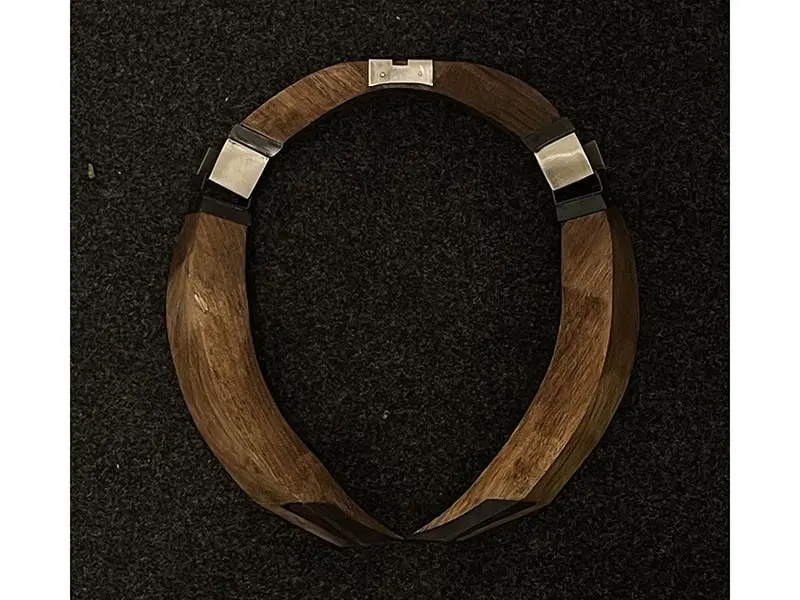
In the contemporary art world, jewelry is traditionally understood as an emblem of elegance, a marker of socioeconomic status, or a glittering symbol of personal wealth and power. However, emerging artist Marie-Caroline Locquet challenges these long-held assumptions entirely. Rather than fashioning pieces designed merely to flatter or adorn the body, Locquet approaches jewelry as a medium for conceptual provocation. Her creations take the form of physical restraints, mechanical armor, and defensive weapons—objects that she describes as unique wearing experiences engineered to explore our shared human fragility. By drawing subtle yet striking parallels between violence, sexual dominance, and vulnerability, Locquet’s provocative works evoke a complex psychological response, balancing precariously between social discomfort and raw erotic tension.
This uncompromising vision has recently earned international recognition. Locquet has been named a finalist for the prestigious Young Artist Award, an accolade supported by patrons Karen and Michael Rotenberg. Presented biennially, the award serves to acknowledge exceptional promise, boundary-pushing innovation, and distinct individuality in the work of an emerging jewelry artist aged 35 or younger. Through this vital prize, the Art Jewelry Forum (AJF) actively supports fresh, daring work designed to inspire and shape future developments within the field.
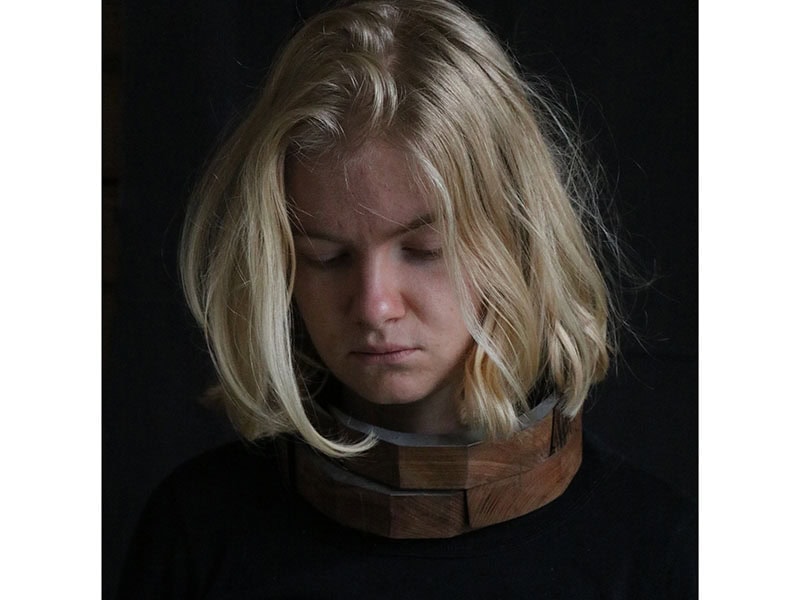
For Locquet, this recognition marks a significant milestone in a career defined by deliberate disruption. Growing up in the north of France, she developed an early awareness of how society utilizes adornment as a form of social camouflage and a public demonstration of status. This early sociological observation steered her toward jewelry not out of simple aesthetic affinity, but as an intellectual subject ripe for deep critical study.
Reflecting on her foundational years in art school, Locquet recalls encountering radical works that completely reshaped her understanding of the medium. Instead of prioritizing beauty or the display of wealth, pieces by pioneering artists like Bernhard Schobinger and Dorothea Prühl appeared strange, unsettling, and inherently dangerous. She cites works featuring unconventional design choices, such as Schobinger’s famous bottle-neck rings, as turning points that opened her eyes to the potential of jewelry as an object of disruption, critical reflection, and active provocation.

This initial wave of curiosity led her to confront a central question: Why create and wear objects that appear deeply disturbing at first glance? What does it truly mean to craft something deemed unwearable? Ultimately, this investigation into unwearability became the foundational core of her artistic research.
Being selected as a finalist for the Young Artist Award validates this uncompromising trajectory. For Locquet, the honor provides a profound vote of confidence, reinforcing her dedication to pursuing a radical path that continuously challenges not only herself, but also the wearer and the viewer.
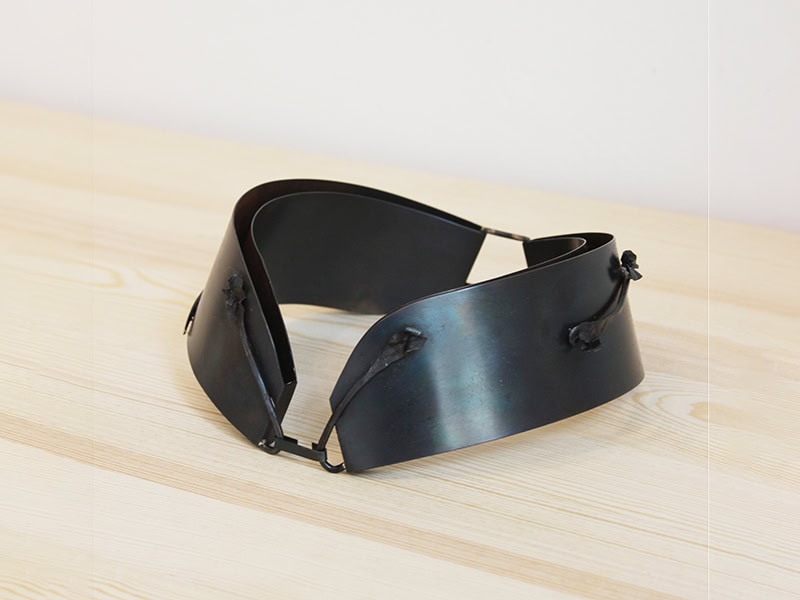
The works that secured her finalist position encapsulate these themes of tension, defense, and confinement. Rather than offering comfort or seduction, her neckpieces, harnesses, and armor confront the public space with a potent disruptive energy. Pushing traditional materials to their absolute physical limits, her pieces strip away artifice to reveal an underlying raw nature. Whether functioning as defensive weapons or strict restraint devices, her creations maintain an uncomfortable, electric tension between the social anxiety of restriction and the compelling temptation of physical embrace.
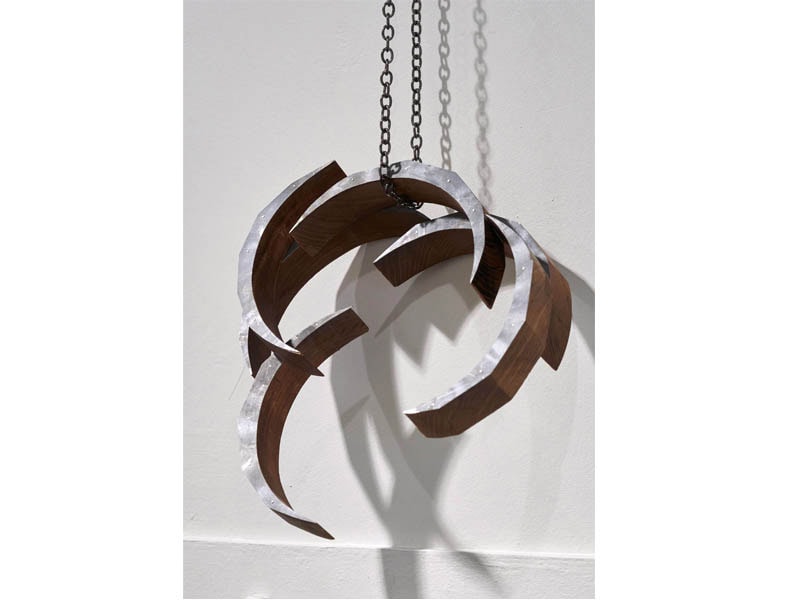
Among her most complex and defining pieces is Hands, a 2024 neckpiece constructed from elm wood, zinc-plated steel, and silver. The work exemplifies her obsessive exploration of complex mechanical systems, intricate clasps, and the fragile border separating wearable jewelry from freestanding sculpture. When unspooled, the piece occupies space like an elaborate machine before eventually constricting around the neck in a motion reminiscent of strangulation. By directly evoking an act of physical violence and confinement, Hands stands as one of her most intimate and aggressive investigations into the darker dynamics of body adornment.
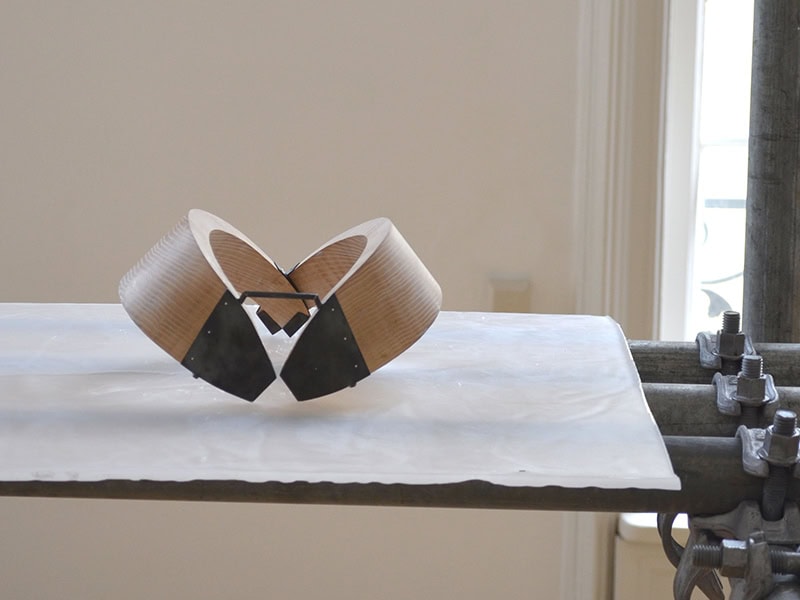
Locquet’s broader portfolio similarly draws on historical and cultural precedents that examine control and submission. Her research has previously engaged with the traditional collier d’appartenance—a collar historically bestowed upon submissive partners—alongside 19th-century Norman and Auvergnat "slave collars" given to women upon marriage as symbols of possession, as well as heavy agricultural tools like horse collars. These references inform her ongoing dialogue regarding intimacy, privacy, and public exposure.
Her recent projects have continued to expand this physical language into larger spatial environments. Pieces such as Panicroom Vector I, exhibited at A-Galerii in Tallinn, Estonia, act as literal spatial keys, allowing viewers to navigate her conceptual framework more directly. Meanwhile, her ongoing iconographic research project—broadly cataloged under the working title "Unwearable"—collects historical and contemporary instances where adornment, cosmetics, or disguise cross into the territory of the obscene or the abominable. Through this research, Locquet seeks to map how bodily ornamentation continually reflects the deep-seated cultural anxieties and structural boundaries of modern society.
Despite the growing acclaim surrounding her practice, Locquet remains acutely aware of the hurdles facing contemporary jewelry as a distinct artistic discipline. Reflecting on her time studying in French fine art institutions, she frequently encountered the lingering perception that art jewelry was somehow secondary, superficial, or overly niche compared to fine art or sculpture.
Yet, she views this historical marginalization not as a weakness, but as an inherent strength. The outsider status of jewelry allows makers to pose questions and construct perspectives that traditional fine art mediums often overlook. At the same time, she acknowledges the ongoing challenge of bridging the gap between the insular community of contemporary jewelry enthusiasts and the wider public. By creating works that are undeniably visceral and direct, she hopes to offer accessible entry points into a deeply conceptual dialogue.
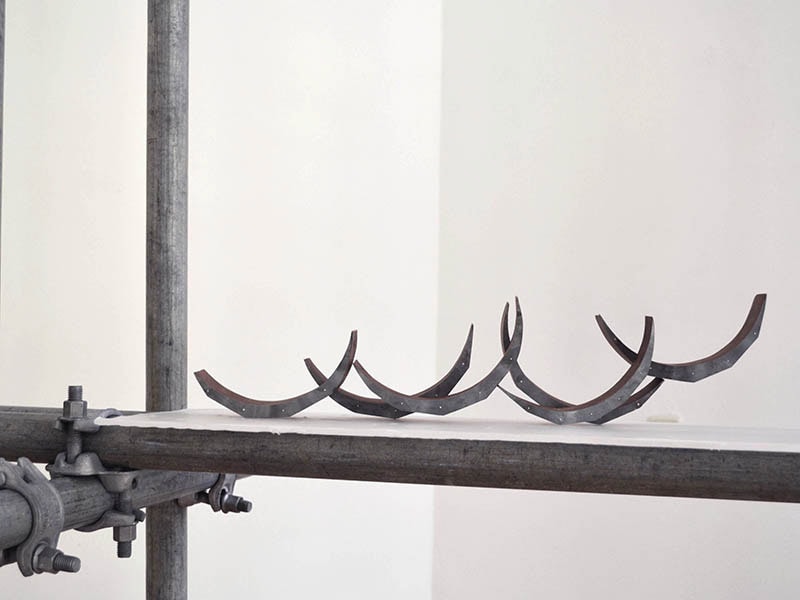
Looking toward the future, Locquet remains focused on expanding the boundaries of her practice. Having recently completed a residency as part of the Artist-in-Residence program at the Estonian Academy of Arts (EKA) in Tallinn—where she produced her steel neckpiece Armor I—she is currently preparing new exhibition projects that integrate her wearable objects with immersive spatial installations.
Beyond her studio practice, Locquet harbors a strong interest in research and education, viewing academic environments as ideal spaces to challenge collective definitions of body ornament and push the evolution of contemporary jewelry forward. As she looks back on the five years that have passed since her graduation, she places her trust in the ongoing creative process, maintaining deep gratitude for the institutions, peers, and mentors who continue to support her uncompromising vision.